 Recouvrement & moulage
Hot casting onto a steel hub
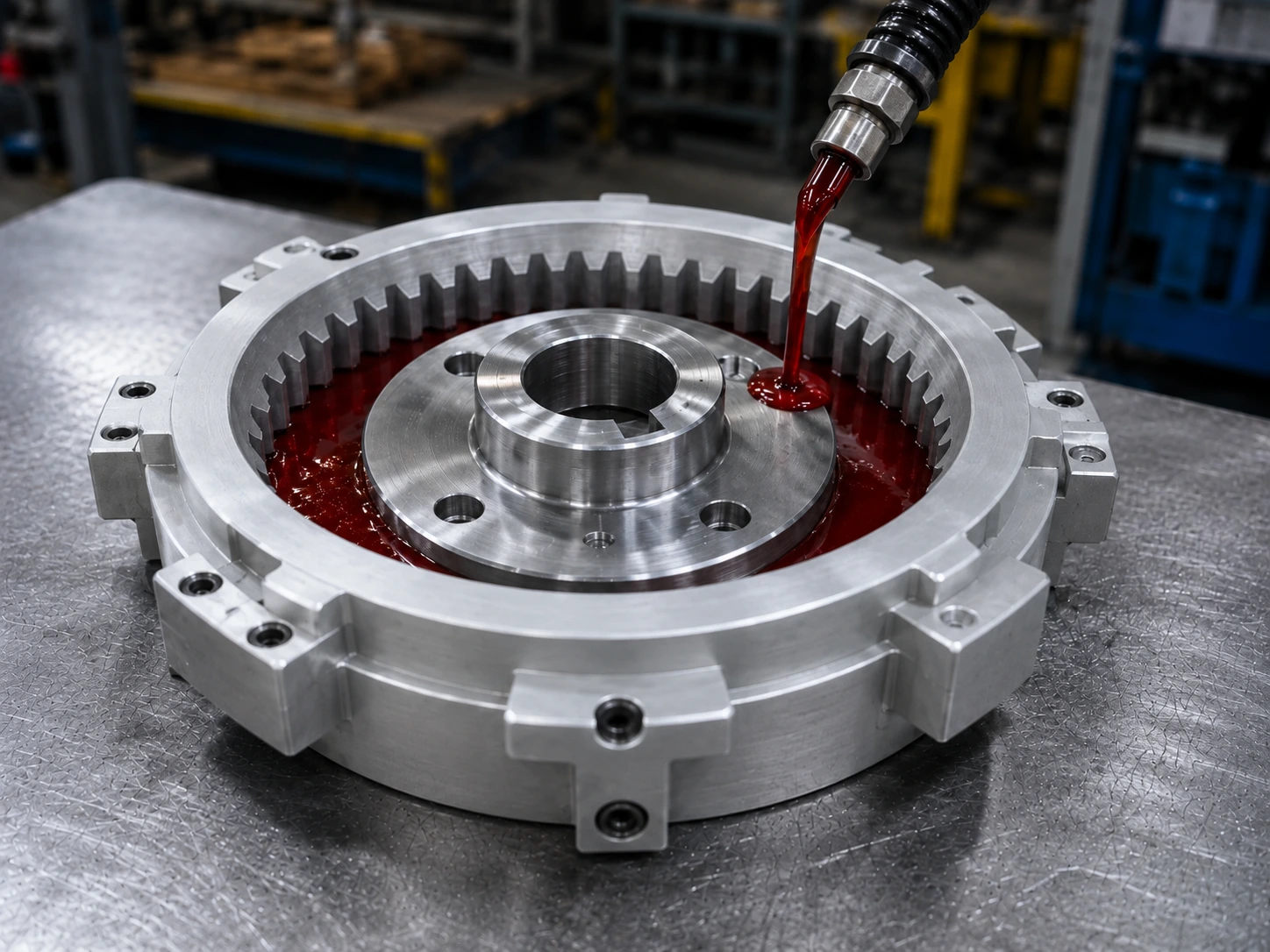
Liquid red polyurethane pours into a toothed mold, around the steel hub. This is metal overmolding: the teeth and the hub end up as one part.

Send a photo, a drawing or the worn part — we identify the material and the right fix.
Contact us →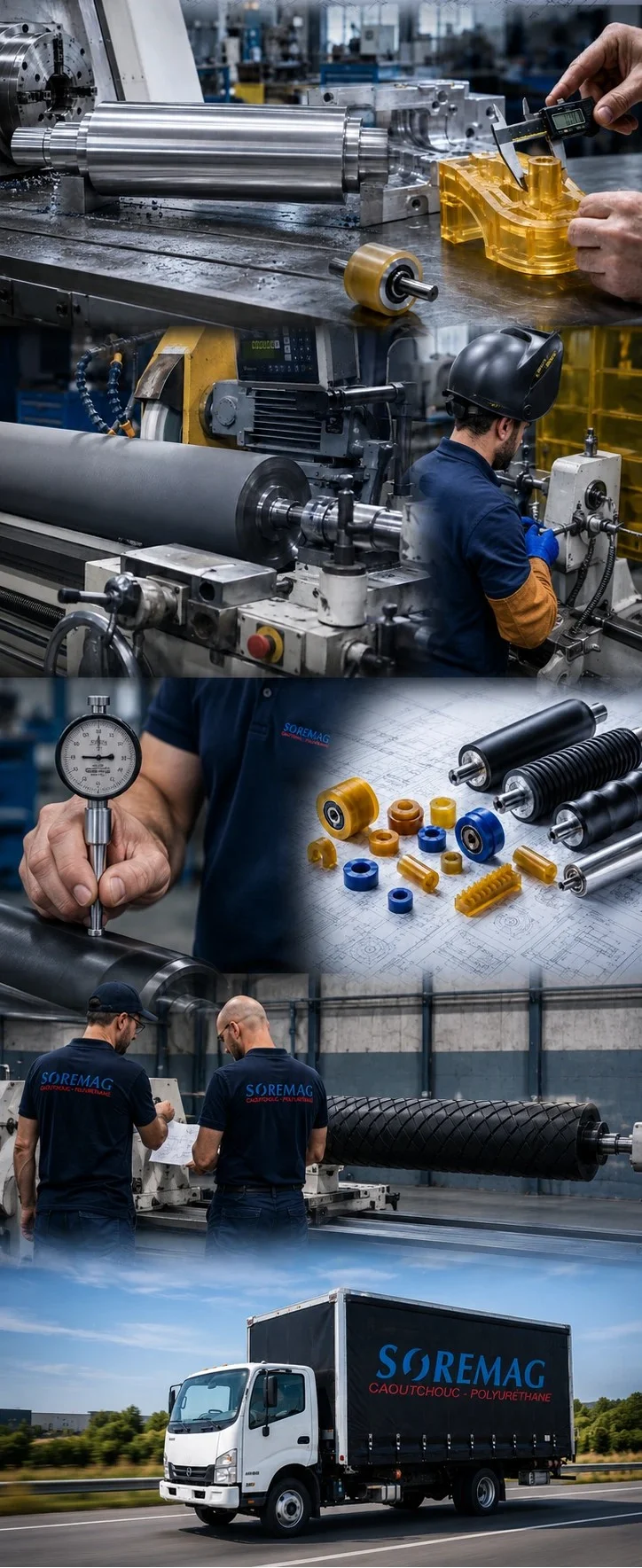
24/7 emergency service — call 450 664-4000 and your part goes to the front of the line.
24/7 Emergency
40 compound data sheets and 2 comparison charts, downloadable as PDF.
See the data sheets →
Covering, molding, machining, grinding and quality control — all in-house.
Request a QuoteWork, repairs and before/after — what passes through our hands in Laval, photographed as it is.
A part that arrives damaged, a casting under way, a mold being machined, a wheel shipping tomorrow. We take the photo, write three lines, and put it here.
Recouvrement & moulageLiquid red polyurethane pours into a toothed mold, around the steel hub. This is metal overmolding: the teeth and the hub end up as one part.
 Recouvrement & moulage
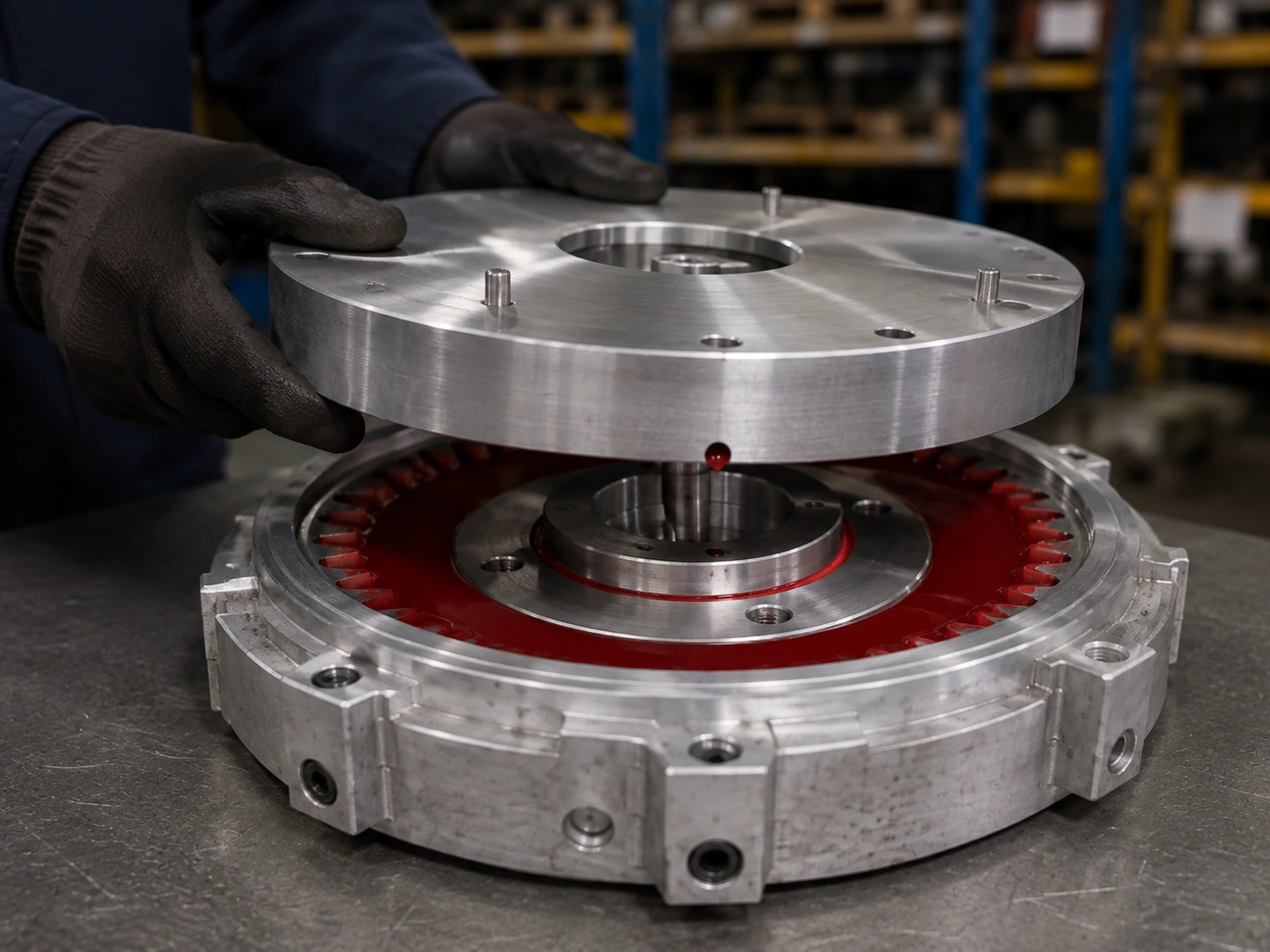
The top plate goes onto the filled mold. The slight overflow rising at the vents gets machined off after cure — it is how we know the mold is full.
 Recouvrement & moulage
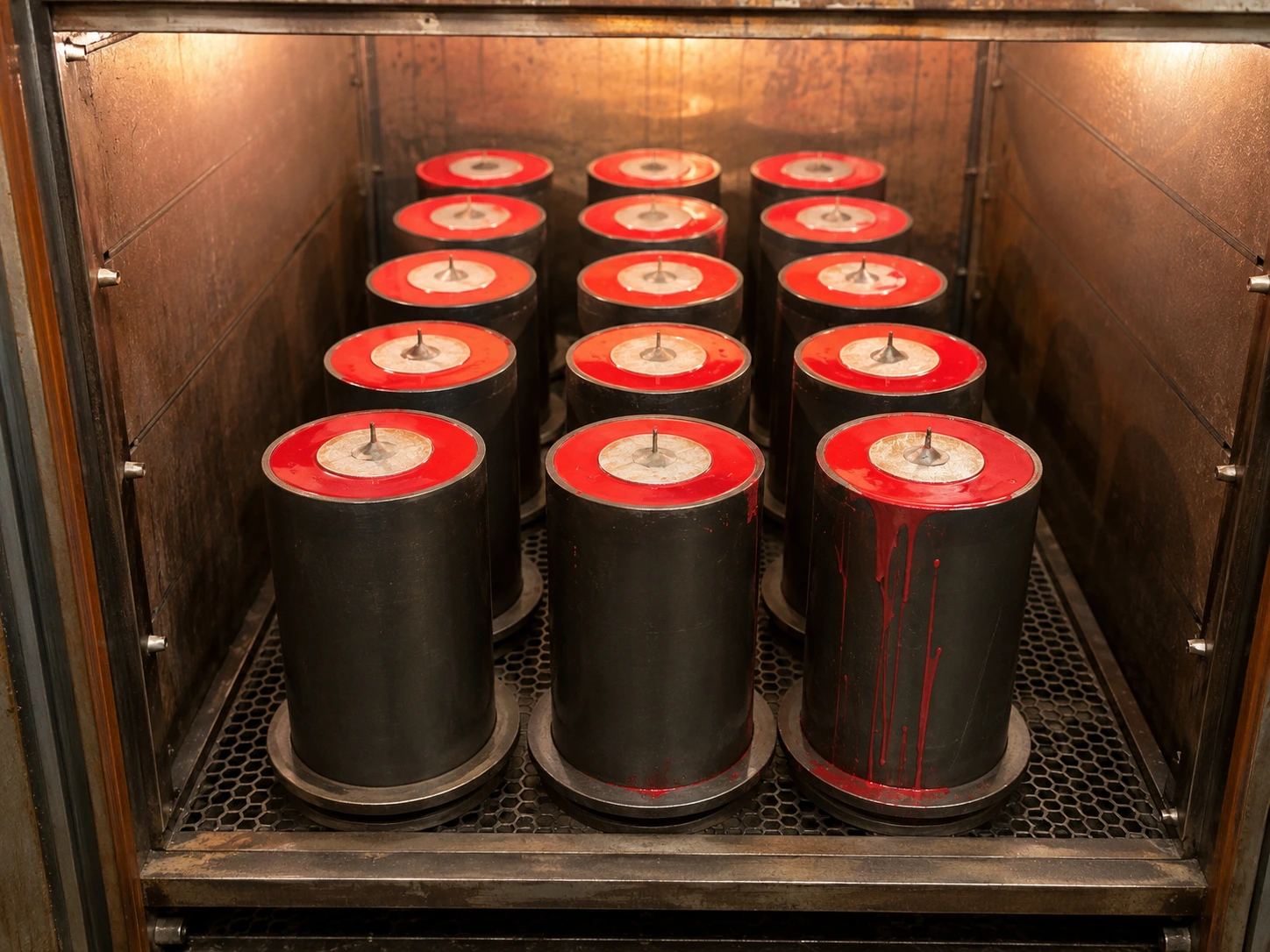
Cast parts go into the oven in their steel molds. Temperature and time are controlled: this is where the polyurethane takes on its final properties.
 Recouvrement & moulage
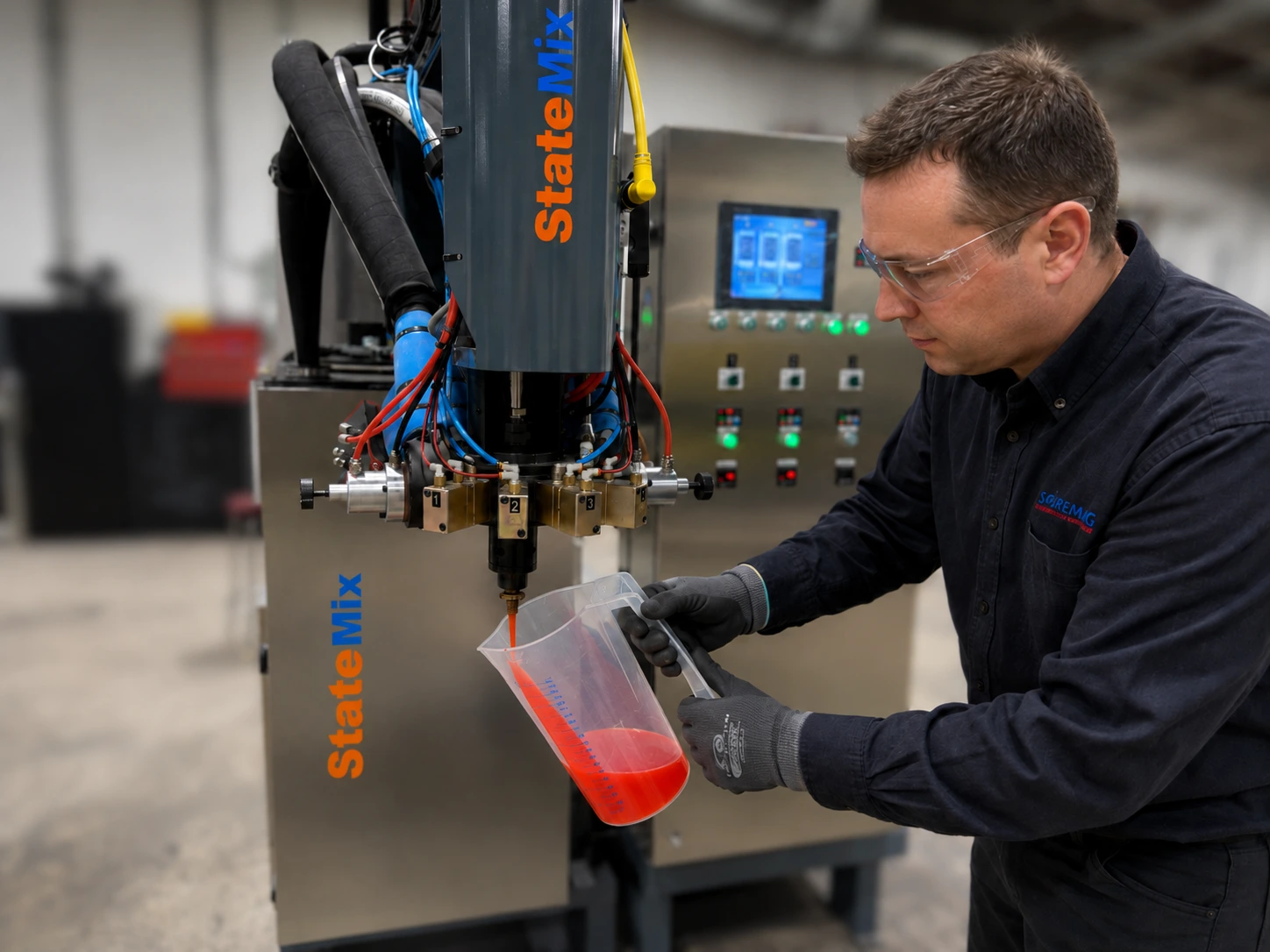
Liquid polyurethane poured into a graduated beaker from the automatic dispenser. The ratio is checked on every batch, before anything reaches a mold.
 Recouvrement & moulage
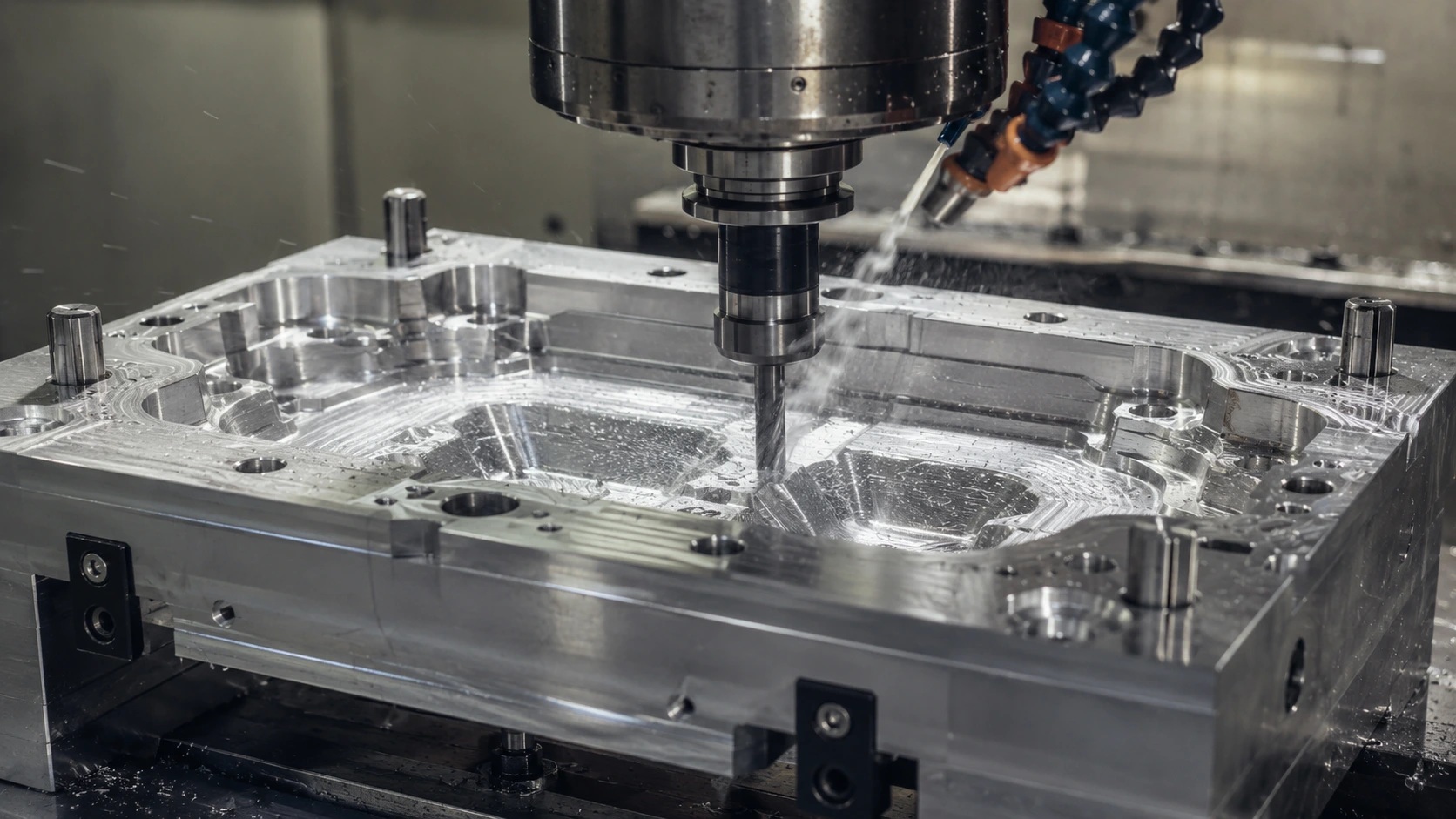
Close-up on the cutting tool and the aluminum. We build our molds in-house — that is what makes a prototype or a short run realistic, without injection tooling.
 Recouvrement & moulage
Small in stainless, large in steel, medium in aluminum — three different bearing journals, resting on wood blocks. When the core is beyond saving, we build a new one.
 Meulage & finition
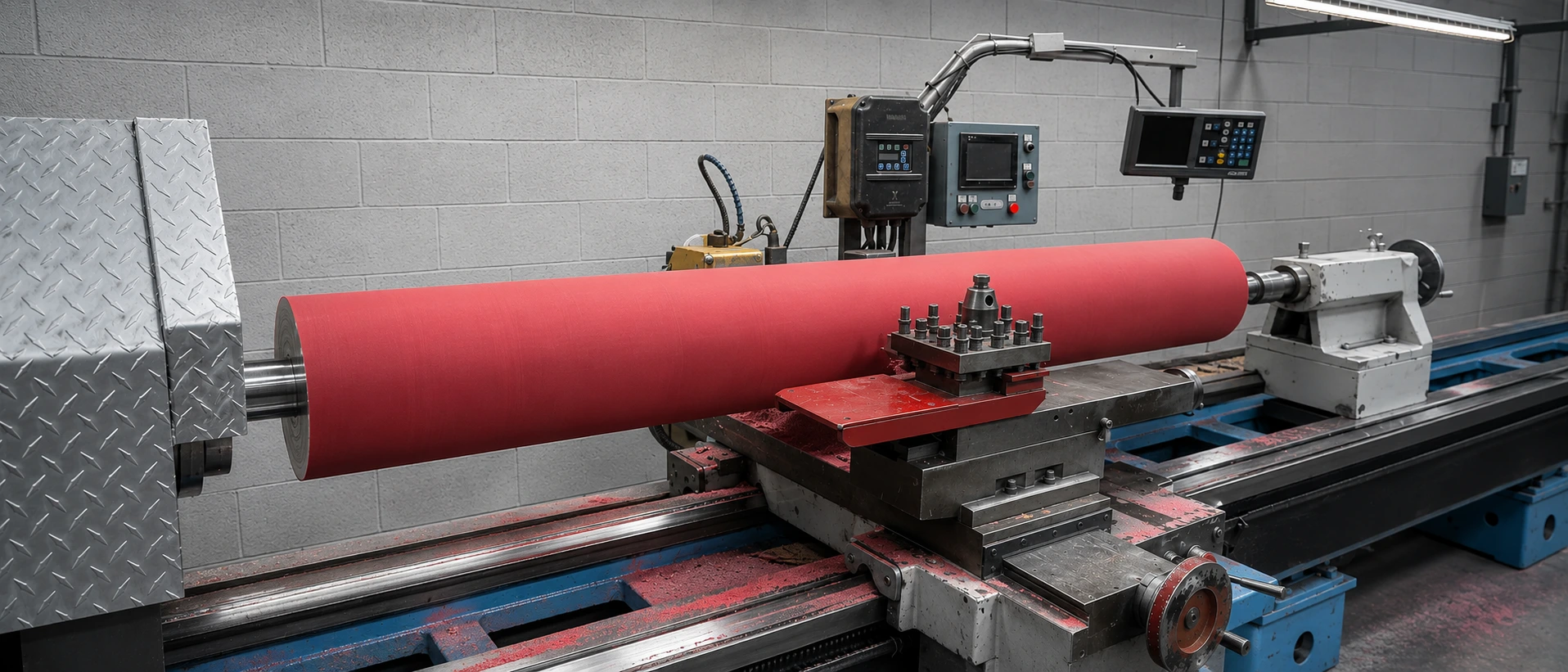
Red polyurethane on the grinding lathe, pink chips all around. Concentricity on a nip is decided at this station and nowhere else.
 Meulage & finition
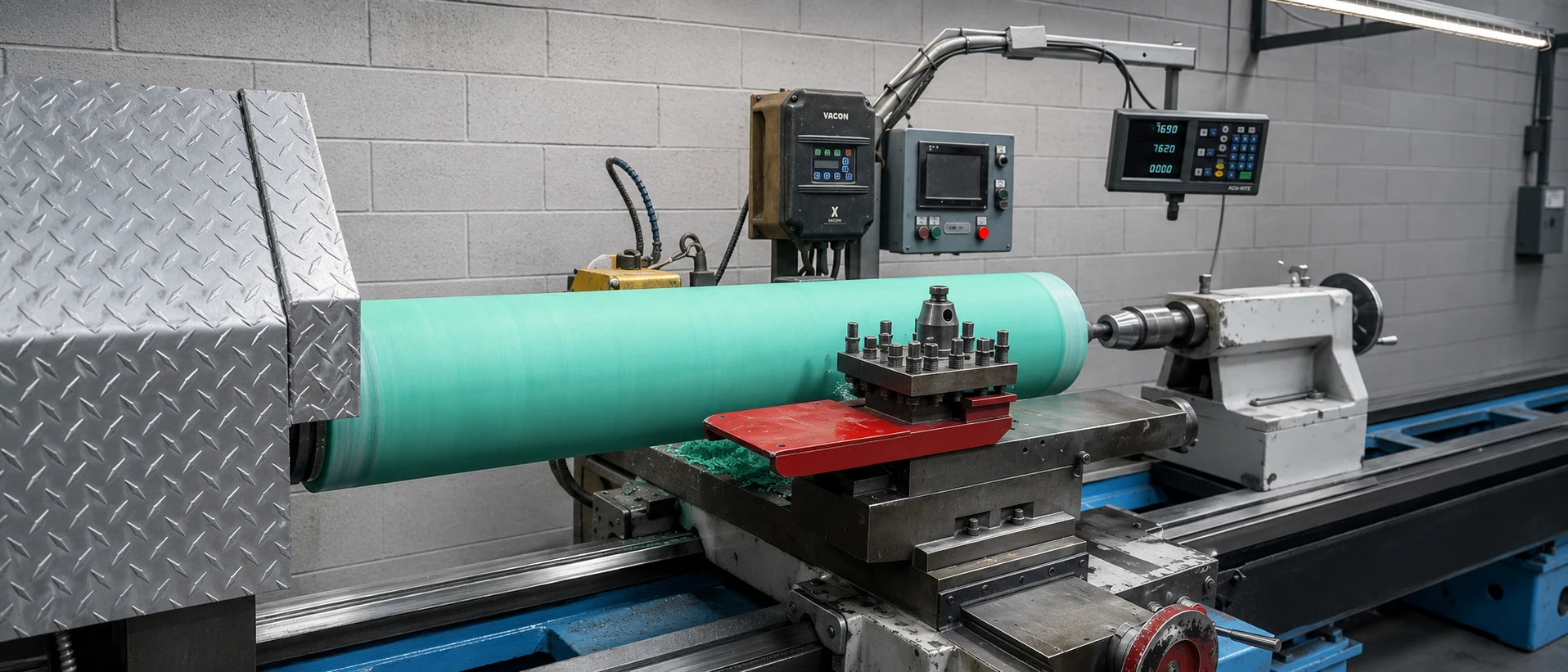
Mint green nitrile/PVC cover. Smooth and concentric over the full face — this is where the roller's behavior in service gets settled.
 Meulage & finition
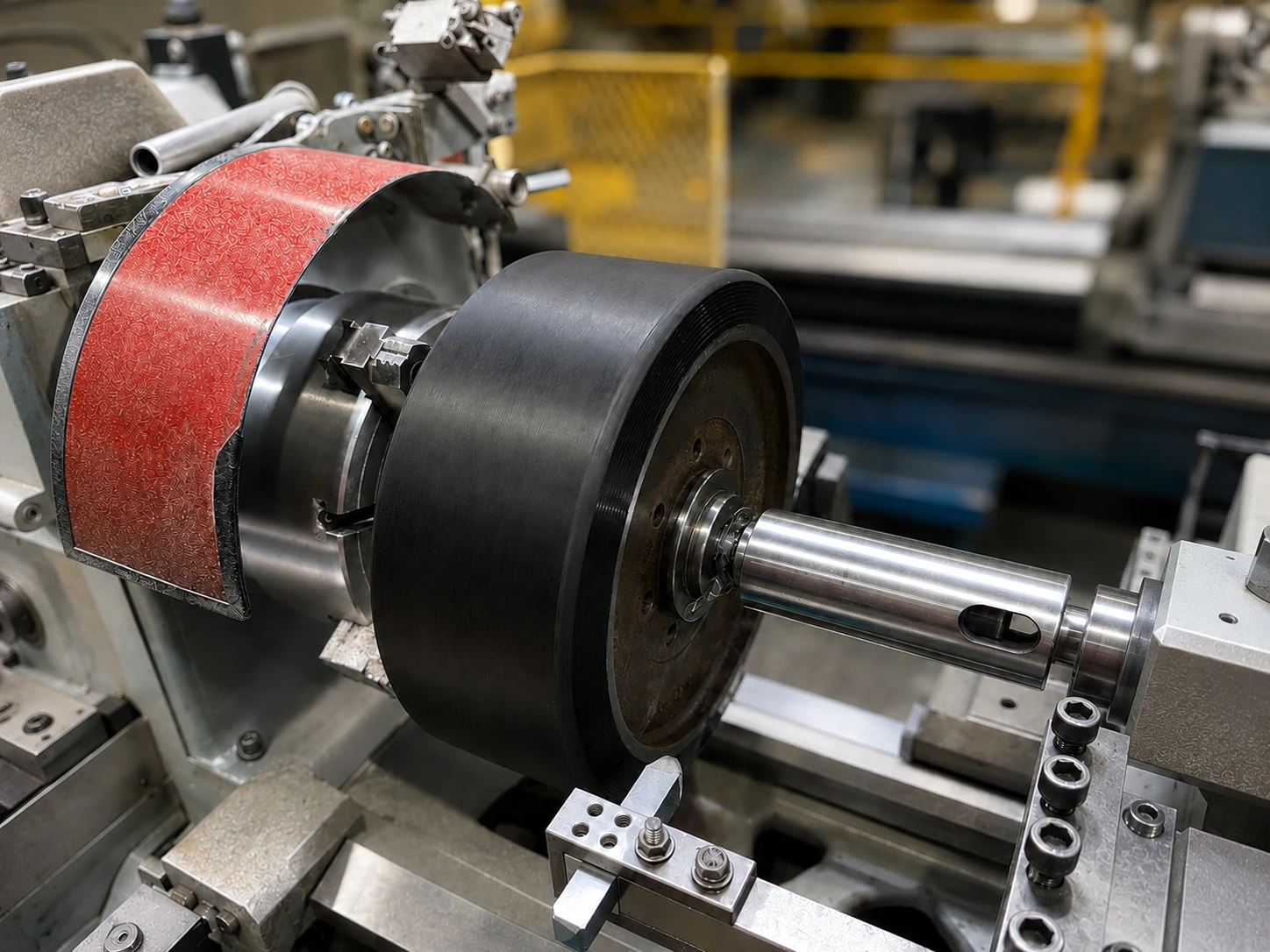
Black polyurethane wheel, 95 Shore A, finished with a knife on the lathe. Some durometers call for the knife rather than the wheel.
 Meulage & finition
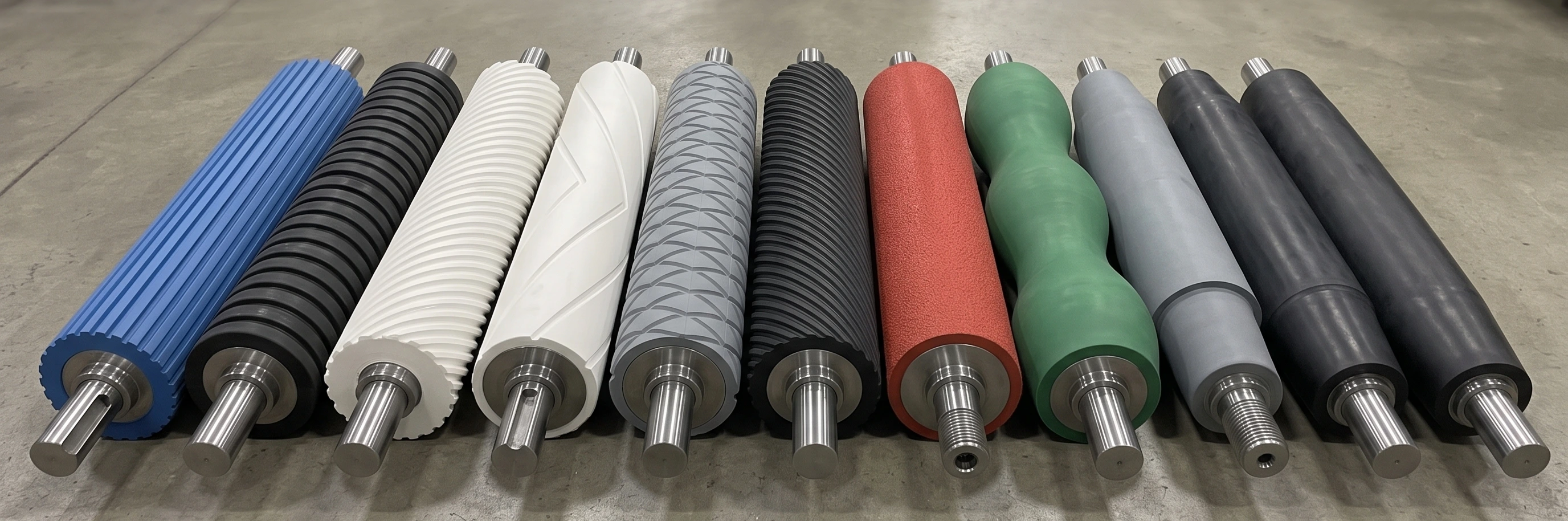
Longitudinal on EPDM, circumferential on black HNBR, spiral on white FDA nitrile, diamond on gray polyurethane. The pattern follows what it has to clear away.
 Réparation
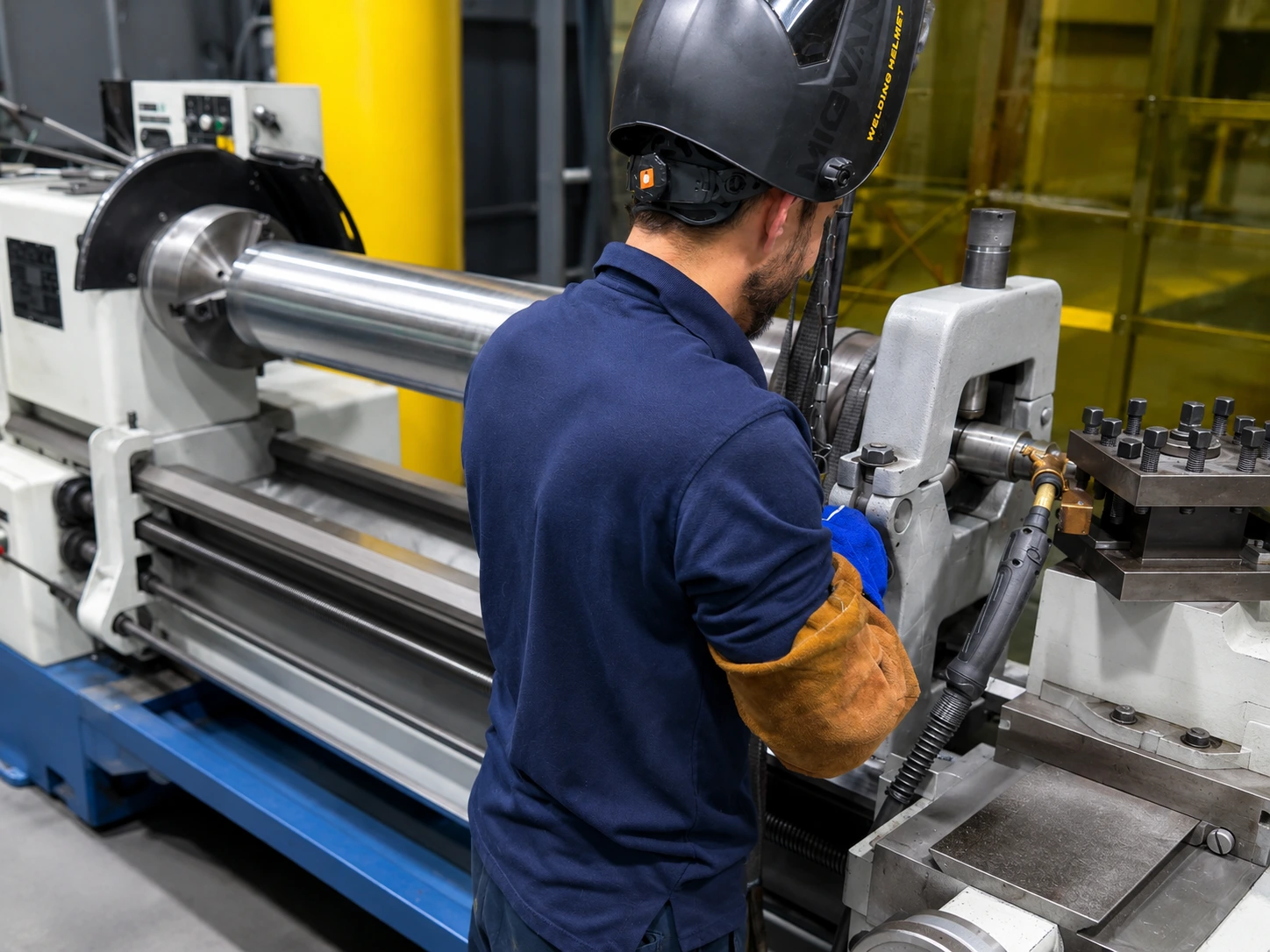
Machining the body on the lathe. Before anything gets covered, the metal has to come back to its original dimensions.
 Réparation
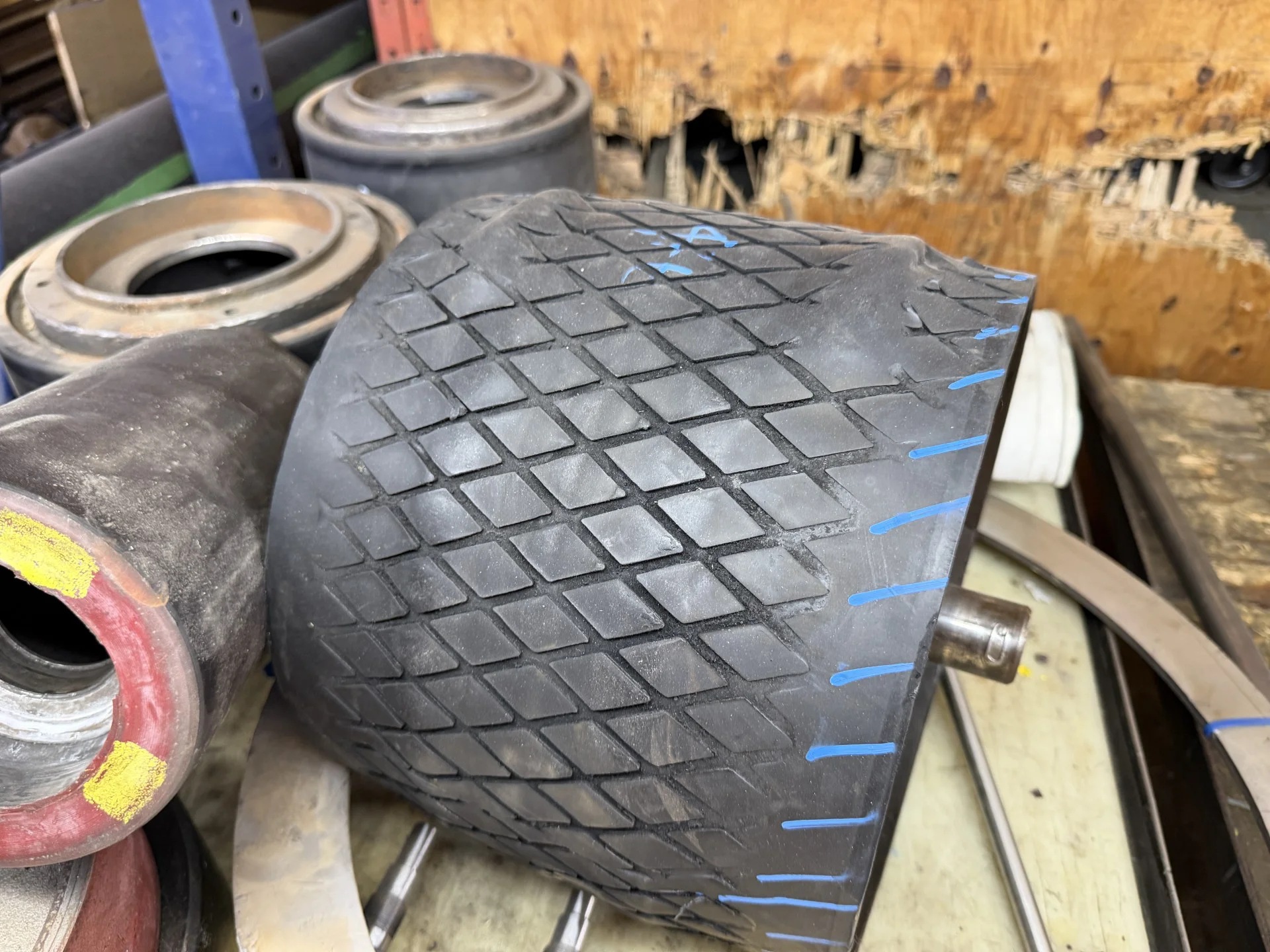
Diamond pattern on a pulley, cold-bonded, torn away by traction. We rebuild it hot and seamless — it is the only way it holds.
 Réparation
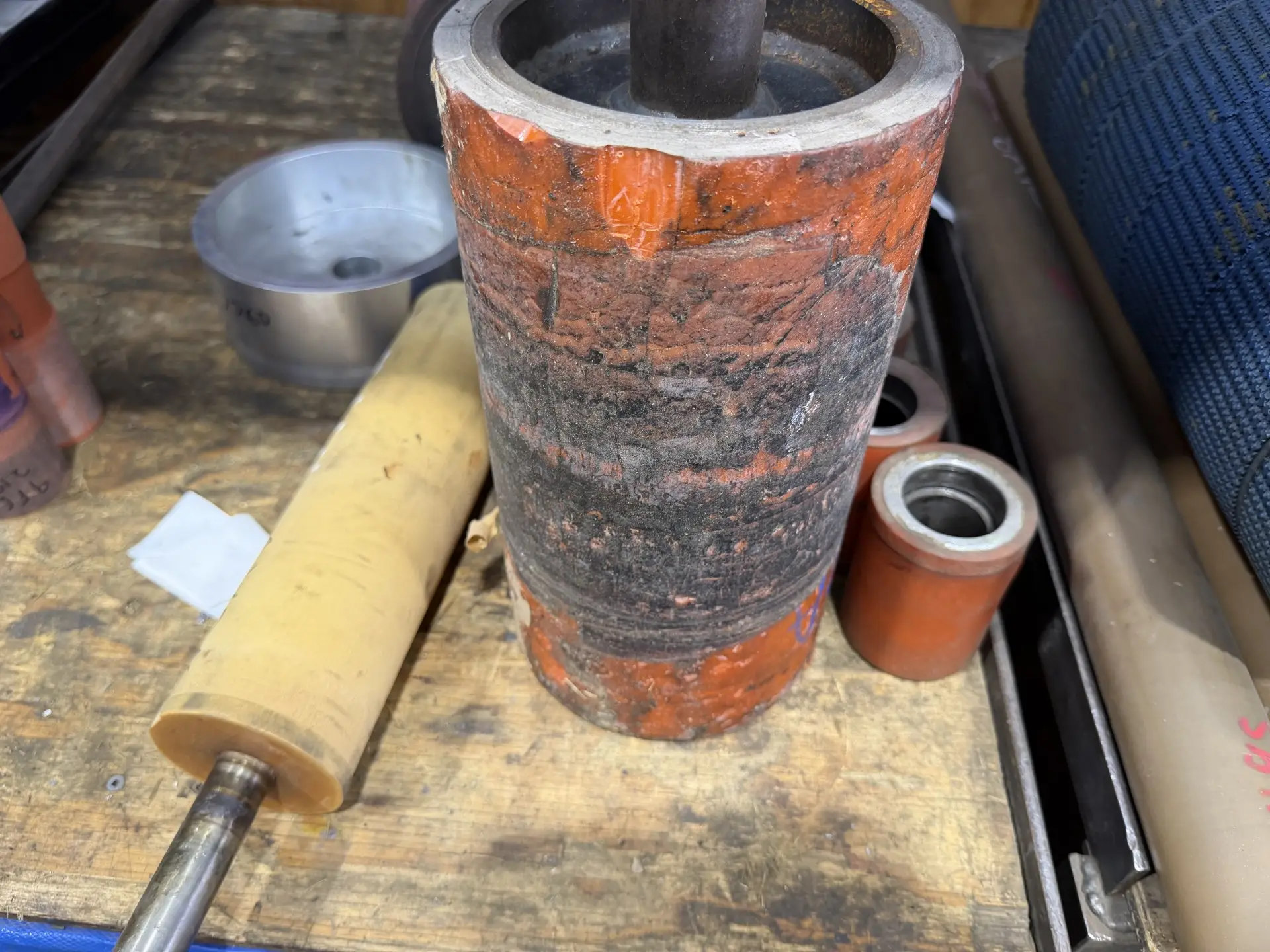
Orange polyurethane cover degraded at mid-face, standing on its shaft in the shop. Wear like that says something about the line it came from.
 Réparation
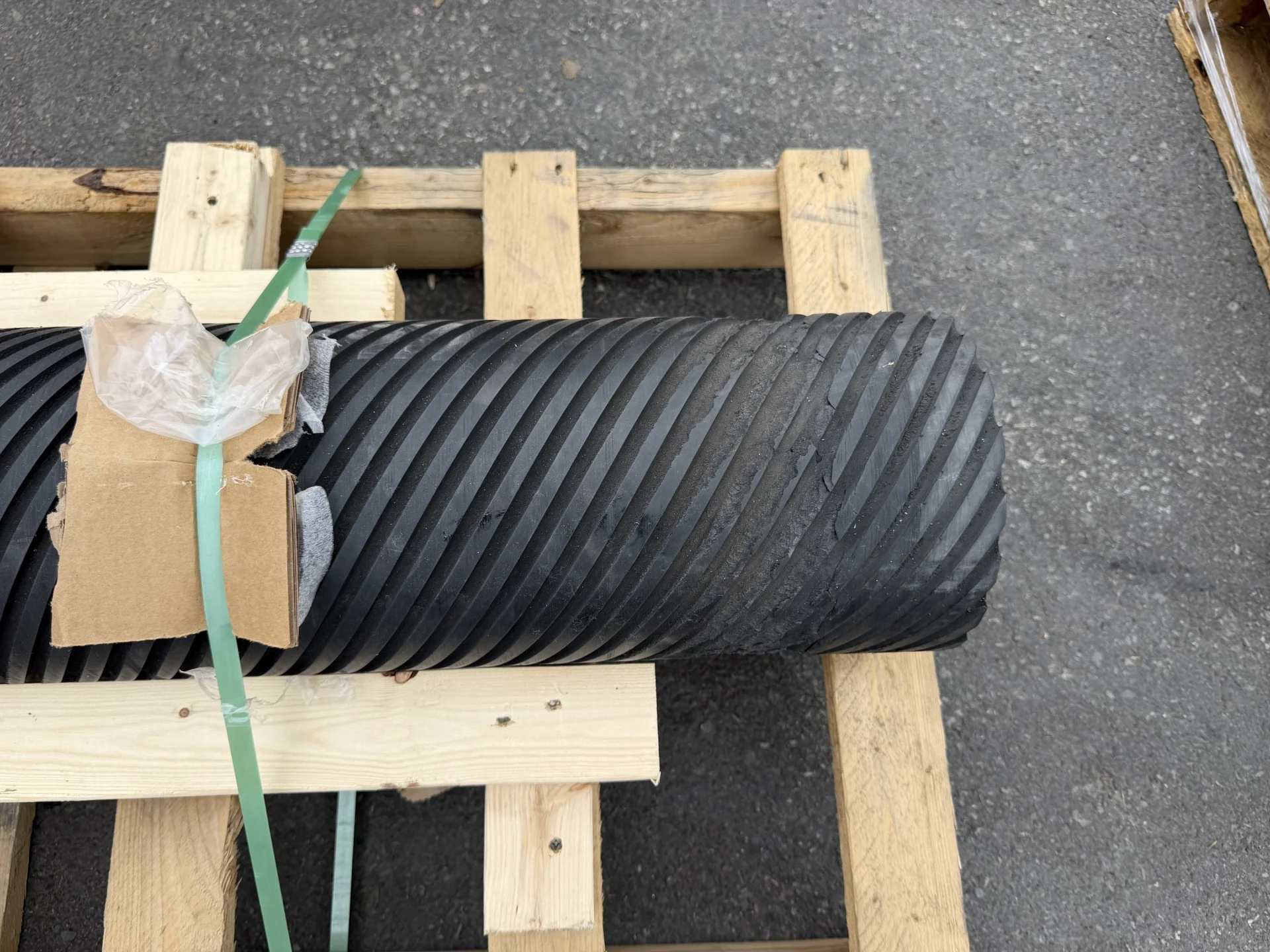
The pattern is still readable, but it no longer works. At this point it is the whole cover that gets rebuilt.
 Avant / après
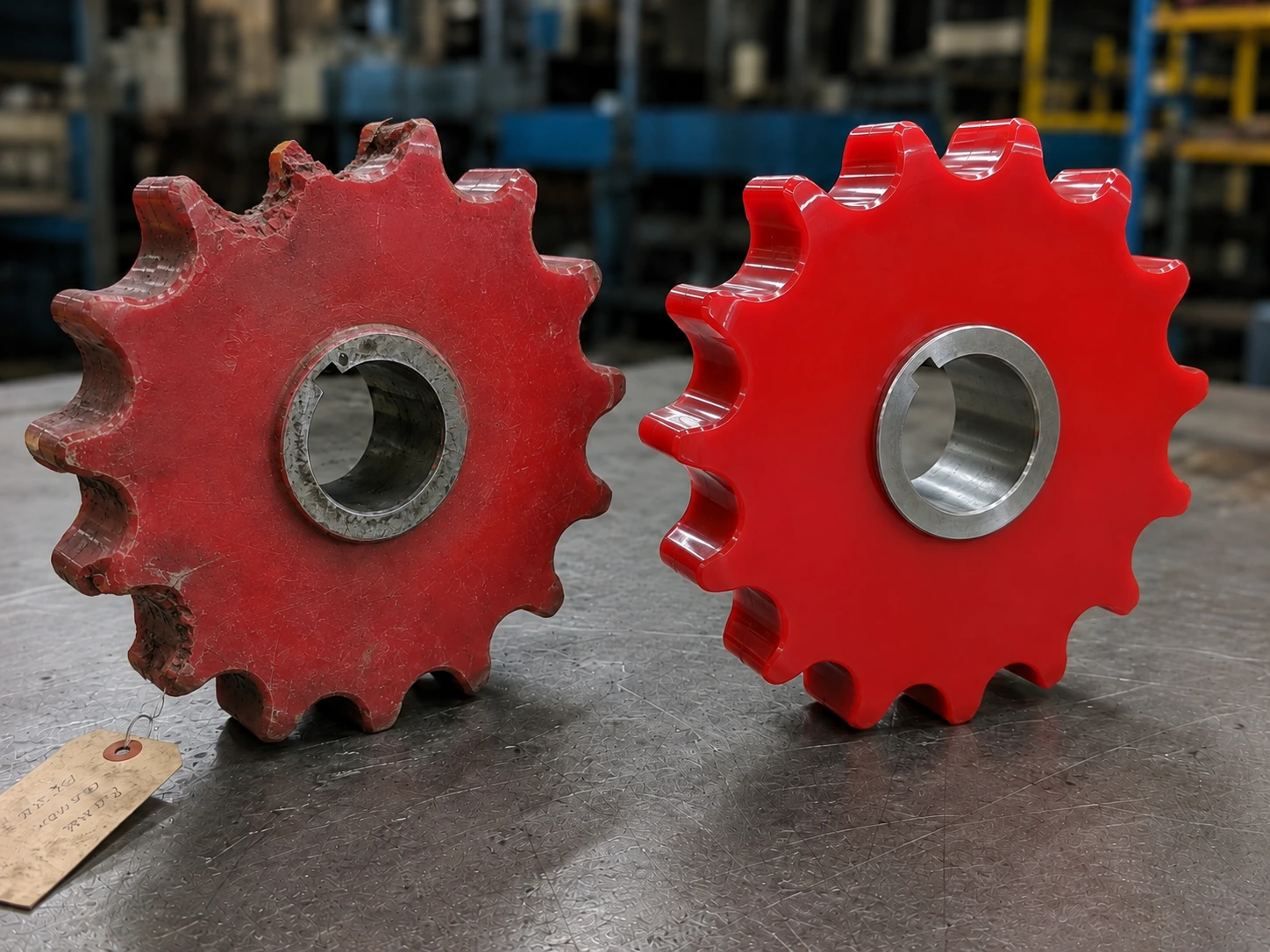
On the left, the teeth torn off. On the right, the new one: red polyurethane hot cast onto a keyed steel hub. Reproduced without an original drawing, from the worn part.
 Avant / après
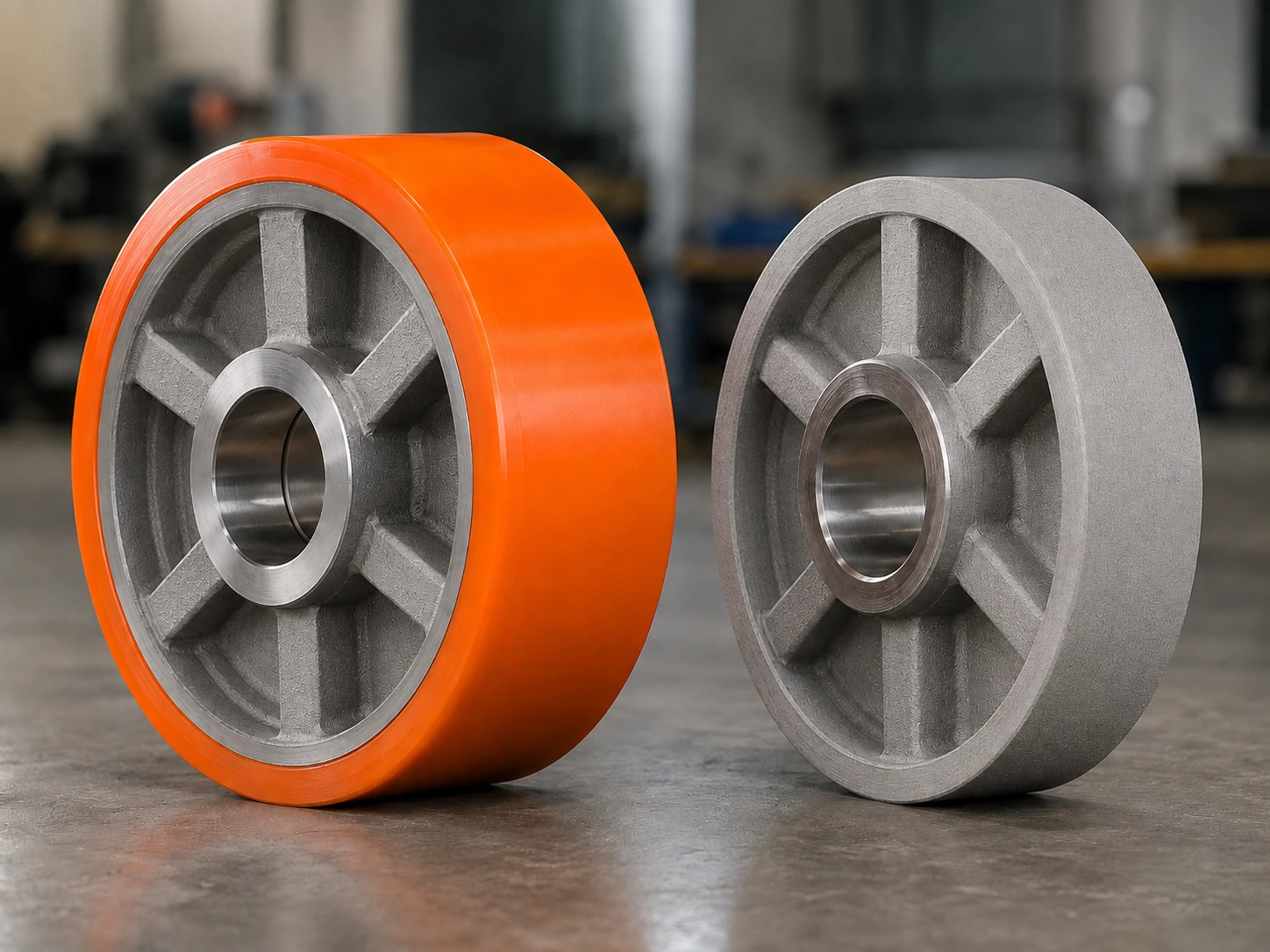
On the right, the steel core stripped and blasted: bare metal, ready to bond. On the left, the same core once covered. Everything in between is preparation.
 Reverse engineering
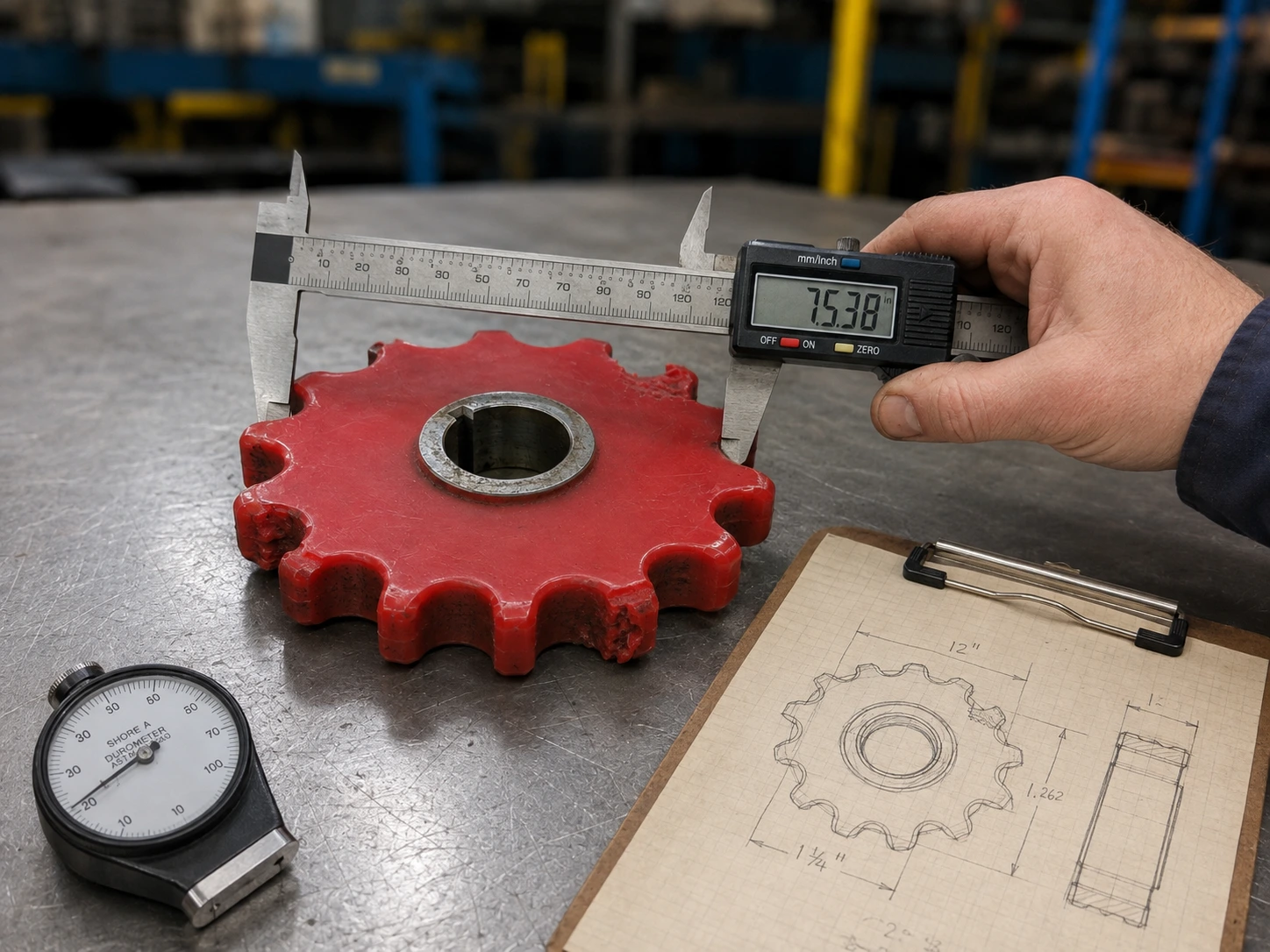
Digital calipers, a dimensioned sketch, a Shore A durometer. That is all it takes to reproduce a part whose original manufacturer is gone.
 Reverse engineering
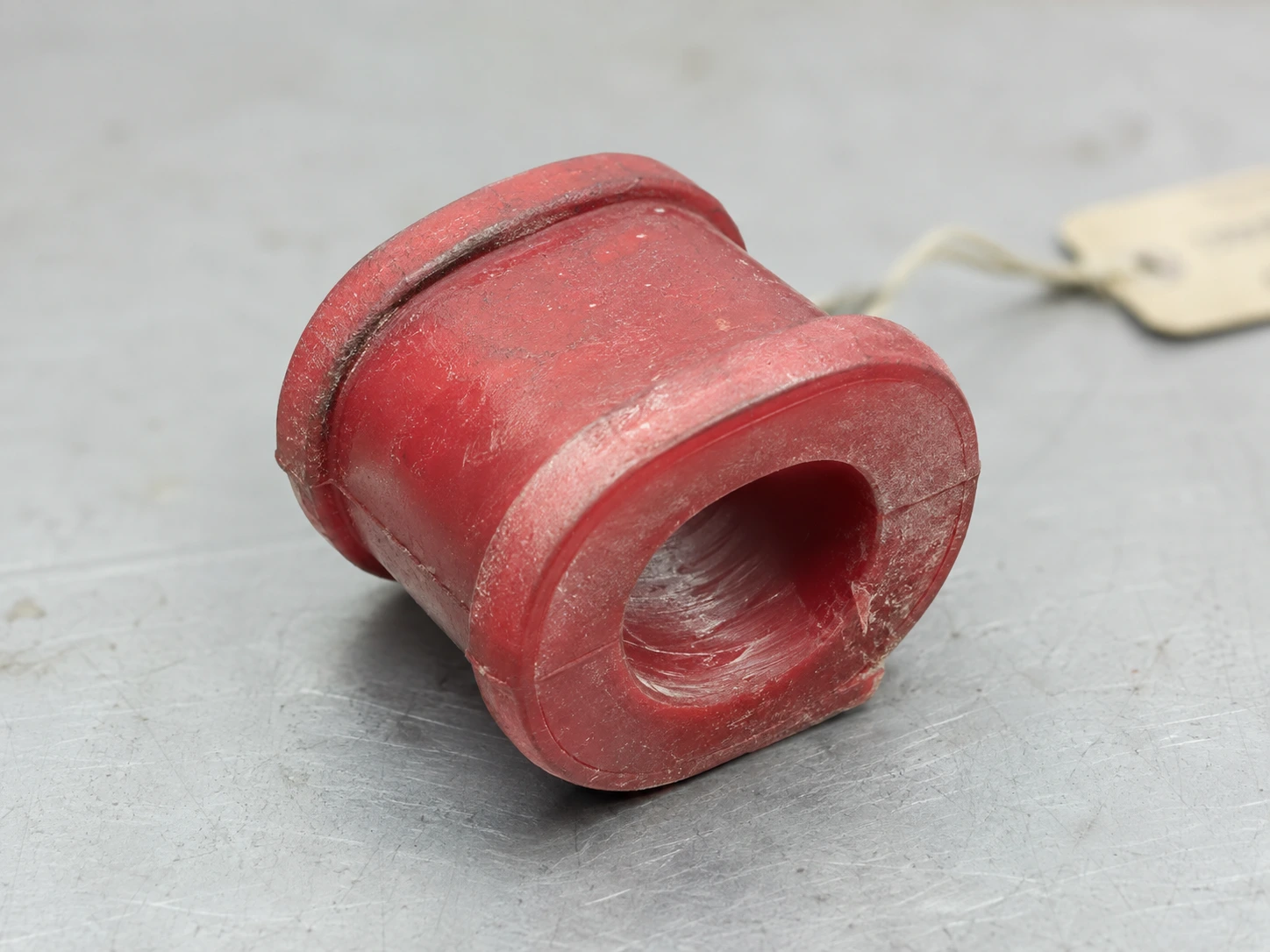
Red polyurethane bushing, bore gone oval, tagged on arrival. It came in with no drawing — and that is perfectly fine.
 Reverse engineering
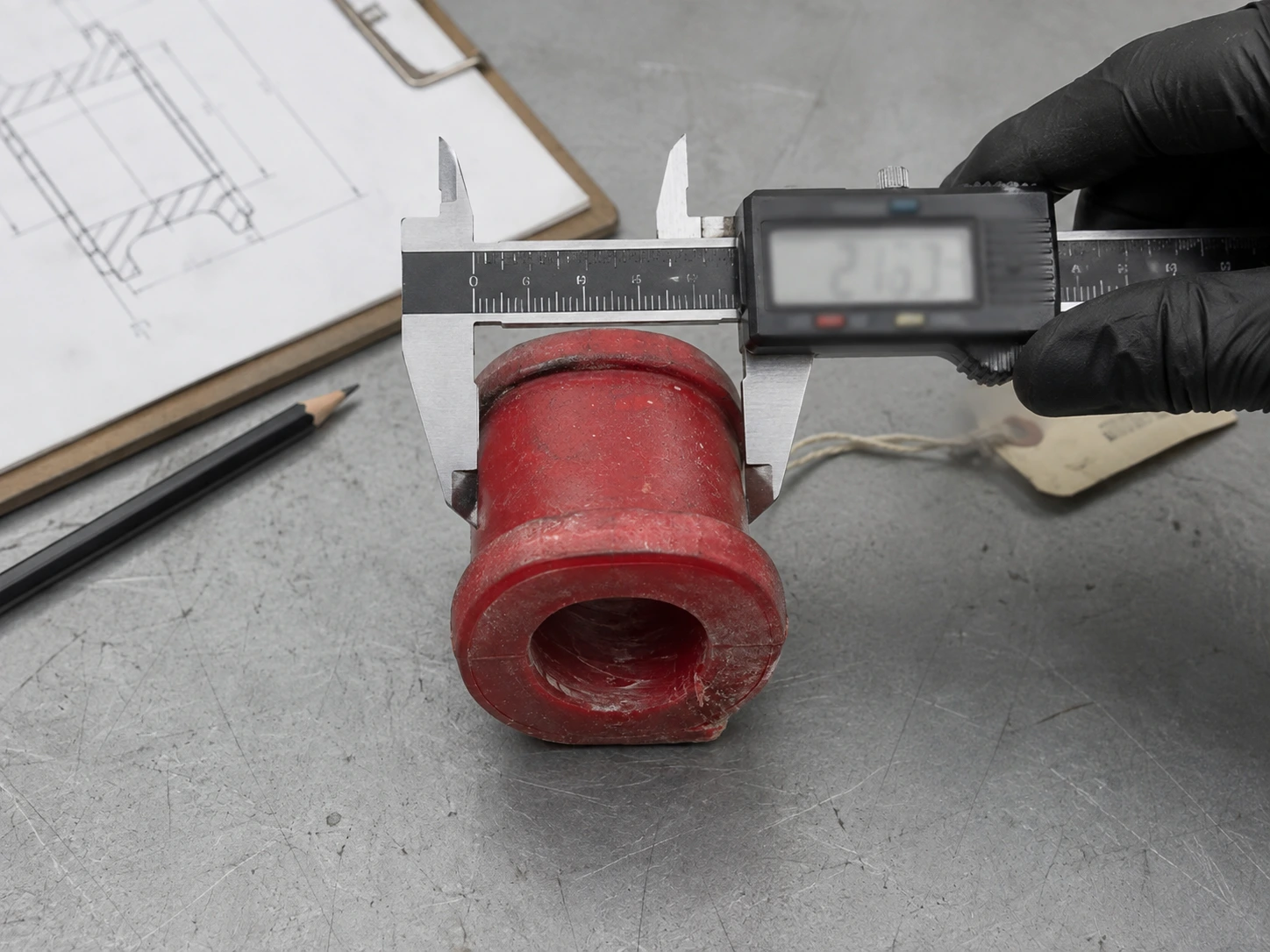
Reverse engineering always starts with measurement. Only then does the question of material and durometer come up.
 Contrôle & expédition
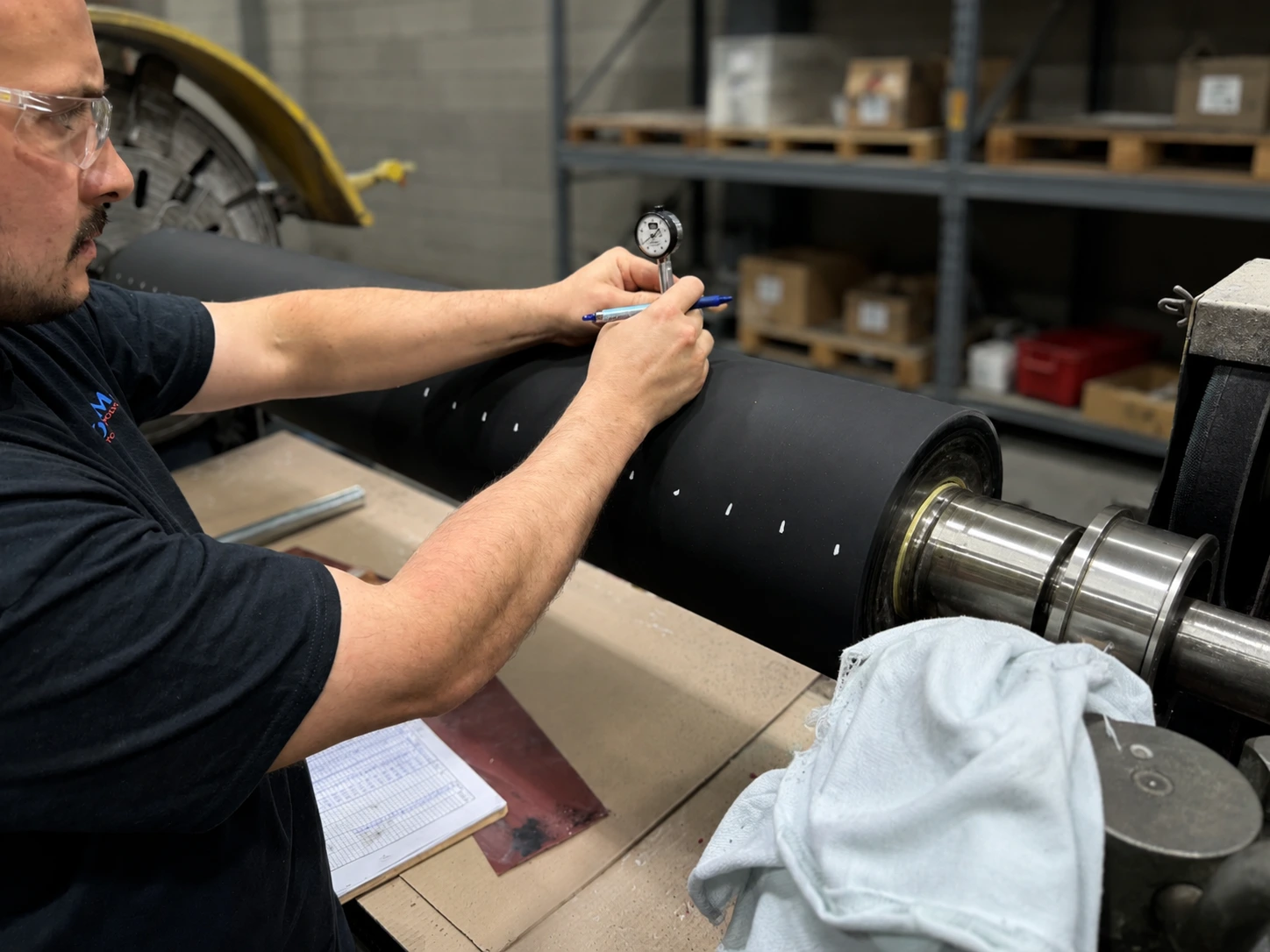
Shore A hardness reading on an antistatic EPDM 65 cover, quality control sheet alongside. Every value gets recorded.
 Contrôle & expédition
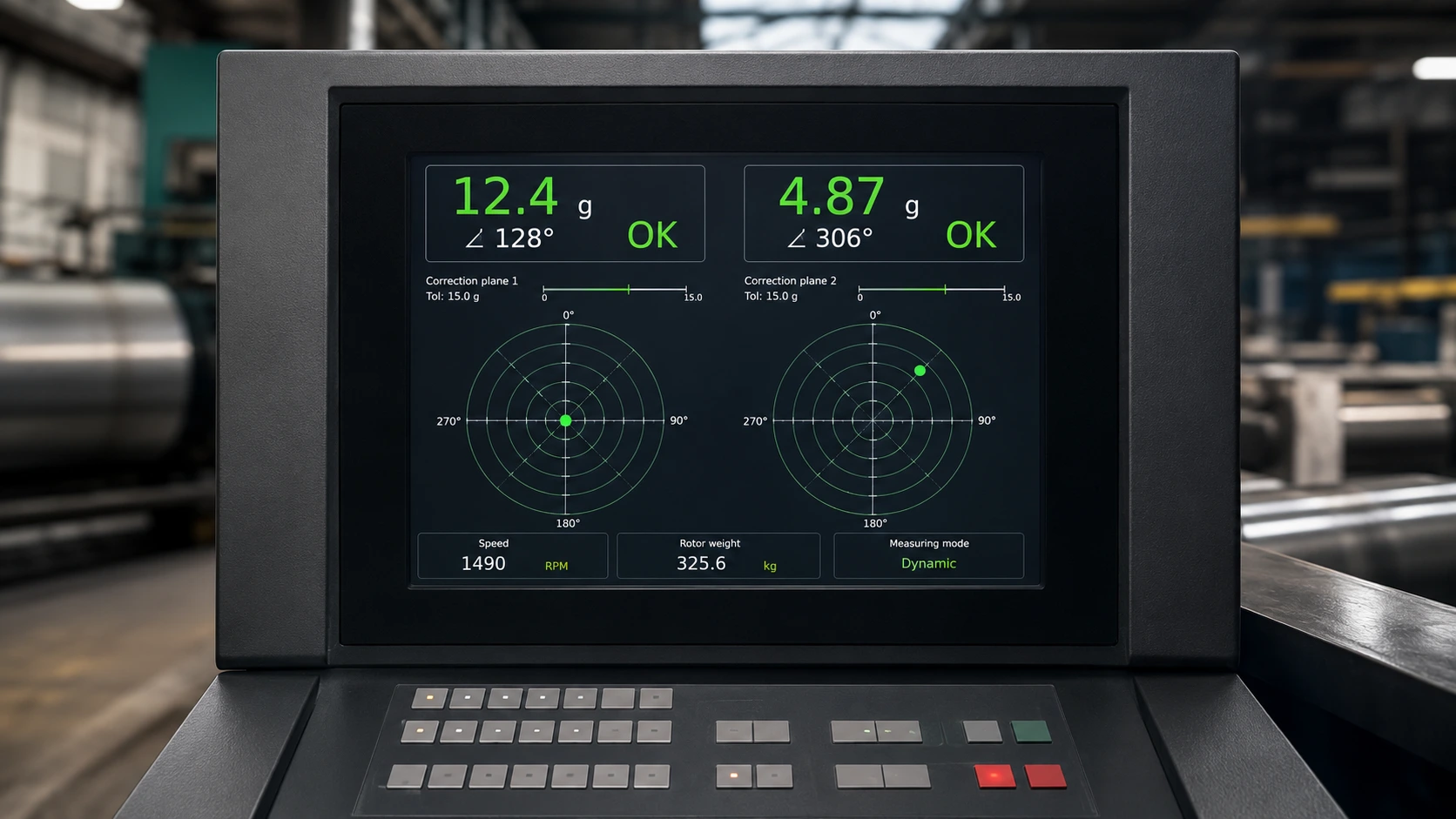
Roller on the bench: supports, drive belt, vibration sensors. At speed, an imbalance the eye cannot catch shows up very clearly here.
 Contrôle & expédition
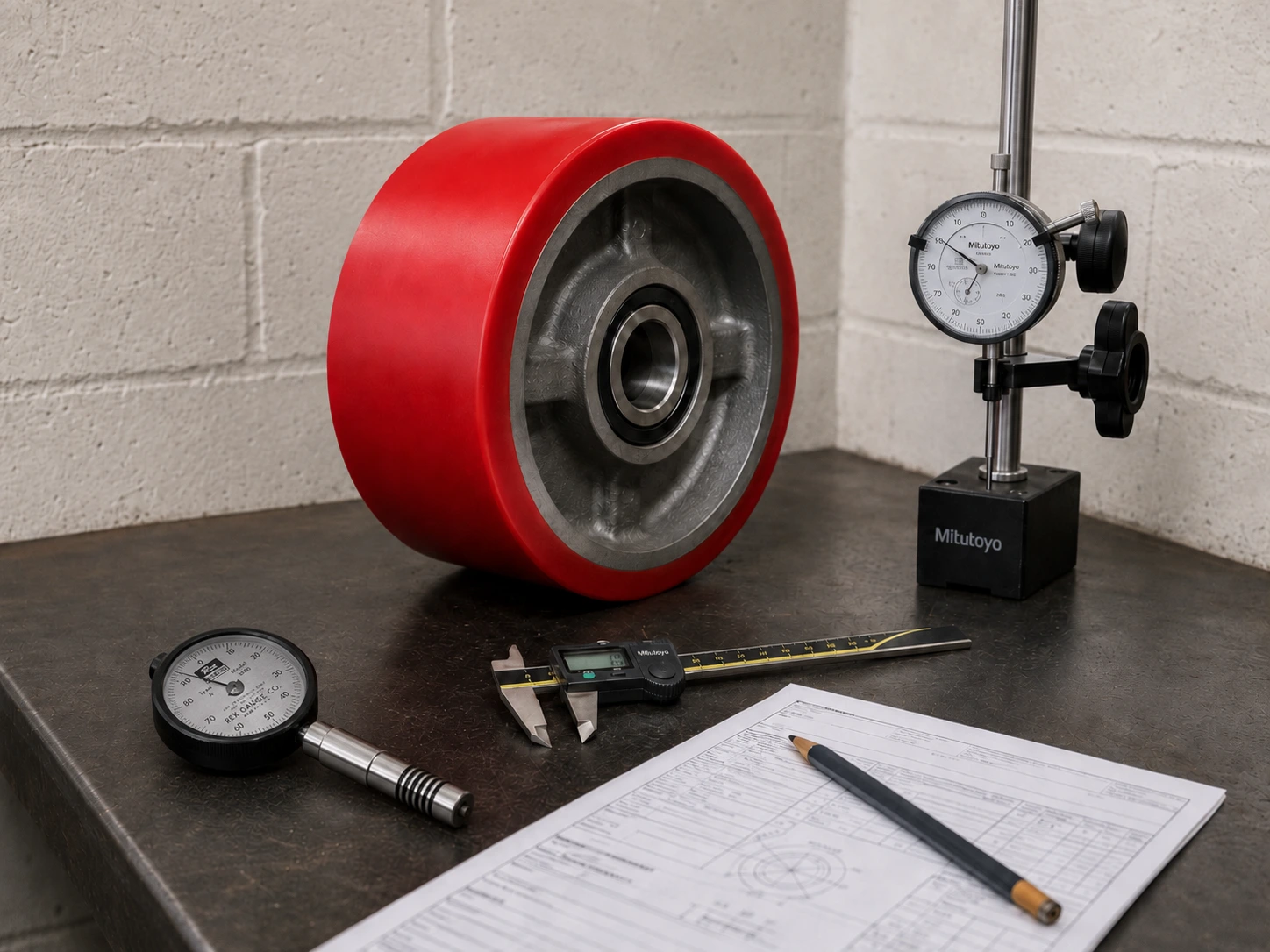
Red polyurethane wheel on the bench with a Shore durometer, calipers, a dial indicator and an inspection sheet. Hardness, dimensions, concentricity, profile, bond — then it ships.
 Contrôle & expédition
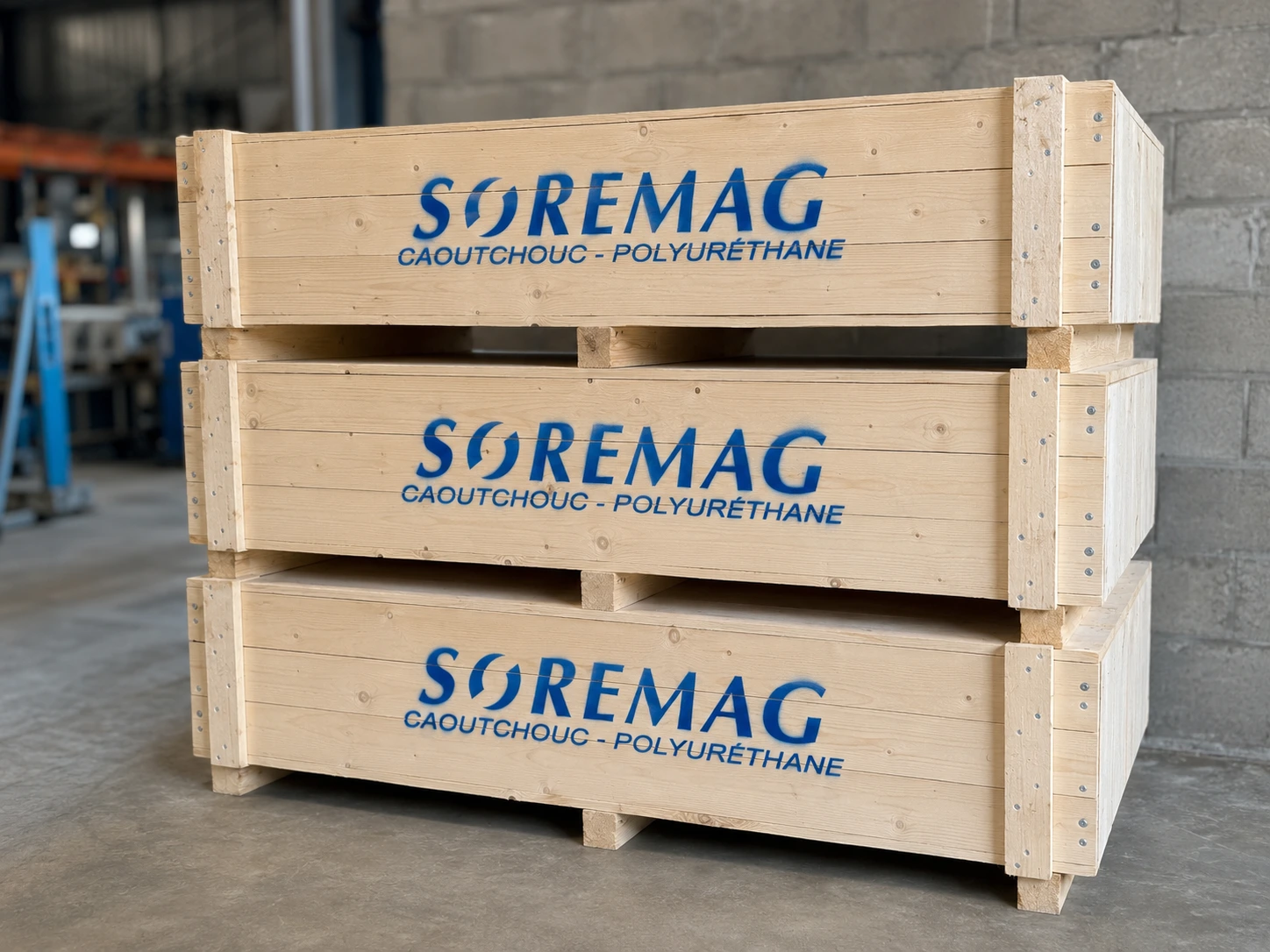
Custom wooden shipping crate built to protect a covered roller. A roller damaged in transit sends the whole shop back to square one.
No photos in this category yet.
Have a part in this shape? A photo and a few words about your line are enough for us to tell you whether it can be rebuilt — and how.
Send us a photo →
Covering and manufacturing of rollers, wheels and parts in rubber and polyurethane. Serving Quebec and Canada.