Covering & manufacturing · rubber and polyurethane · Quebec450 664-4000·1 800 361-5588·EN|FR
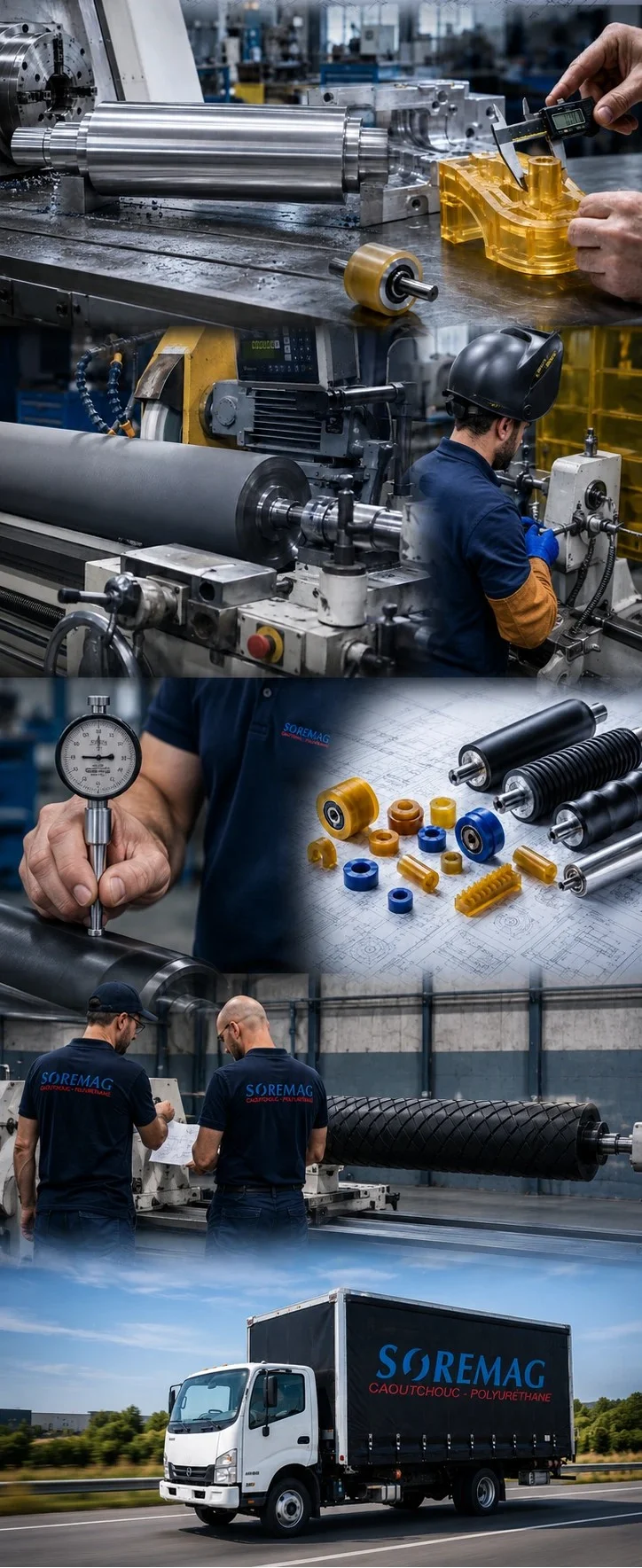
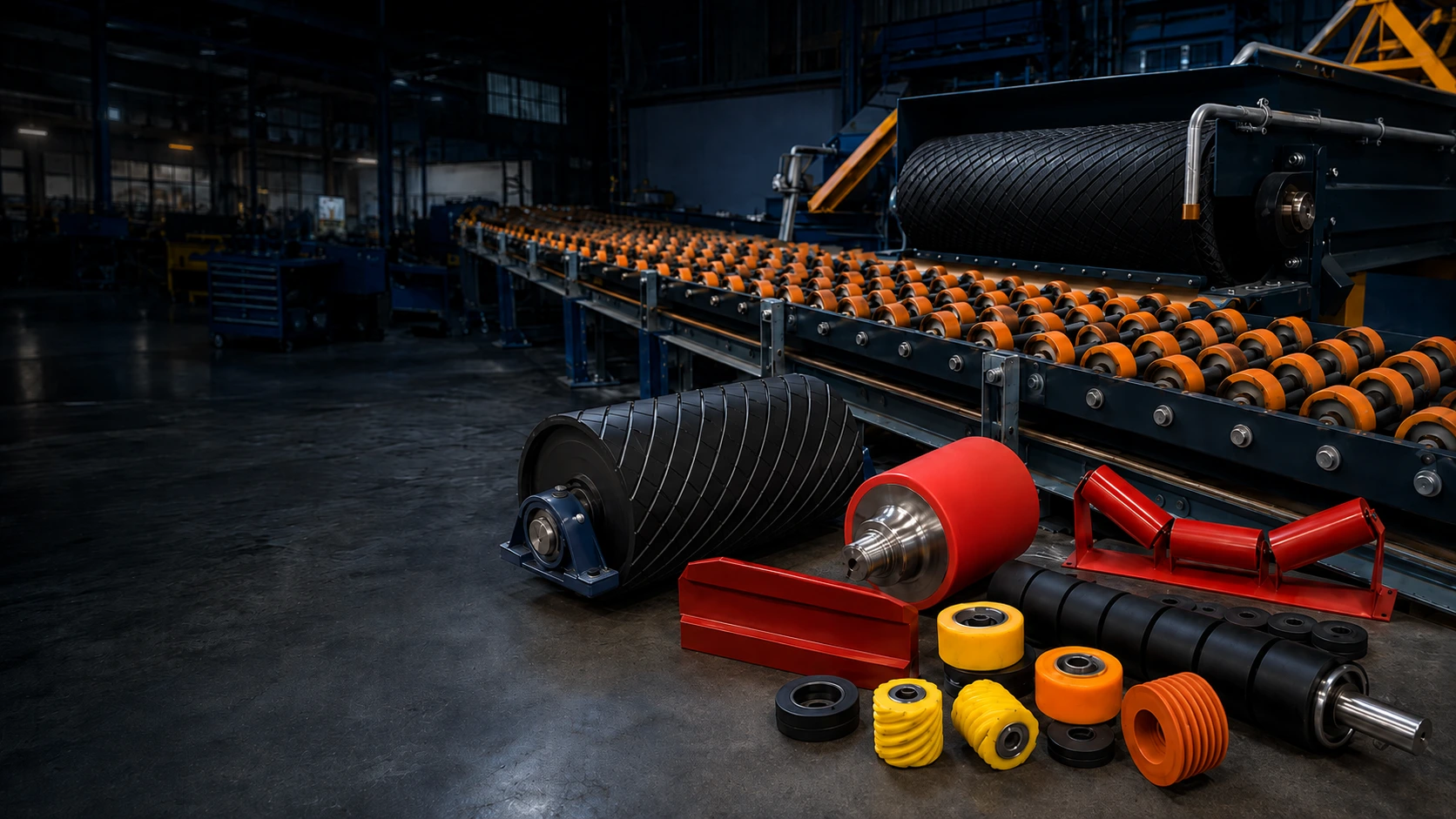
Ligne de convoyeur : rouleaux porteurs en polyuréthane orange, tambour rainuré et galets et pièces d'usure PU
Industries · Convoyeurs & manutention

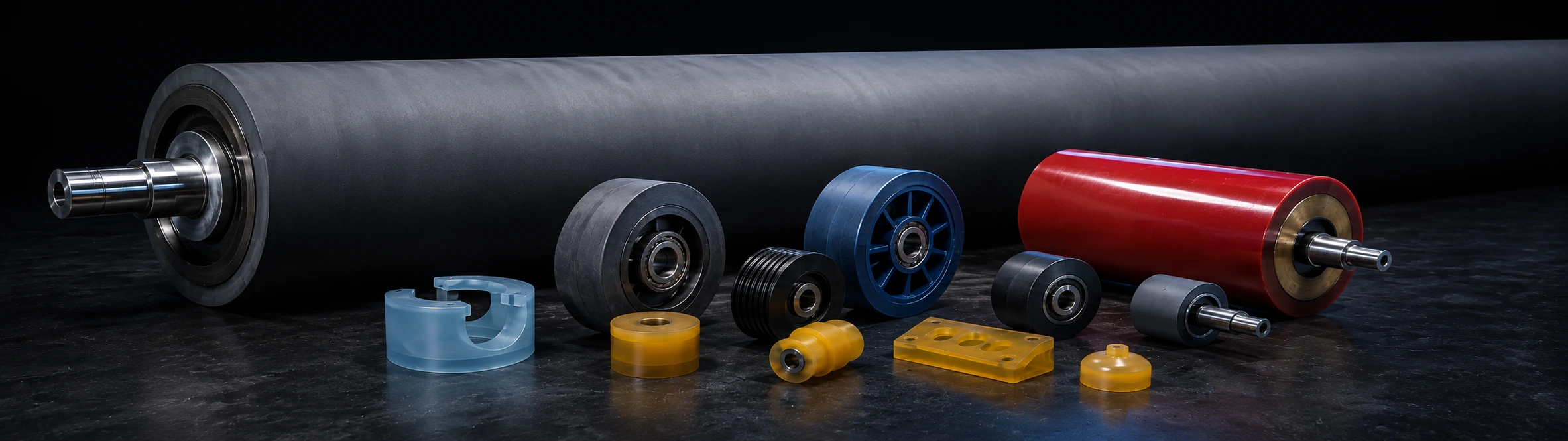
Rollers, wheels and molded parts for conveyors & material handling

Slipping, jams, boxes turning, parcels sliding, belts drifting, rollers vibrating, wear at the ends, build-up… A “small” conveying problem quickly becomes a big cost. We keep your lines predictable.

In a conveying system, a “small” problem quickly gets expensive

Slipping, stoppages, jams, boxes turning, parcels sliding, belts drifting, cartons snagging, rollers vibrating, wear at the ends, build-up, abrasion… and the throughput is no longer stable.

At Soremag, we build and refurbish covered rollers (rubber, polyurethane, silicone), and polyurethane wheels and cast polyurethane parts so your conveyors stay predictable: controlled traction, stability, matched surfaces, correct geometry and mechanical components within tolerance.

The segments we serve

Common examples — describe what the roller or the part does and where it sits on the line, and we'll figure it out.

Distribution

Distribution centers & warehouses

E-commerce, parcels, sorting, shipping.

Usine

In-plant material handling

Packaging, paper/board, wood, metal, plastics.

Flux

Palletizing, transfer, sorting

Accumulation, transfer and sortation lines.

Traction

Incline / friction conveyors

Traction and hold-back zones.

Abrasif

Abrasive environments

Cardboard dust, particles, chips, recycling.

Nettoyage

Wet environments / frequent washdown

Chemical/cleaner compatibility depending on the sector.

Typical applications where our solutions make a real difference

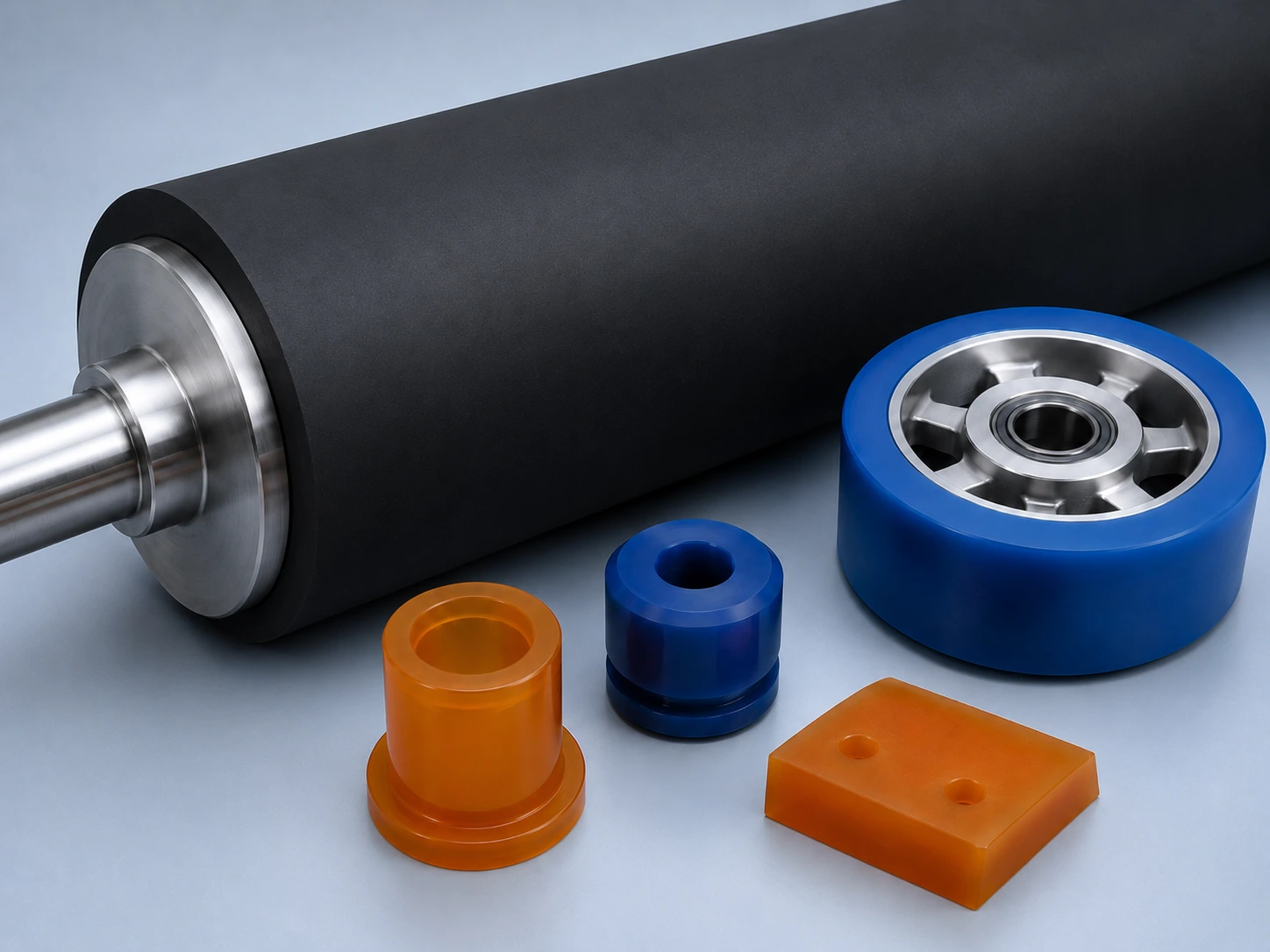
The rollers, wheels and parts you find in conveying

Each function has its own compound, hardness, profile, surface finish and tolerances.

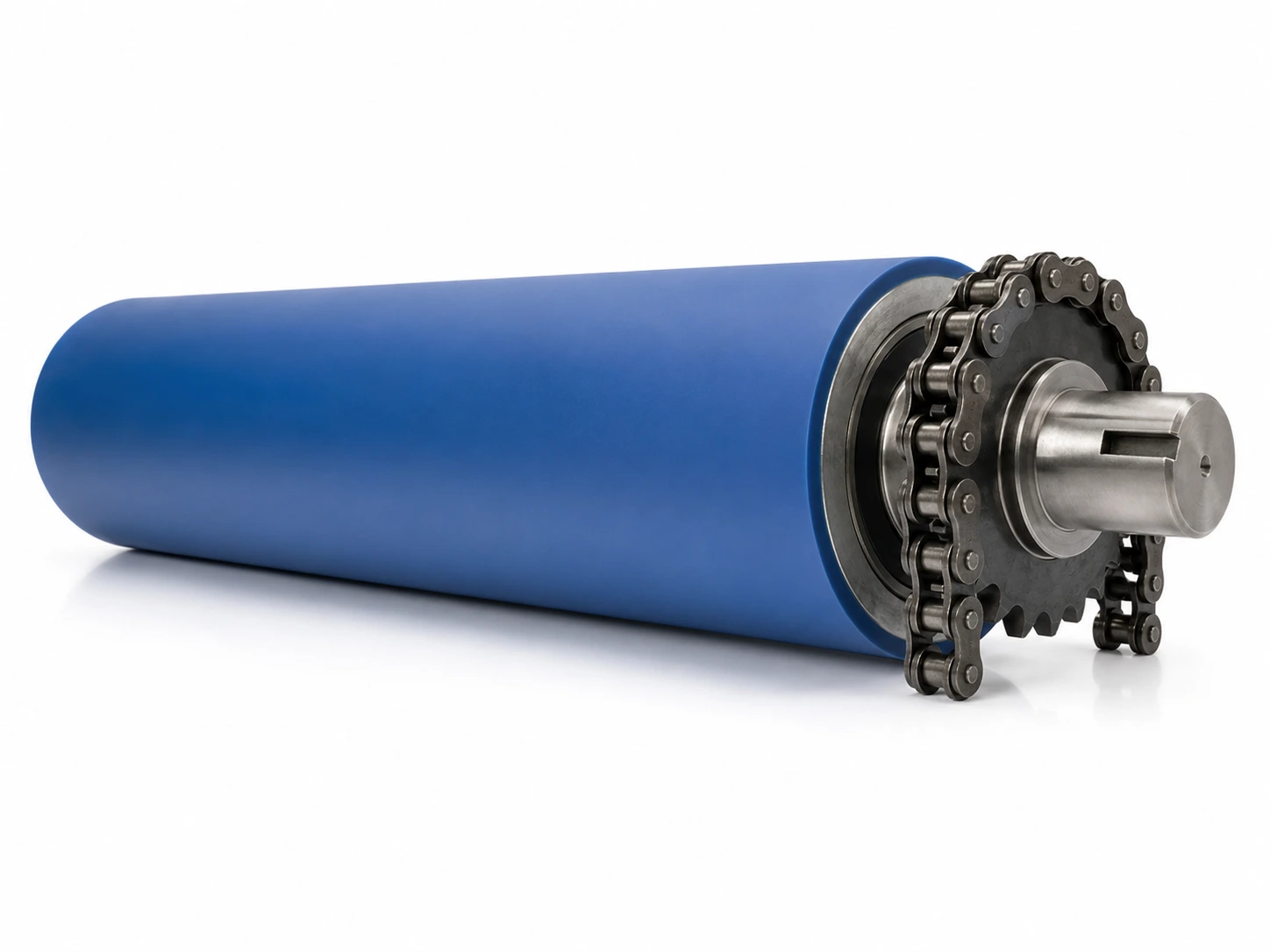
Drive rollers (drive rollers)

Traction, abrasion resistance, controlled surface. Typical hardness ~70-85 Shore A.

Idler rollers (idler / support)

Stability, reduced vibration, long service life.

Pressure rollers (nip / pinch)

Uniform pressure, matched surface. Typical hardness ~40-60 Shore A.

Tapered curve rollers / angled guide rollers

Path control, transfer through curves and product stability depending on the conveyor layout.

Transfer rollers

Surfaces non-marking, reduced snagging.

Sleeves (sleeves)

Simplified maintenance, fast replacement.

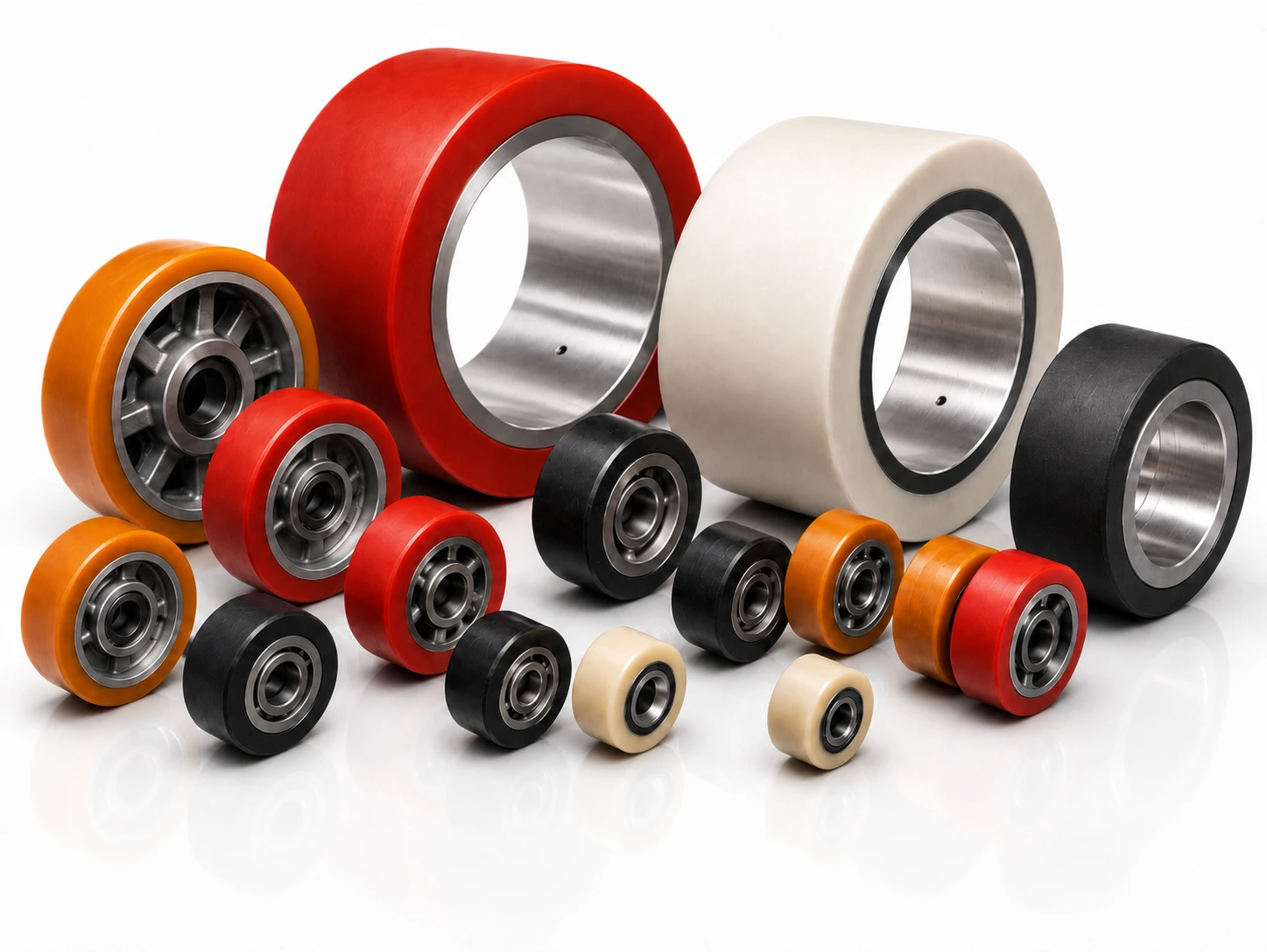
Drive & conveying wheels

Stable traction, wear resistance; on a steel or aluminum core — often overmolded onto metal. Load wheels: ~90-95 Shore A / ~60 Shore D.

Guide / stabilizing wheels

Reduced vibration, dimensional consistency, matched hardness.

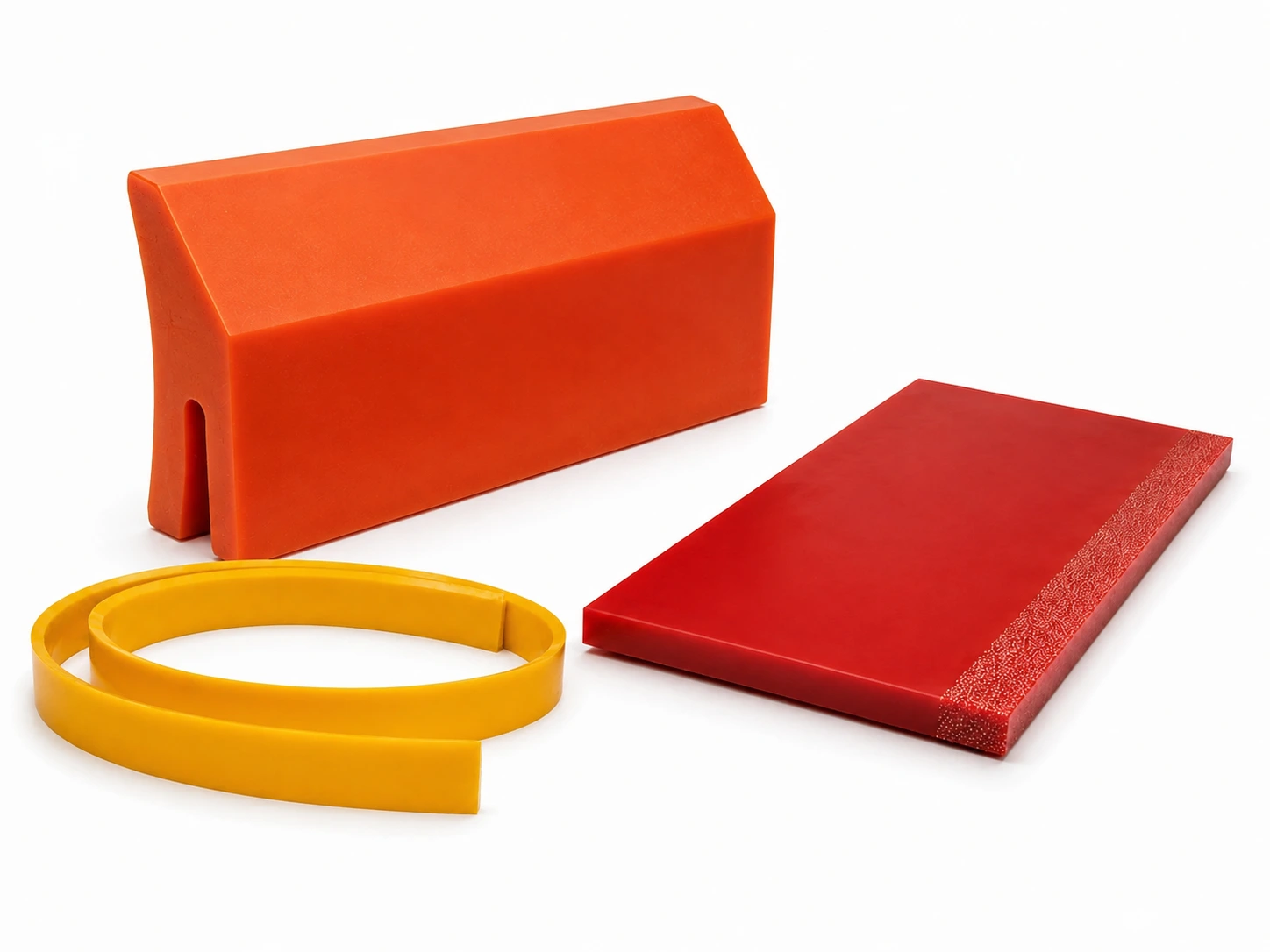
Polyurethane molded wear parts

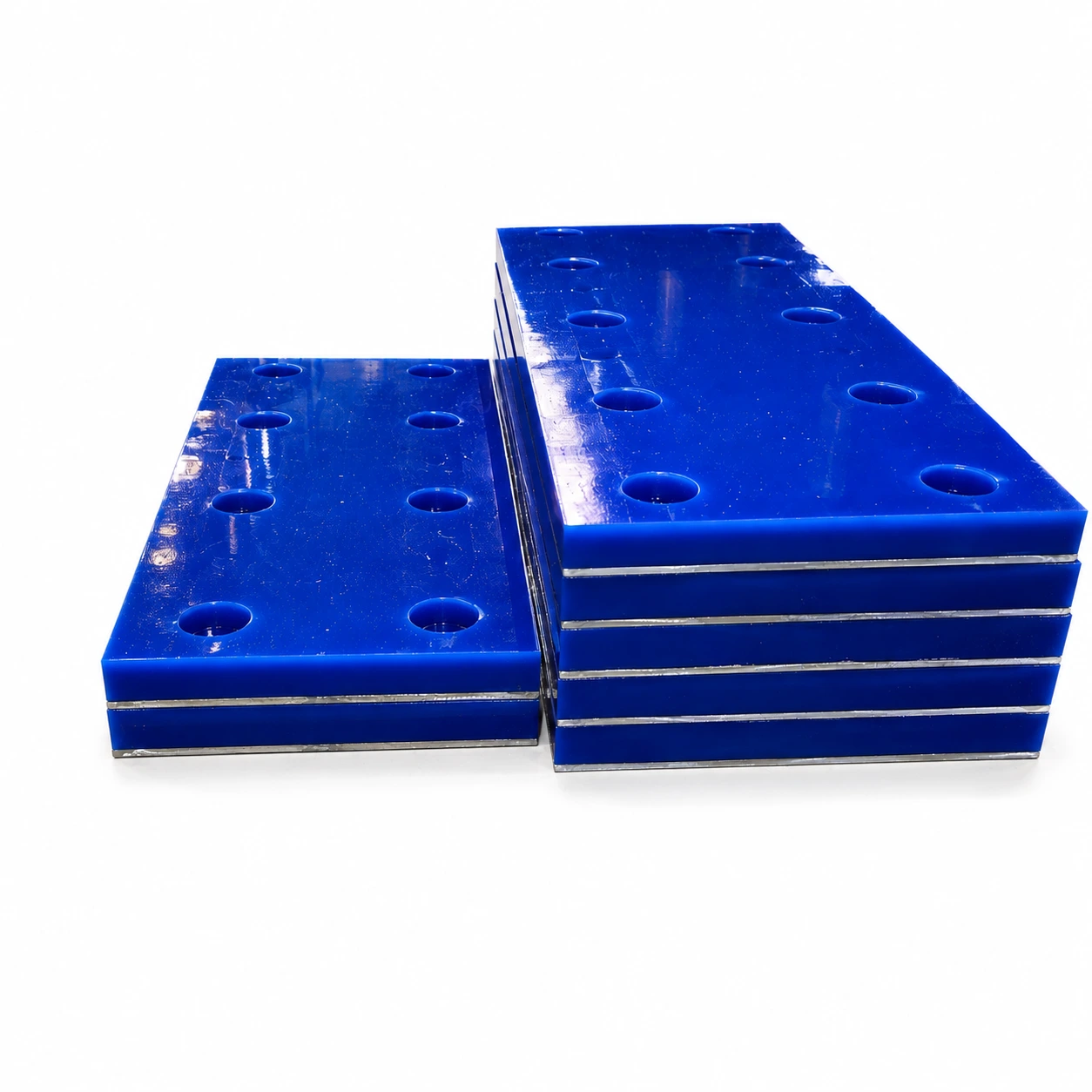
Bumpers, pads, shock absorbers, guides, bushings/spacers — reverse engineering when the OEM part is unavailable.

Anti-impact / anti-vibration blocks

Hardness, resilience, compression set, load and geometry matched to the mounting.

Sélection des matériaux

The right material for abrasion, moisture and grip

Abrasion, contamination, moisture, cleaning, pressure, speed, temperature and the grip you need.

In conveying,

abrasion and traction are what matter
. Two urethanes lead the way, separated by a single factor: moisture. The rest is chosen for the environment.

Polyester urethane

Severe dry abrasion

Very high abrasion and cut resistance.

Sensitive to hydrolysis — heat plus moisture: keep it out of wet service.

Polyether urethane

Water and washdown

More durable against hydrolysis, and long-lived.

The natural relay for the ester as soon as water is involved.

Natural rubberNR

Pure grip, no oil

Unbeatable for resilience, impact and tear strength.

On condition that oils, ozone and UV are kept away.

SBR

Standard handling

Economical, good general abrasion resistance.

Everyday press and conveying rollers.

EPDM

Wet environments and frequent cleaning

Water, steam, dilute acids and bases, ozone.

No oils, no hydrocarbons.

NitrileNBR

Oils and contaminants

Oils, greases and fuels — plus good abrasion resistance.

Less comfortable with ozone and UV.

The abrasion ranking under load

Polyester urethane > polyether urethane > natural rubber (NR) > SBR.
That is the order to remember when wear is the only criterion — but it reverses the moment water enters the picture.

Antistatic and dissipative
compounds (dust, corrugated, film) and
FDA grades
are available depending on the application. Durometer figures are indicative, confirmed case by case.

Problem observed → possible fix

To be validated on your application.

Symptôme en usinePiste de solution fréquente (Soremag)
Glissement / manque de tractionFormulation + dureté + surface (Ra) + revue nettoyage/contamination.
Marquage sur produitComposé non-marquant à charges blanches (silice), sans noir de carbone ni huiles exsudantes + dureté + fini adaptés (le marquage est souvent chimique, pas juste une question de rugosité).
Usure prématurée (abrasion)Polyuréthane spécialisé ou caoutchouc haute résistance selon l'abrasif.
Dépôts / encrassementMatériau plus compatible + surface adaptée + méthode de nettoyage.
Usure aux extrémitésVérifier l'alignement, le tracking de la courroie, la largeur produit vs largeur utile, le crown/profil, le parallélisme, la charge aux rives, les dépôts et l'état des portées. Solution d'usinage fréquente : un chanfrein de dégagement / dépouille (end relief) aux extrémités.
Vibration / battementRectification, concentricité (TIR), équilibrage si requis, état des portées.
Accrochage / bourrages en transfertSurface + géométrie + correction mécanique des zones de transfert.
ADN Soremag

The solution isn't just “change the material”. Very often, it's the right combination:

hardness + finish (Ra) + geometry + mechanics
— and sometimes dual hardness depending on the application.

What we measure and validate:
hardness (Shore A / D), surface finish (Ra), runout (TIR), cylindricity, profile / crown, dynamic balancing, condition of the journals, and chemical compatibility (swelling, hardness and surface testing on a sample).

Common symptoms (and what we check first)

Click a category.

Traction and stability +

Slipping:
contamination, hardness, surface, actual pressure.
Traction too aggressive:
marking → adjust hardness/surface/formulation.
Drift / unstable guiding:
alignment + geometry + mechanical condition.

Surface, build-up, contamination +

Build-up that accumulates:
material compatibility + surface + cleaning.
“Glazed” surface:
unsuitable finish / contamination / aging.
Snagging:
surface too aggressive, local defect, geometry.

Wear and damage +

Abrasion:
material, hardness, dust/particles, pressure.
Cuts / gouges:
formulation + hardness + protection + process review.
Debonding:
preparation, bonding agent, chemistry, overheating, cycles.

Vibration and dimensions +

Chatter (TIR):
precision grinding, journals, concentricity, balancing if required.
Variations:
localized wear, wear or deflection of the core and of the bearing journals, alignment, load.

The full “problem → diagnosis → solution” approach → Roller & Wheel Diagnostics

Our approach (structured: diagnosis, technical selection, targeted testing when the risk justifies it)

We usually start with a call, an email or a Zoom to understand the application before driving out. Depending on the case, we ask for photos/video, parameters (speed, load, pressure), cleaning method, downtime history and sometimes a sample part.

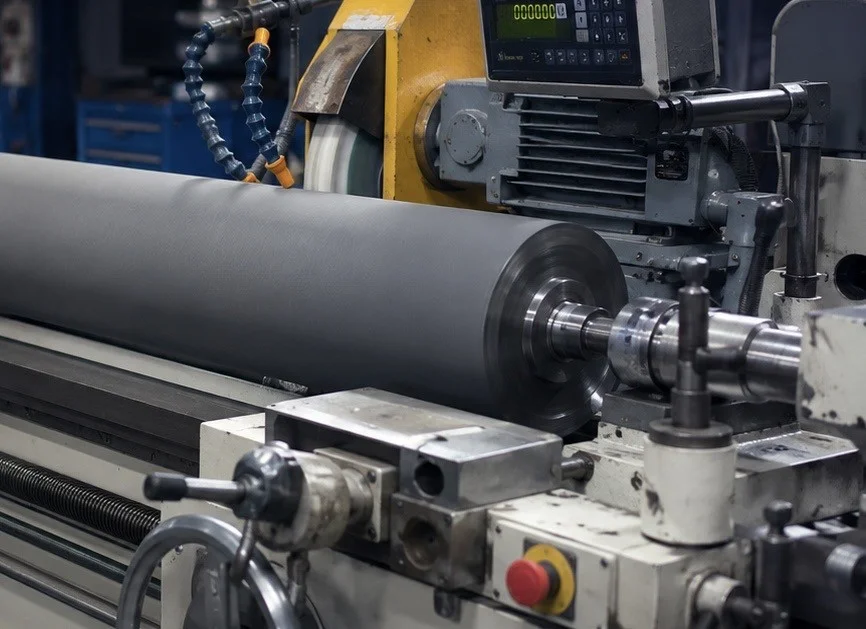
Then we step in at the right level: resurfacing / precision grinding / grooving, complete recovering, mechanical repair (cores, shafts, journals), or reverse engineering when the OEM part is no longer available. Need a fast fix? See emergency & logistics.

Equipment and brands we see often

Even if your line goes by another name, describe the function: we'll figure it out.

Integrators / conveyors: Hytrol, Dorner, Dematic, TGW, Honeywell Intelligrated. Rollers, MDR & drum motors: Interroll, Itoh Denki, Van der Graaf. Rubber-lagged drums and pulleys for modular belts: Intralox, Habasit, Rexnord.

HytrolInterrollDornerFlexLinkDematicHoneywell IntelligratedTGWItoh Denki (MDR)Van der GraafRexnordHabasitIntralox

Motorized drive rollers (MDR):
we first assess the construction, the allowable diameter, the presence of a sleeve, the motor heat and the OEM constraints before recommending a cover, a sleeve or a replacement.

Brands listed for reference only; Soremag is not affiliated with any of these manufacturers.

Frequently asked questions — conveyors & material handling

Is it better to buy OEM or to have the part refurbished? +

In many cases, refurbishing is faster or more economical than OEM, especially if the metal body is salvageable and the geometry can be improved. Above all, we can

improve
material, hardness, surface and geometry instead of reproducing a standard.

Why does the wear happen at the ends? +

Alignment, working width vs the product being carried, load, geometry. We check whether a profile or alignment correction is needed.

Does the Ra (surface roughness) really matter? +

Yes, but it isn't “rougher = more grip”. On a clean, dry surface (plastic totes, glossy cardboard), a

smooth
finish and a lower hardness maximize contact adhesion. Roughness or grooving mainly serve to
break a film
of water or oil and to clear dust. So we look at the Ra
and
the Rz, the type of grinding/grooving, the actual pressure, the speed and the contamination.

Resurfacing instead of a complete recovering, is that possible? +

Yes if the cover is sound and the tolerances allow it. Otherwise, we strip and recover from scratch.

Do you do custom grooving? +

Yes. grooving can help traction, air release, contamination evacuation and stability depending on the application. Common patterns: longitudinal, spiral/helical, herringbone, diamond, evacuation/venting grooves and traction grooves.

My bearing journals are damaged: do I have to scrap the roller? +

No. We can often repair, build up and remachine the journals to bring them back into tolerance before covering.

Can the build-up that fouls the rollers be reduced? +

Often yes: material choice, surface and cleaning method. Some formulations and finishes clean up much better.

Can you remake a part if the OEM lead time is too long? +

Yes. Reverse Engineering and improvement of the material or the geometry to match your actual use.

How do you choose the right material without guessing? +

We start from the actual parameters (abrasion, contamination, cleaning, speed, pressure, temperature), then we choose a formulation validated against your context.

A conveyor roller is slipping: where do you start? +

We first check the contamination (oil, dust, glazing), the actual pressure, the hardness and the finish (Ra/Rz). The solution is often a combination of formulation + surface + cleaning — not just “change the material”.

Do you cover motorized drive rollers (MDR)? +

We assess every MDR (Itoh Denki, Interroll…) first: an MDR cannot go in the oven without destroying the motor. Depending on the construction, we steer toward a sleeve/jacket, a cold process or a replacement, taking into account the diameter, the heat and the OEM constraints.

Are your conveyors slipping, marking, vibrating or wearing out too fast?

Talk to a Soremag expert: we help you pin down the most solid option, quickly.

➔ Talk to a technical expert