Covering & manufacturing · rubber and polyurethane · Quebec450 664-4000·1 800 361-5588·EN|FR
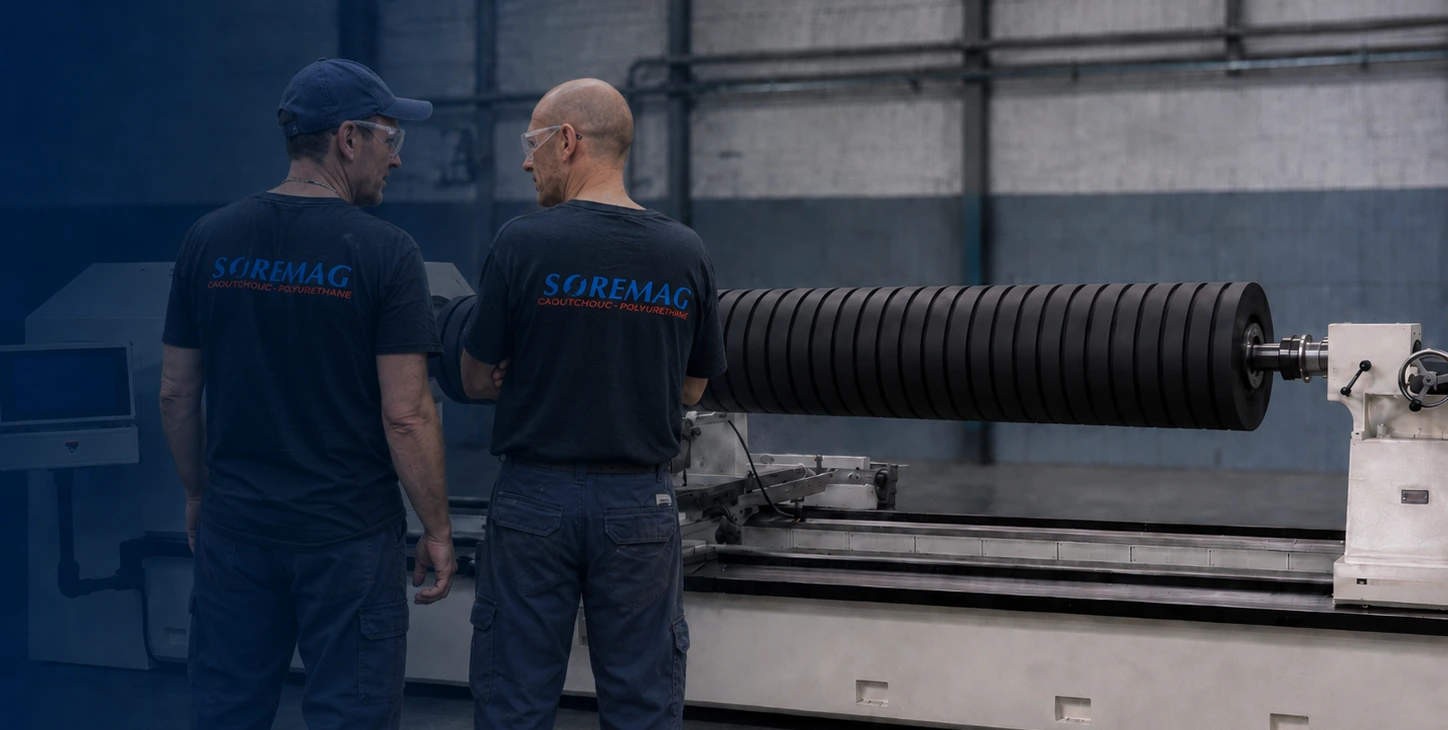
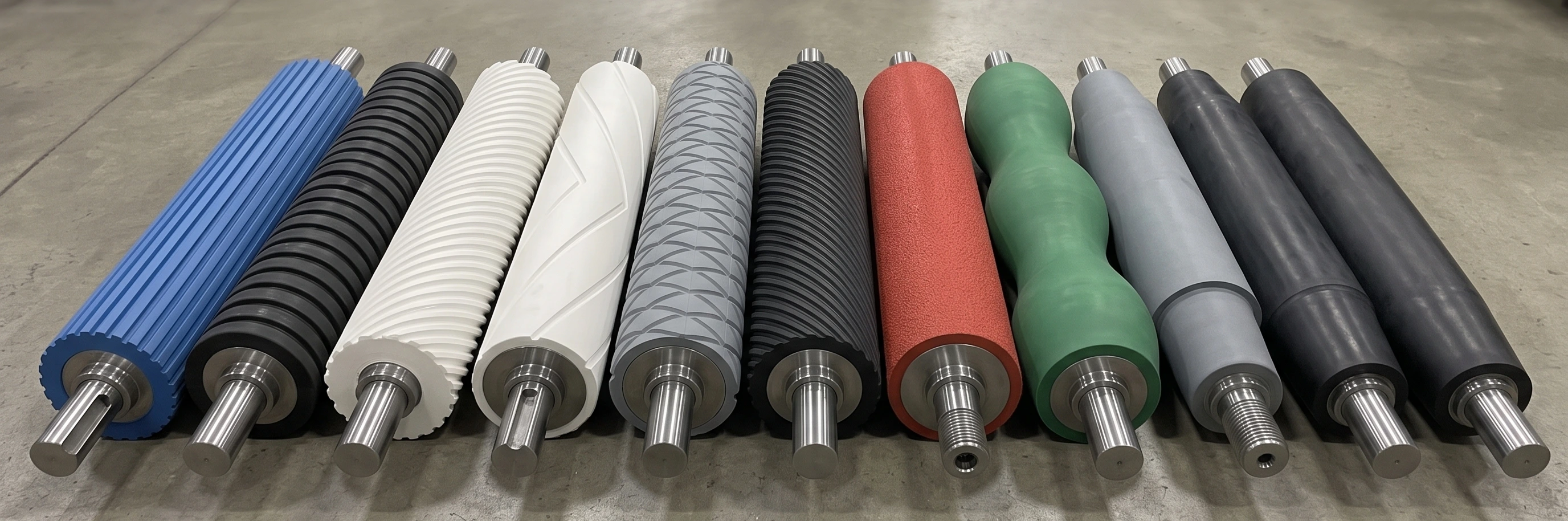
Rouleau recouvert de caoutchouc rainuré (motifs hélicoïdal et diamant) — grooved rubber roller, rainurage CNC Soremag
Services · Rainurage

Roller grooving: the right pattern for the right function

A groove is never decorative. It is a functional geometry that controls the contact, the available void volume, the temperature, fluid evacuation and web stability. We choose the pattern — and its ratio, its angle and its root — based on what your roller actually has to do.

Soremag, the expert in grooved rubber and polyurethane rollers in Quebec for more than 35 years

Five things a groove really changes

At the contact point (the nip), a groove changes the

actual contact
(it reduces the land area), creates an
escape volume
(to evacuate air, water, glue, ink, oil, dust or steam), gives the covering a
compression volume
without heat build-up, directs a
force
(spiral, chevron and diamond can push material toward the sides, toward the center or steady the tracking) and helps pull fluid and dust out of the contact to keep the
temperature and cleanliness in check
.

Result: you do not choose a groove by its name, but by the

actual function
of the roller — drive, press, squeeze, meter, spread, cool or evacuate air. We cover in rubber or polyurethane, then we groove on CNC with documented groove depth, groove pitch, angle and radius.

The groove patterns in pictures

Our main groove profiles, CNC machined into the rubber or polyurethane covering.

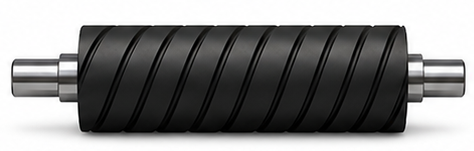
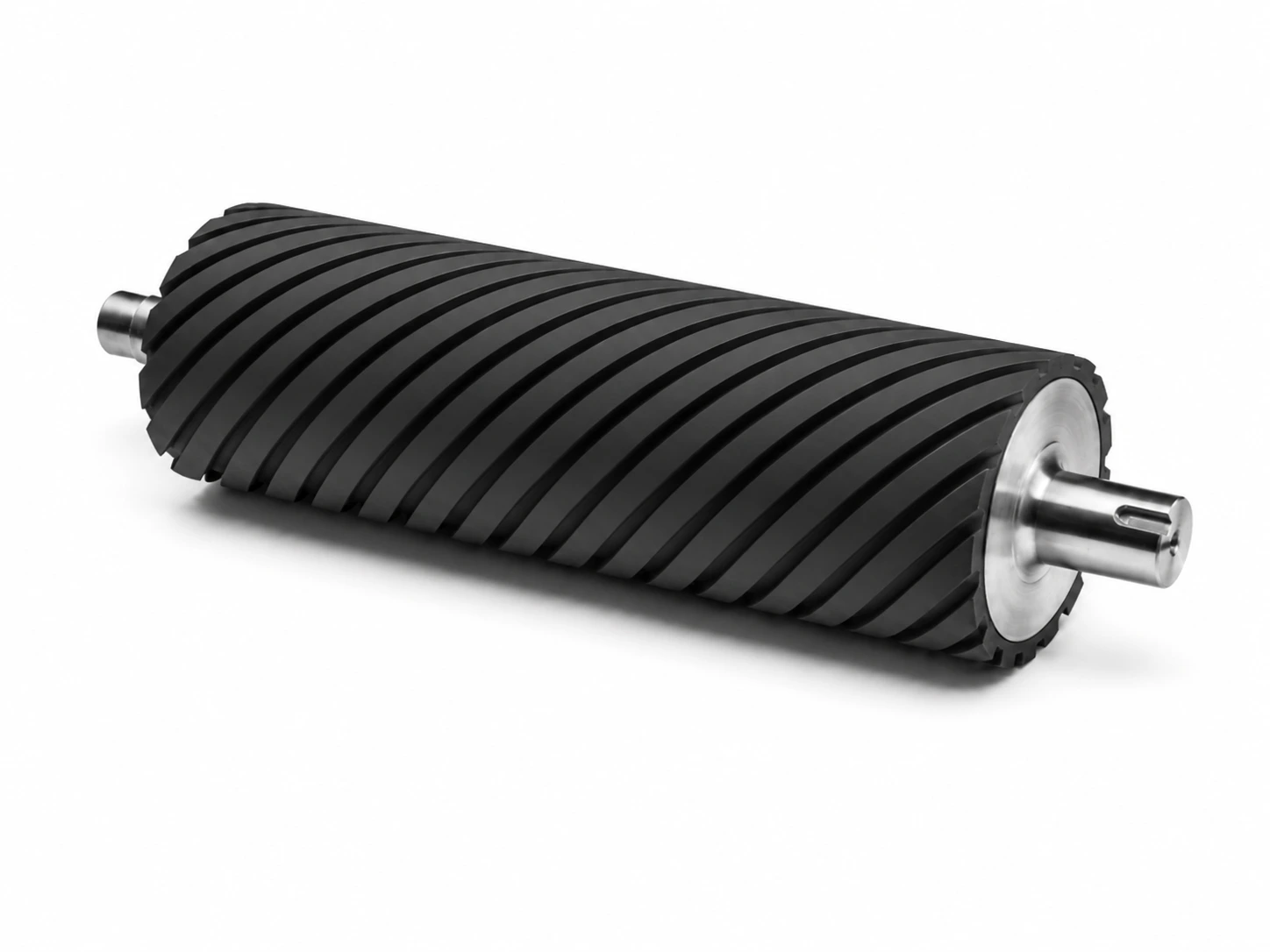
Rouleau recouvert de caoutchouc à rainure spirale (hélicoïdale) — spiral / helical grooved rubber roller — Soremag, Québec
Spirale spiral / helical
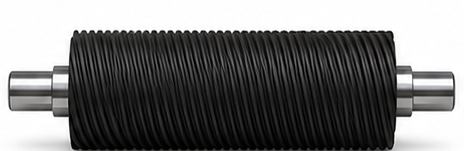
Rouleau à rainure hélicoïdale fine, pas serré — fine / close-pitch helical grooved roller — Soremag, Québec
Hélicoïdale fine fine helical
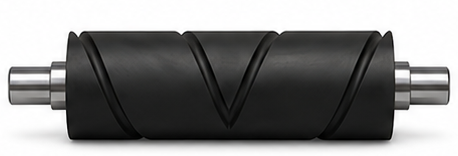
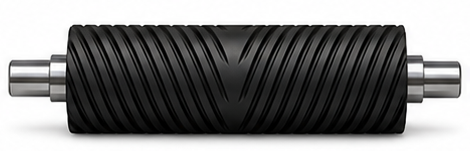
Rouleau à rainure chevron en V — chevron grooved rubber roller — Soremag, Québec
Chevron chevron
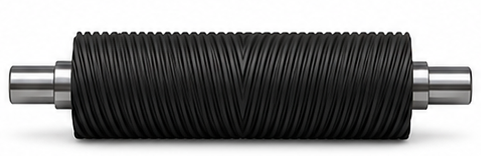
Rouleau à rainure en arête de poisson — herringbone grooved roller — Soremag, Québec
Arête de poisson herringbone
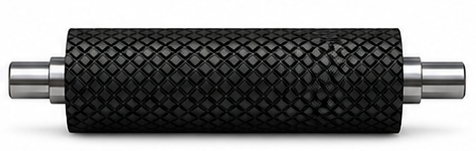
Rouleau à rainure diamant / quadrillé — diamond grooved rubber roller — Soremag, Québec
Diamant diamond / serrated
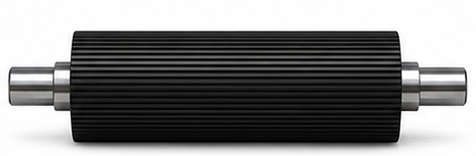
Rouleau à rainures longitudinales (axiales) — ruling / axial grooved roller — Soremag, Québec
Longitudinale ruling / axial
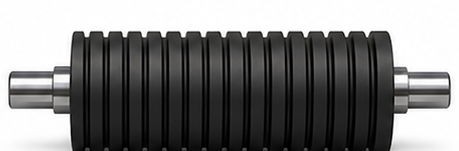
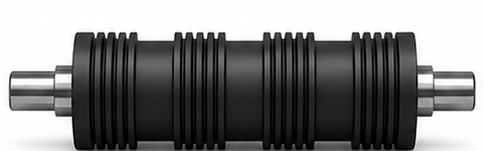
Rouleau à rainures circonférentielles (anneaux) — circumferential / ring grooved roller — Soremag, Québec
Circonférentielle circumferential
Rouleau à rainure filetée (pas de vis) — screw-thread grooved roller — Soremag, Québec
Filetée screw-thread
Rouleau à rainures étagées — step and plunge grooved roller — Soremag, Québec
Étagé step & plunge

Pattern nomenclature

Each pattern solves a specific problem — here is when to use it and the risk if it is chosen wrong.

MotifEffet principalÀ utiliser quandRisque si mal choisi
Axiale / longitudinaleÉvacuation rapide au nip, grip agressifPoussière, eau, traction, rouleaux de feedMarquage, vibration, bruit
CirconférentielleRéserve de fluide / de déformationTextile, essorage, certains presseursRetient la saleté si mal nettoyée
Spirale / hélicoïdaleÉvacuation continue, refroidissement, traction douceSableuse, laminage, web handling, airForce latérale non désirée
Double spirale inverséeDéfroissage vers les bords ou le centreFilm, papier, textile, refendeuseMauvais sens = plis aggravés
ChevronÉvacuation directionnelle, grip, anti-aquaplaningEntraîneurs, essoreurs, poulies, webConcentre le liquide si mal orienté
HerringboneComme le chevron, souvent plus progressifTraction, évacuation eau/huile, tensionMauvais angle = tracking instable
Diamant / quadrilléGrip multidirectionnel, brise le film d'huilePinch, bridle, feed, bois brutPeut imprimer un motif, user le produit
Évacuation d'air au nipÉvacuation d'air dans le nipLay-on / rider, laminage, bobinageTrop ouvert = pression non uniforme
Micro-rainureCasse le coussin d'air sans marquerFilm mince, optique, emballage flexibleTrop profond = marque; trop faible = inefficace
Rainure + trous borgnesTrès grand volume vide pour l'eauPresse à papier, tissue, cartonColmatage, shadow marking
Créneaux (castellated)Traction agressive, grand volume videConvoyage lourd, feed difficileBruit, vibration, usure rapide

Important:
for the chevron, the herringbone and the double spiral, the evacuation direction (toward the edges or toward the center) depends on the orientation of the pattern and on the
direction of rotation
— we always confirm it before machining.

Where you find grooved rollers and wheels

The same pattern does not work everywhere — and that holds as much for

rollers
as for
wheels
. Here are the uses by industry.

SecteurRouleau / roue & fonctionMotif typique
Bois & panneauxRoue de contact de sableuse (refroidir, évacuer la poussière); rouleau de pression / hold-down; roue & rouleau d'entraînementSpirale; diamant / herringbone léger
Papier / cartonRouleau presseur (drainer l'eau au nip); rider/lay-on (densité d'enroulement, air)Rainuré + trous borgnes; évacuation d'air au nip
Film & convertingSpreader anti-plis; lay-on; laminage (évacuer l'air)Double spirale / chevron; micro-rainure
Carton onduléPull/traction sans écraser la cannelure; feed d'imprimeuseDiamant / axial profond / herringbone
Acier & métauxWringer/squeegee (essorer acide/eau); bridle (tension, casser le film d'huile)Chevron / herringbone / spiral; diamant
Textile & non-tisséFoulard/padder (essorage); guide/spreader (ouvrir le tissu)Circonférentielle / spiral fine; chevron / double spirale

What about wheels?
Many of these functions also exist on
wheels
— sander contact wheel, drive wheel, idler wheel or guide wheel — grooved on the same logic (spiral to cool and evacuate, diamond for grip, circumferential to drain). We cover them and groove them the same way we do rollers.

See also the pages Wood, Pulp & Paper, Packaging, Film & Extrusion, Corrugated, Steel & metals and Textiles.

Designing the right groove

The pattern is only part of it: the ratio, the angle and the root matter just as much.

ParamètreCe qu'il change
Ratio plein / vide80/20 : nip haute pression, laminage, peu de fluide. 60/40 : traction générale. 50/50 : essorage, poussière, colle, air (plus agressif). 40/60 : évacuation massive, mais pression moins uniforme et risque de marquage.
Angle de rainureFaible (par rapport à l'axe) = directionnel, pousse le fluide ou la bande latéralement; élevé = contact plus continu, moins agressif, souvent meilleur à haute vitesse. On précise toujours si l'angle est mesuré par rapport à l'axe ou à la circonférence.
Rayon au fondLe fond ne doit jamais être coupant : un rayon réduit l'amorce de fissure, l'arrachement du recouvrement, la chaleur, la déchirure et le colmatage.
Rainure + crownOn rainure après le crown, en suivant le profil réel — sinon la profondeur varie d'un bout à l'autre et le rouleau tire de côté.

Our grooving capacity

We groove on

CNC up to 42 in. diameter × 240 in. length (20 ft.)
, and
conventionally up to Ø 68 in. × 175 in. or Ø 76 in. × 36 in.
. Patterns reproduced faithfully or developed for your application.

Aussi au menu

We grind and profile too.

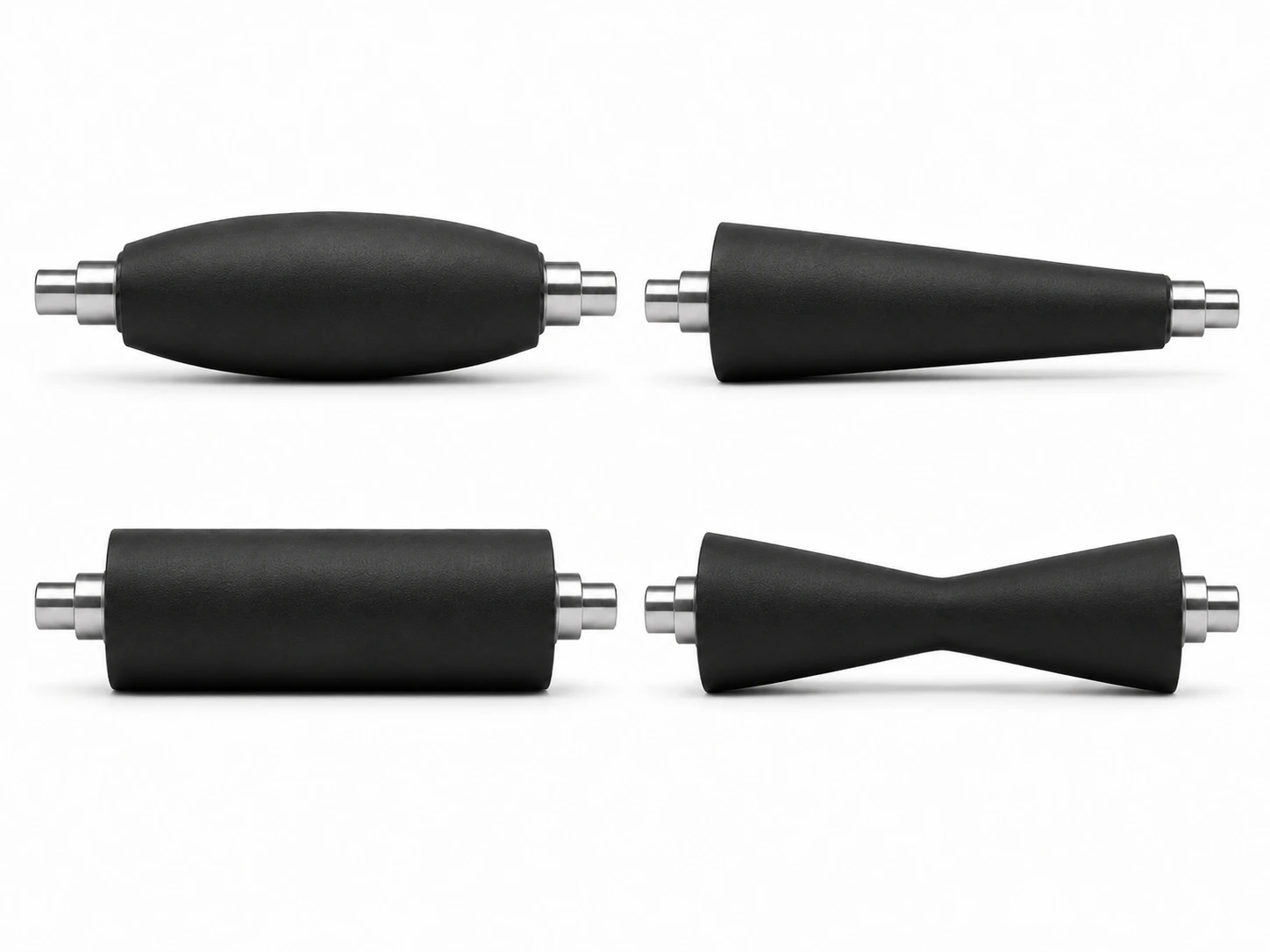
Cylindrical, crown, taper, double taper… The

right geometry
before — or without — grooving: diameter, runout (TIR) and surface finish, tolerances down to the thousandth of an inch (±0.001 in.).

See grinding & precision grinding →
Profils de meulage de rouleaux — cylindrique (droit), bombé (crown), conique (taper) et double conique intérieur

Symptom → probable cause

Ce que vous observezCause probable (côté rouleau rainuré)
Le produit glisseRainure trop peu ouverte, dureté trop élevée, surface glacée, mauvais matériau
Le produit est marquéRainure trop profonde, pas trop large, arêtes trop vives, pression trop forte
Tracking instableSpirale dans le mauvais sens, crown incorrect, rouleaux non parallèles
VibrationFaux-rond, déséquilibre, motif trop agressif, pas de rainure répétitif
SurchauffeTrop de surface pleine, mauvaise évacuation, matériau trop hystérétique
ColmatageRainures trop fines, fond carré, produit collant, absence de nettoyage
Bulles au laminagePas assez de venting, mauvais wrap angle, vitesse trop élevée

What we document on every grooved roller

  • Material and hardness (Shore / P&J)
  • Finished diameter, face length, crown / taper
  • Pattern, width, groove depth, groove pitch, angle and root radius
  • Intended direction of rotation
  • Runout (TIR) and finish (Ra / Rz if critical)
  • Dynamic balancing if high speed (ISO grade)
  • Target land-to-groove ratio
  • Spec sheet + lot number
Roue / rouleau de contact de sableuse en caoutchouc, rainuré en spirale (hélicoïdale) pour refroidir et évacuer la poussièreRouleau de contact de sableuse →
Roue et rouleau spécialisé

Need a

sander contact roller
(spiral grooved to cool and evacuate dust) or a
pre-stretch roller
for a pallet wrapper (stretch wrapper)? We have dedicated pages — and we can also recut the grooves without recovering when the condition of the covering allows it.

Sander rollers →

At Soremag, we know what you mean

The same grooved roller often goes by several names depending on the plant, the region or the language. Describe it the way you say it in your shop — we know what you are talking about.

  • Diamant = losange, quadrillé, diamond, serrated, moleté
  • Hélicoïdal = spirale, helical, spiral, double hélice, fileté
  • Arête de poisson = herringbone, chevron double, épi
  • Chevron = en V, chevron
  • Étaleur = spreader, anti-plis, défroisseur, banana
  • Circonférentiel = anneaux, ring, threading, « sur le diamètre »
  • Longitudinal = axial, ruling, rainures droites
  • Étagé = step and plunge, à paliers

Not sure of the term? Send us a photo or a sample : we identify the pattern and recommend the right geometry.

Rouleaux industriels rainurés : EPDM, nitrile HNBR, nitrile FDA, polyuréthane, néoprène, SBR, éponge EPDM et bombés

Which material for a grooved roller?

Polyurethane
for abrasion, cutting and load;
rubbers
depending on chemistry, heat and grip: EPDM (hot water, steam, acids/bases), NBR / NBR-PVC (oils), NR / SBR (abrasion, grip), neoprene (all-purpose), silicone (heat, release). The
chemical resistance
depends on concentration, temperature, contact time, cleaning and pressure — never on the generic family alone. Need help? See the material selection guide.

Frequently asked questions

À quoi sert vraiment une rainure sur un rouleau ?+
A groove is not decorative: it reduces the land area in contact, creates volume to evacuate air, water, glue, ink, oil or dust, gives the covering room to compress without heat build-up, directs a force (spiral, chevron, diamond) and keeps the contact point clean and at the right temperature.
Comment choisir le bon motif de rainure ?+
By the roller's actual function in the machine, not by its name. We start from the defect to correct (slippage, wrinkles, air, water, glue, dust), then we choose the pattern, the land-to-groove ratio, the angle, the root and the material. Diamond gives multidirectional traction; the spiral evacuates and cools; the chevron and the herringbone spread the web.
Le chevron pousse-t-il toujours vers les bords ?+
No. The evacuation direction of a chevron, a herringbone or a double spiral depends on the orientation of the pattern and on the roller's direction of rotation — it can push toward the edges or bring material back toward the center. We always confirm the direction before machining.
Pouvez-vous refaire les rainures sans recouvrir à neuf ?+
Often yes: if the remaining thickness and the condition of the covering allow it, we can reprofile or deepen the grooves. If the covering is too thin or too degraded, we recover first, then groove on CNC.
Quelle matière pour un rouleau rainuré ?+
Depending on the application: polyurethane for abrasion, cutting and load; rubbers (NBR, EPDM, NR, neoprene, silicone…) depending on chemistry, heat and grip. Chemical resistance depends on concentration, temperature, contact time and cleaning.
Jusqu'à quelle taille pouvez-vous rainurer un rouleau ?+
On rainure au CNC jusqu'à 42 po de diamètre × 240 po (20 pi) de longueur, et de façon conventionnelle jusqu'à Ø 68 po × 175 po ou Ø 76 po × 36 po. On reproduit fidèlement un motif existant ou on développe une géométrie selon l'application.

A roller that slips, marks or does not evacuate?

Describe the machine, the product, the nip and the defect to correct: we recommend the pattern, the ratio, the angle, the root and the material — then we groove on CNC. Service in Quebec, Ontario and the Maritimes.

➔ Request a technical analysis