Covering & manufacturing · rubber and polyurethane · Quebec450 664-4000·1 800 361-5588·EN|FR
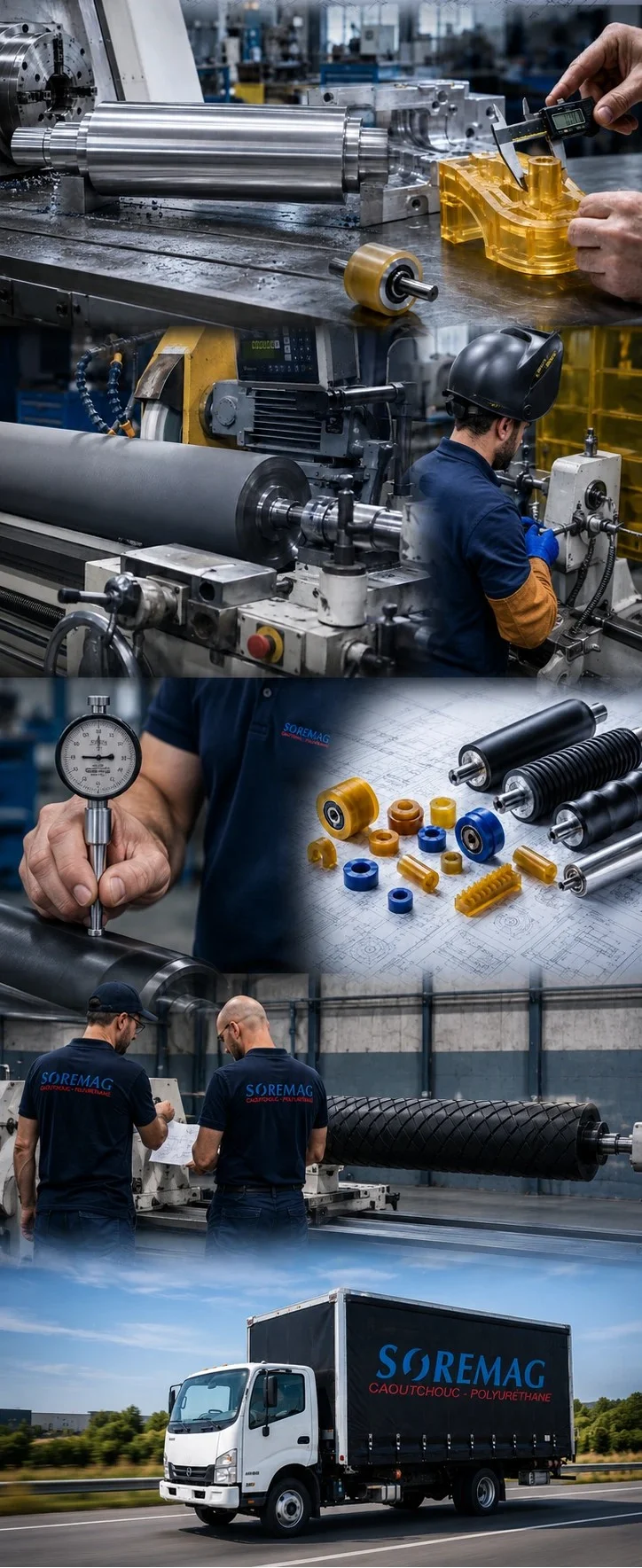
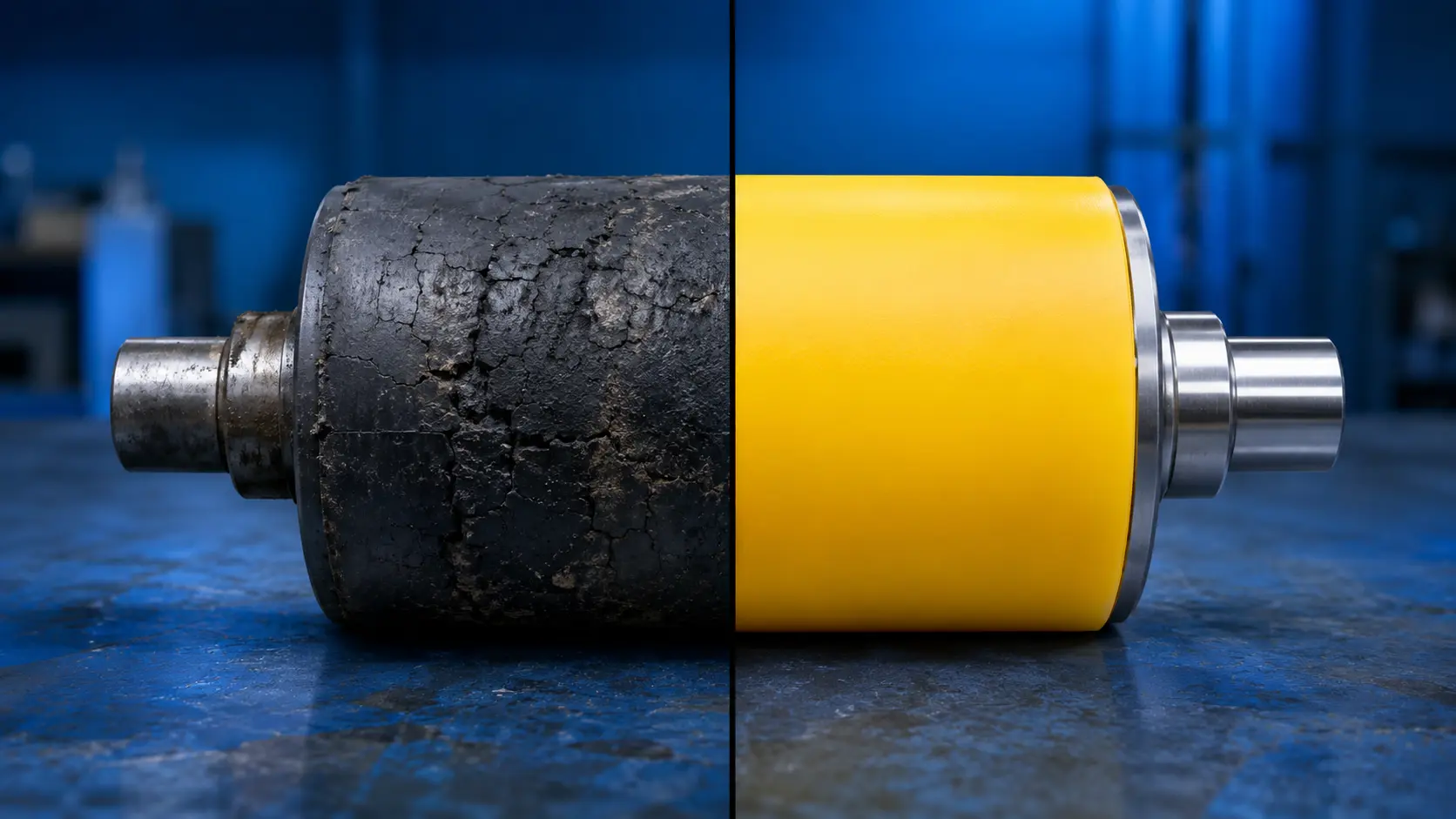
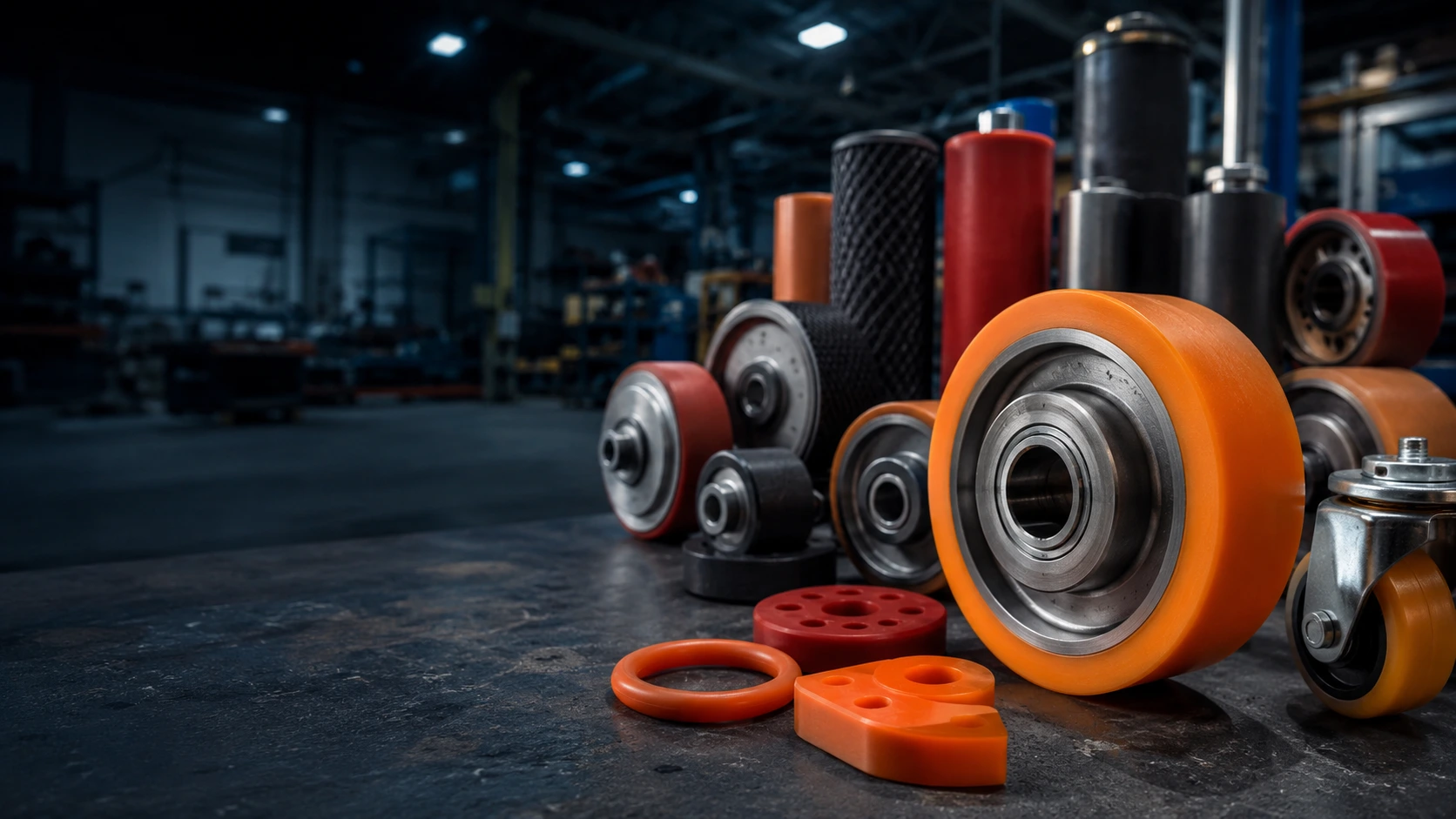
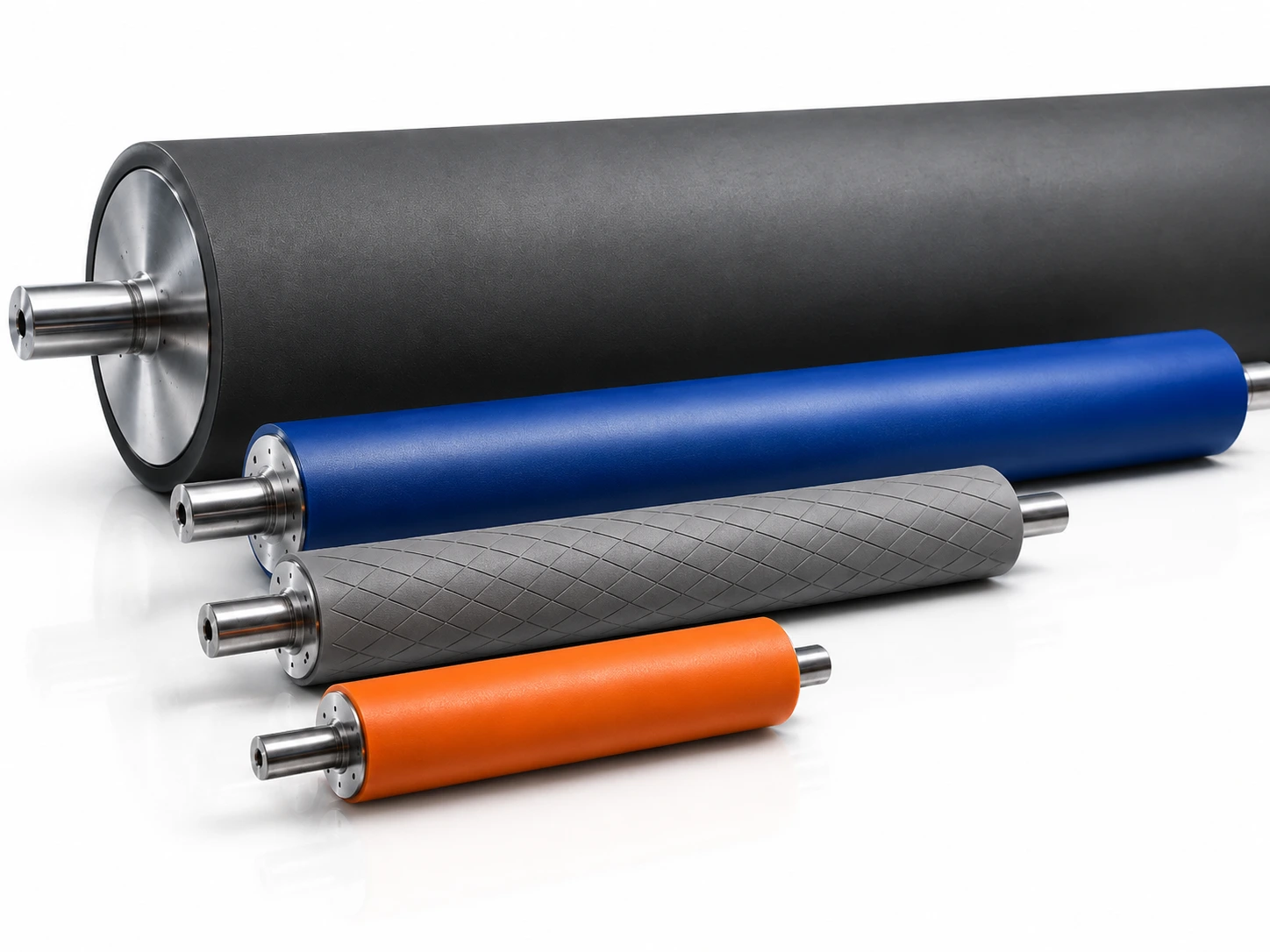
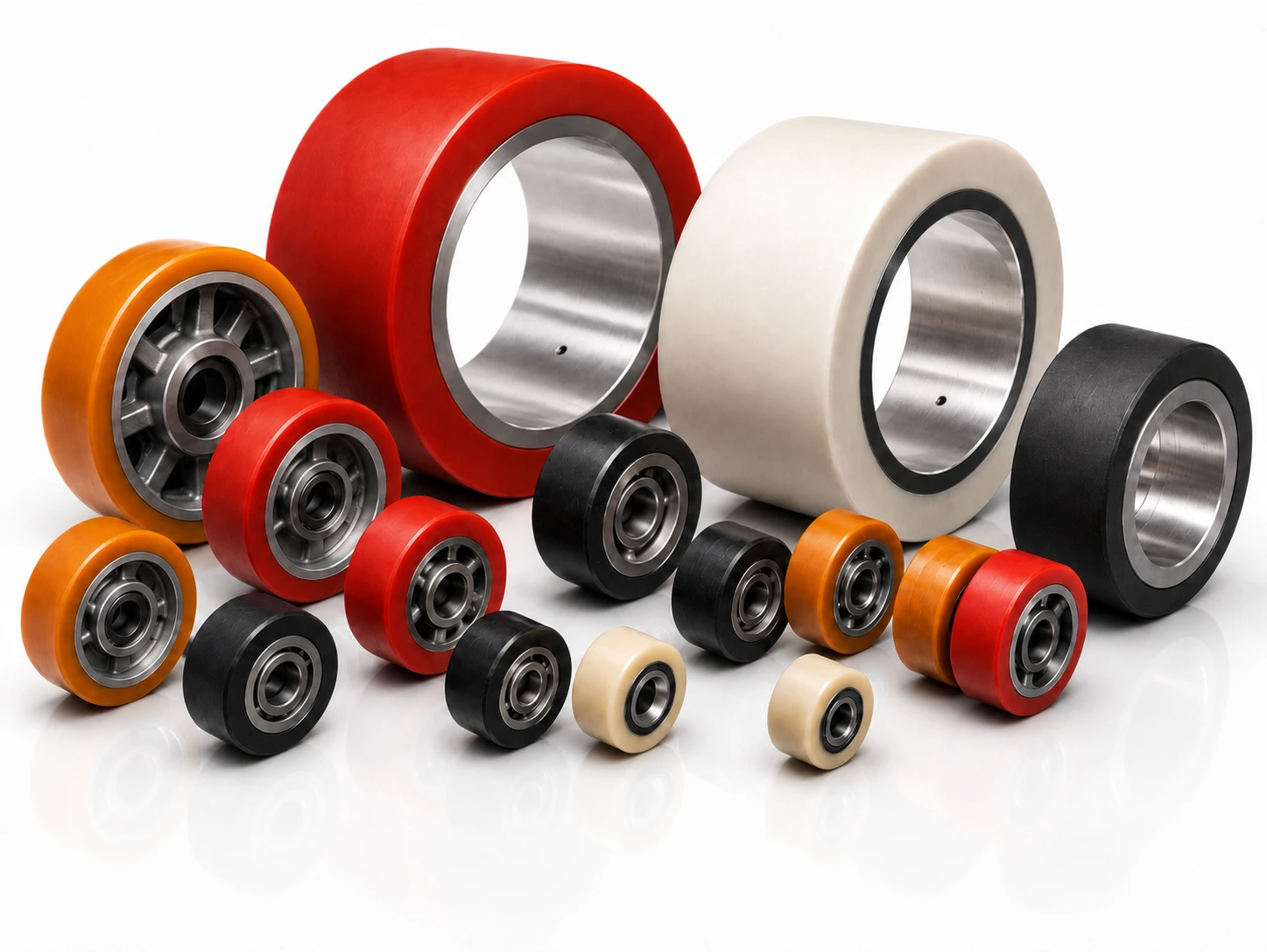
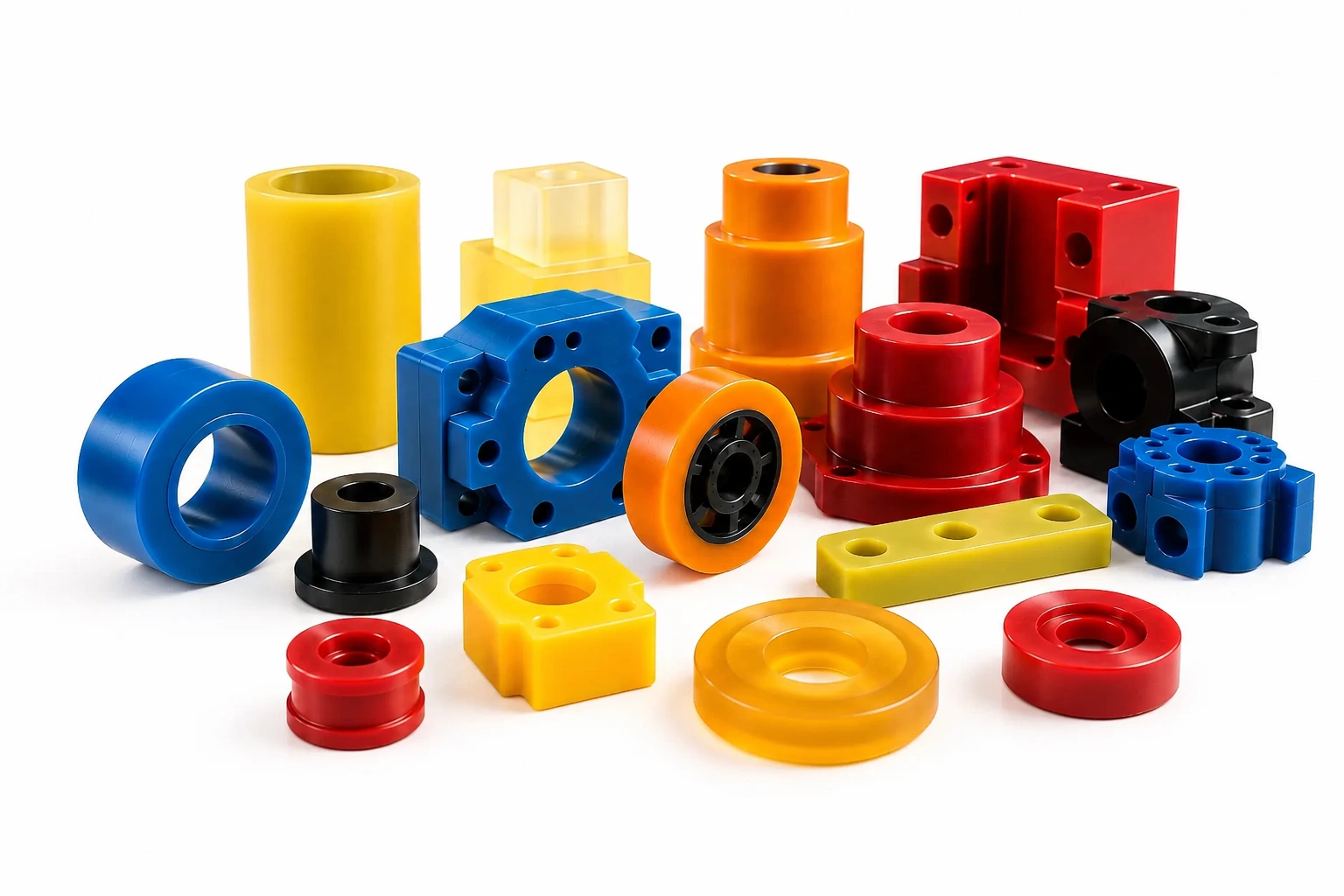
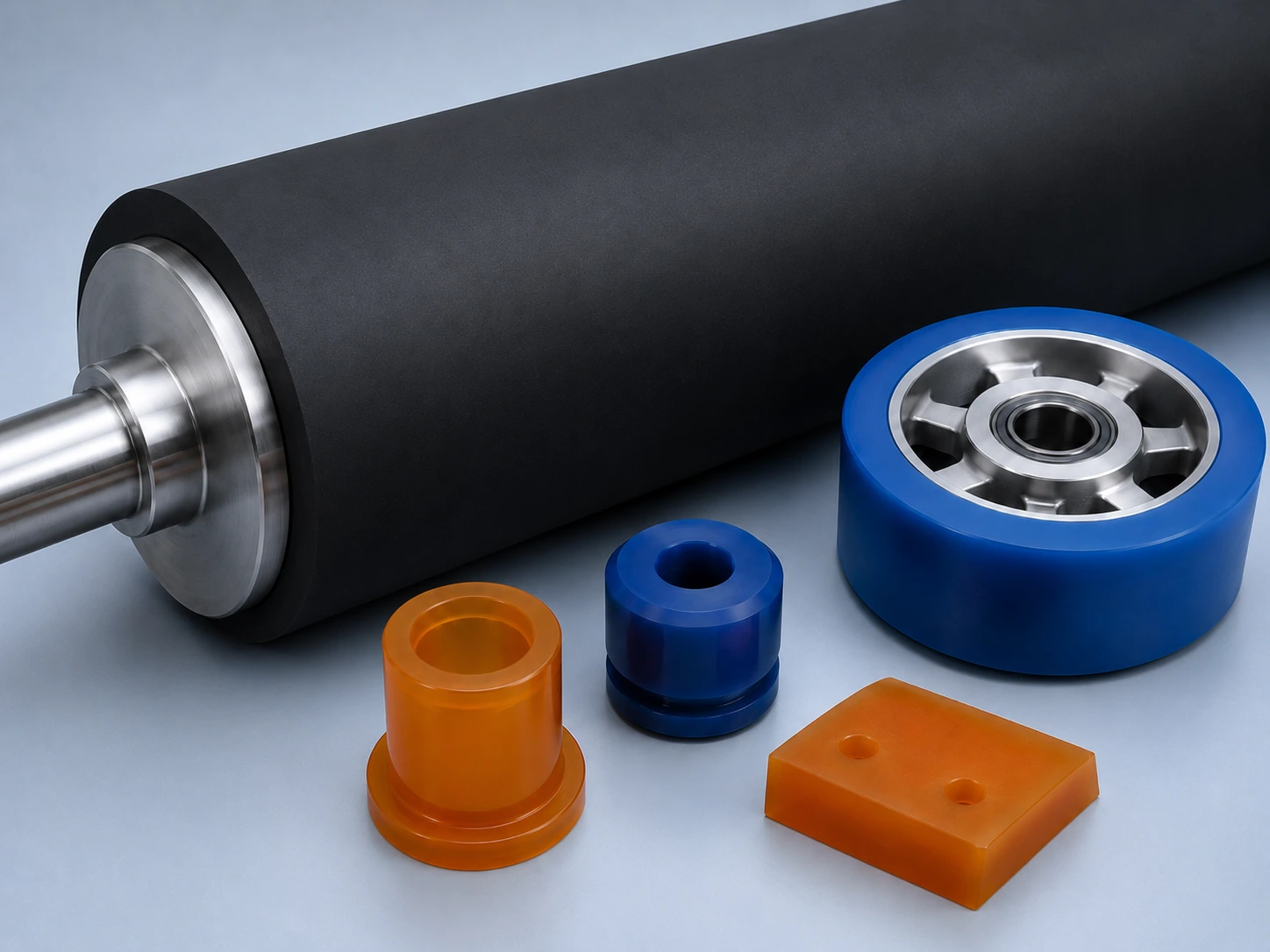
Assortiment de rouleaux recouverts, roues et galets sur mandrins métalliques et pièces moulées en polyuréthane
Industries · Autres industries

The same wear part turns up in dozens of industries

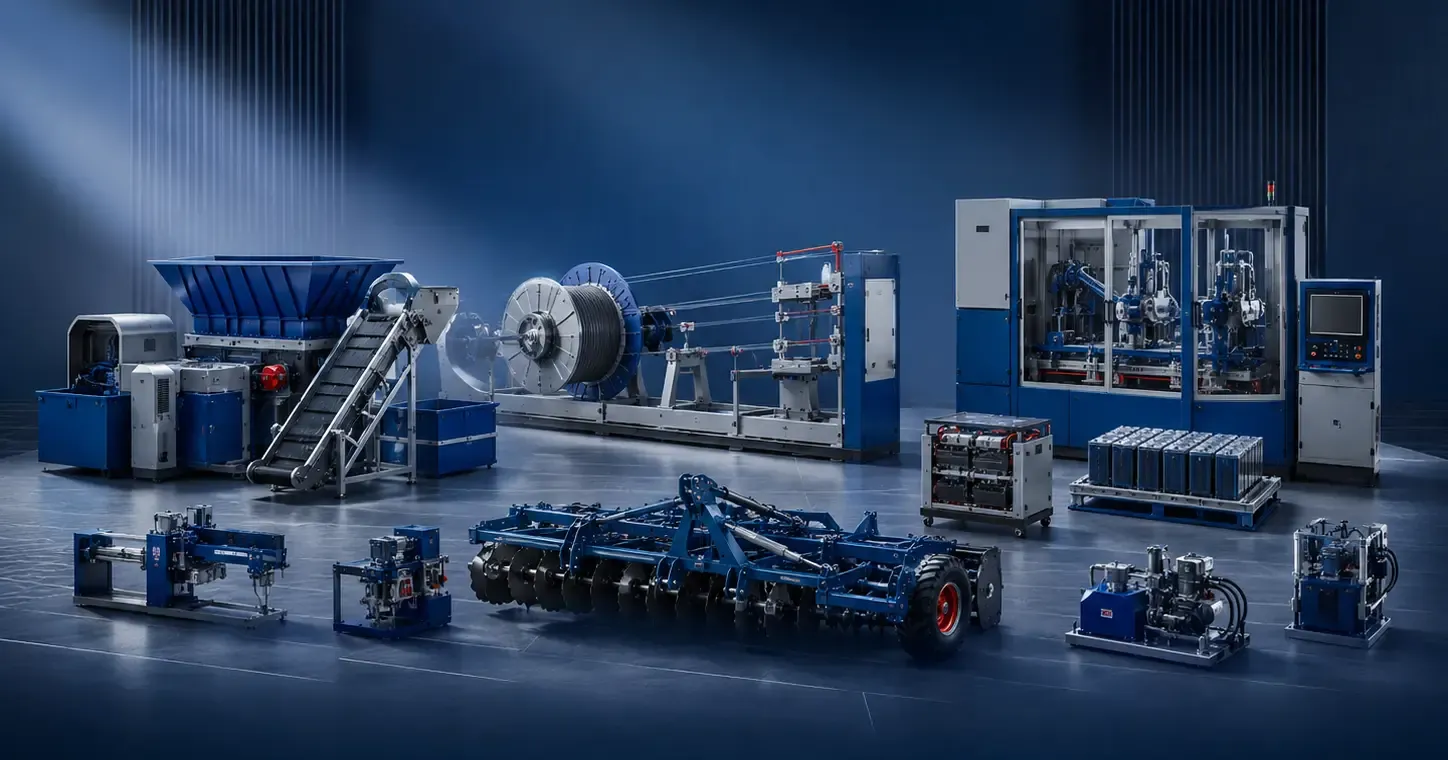
A roller that drives, a wheel that carries, a part that wears or absorbs impact: these functions run through almost every sector. Here, by material and by industry, is where our covered rollers, our wheels and our cast polyurethane parts end up — beyond the industries in our menu.

We think in terms of function, not sector

The name of the industry changes, but the need comes back the same: drive without slipping, carry a load without marking the floor, resist abrasion, take an impact, or stay stable in oil, hot water or acids. That is why the same families of rubber and polyurethane show up from one sector to the next.

We cover rollers and wheels, and we cast polyurethane parts for all these uses. Two ways to read this page: by

material
(what the part has to take) or by
industry
(the parts you find there).

Several sectors already have their own detailed page — packaging, pulp & paper, printing, corrugated, textiles, wood, steel, conveyors, food processing, OEM. This page gathers

all the others
. For the complete list, see the industry directory.

Par matière

Each material takes something different

We choose the material first, according to the dominant constraint. Here are the families we use most, the typical parts and the industries where they come up.

MatièreCe qu'elle encaisse le mieuxPièces typiquesIndustries où on la retrouve
Nitrile (NBR)Huiles, graisses, carburants; bonne abrasionRouleaux d'encrage, rouleaux d'entraînement et presseurs en présence d'huile, manchonsImprimerie, agroalimentaire (gras), métal huilé, bois (résines)
Nitrile-PVC (NBR/PVC)Huile + ozone, intempéries, UVRouleaux et revêtements semi-extérieurs, presseursBois & finition, convoyeurs exposés, extérieur
Caoutchouc naturel (NR)Abrasion, rebond élevé, faible échauffementRouleaux d'entraînement et de traction haute adhérence, revêtements anti-abrasionBois (feed rolls), mine & agrégats, convoyage général
SBRUsage général économique, bonne abrasionRouleaux presseurs et de convoyage courants, revêtementsManutention, convoyeurs, usage industriel général
EPDMChaleur, vapeur, eau chaude, acides & bases, ozoneRouleaux de sécherie et de couchage, rouleaux de lignes de décapage/lavage, racles CIPPâtes & papiers, acier (décapage, coil coating), traitement des eaux, agroalimentaire (lavage)
Néoprène (CR)Huile modérée, intempéries, tenue à la flammeRouleaux polyvalents, revêtements de protectionIndustriel général, convoyeurs, marine légère
Hypalon (CSM)Acides forts, agents oxydants, ozone, UVRouleaux de lignes chimiques et de traitement de surfaceTraitement de surface (bains acides), chimie, extérieur
HNBRHuile + chaleur plus élevée que le NBRRouleaux chauds et huilés, rouleaux type Yankee (~150 °C)Pâtes & papiers (sécherie), métal, huile chaude
SiliconeChaleur (~200 °C), anti-adhérence, grade alimentaire selon l'applicationRouleaux de démoulage et de lamination, contact chaud/collantPlastique & film, agroalimentaire (cuisson), lamination
FKM / fluoré (sur demande)Chimie et chaleur extrêmesRouleaux et joints pour milieux très sévèresChimie agressive, procédés spéciaux
PU — esterAbrasion, coupe, charge élevée (milieu sec)Roues, galets, scrapers, patins et wear plates, tamisManutention, mine & agrégats, imprimerie (racles), robotique
PU — étherAbrasion + résistance à l'hydrolyse (milieu humide)Roues et rouleaux en milieu humide, rouleaux de presse à bandeTraitement des eaux, agroalimentaire humide, extérieur mouillé

A useful rule: in

wet or submerged service
, we specify
polyether PU
— polyester PU hydrolyzes (breaks down) in water, especially hot water. For
heat with steam or chemicals
,
EPDM
remains the reference. For
hot release
,
Silicone
. Note: the families of
rubber
above are used for the
roll covering
of your rollers and wheels (metal core), never for standalone molded parts — molding, here, is done in
polyurethane
. Need help specifying? See the material selection guide. The final choice always depends on the load, the speed, the target hardness and the service life you are after.

Par industrie

The parts you find, sector by sector

An overview of the rollers, wheels and cast polyurethane parts by industry — and the materials we use most often in each.

IndustriePièces qu'on recouvre ou qu'on mouleMatières fréquentes
Ascenseurs & levageGalets de guidage de cabine, roues de portes palières, garnissage de poulies de tractionpolyuréthane, caoutchouc
Robotique & AGV/AMRRoues motrices, roues folles et porteuses, roulettes (versions antistatiques/conductrices offertes)PU (ester)
Manutention & chariots (page dédiée)Bandages emmanchés (press-on), roues porteuses de transpalette, galets de guidage de transstockeurspolyuréthane, caoutchouc
Aéroports & assistance au solRouleaux de convoyage de bagages, roues de tri, galets de guidage, bumpers; cales de roues d'avion, roues de tracteurs de pistepolyuréthane
Transport & ferroviaireRoues et galets de guidage de manutention (no-mark), rouleaux de transfert, pads et butoirs d'impactpolyuréthane, caoutchouc
Automobile — assemblageRoues de skid (lignes soudage/assemblage/peinture), rouleaux de transfert, nids d'épousage et cales de transport mouléspolyuréthane (85–95 A)
Verre & céramiqueRouleaux de convoyage no-mark (verre froid), galets de guidage, spacer bushings pour chevaletspolyuréthane, caoutchouc
Mine, carrières & agrégatsRouleaux d'impact, racles de bande, liners de goulotte/trémie, jupes (skirting), plaques d'usure; panneaux de criblage sur demande — voir notre guide Polyurethane in mining →. Notre expertise roues-sur-rails, développée en pâtes et papiers dès 1995, a été adaptée à deux applications minières en 2004 et 2008 : read the case study →polyuréthane (racles 80–90 A), NR
Recyclage & centres de triRouleaux de convoyeur, liners de chute, racles, doigts de séparation; star screen discs sur demandepolyuréthane
AgricultureRoues de jauge et de fermeture de semoir, doigts de cueillette, rouleaux d'alimentation, étoiles de séparation, racloirspolyuréthane, caoutchouc
Traitement des eaux & bouesRouleaux de presse à bande, squeeze rolls, rouleaux de gravité, guides, raclesPU éther, EPDM
Médical & pharma (emballage)Roues de tables d'imagerie (IRM/CT), galets de pompes péristaltiques, roulettes de salle blanche antistatiquespolyuréthane (grade selon l'usage)
Énergie éolienne & hydroPatins conformes et galets de glissement pour berceaux de pales, éléments d'accouplementpolyuréthane
Câblerie & tréfilerieRouleaux de tirage et de cabestan, galets de guidage anti-abrasion, rouleaux compteurs rectifiéspolyuréthane (dur), caoutchouc
Sport & loisirsRoues coulées (rebond ajusté), galets de poulies, rouleaux de retourpolyuréthane coulé
Blanchisserie industrielleRouleaux essoreurs de calandres et repasseuses, roues de chariots anti-fils, galets de plieusesEPDM, polyuréthane

One important clarification:
all the standalone profile and wear parts listed above (fingers, stars, bumpers, pads, blocks, nests…) are
molded in polyurethane
; the rubbers (NBR, EPDM, NR…) are used for the
lining and covering
of your metal cores and rollers, and the
molding of parts
is done in polyurethane.

Spotlights

A few sectors where the angle is particular — and why the material matters.

Elevators — guide rollers

Car guide rollers run on the T-rails for a quiet, vibration-free ride; we cover them in polyurethane, softer for ride comfort or harder (up to ~95 Shore A) on slow or heavily loaded cars. Also door rollers and sheave lagging. Not the certified safety components.

Robotics & AGV

The drive wheels on warehouse robots are covered in polyurethane (often 85–95 A): consistent grip, no floor marking, and low rolling resistance that saves battery life. Antistatic/conductive versions for electronics and cleanrooms.

Glass — cold handling

On soft-coat (Low-E) glass, a micro-scratch downgrades the product. Our covered rollers do not scratch and increase traction. We stay on cold glass (cutting, washing, storage) — not tempering furnace rollers (620–640 °C), which are ceramic.

Mining & aggregates

In sliding abrasion (slurry, screening, chutes), polyurethane gives a service life far longer than steel and standard rubbers — and makes wear plates 30 to 50% lighter. Covered impact rollers, belt scrapers (80–90 Shore A), chute liners and molded wear plates. (Under severe impact from large rock, a specialized natural rubber can suit better: we discuss it according to the actual wear mode.)

Water treatment

A belt press dewaters sludge with a series of rollers of decreasing diameter; we cover the steel core. Key detail: in permanent contact with water, we use polyether PU, never polyester PU, which hydrolyzes.

Airports & ground

Non-marking baggage conveyor rollers, sortation wheels, and on the ramp: molded polyurethane aircraft wheel chocks (resistant to fuels and UV, lighter than wood). Ground support equipment only — no flight parts.

Automotive — assembly lines

The skid wheels carry the bodies through welding, assembly and paint: steel core covered in polyurethane, resistant to shop oils and non-marking on finished body panels. Also molded locating nests.

Medical & imaging

Polyurethane covering on wheels for imaging tables (MRI/CT) — quiet, vibration-free rolling; covering on customer-supplied cores, including non-magnetic ones for MRI. Peristaltic pump rollers that squeeze the tubing without ever touching the fluid. Industrial-grade covers — with no medical certification and no company-level pharmaceutical standard (USP/GMP).

These industries already have their own page

If your sector is below, you will find the detail of the rollers, positions and materials there:

Votre secteur n'est pas listé ?

The function of the part tells us more than the name of the industry: a roller that

drives
, a wheel that
carries
, a part that
wears
or that
absorbs impact
. Send us a drawing, a sample (even a worn one) or a photo: we identify the material and the hardness, and we can copy an existing part by
reverse engineering
.

Explore reverse engineering →

Frequently asked questions

My industry isn't listed — do you still work with it? +

Almost always. The function of the part counts for more than the name of the sector. Describe the function and the environment (load, speed, abrasion, chemistry, temperature, humidity): we can cover a roller or a wheel, or mold a polyurethane part to suit.

How do I choose the material for my industry? +

We start from the dominant constraint. Oils/greases:

nitrile (NBR)
. Heat, steam, acids/bases:
EPDM
. Strong acids, ozone, UV:
CSM (formerly sold as Hypalon®)
. Dry abrasion:
natural rubber
or
polyester PU
. Wet environment:
polyether PU
. Hot release:
Silicone
. Details in the materials guide.

Do you mold custom parts? +

Yes, in hot cast polyurethane: bushings, bearings, bumpers, wear plates, scrapers, gears and parts made to drawing, from less than 1 g to more than 2,500 lb. Rubber, for its part, is used to cover your rollers and wheels on a metal core.

Do you make elevator guide rollers? +

Yes — the polyurethane covering on car guide rollers, door rollers and sheaves. We do not make certified safety components (approved safety gears, ropes or load-bearing belts).

Do you work in aerospace? +

Only on the

ground support and material handling side
: baggage conveyor rollers, ramp tug wheels, molded polyurethane aircraft wheel chocks, jet bridge bumpers.
No flight-certified aircraft parts.

Do you make polyurethane screen panels or sorting stars? +

On request, project by project: these are specialized molded parts and we assess feasibility (geometry, quantity, tooling). For mining and recycling, we also offer covered rollers, chute liners, wear plates and polyurethane scrapers.

A part to cover or to mold, whatever your sector?

Describe the function, send a drawing or a sample: we assess the material, the hardness, the geometry and the finish that suit. Service in Quebec, Ontario and the Maritimes, with shipping available.

➔ Request a quote