Covering & manufacturing · rubber and polyurethane · Quebec450 664-4000·1 800 361-5588·EN|FR
Pièces en polyuréthane surmoulées sur métal : roue sur moyeu claveté, plaques d'usure, pignon, bague à cœur d'acier
Produits · Polyuréthane moulé

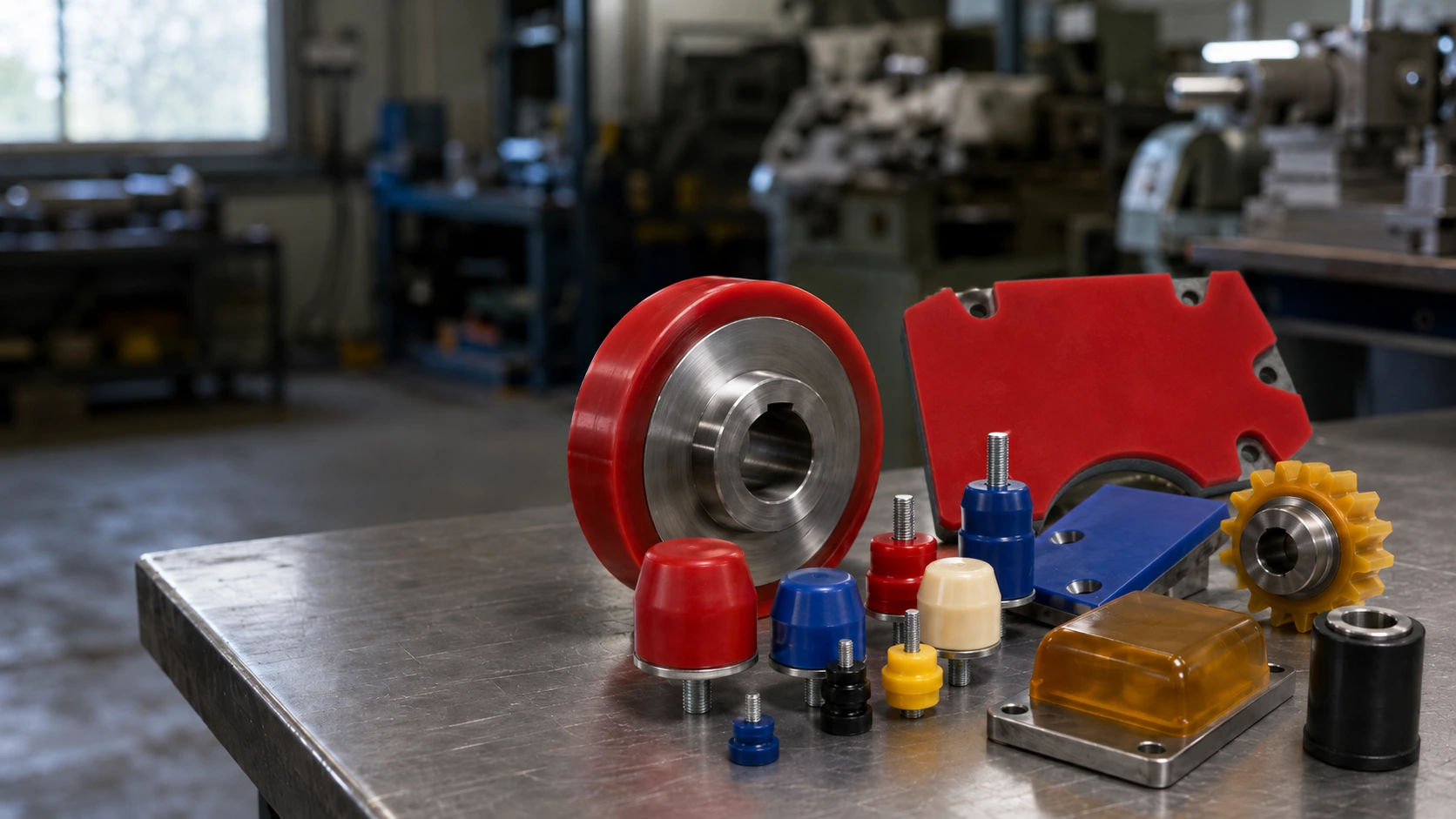
Polyurethane parts overmolded on metal

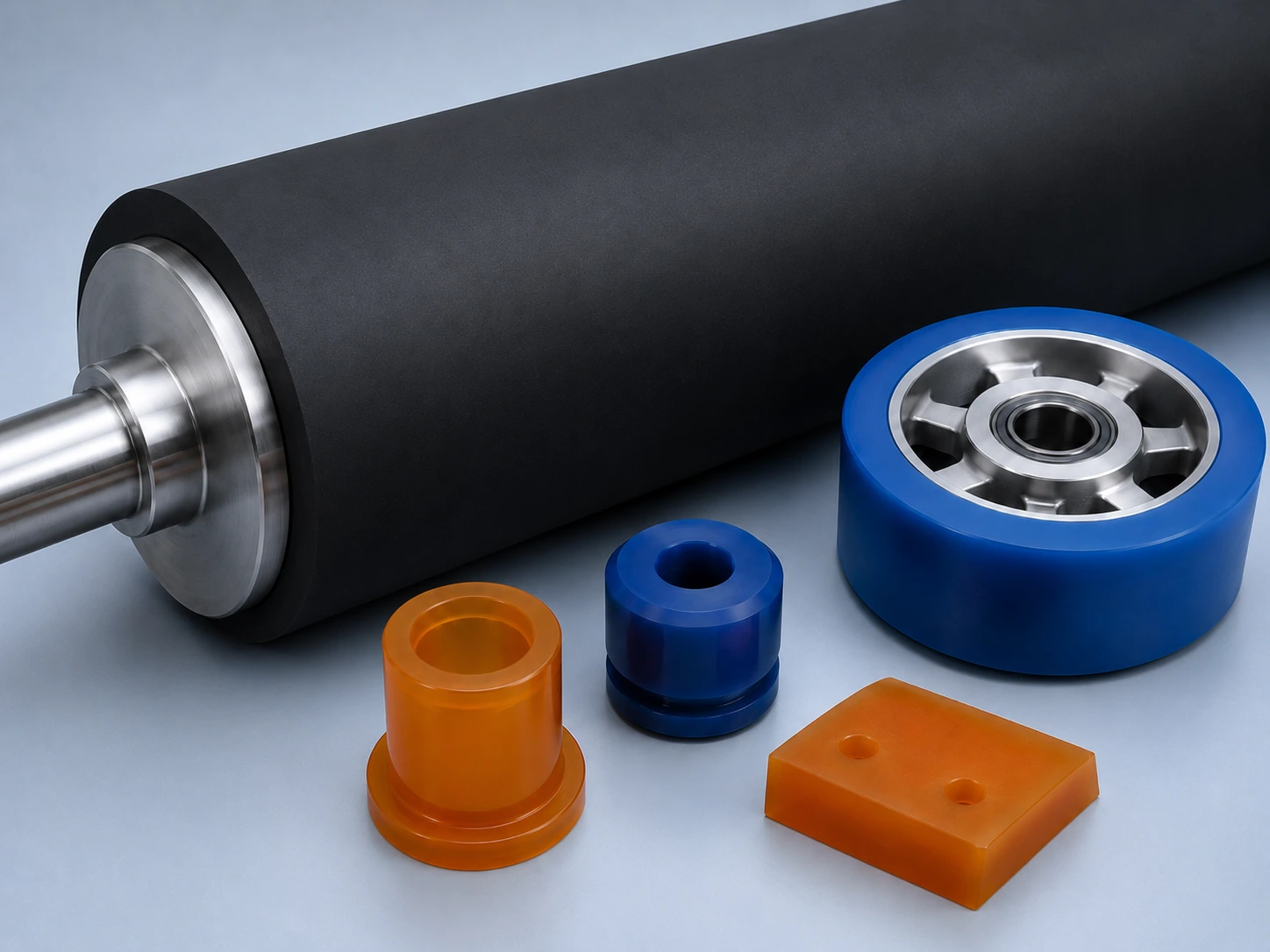
The polyurethane is cast directly onto a steel, stainless or aluminum core: the stiffness and the precision of metal, plus a tough, wear-resistant PU surface — in a single part, cast in house in Quebec.

A metal skeleton, a polyurethane surface

Bare metal wears, pounds and marks everything it touches; polyurethane on its own lacks the stiffness to mount and carry the load — together they make a complete part. Overmolding combines two materials in one part: the metal gives the shape, the stiffness and the mechanical anchoring; the cast polyurethane gives a working surface, soft or firm, wear-resistant and quiet. Useful wherever a part has to mount solidly and take wear or impact at the same time.

Overmolded products

A look at the parts we cast on a metal core. The list is not exhaustive: if your part has to mount solidly and take wear at the same time, it can probably be overmolded.

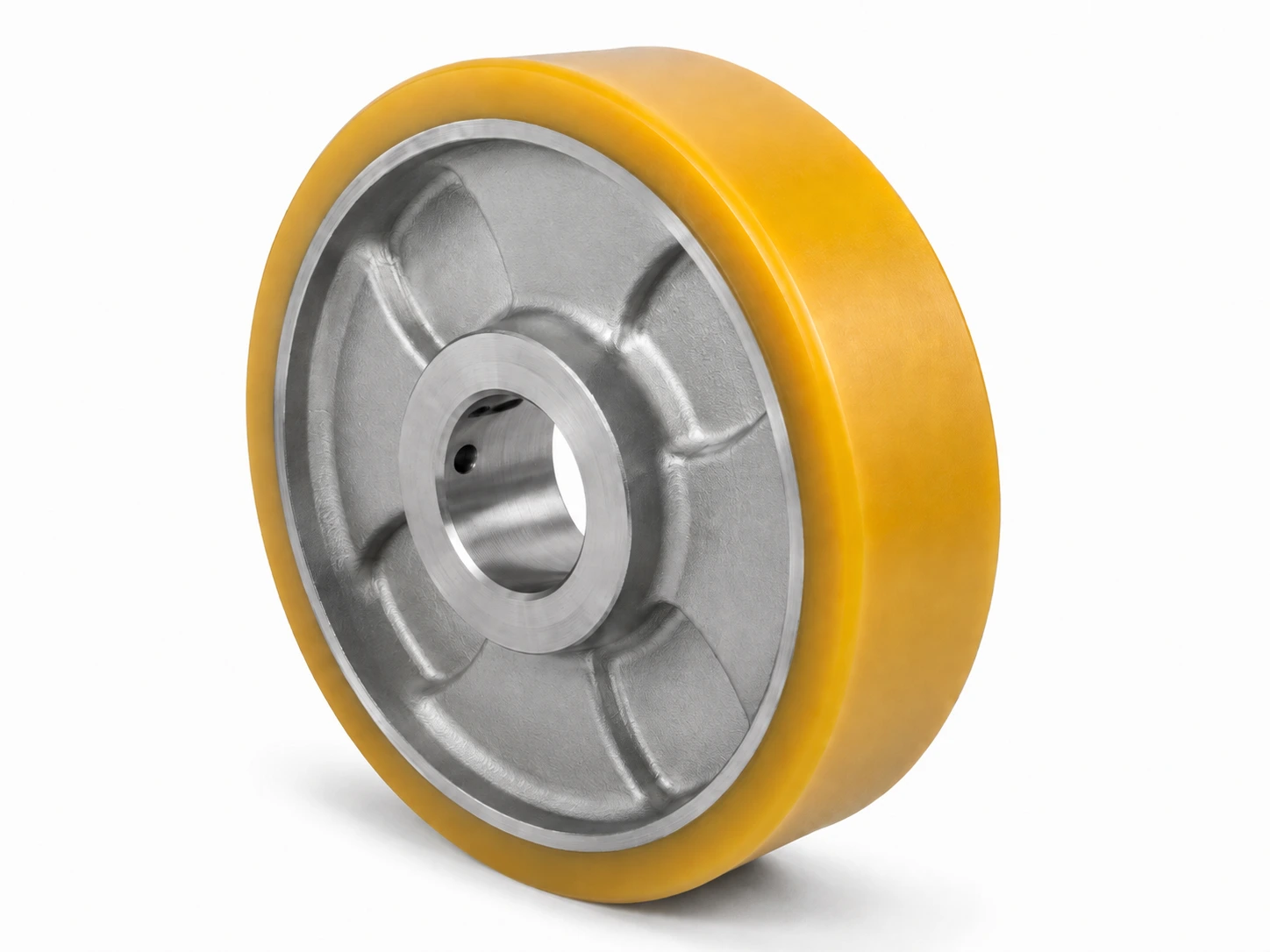
Roue en polyuréthane ambre coulée à chaud sur moyeu d'acier, alésage usiné et clavette — roue surmoulée sur mesure
Custom wheel overmolded on a steel hubWheel — tread cast to your sample, bore and keyway machined
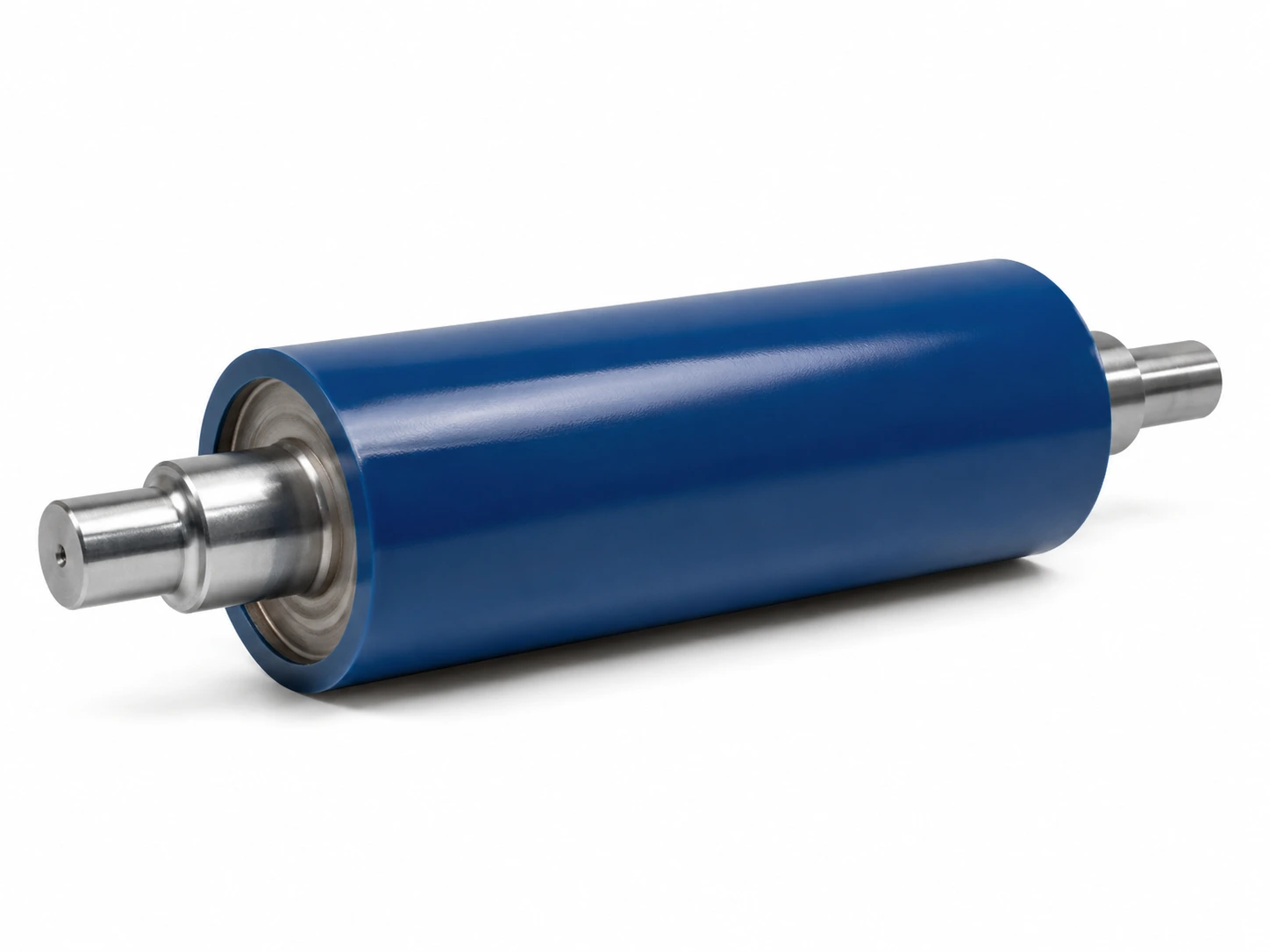
Rouleau surmoulé : manchon de polyuréthane bleu coulé sur arbre d'acier usiné, portées dégagées — équilibrage dynamique
Roller overmolded on a steel shaftRoller — sleeve cast to your drawing, journals machined
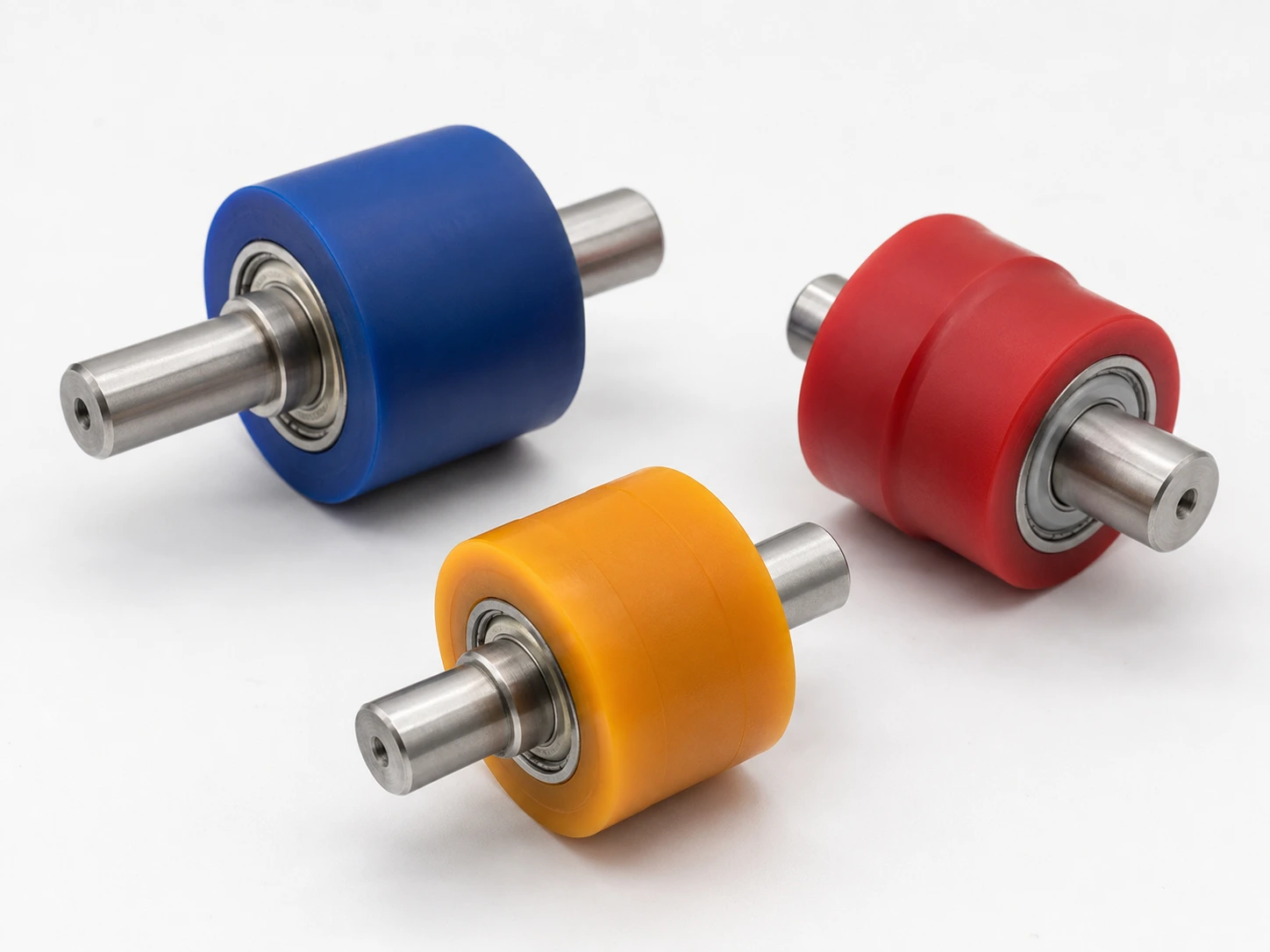
Trois galets de guidage en polyuréthane bleu, rouge et orange sur axes avec roulements — dureté choisie selon la charge
Guide rollers on bearingsGuide rollers — durometer, profile and color to suit the application
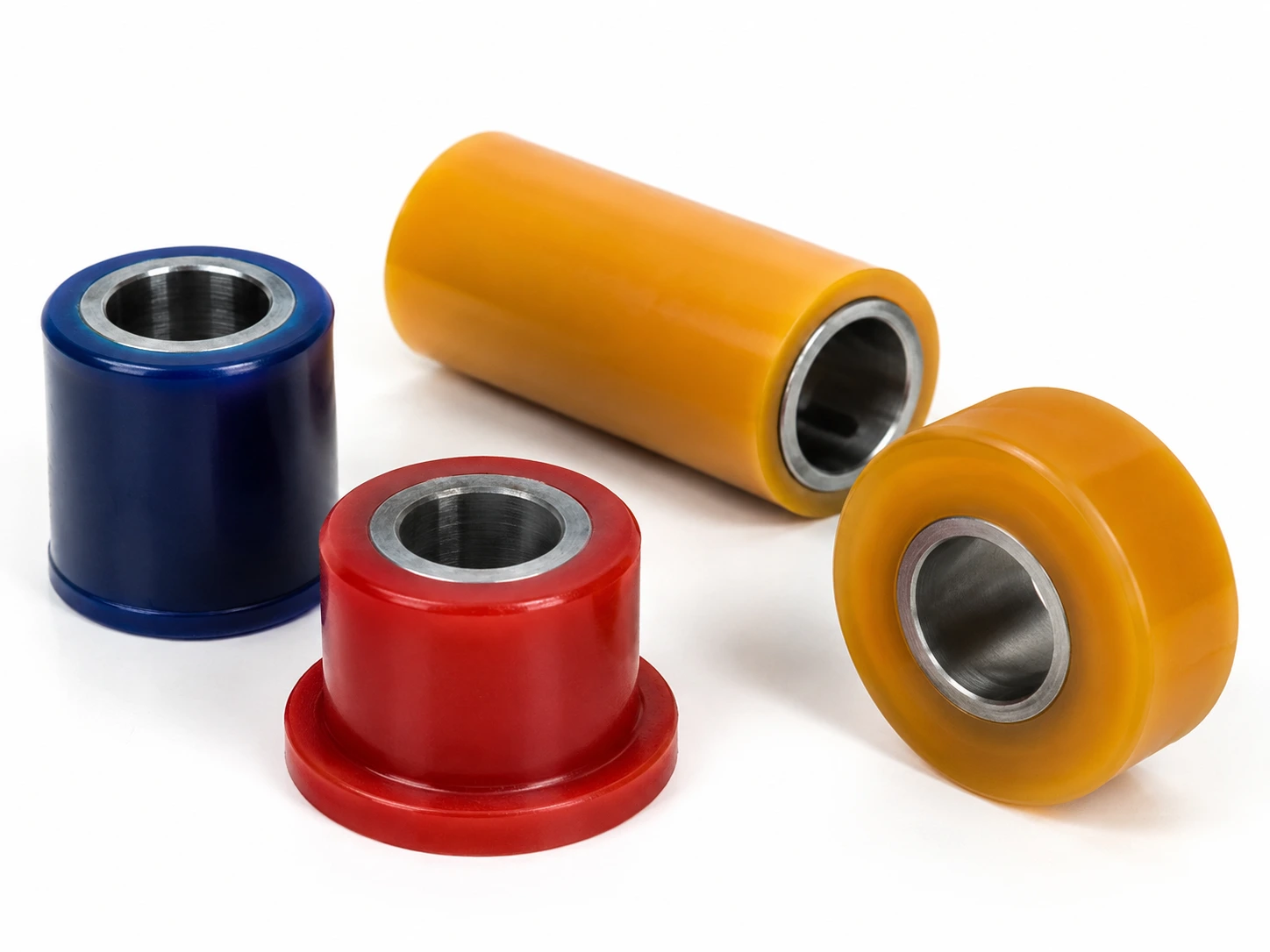
Bagues et manchons en polyuréthane bleu, rouge à collerette et ambre, à âme d'acier avec clavette
Bushings and sleeves with a steel coreBushings & sleeves — flanged or keyed, to your sample
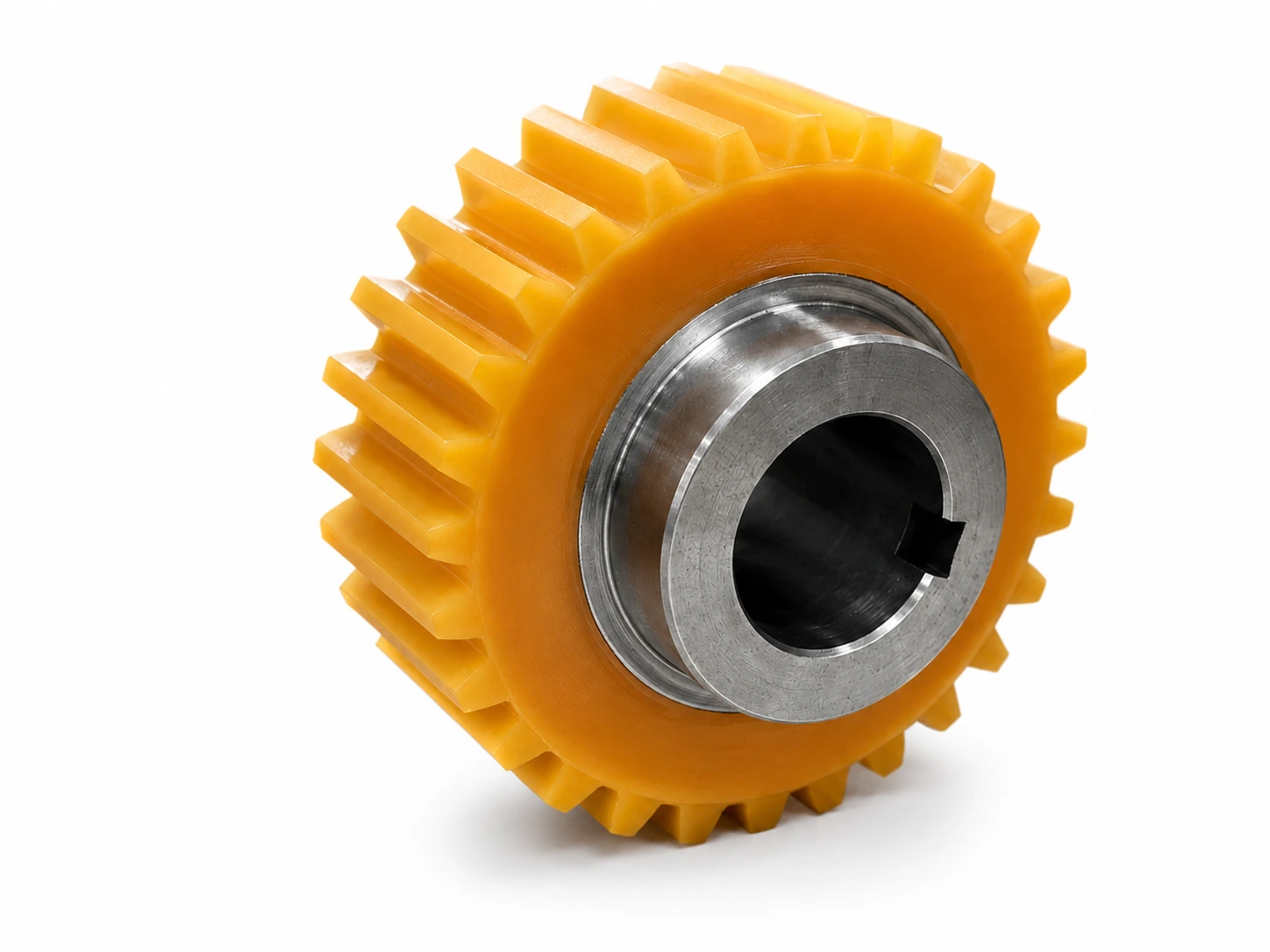
Engrenage à denture de polyuréthane jaune-orangé coulée à chaud sur moyeu d'acier à alésage claveté — Soremag Québec
Gear with polyurethane teethGear — teeth cast on a keyed hub, reproduced from your sample
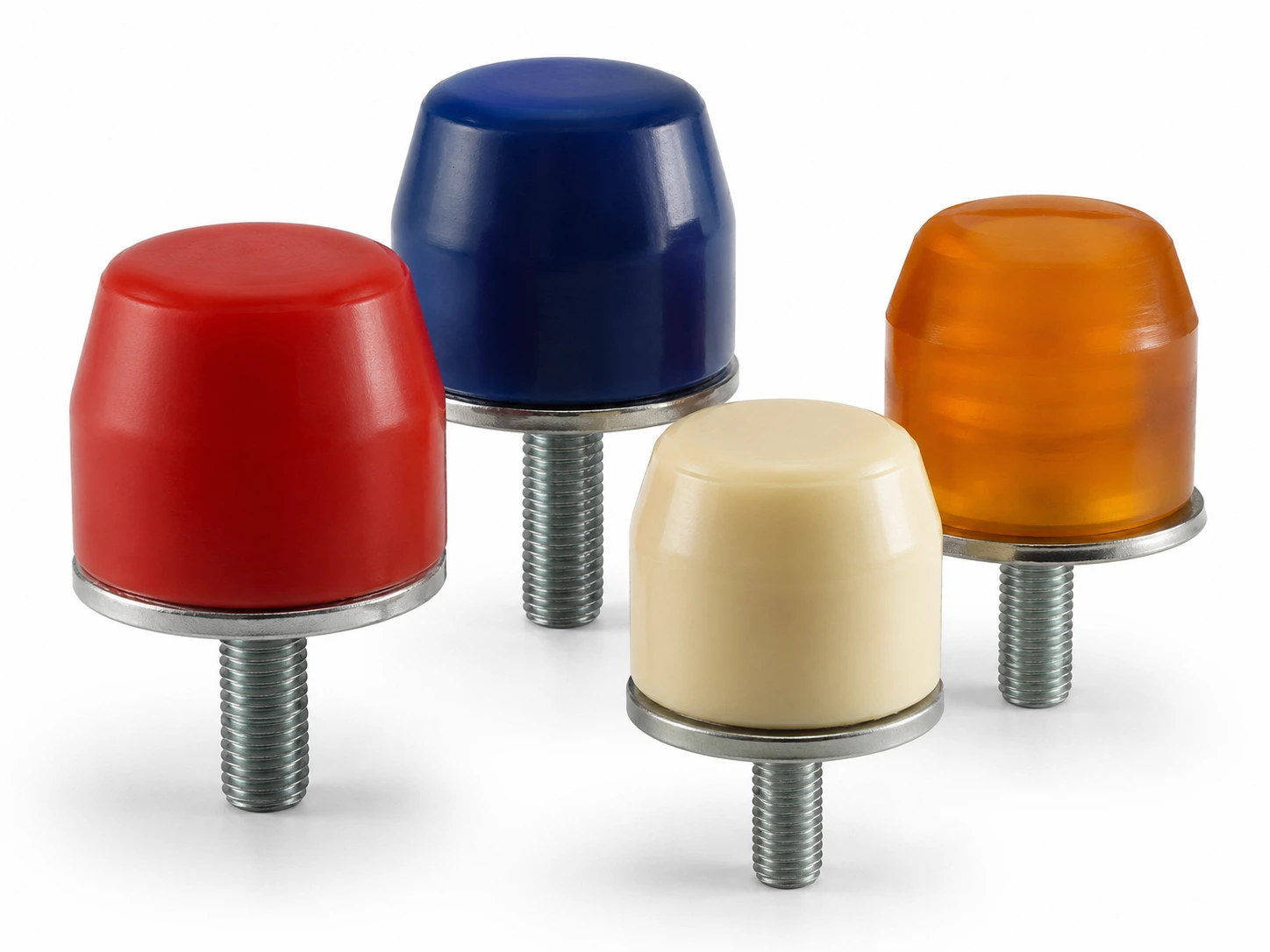
Butées à goujon fileté en polyuréthane rouge, bleu, crème et ambre translucide avec rondelle
Threaded stud bumpers, ready to screw inThreaded stud bumpers — your choice of durometer and color
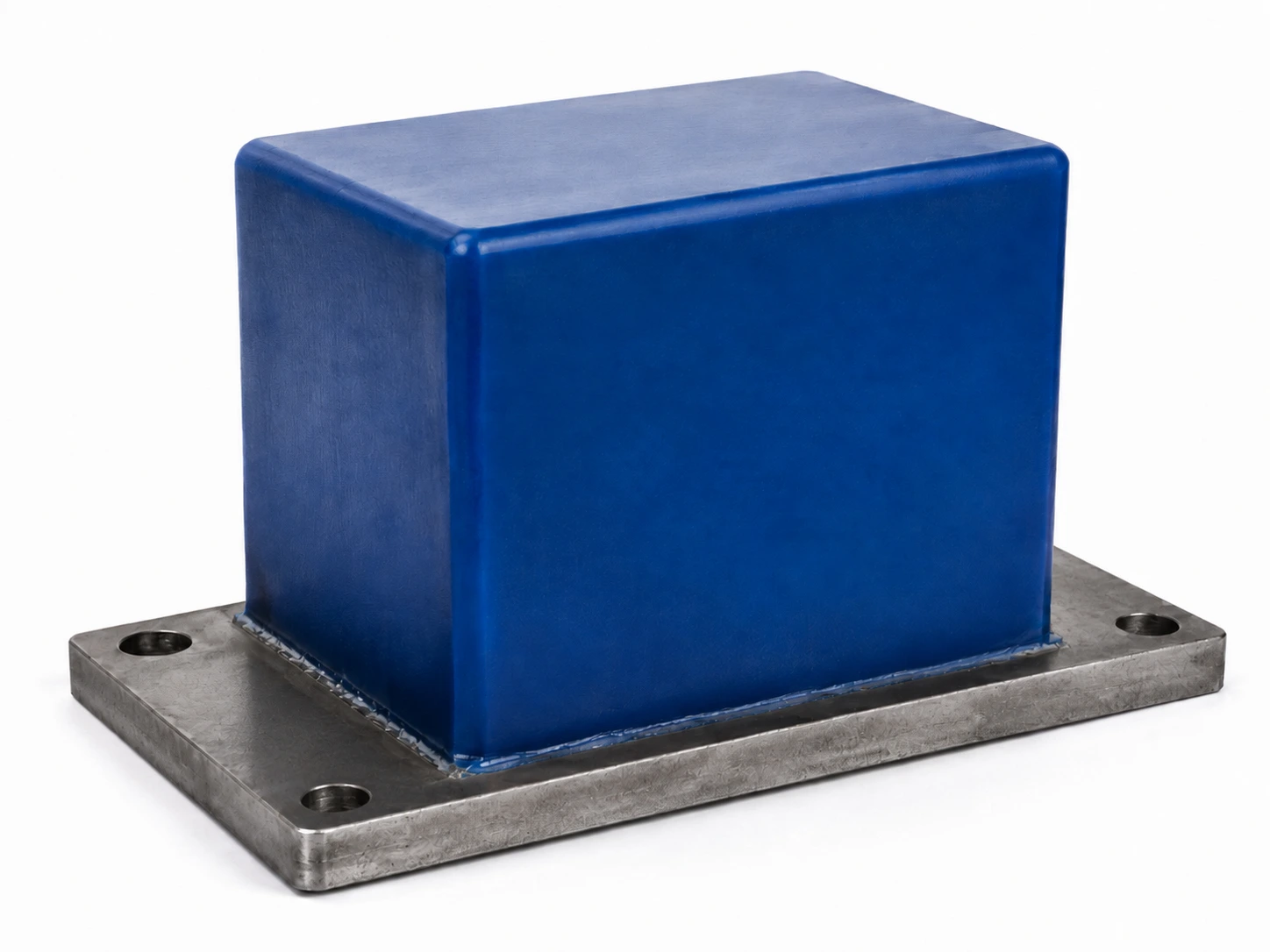
Gros tampon amortisseur en polyuréthane bleu coulé à chaud sur platine d'acier à quatre trous fraisés — Soremag Québec
Bumper block on a steel base plateBumper block — cast on a plate with countersunk holes, sized to your loads
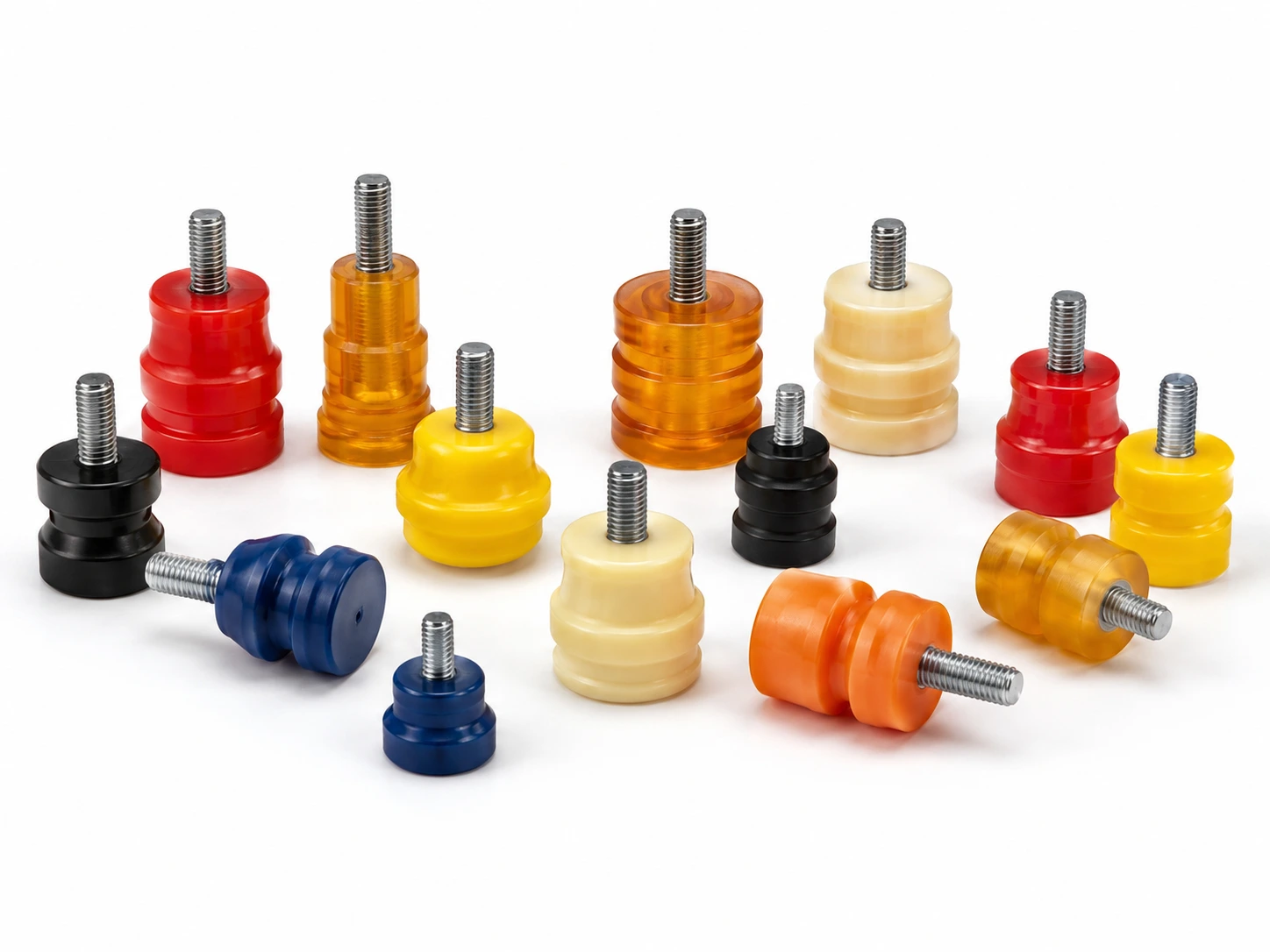
Butées à goujon fileté en polyuréthane de formes et diamètres variés, surmoulées sur goujon d'acier — Soremag Québec
Custom threaded stud bumpersStud bumpers — shapes and diameters to suit the job
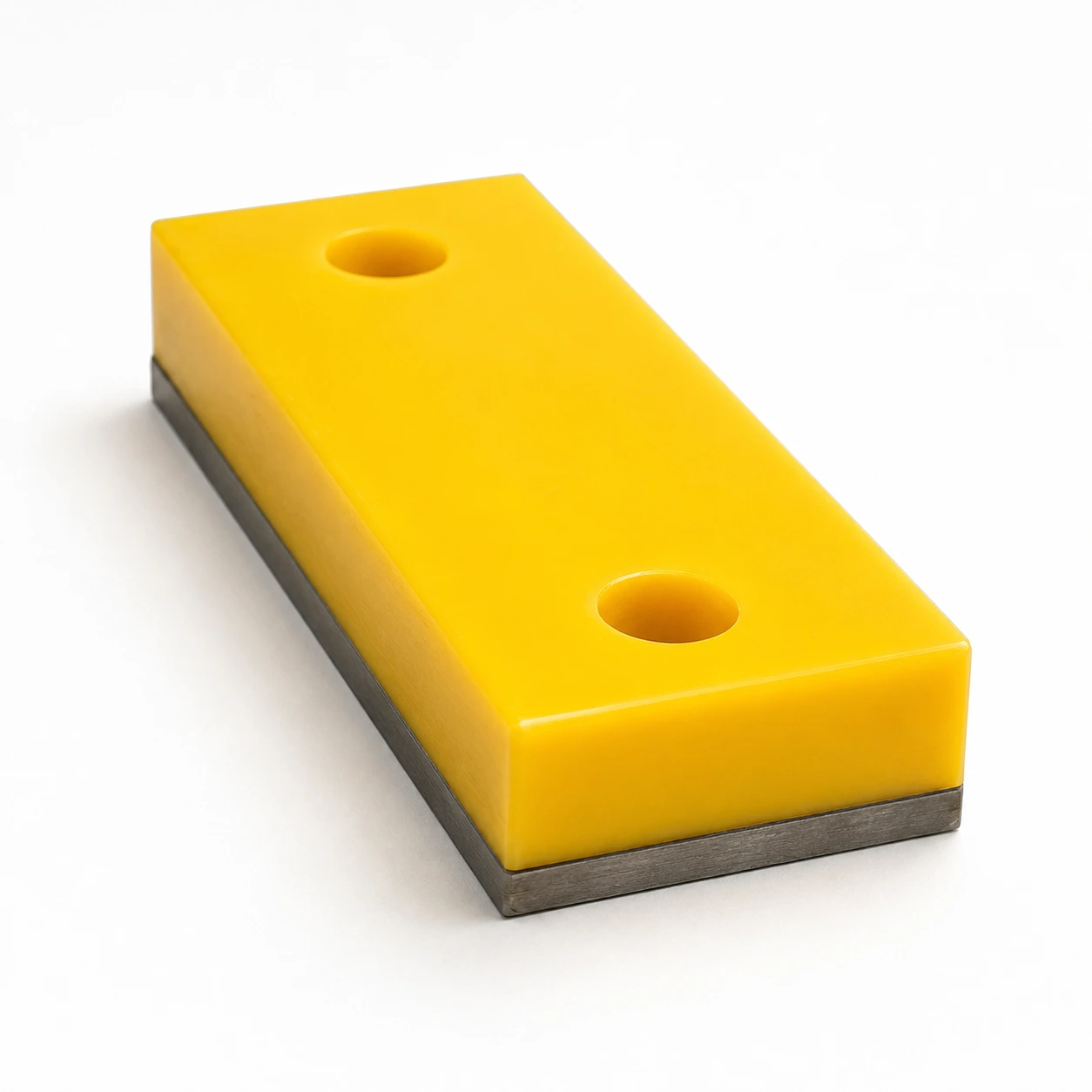
Patin d'usure en polyuréthane jaune coulé sur plaque d'acier avec deux trous fraisés — dureté choisie selon l'abrasion
Wear pad on a steel plateWear pad — countersunk holes for flush mounting
Assortiment de butées à goujon fileté en polyuréthane coulé à chaud, plusieurs duretés — Soremag Québec
Threaded bumpers, several durometersStud bumpers — soft to firm, matched to the energy to absorb
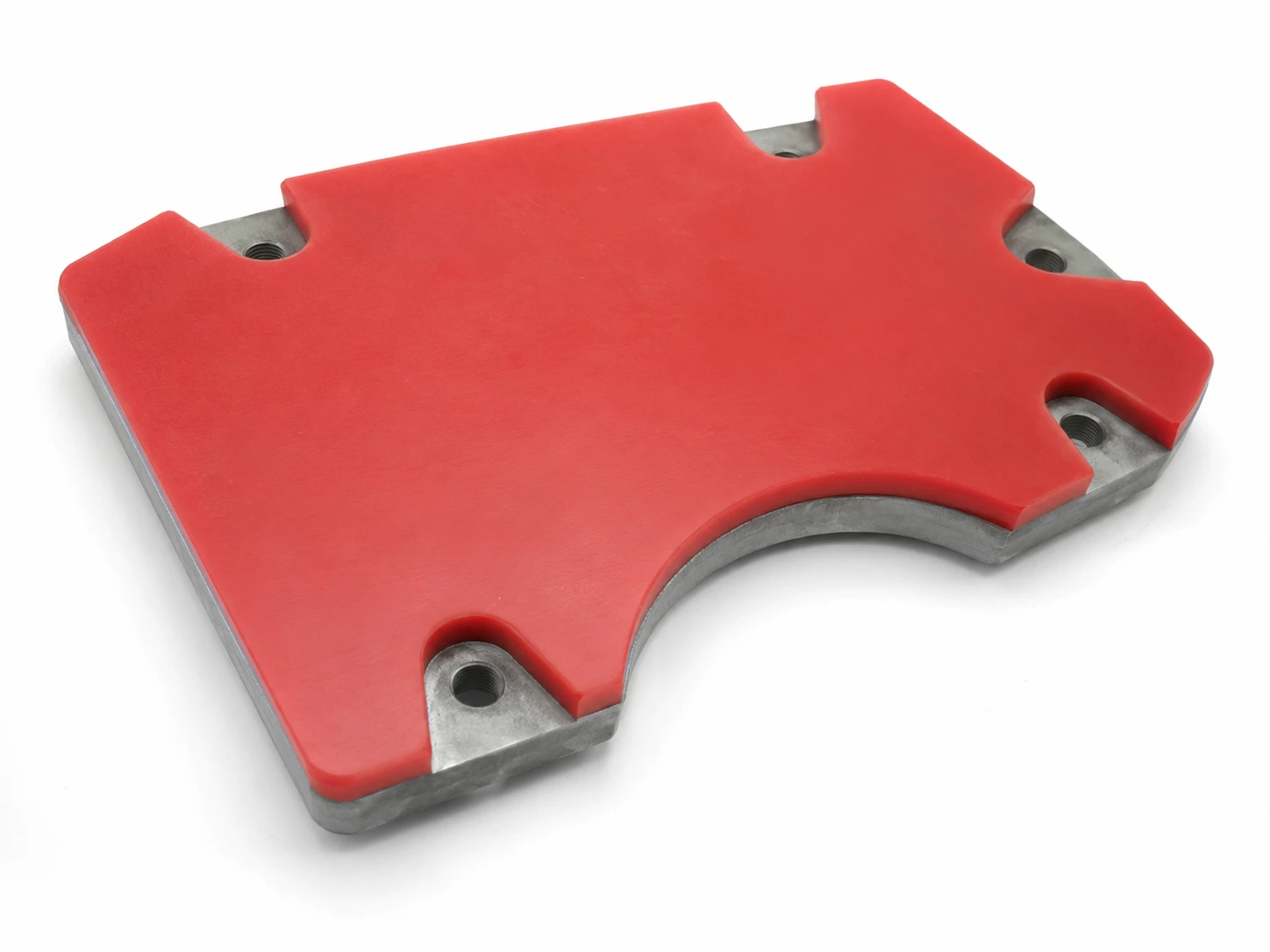
Plaque d'usure en polyuréthane rouge coulée sur une forme d'acier spéciale découpée sur mesure avec trous taraudés
Wear plate on a special steel shapeCustom liner — reproduced from your sample, tapped holes

Wheels (wheels)

Polyurethane cast on a steel or aluminum hub: the wheel combines a rigid center with a tough, quiet, non-marking tread. See also our wheel covering.

Rollers (rollers)

Roll body or tube covered in polyurethane. See also our polyurethane rollers.

Guide rollers (guide rollers)

Small guide and idler rollers on a metal shaft, with a polyurethane surface for smooth rolling and good wear life.

Wear plates (wear plates)

Steel plate covered with a layer of cast polyurethane, with countersunk holes for flush mounting. Details on our polyurethane wear plates.

Bumpers & blocks

Bumpers and shock blocks on a steel base plate: the polyurethane absorbs the impact, the plate handles the mounting.

Bumpers

Stops and end stops with a metal body overmolded in polyurethane, to cushion end of travel without marking.

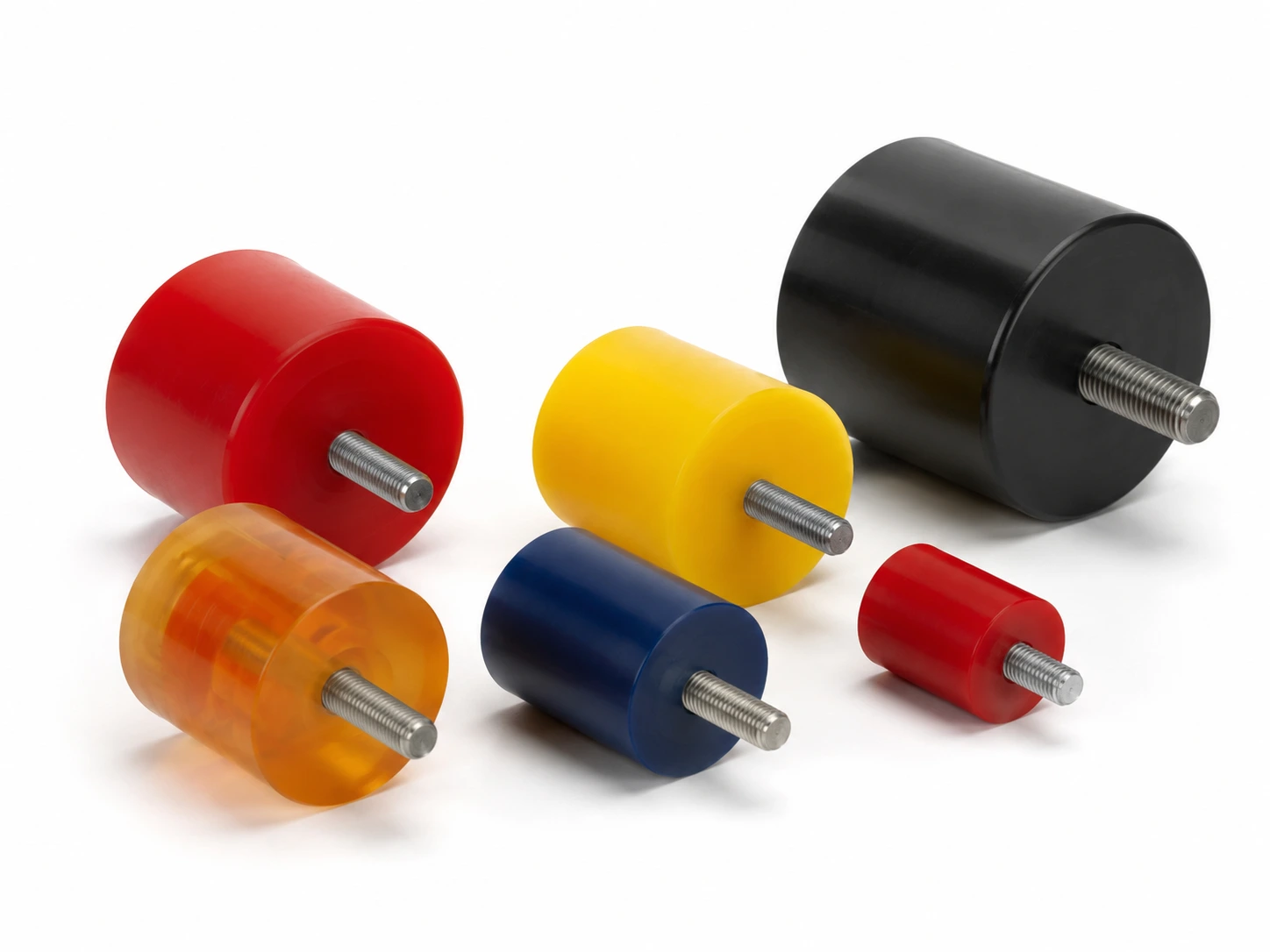
Threaded stud bumpers (threaded stud bumpers)

Small polyurethane bumpers overmolded on a threaded stud insert : they screw straight onto the equipment to cushion a contact or stop a travel — available in several durometers, shapes and diameters.

Bushings & sleeves (bushings)

Bushings and sleeves with a metal core and a polyurethane surface: precise mounting and a compliant interface between moving parts.

Gears & sprockets (gears)

Polyurethane teeth cast on a metal hub: quieter running and better shock absorption. We can often take an impression of an existing part or machine the pattern, which cuts mold costs compared with full tooling.

Bolted / reusable components

Parts designed to come apart and be replaced: the metal core is kept, the polyurethane layer is renewed as the service requires.

The substrates we overmold

Depending on the project, we overmold polyurethane onto a wide range of materials and shapes prepared in our shop.

Core materials

  • Acier au carbone — plaques, profilés et pièces mécano-soudées.
  • Acier inoxydable — environnements humides, corrosifs ou nécessitant une bonne résistance au nettoyage. Contact alimentaire : matériaux et exigences réglementaires validés selon le projet.
  • Aluminium — pièces légères et bien usinées.
  • Fonte et alliages compatibles — corps de pompe, poulies et pièces coulées.
  • Autres matériaux rigides — après validation du procédé.

Overmolded shapes and components

  • Moyeux — pour roues, galets et poulies.
  • Arbres et axes — à recouvrir de polyuréthane.
  • Tubes et corps de rouleaux — noyaux tubulaires pour rouleaux et manchons.
  • Plaques et pièces mécano-soudées — plaques d'usure à dos d'acier.
  • Bagues, manchons et inserts filetés — pièces de fixation intégrées.
  • Pièces usinées sur mesure — préparées pour l'adhérisation.

Not every substrate bonds the same way

Chemical bonding works very well on some materials; others need

mechanical anchoring
(holes, grooves, undercuts) to perform, and some barely bond chemically at all. Here is how we sort them:

  • Substrats courants — acier au carbone, acier inoxydable, aluminium et fonte : adhérisation chimique éprouvée, avec préparation standard.
  • Substrats spéciaux, après validation — laiton, cuivre, magnésium, acier galvanisé, métaux plaqués, plastiques techniques et composites rigides : essai d'adhérisation ou ancrage mécanique complémentaire selon le cas.
  • Substrats difficiles — PE, UHMW-PE, PP, PTFE, silicone et surfaces contaminées par des huiles, cires ou démoulants : la liaison chimique est faible ou impossible ; un verrouillage mécanique (géométrie, inserts, encapsulation) est généralement requis pour bien performer.

For covering rollers and wheels with a metal core, see also wheel covering and polyurethane rollers.

Why overmold polyurethane

Pairing a metal core with a polyurethane surface pays off on several fronts at once.

Wear-resistant surface

Polyurethane gives a working surface that stands up well to abrasion, cutting and tearing — the actual gain is confirmed application by application.

Shock absorption

The polyurethane layer takes the impact then returns to shape, protecting the metal core and the surrounding components.

Less noise and vibration

On a hub or a shaft, a polyurethane surface rolls more smoothly and damps vibration better than bare metal.

Product protection

A soft, non-marking surface is easy on sheets, films, metal sheet and any other product in contact with the part.

Less metal-to-metal contact

Polyurethane puts a protective interface between metal components: less noise, less pounding and better-controlled wear at the contact points.

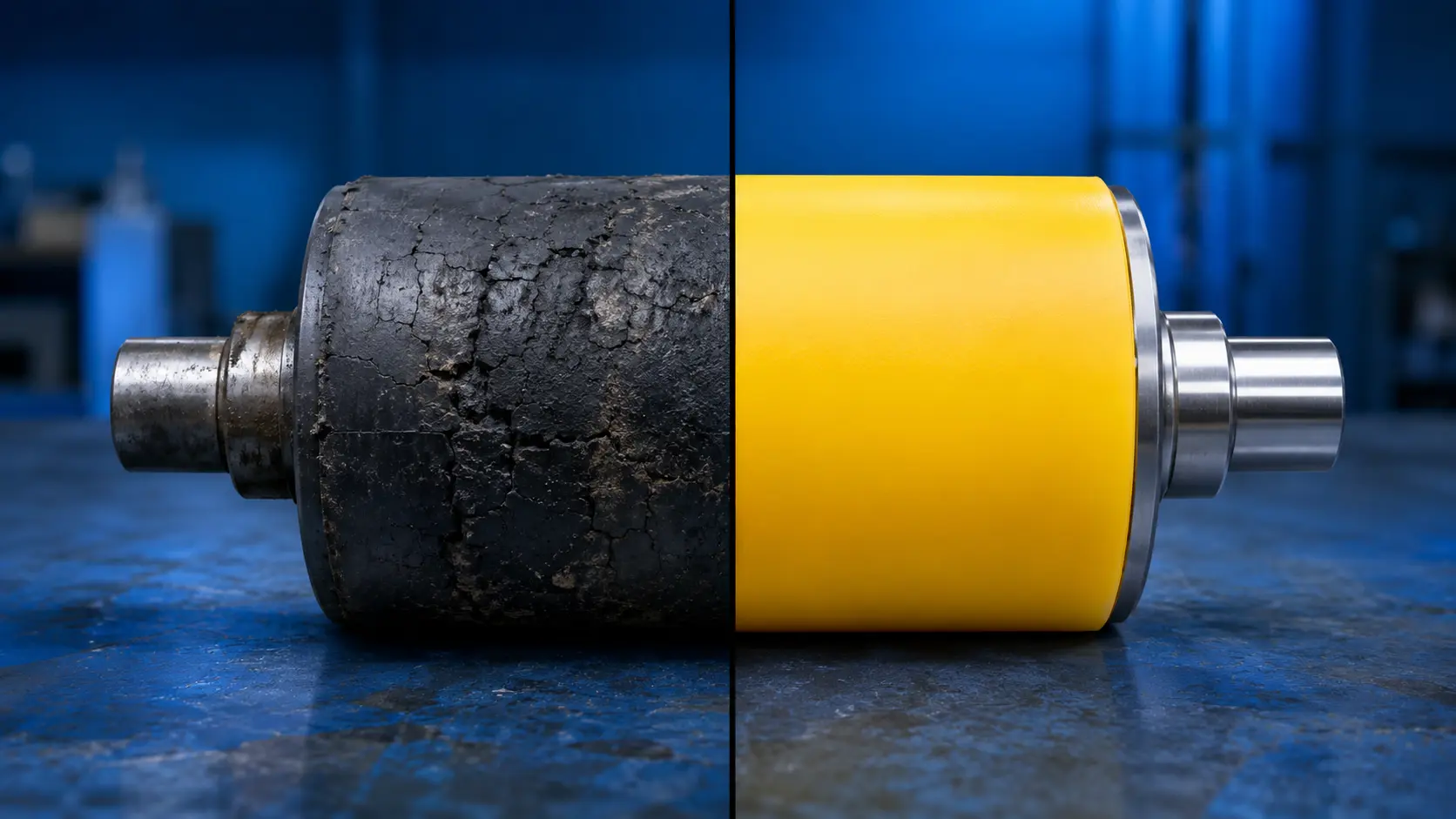
New cores or parts to refurbish

Two routes to the same finished part — and often a good way to cut costs.

New core

We overmold a core

supplied by the customer
,
built to drawing
or
prepared in our shop
— our metal fabrication and repair service can produce or modify the core in house.

Existing part reclaimed

When a part can be salvaged, the old cover is

stripped
, the core
inspected and repaired as needed
, then prepared and
recovered
. This route can cut costs, lead times and raw material use — particularly worthwhile for wheels, rollers, pulleys, guide rollers and pump parts.

Metal preparation & bonding

The quality of an overmold is decided first by the metal preparation and by the bonding system. The exact process is matched to the metal, the polyurethane formulation, the part geometry and the service conditions — in six main phases:

La tenue de la liaison polyuréthane-métal se conçoit et se contrôle selon le service : elle dépend du métal, de la préparation, du système d'adhérisation, des efforts et de l'environnement. Nous définissons le plan de préparation et de contrôle en fonction de votre application — voyez notre quality control (QC7).

Core design

A properly prepared chemical bond is generally the basis of the joint. Depending on the loads, the geometry and the safety margin required, mechanical anchoring features can also be built into the core — they are defined by the part and its service.

Chamfers

Broken edges to guide the pour and avoid stress concentrations at the polyurethane-to-metal joint.

Radii

Filleted corners for even polyurethane flow and smooth transitions.

Anchoring holes and openings

Where the design calls for it, openings let the polyurethane pass through the core and form a mechanical lock — positioned so they neither weaken the part nor create stress concentrations.

Anchors

Raised features, lugs or undercuts that mechanically lock the polyurethane layer.

Grooves and channels

They increase the bond area and the shear strength — sized to the polyurethane thickness and the applied loads.

Thickness transitions

Polyurethane thicknesses chosen and blended to limit stress and internal defects.

Our overmolding capabilities

What we can actually cast, machine and inspect on a metal core.

To have your part evaluated

The more complete your request, the faster the recommendation — and the price. Here is what helps us:

Have a part evaluated

Where our overmolded parts work

Three application families where the metal-polyurethane pairing proves itself — and the industries where you find it.

Conveyors & material handling

Overmolded wheels, guide rollers and drums: the metal hub carries the load, the polyurethane rolls quietly and without marking.

See the conveyor industry →

Steel, metals & heavy equipment

Overmolded rollers and rolling mill parts: a surface that takes the load and protects the product, on a steel core that does not budge.

See the steel & metals industry →

Industrial manufacturing

Machine parts and drive components: overmolded parts that replace metal on metal and cut play, noise and maintenance.

See industrial manufacturing →

Questions about overmolding on metal

Which metals can you overmold polyurethane onto? +

Depending on the project, on carbon steel, stainless steel, aluminum and cast iron: hubs, shafts, tubes, rollers, plates, sleeves, threaded inserts and machined parts. The preparation and the bonding system are chosen for the metal, the loads and the service environment.

How do you prepare the metal before overmolding? +

The metal is inspected, stripped of the old cover where applicable, degreased, mechanically prepared (grit blasting) and then cleaned. A suitable bonding system is applied next, before preheating, casting and cure. The strength of the bond is designed and verified for the service.

Does the core need to be designed a particular way? +

Often, yes. Chamfers, radii, holes, anchors, grooves and thickness transitions can be built into the core to help the pour and the mechanical anchoring of the polyurethane. These details are defined part by part; through reverse engineering, we can also start from an existing part.

Can an existing hub or shaft be reused? +

Depending on the project. An existing hub, shaft or insert can be reconditioned, prepared and overmolded again, or designed to be reusable and bolted. We assess the condition of the metal before recommending an approach.

Can the polyurethane debond from the metal? +

A properly designed bond should not let go in normal service. Debonding almost always comes from insufficient preparation, a poorly matched bonding system, overheating in service or loads beyond the design. That is why preparation, bonding and bond inspection are an integral part of our process.

How much polyurethane thickness should you plan for? +

It depends on the job: a thin layer holds dimensions better and sheds heat better; a thick layer absorbs more energy and gives more wear reserve. The thickness is chosen for the load, the speed, the expected wear and the geometry — we recommend it along with the hardness.

Can you strip an old cover? +

Yes. On a part being refurbished, the old rubber or polyurethane cover is stripped, the core is inspected and repaired as needed, then prepared and recovered.

Can you overmold a single part or a prototype? +

Yes. Casting suits one-off parts and prototypes well: we can often take an impression of an existing part or machine the pattern, which cuts mold costs. See also our prototyping and pilot runs.

What information do you need to give a price? +

The essentials: a drawing, a sketch or the existing part; the core material; the critical dimensions; the load, the speed and the environment; the expected quantity; and whether it is a new part or a core to reclaim. The full list is in the “To have your part evaluated” section above.

Have a part to overmold on metal?

Send us the core, a drawing or a worn part, with its function, the load and the environment — we recommend the preparation, the bonding system, the hardness and the casting process, anywhere in Quebec and across Canada.

➔ Request a quote