Covering & manufacturing · rubber and polyurethane · Quebec450 664-4000·1 800 361-5588·EN|FR
Tampons et butées en polyuréthane coulé à chaud : surmoulés sur platine, à goujon fileté, à insert taraudé, diabolo
Produits · Polyuréthane moulé

Pads, bumpers and shock absorbers in polyurethane

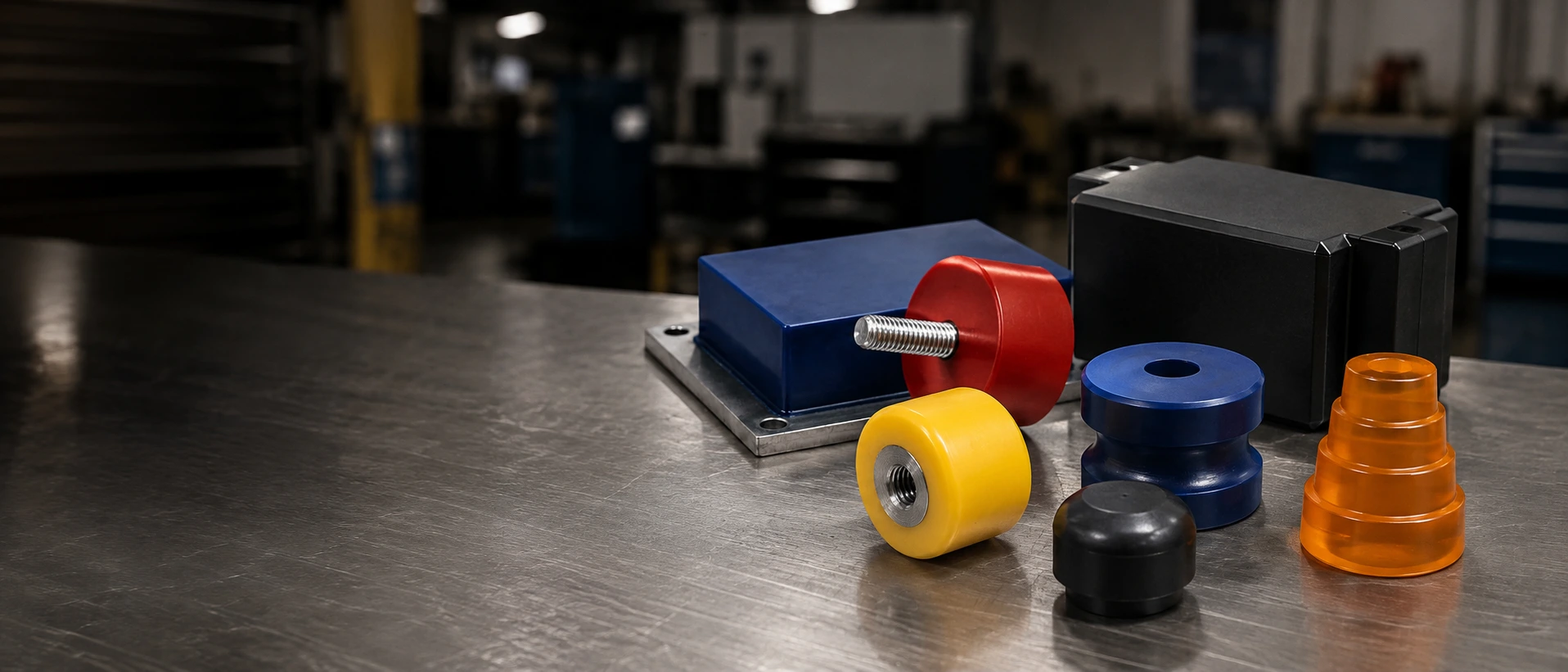
Absorbing the energy of an impact, limiting a travel, protecting a structure or reducing shock and vibration: Soremag custom casts your polyurethane pads, bumpers, bumper guards and shock absorbers — with or without a metal plate or insert, depending on the project.

Pièces d'amortissement et de fin de course

A polyurethane part between the load and the structure

An impact that is not absorbed does not disappear: it goes into the structure — cracks in the welds, noise, bolts working loose. A polyurethane pad, bumper or shock absorber sits where the moving mass meets the structure: it takes the impact, absorbs part of the energy and returns to its shape, cycle after cycle, while resisting wear and a range of environments. The shape, the hardness and the fastening are chosen to suit the application.

Types of parts

An overview of what we mold in this family. The list is not exhaustive: the exact shape depends on the function and on the space available, depending on the project.

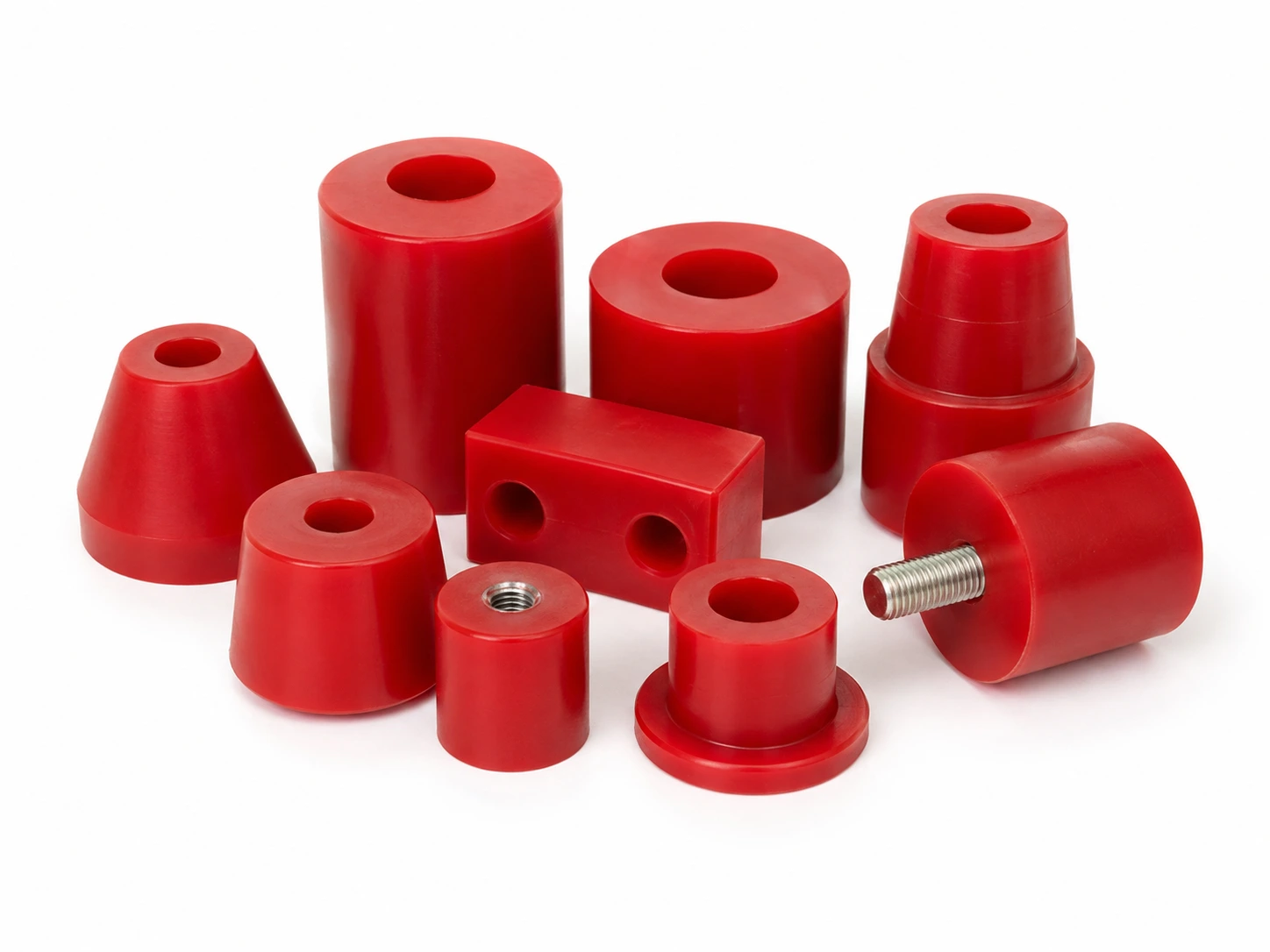
Butées et tampons en polyuréthane rouge coulé à chaud : coniques percées, cylindriques, à insert taraudé, à collerette
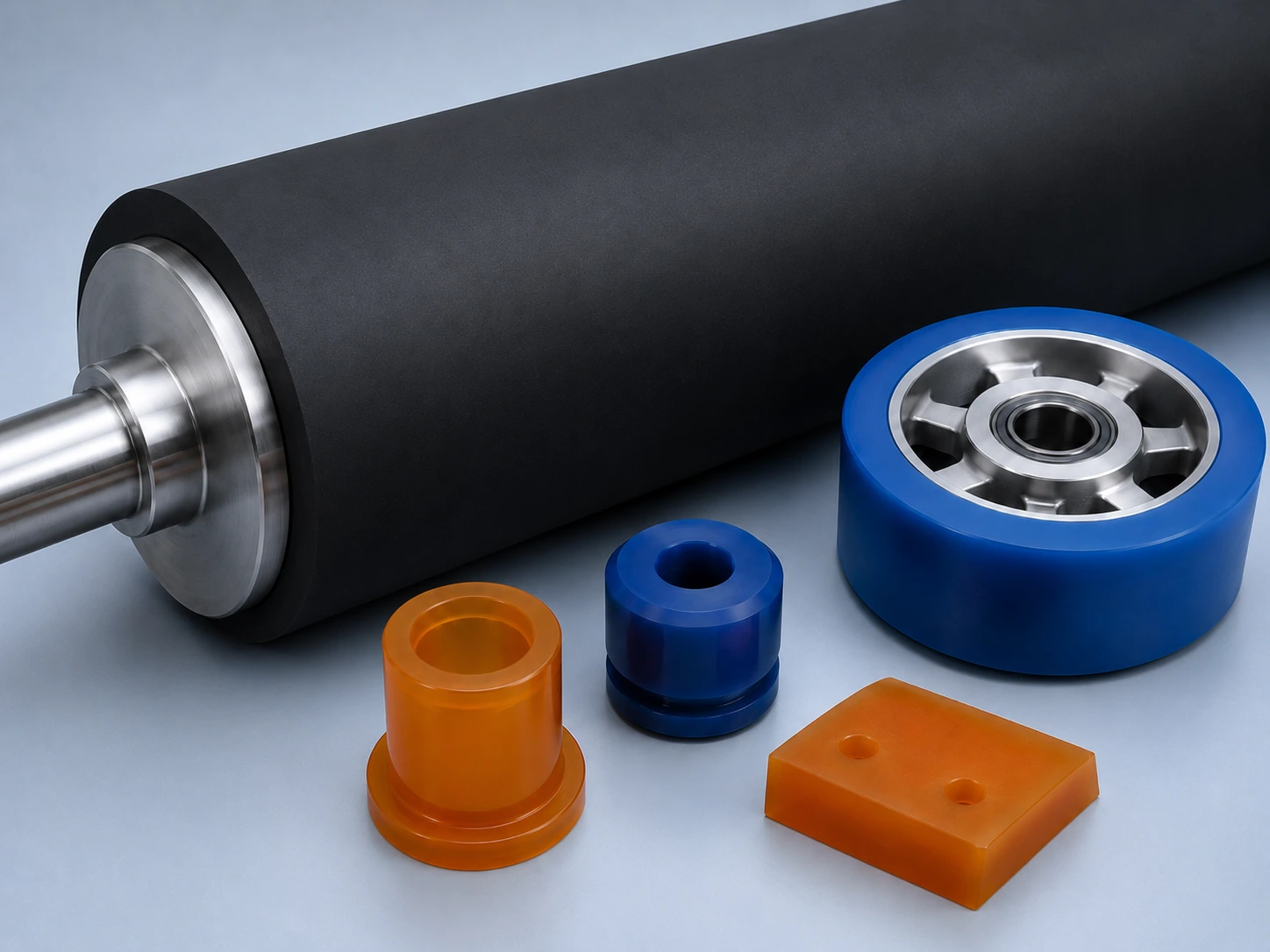
Assortment of bumpers and padsBumpers & stops — several shapes and sizes, depending on the project
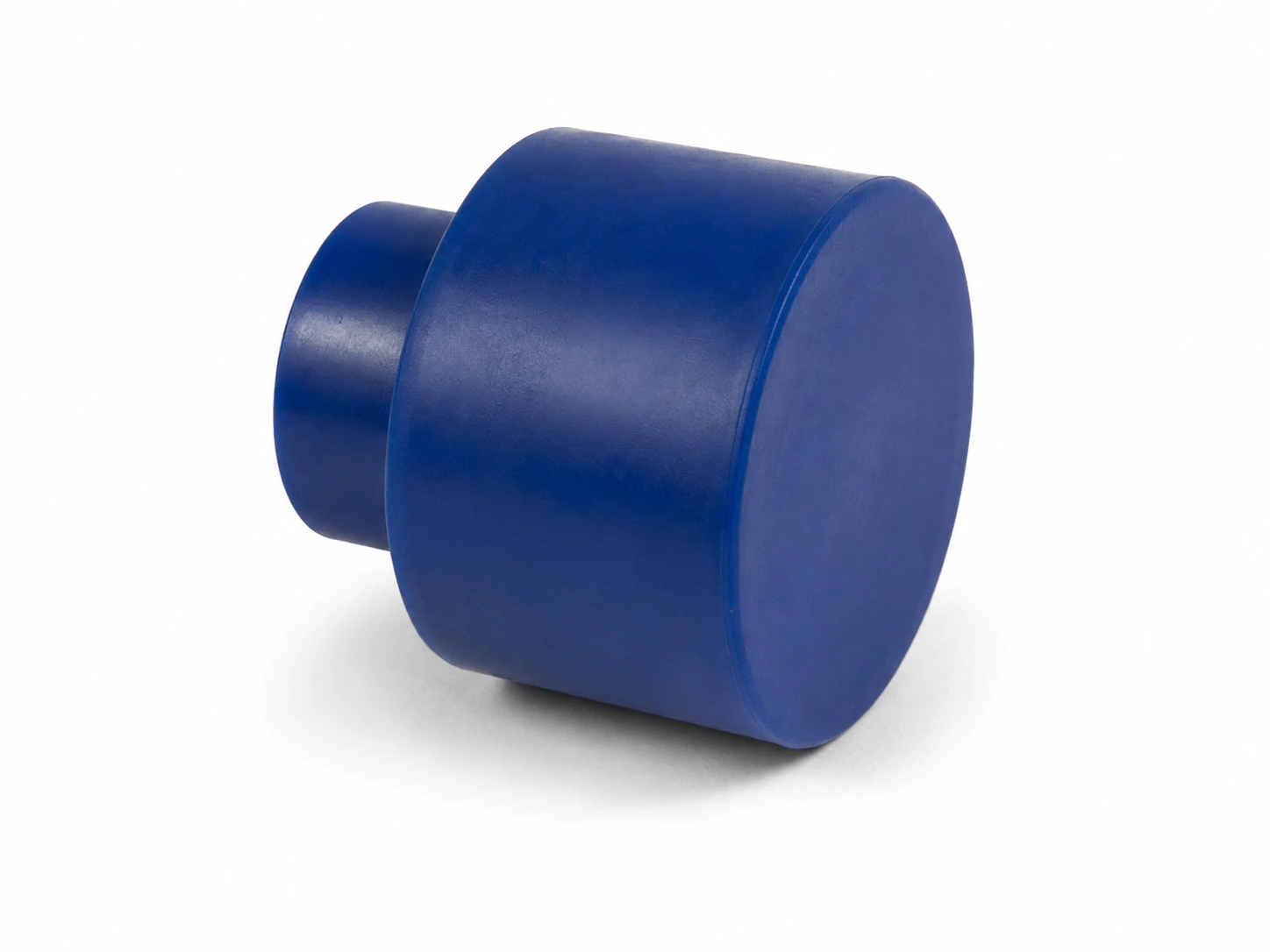
Butée épaulée en polyuréthane bleu à deux diamètres, épaulement de centrage moulé — Soremag Québec
Shouldered bumperShouldered bumper — centering shoulder
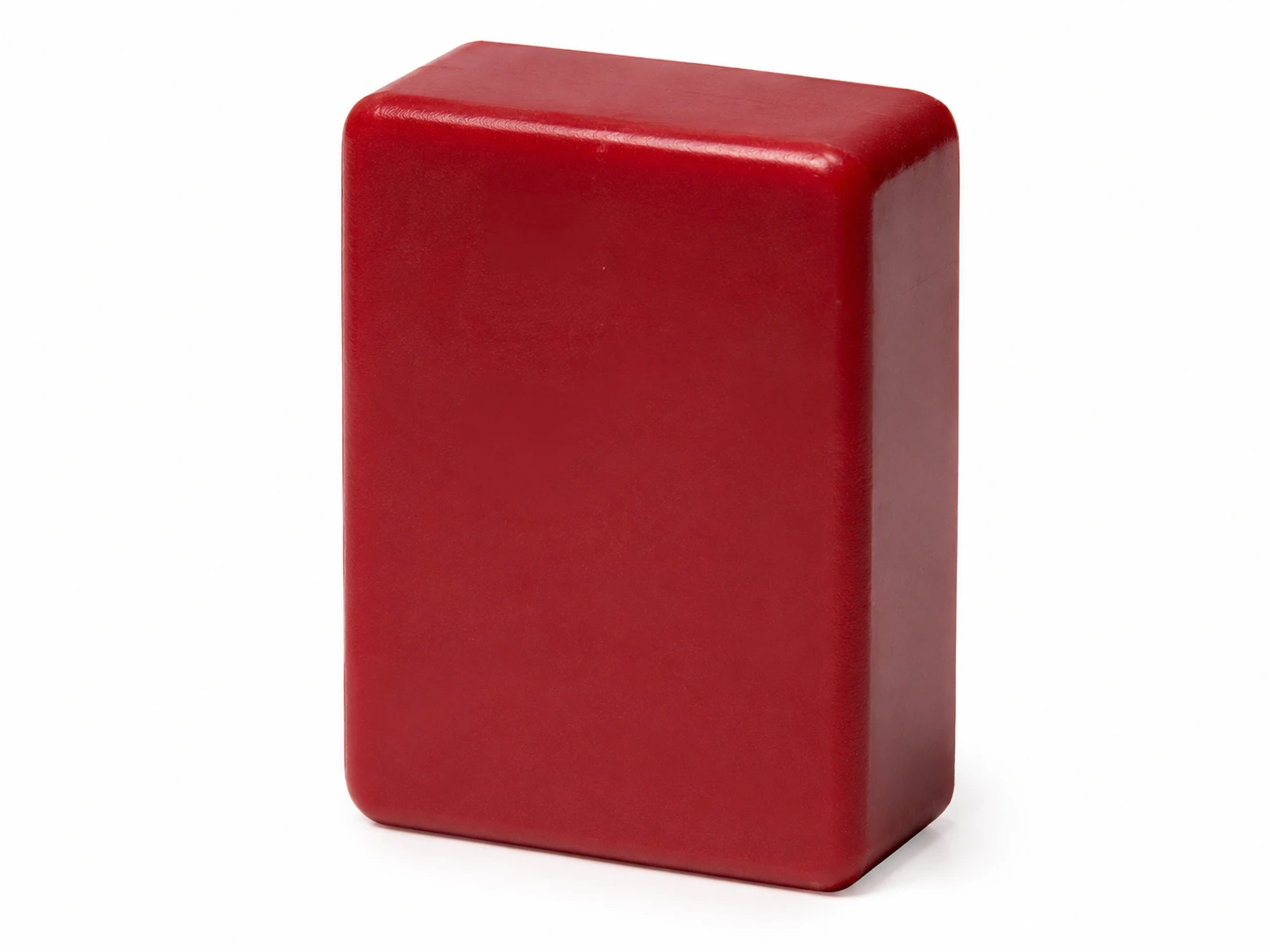
Bloc amortisseur rectangulaire en polyuréthane rouge à coins arrondis, dureté choisie selon l'énergie à absorber
Rectangular damping blockRectangular damping block
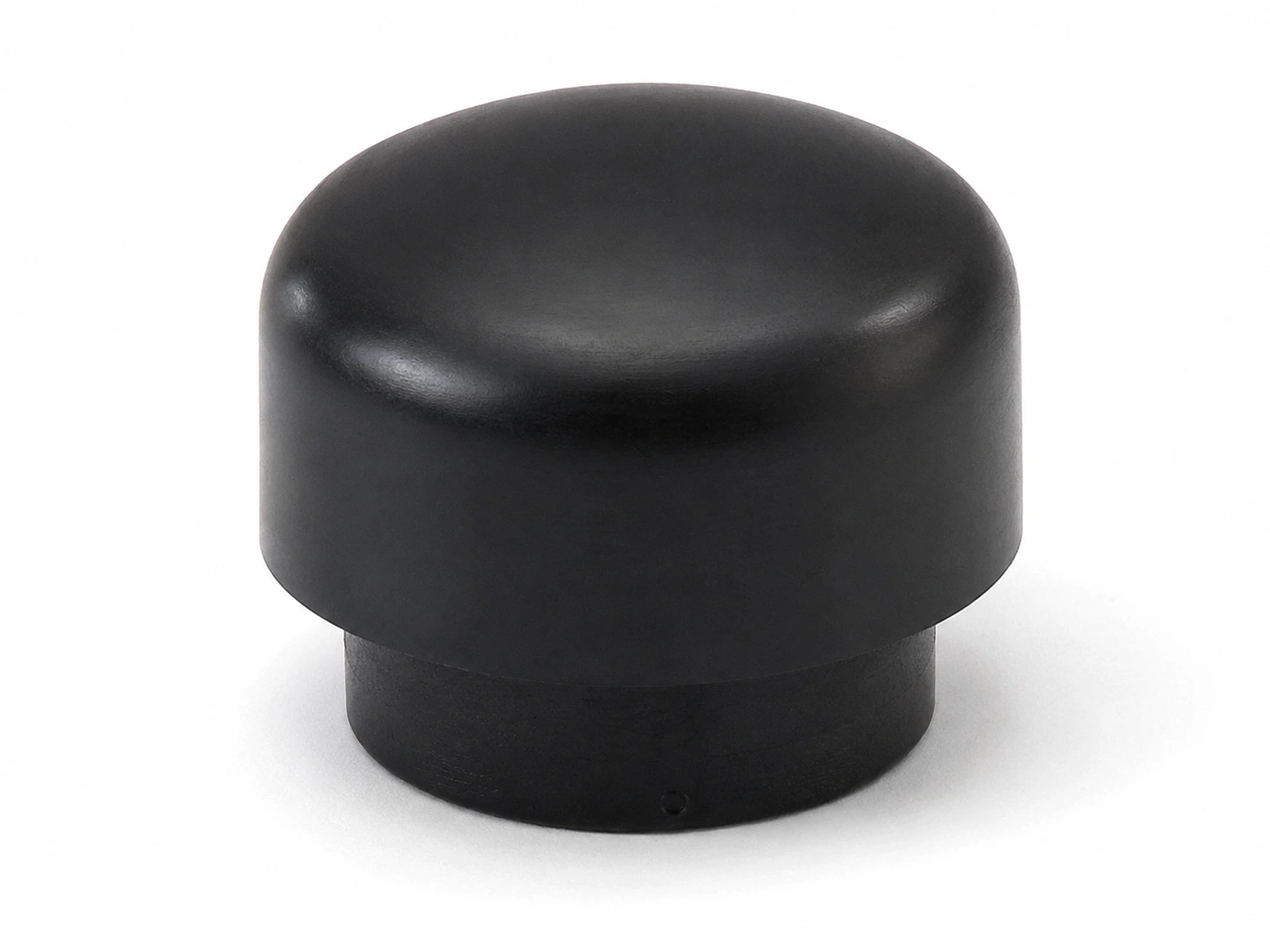
Butée à tête bombée en polyuréthane noir avec base réduite emmanchée press-fit — Soremag Québec
Dome-head bumperDome-head bumper — press-fit base
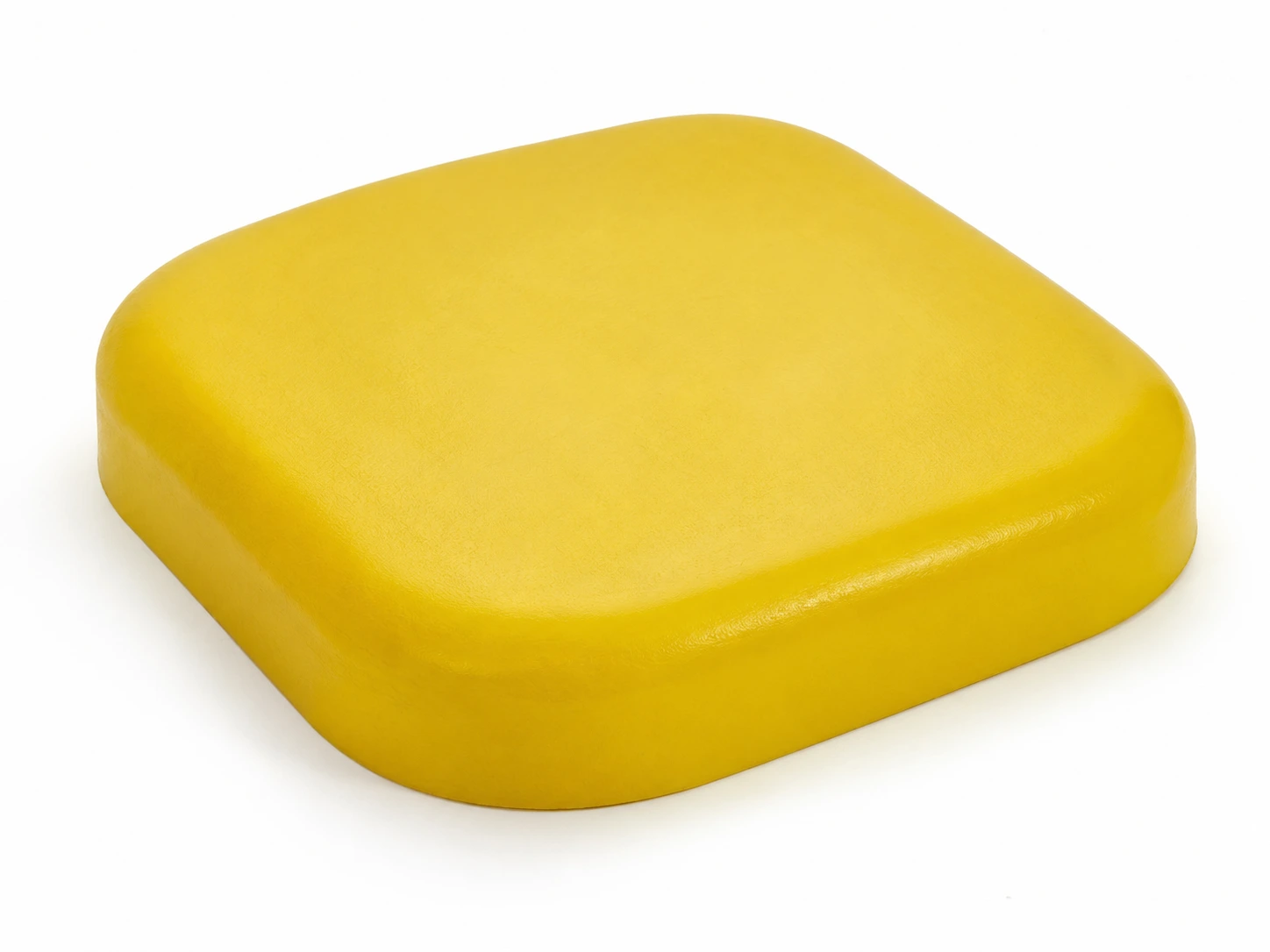
Tampon carré en polyuréthane jaune à coins arrondis, coussin d'appui coulé du souple au ferme selon la charge
Square padSquare pad — support cushion
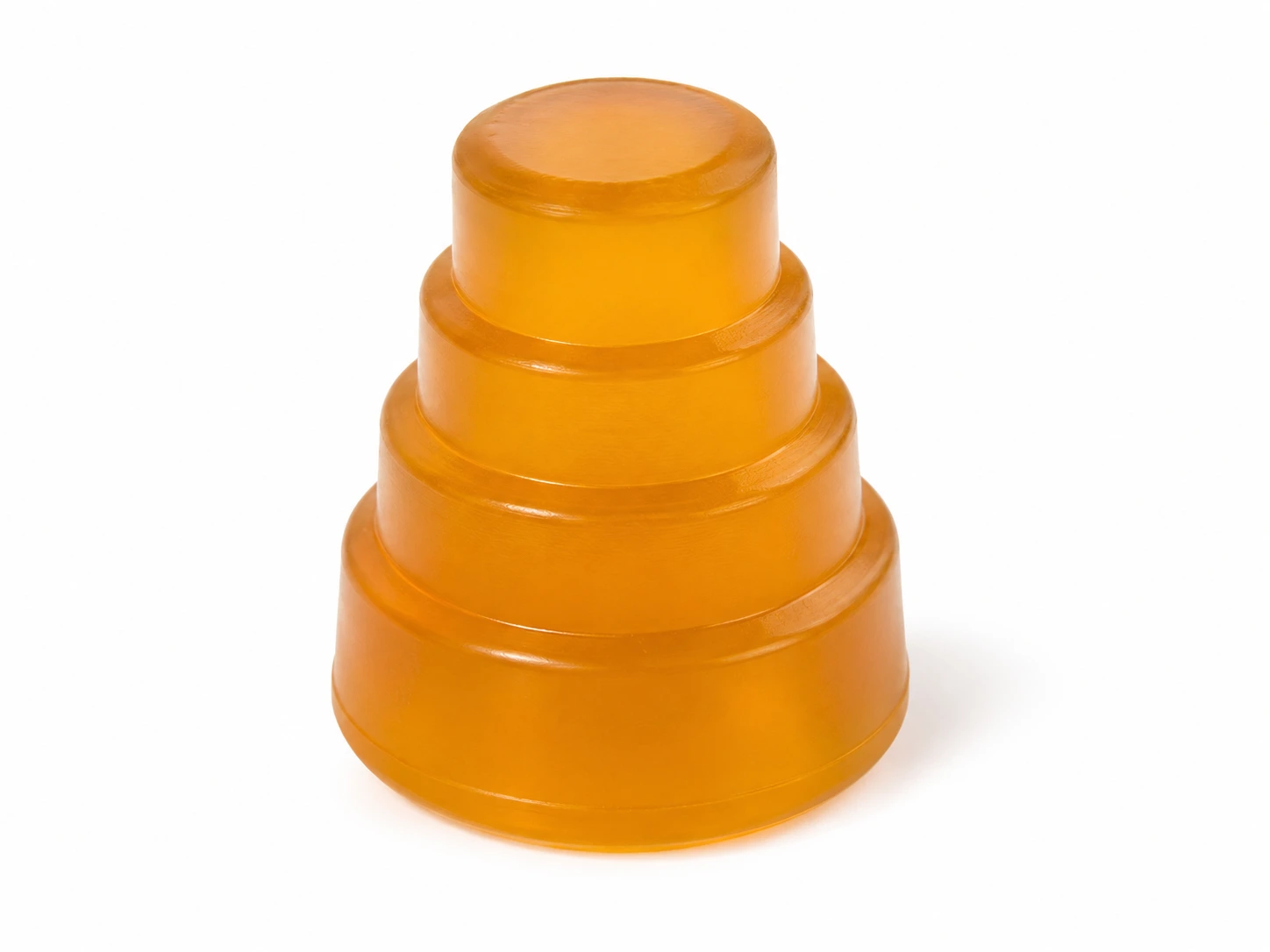
Butée conique étagée en polyuréthane ambre translucide, compression progressive étage par étage
Stepped conical bumperStepped conical bumper — progressive compression
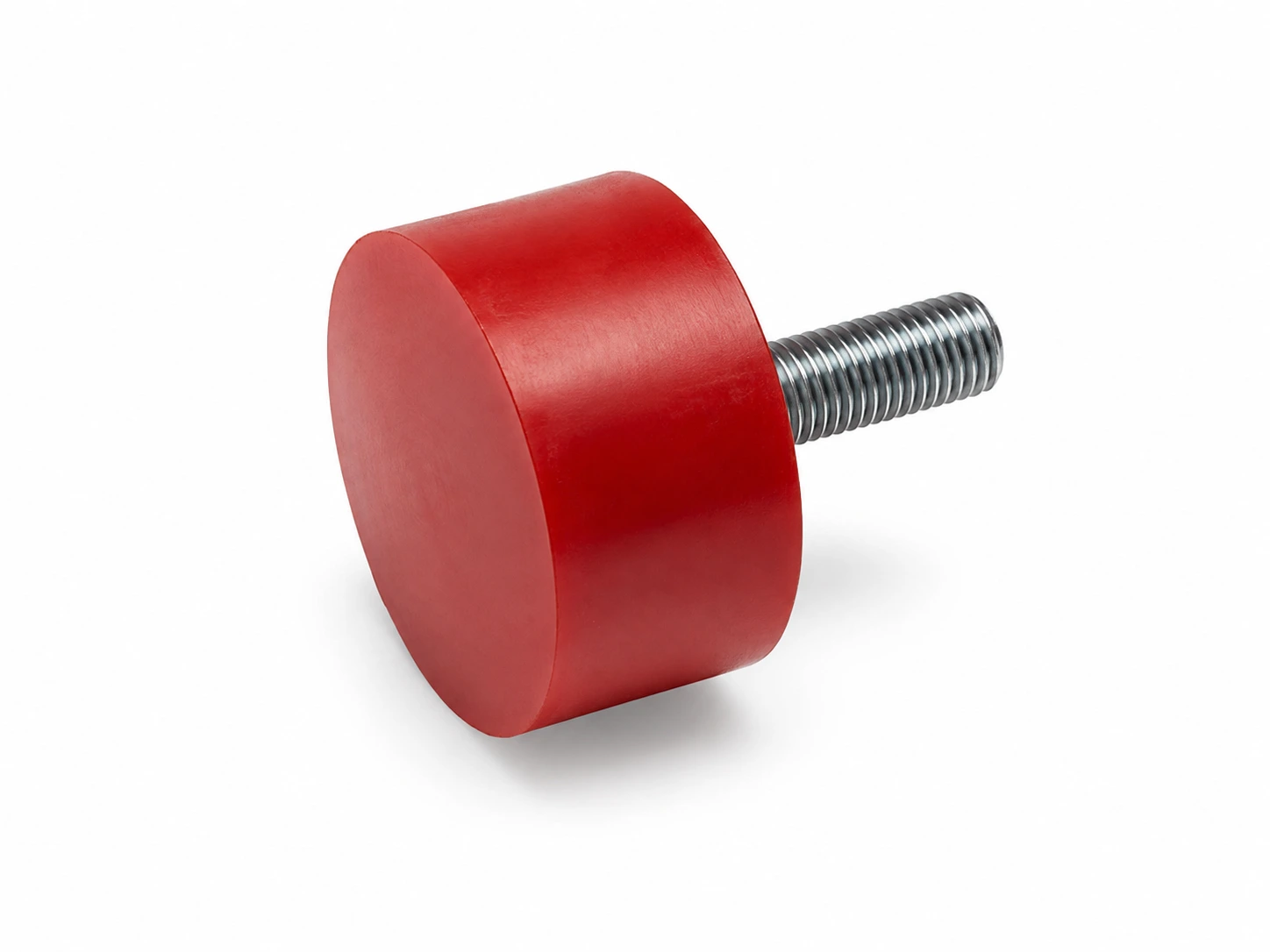
Butée cylindrique en polyuréthane rouge coulée à chaud sur goujon fileté d'acier — montage vissé direct, Soremag Québec
Threaded-stud bumperThreaded-stud bumper — direct screw-in mounting
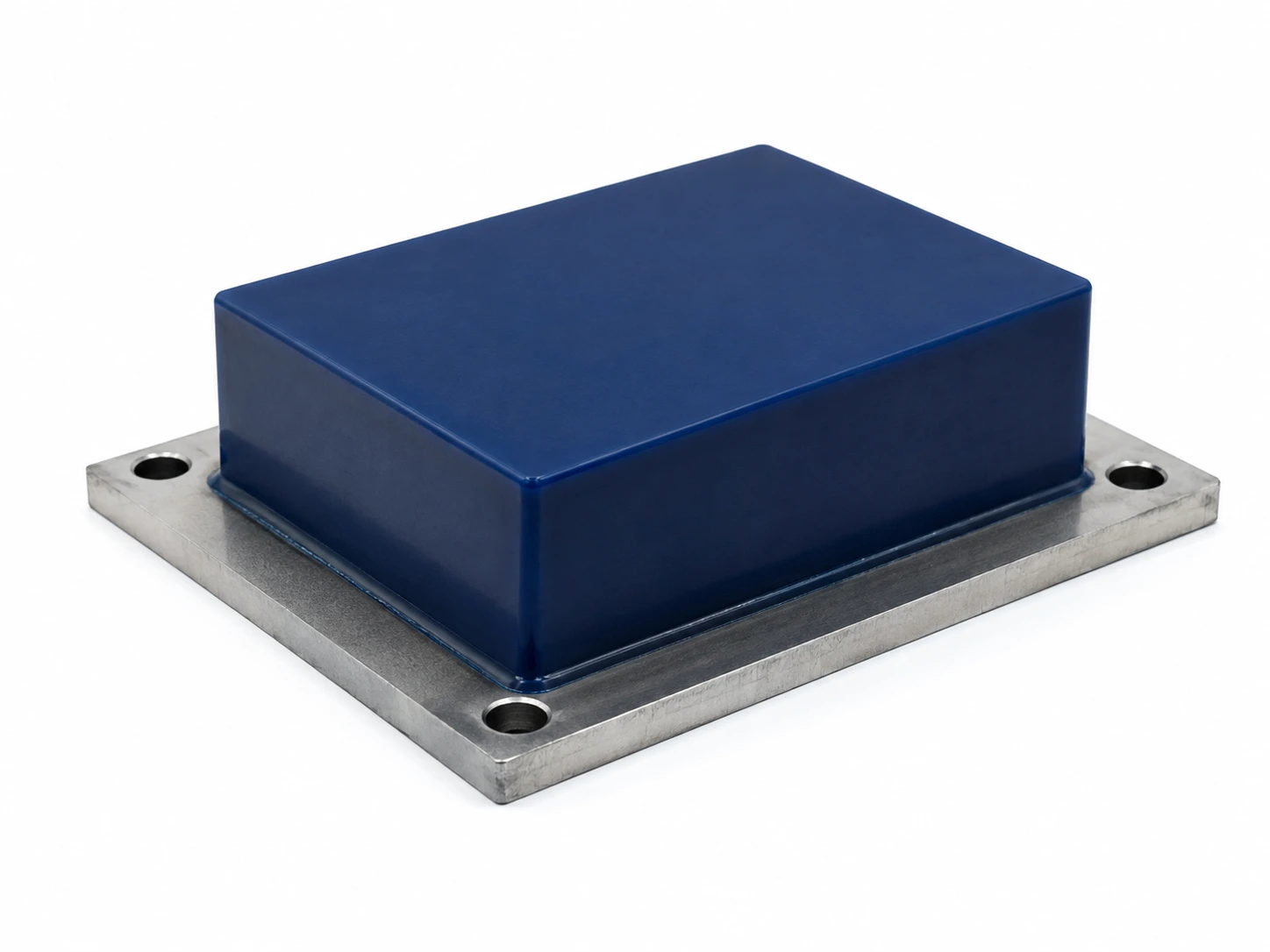
Tampon rectangulaire en polyuréthane bleu surmoulé sur platine d'acier à quatre trous de boulonnage, adhérisation validée
Pad on a steel base plateSteel-backed pad — boltable, load carried by the metal
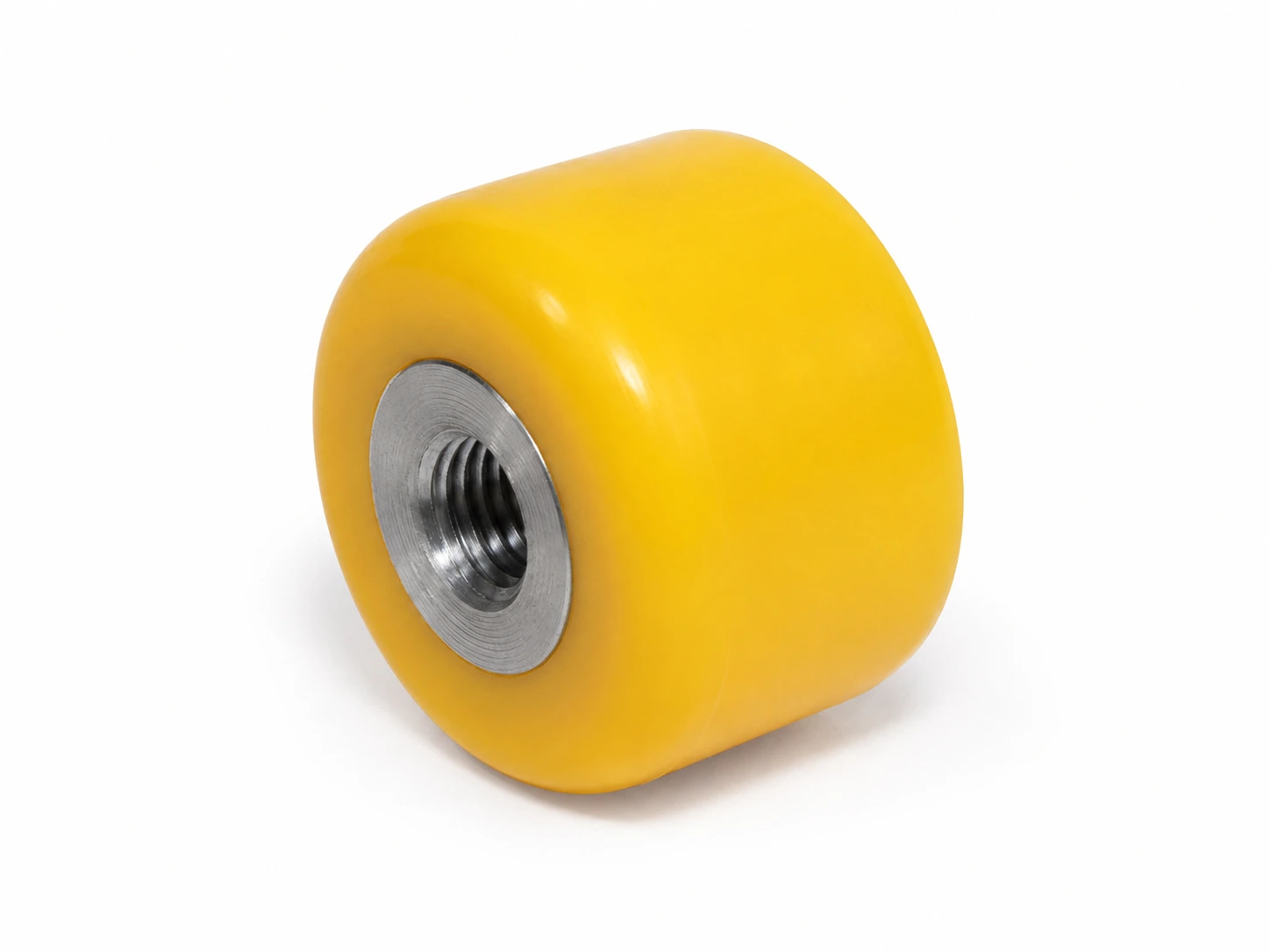
Butée en polyuréthane jaune avec insert d'acier taraudé noyé au moulage pour fixation par vis
Threaded-insert bumperThreaded-insert bumper — fastened from the inside
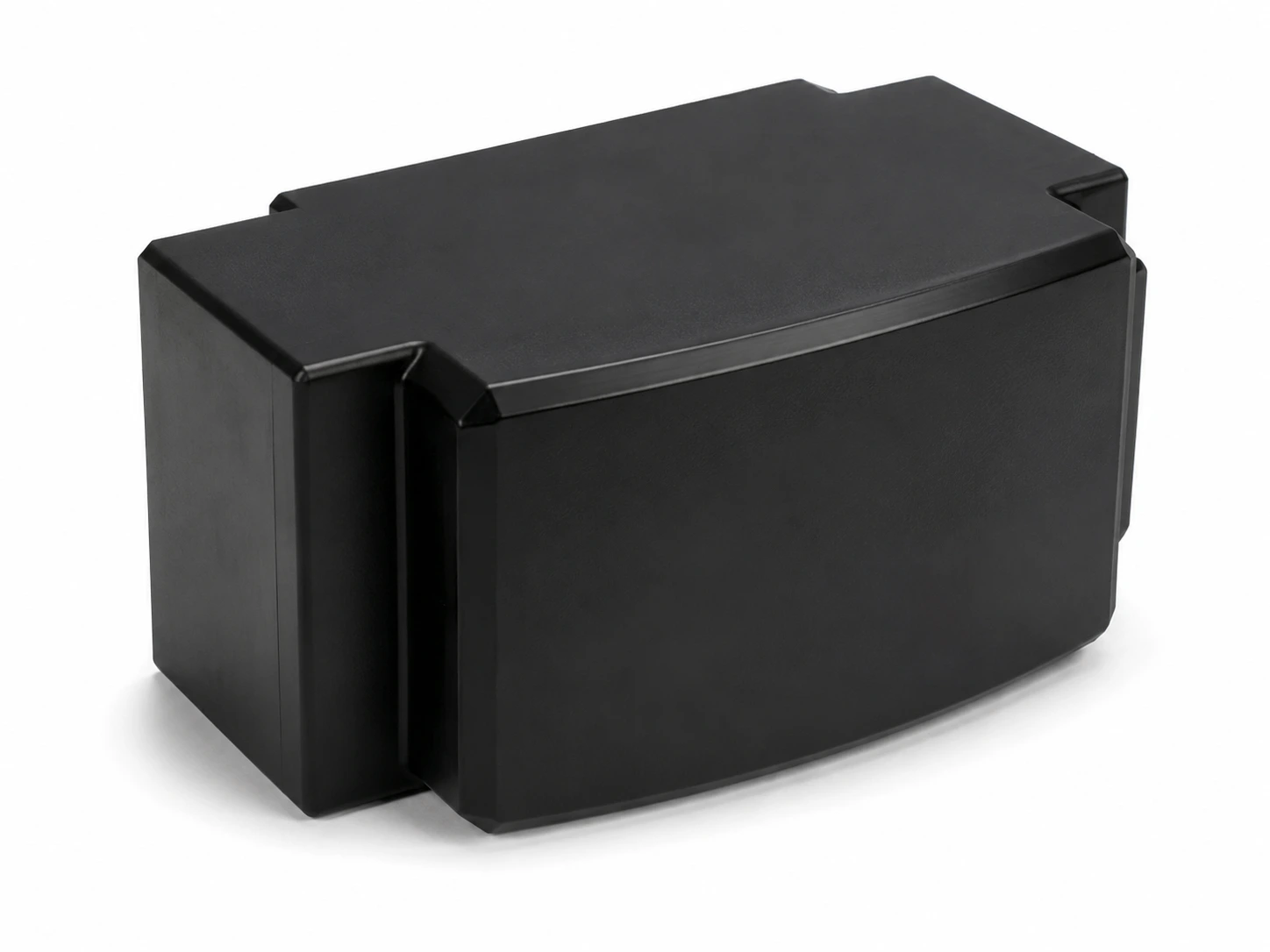
Gros bloc amortisseur profilé en polyuréthane noir, moulé sur mesure selon plan ou échantillon — Soremag Québec
Custom damping blockCustom impact block — from a drawing or a sample
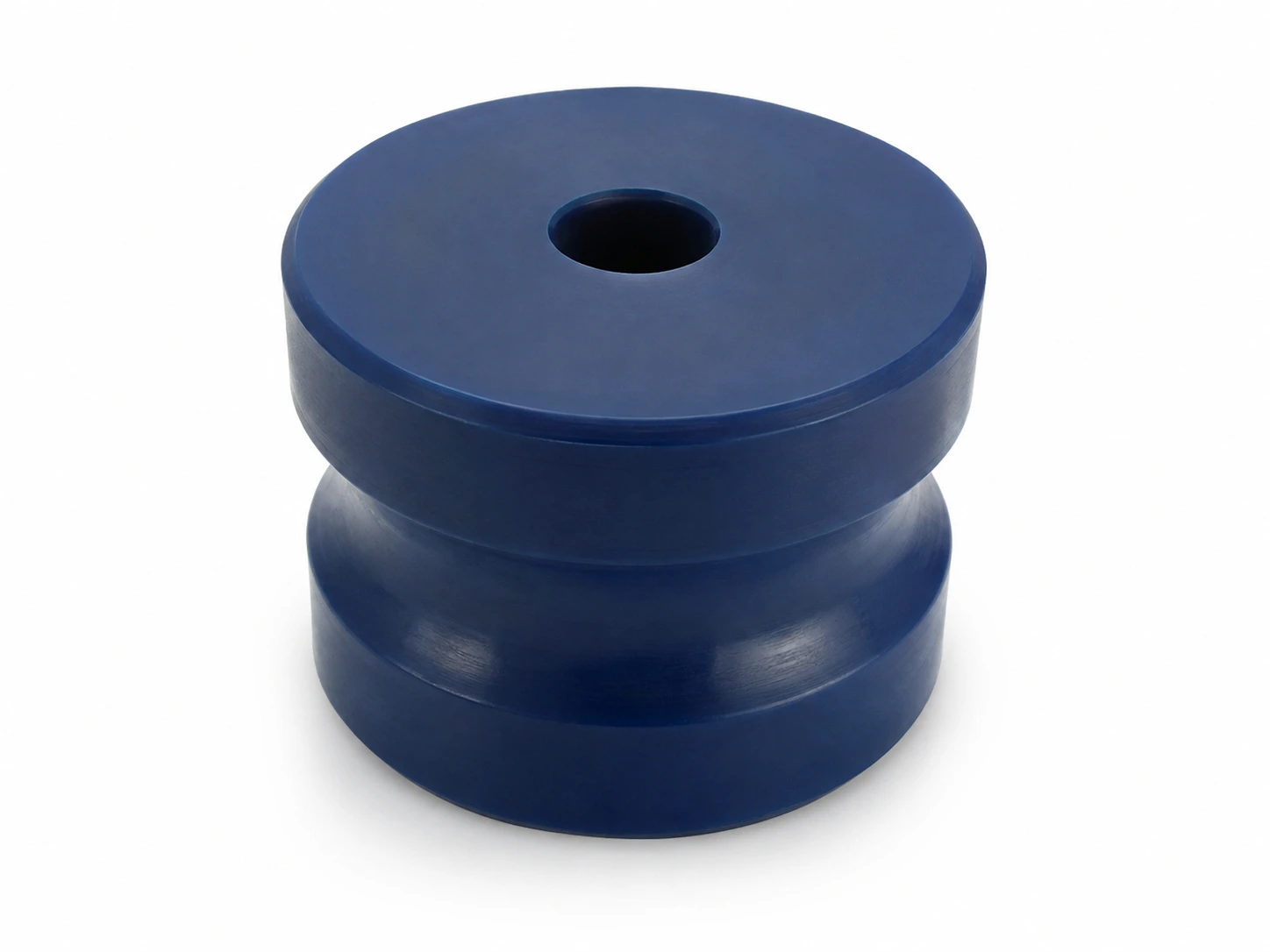
Tampon diabolo en polyuréthane bleu à gorge et trou central — amortisseur de chocs et de vibrations, Soremag Québec
Spool bumperSpool bumper — shock and vibration

Vibration isolators (vibration isolators)

Parts fitted in between to decouple a machine from its support and limit the transmission of vibrations — hardness and shape chosen according to the load and the frequency.

Bumpers with a threaded rod (threaded stud)

Pad or bumper cast around a threaded rod that serves as a direct mounting point — handy for a screw-in installation with no extra plate.

Pads with a steel plate (steel-backed)

Polyurethane cast on a steel mounting plate, often with bolt holes, for a solid mounting and load carried by the metal.

Bumpers with an insert (insert / threaded)

Bumper with a built-in threaded insert or metal core embedded in the polyurethane, to take a screw or act as a rigid anchor.

Impact blocks (impact blocks)

Heavy blocks placed at points of repeated impact or drop to absorb the energy and protect the supporting structure.

End-of-travel stops (end stops)

Parts that stop or limit the travel of a moving member at the end of its stroke, taking the contact instead of letting it hit the metal.

Compression pads (compression pads)

Blocks loaded in compression that deform under the load then return to their shape — to absorb a descent, a bearing load or repeated pressure.

Bumper guards (bumpers)

Protective parts placed in the contact zone to take an impact and protect the nearby equipment from marks and damage.

Shock absorbers (shock absorbers)

Parts designed to dissipate the energy of an impact or a stop and reduce the rebound, the noise and the vibrations transmitted to the structure.

Protective cushions (cushions)

Cushions and pads that spread a load and cushion the contact between two surfaces, depending on the space and the travel available.

Conical and cylindrical shapes

Profiles conical, cylindrical or stepped that influence the way the part compresses — a geometry chosen according to the travel and the progressiveness wanted, depending on the project.

A specific part in mind, or a sample to copy? Tell us about your part →

Conception selon l'application

What we look at before casting the part

A pad is first of all a question of energy: how much it has to take, how fast and how many times. Depending on the project, these factors drive the shape, the formulation and the fastening. The more you tell us about the real use, the more accurate the recommendation can be.

The factors that drive the design

Depending on the project, a softer part tends to give progressive compression and better cushioning, while a firmer part limits the travel more. The real behavior is confirmed at installation or by testing — these guidelines do not replace validation for your application.

Metal inserts and backings

Depending on the installation, the part can include a metal component that serves as a mounting point or a rigid core, while the polyurethane forms the surface that absorbs the impact.

Threaded rod

Threaded rod embedded in the polyurethane for direct screw-in mounting, with no extra plate (depending on the project).

Mounting plate

Steel plate, often drilled for bolts, on which the polyurethane is cast — for a solid mounting and load carried by the metal.

Threaded insert

Built-in threaded insert to take a screw, when the part has to be fastened from the inside.

Stud

Overmolded mounting stud used as an anchor or a locating point, depending on the assembly.

Metal core

Rigid core embedded in the polyurethane to give the part stiffness while keeping a soft contact surface.

Reusable backing

Depending on the project, a metal backing can be designed to be reused, with only the polyurethane part to replace.

Integrating metal relies on a validated preparation and bonding system. To learn more about the principle, see polyurethane overmolding on metal →

Where our pads and bumpers work

Three application families where cast polyurethane proves itself — and the industries where you find it.

Conveyors & material handling

Dock bumpers, cart stops, transfer car bumpers: parts that take repeated impacts without marking the equipment or fatiguing the structure.

See the conveyor industry →

Industrial manufacturing & equipment

End-of-travel stops, press pads, cylinder shock absorbers: the polyurethane stops the travel gently and reduces the noise and the vibrations transmitted to the machine.

See industrial manufacturing →

Wood industry

Equipment stops, damping pads, loading supports: parts that absorb the impacts of moving lumber and protect the supporting structures.

See the wood industry →

Questions about pads, bumpers and shock absorbers

Which hardness should you choose for a polyurethane pad or bumper? +

The hardness depends on the use. Depending on the project, a softer part tends to give progressive compression and better cushioning, while a firmer part limits the travel more. Because the behavior also depends on the shape, the load and the impact speed, the hardness is generally a starting point to validate for the application, rather than a value on its own.

Can you integrate a plate or a metal insert into the pad? +

Yes, depending on the project. The polyurethane can be cast with a threaded rod, a mounting plate, a threaded insert or a stud, with a validated preparation and bonding system. The metal part serves as a mounting point or a rigid core, and the polyurethane forms the contact surface that absorbs the impact. For the bonding principle, see overmolding on metal.

Do you make pads or bumpers from a worn part, without a drawing? +

Yes. Through reverse engineering, we can reproduce a pad, a bumper or a shock absorber from a sample, a worn part or a sketch. Depending on the information available, we validate the dimensions, the target hardness and the mounting method with you.

A pad, a bumper or a shock absorber to make?

Tell us the function, the moving mass, the load, the space available and the mounting method — or send us the worn part to copy. Depending on the project, we recommend the shape, the hardness and the metal integration best suited to it, anywhere in Quebec and Canada.

➔ Request a quote