Covering & manufacturing · rubber and polyurethane · Quebec450 664-4000·1 800 361-5588·EN|FR
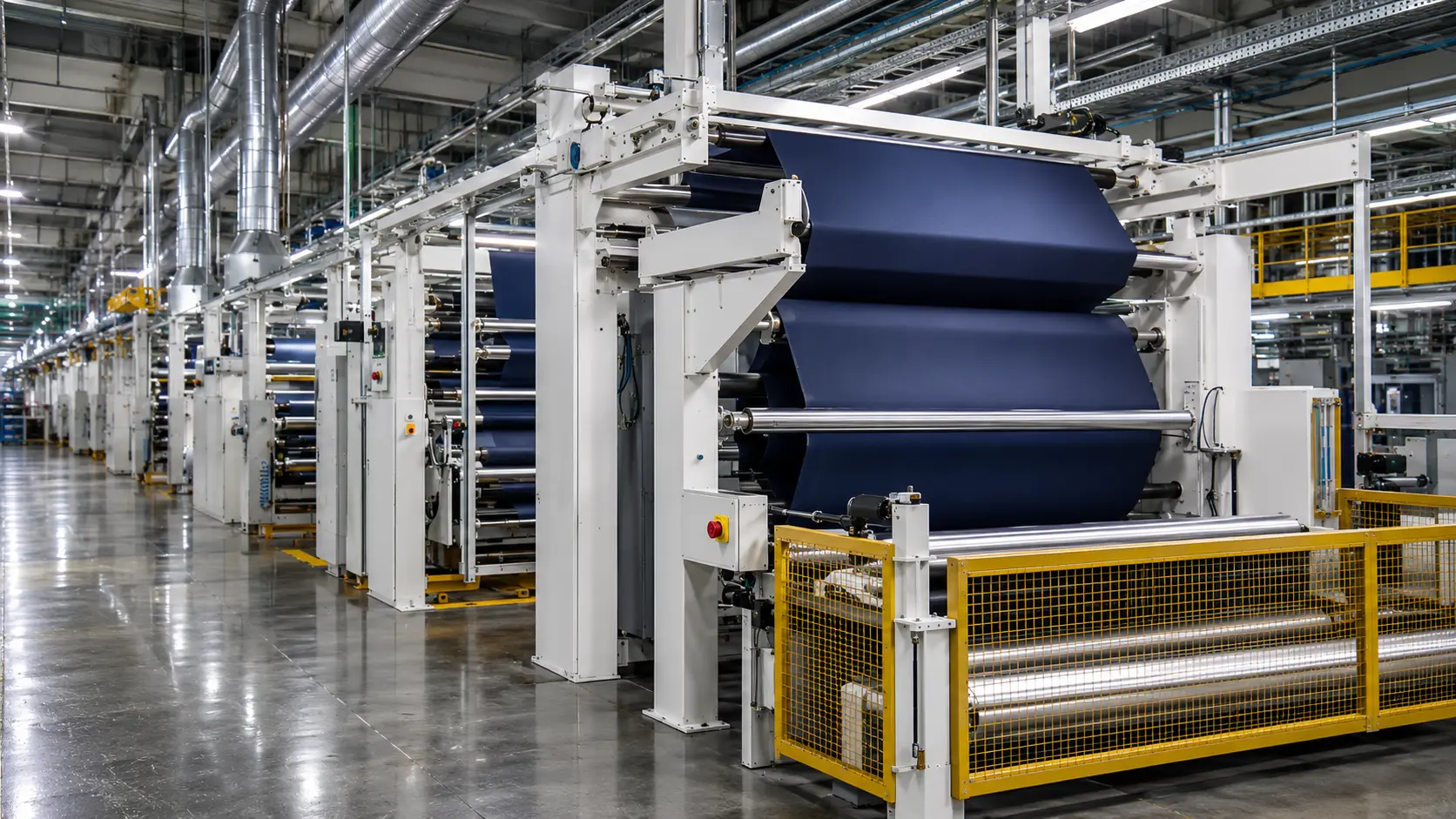
Ligne de finition textile : larges nappes de tissu bleu marine passant sur une série de rouleaux recouverts
Industries · Textiles & non-tissés

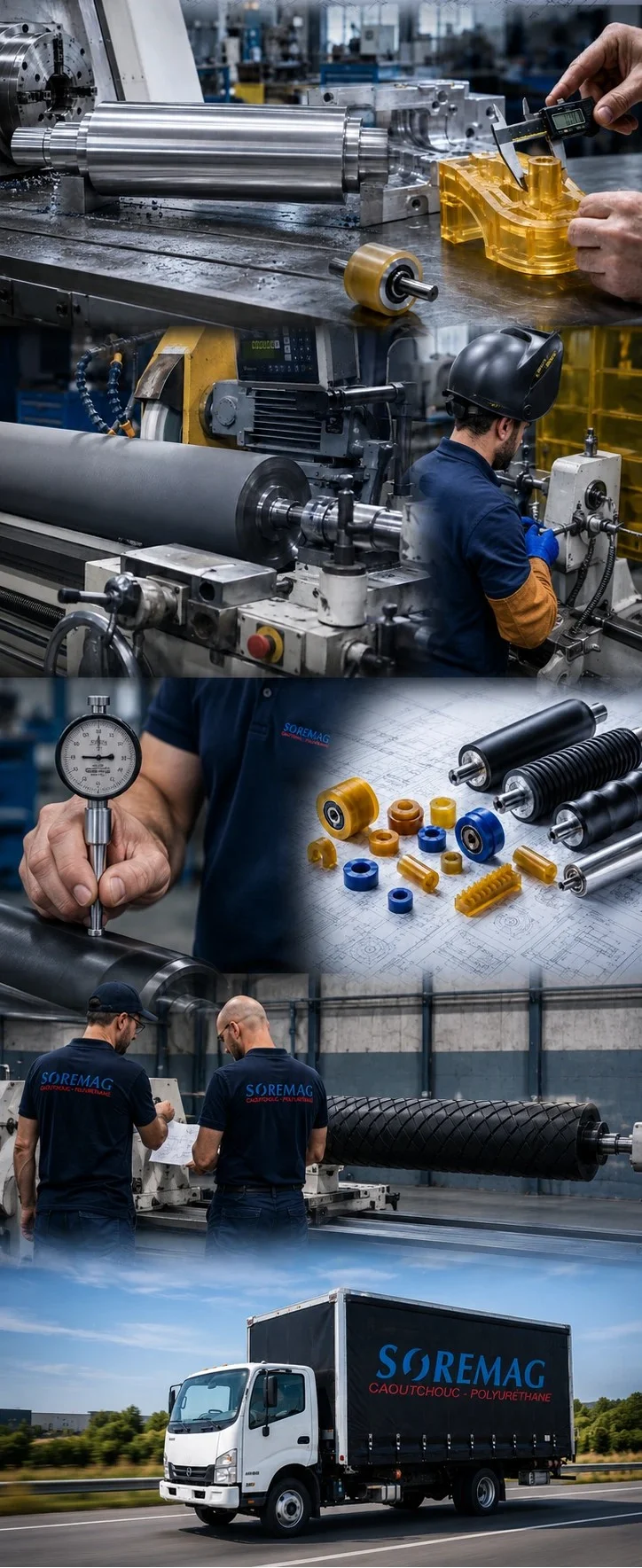
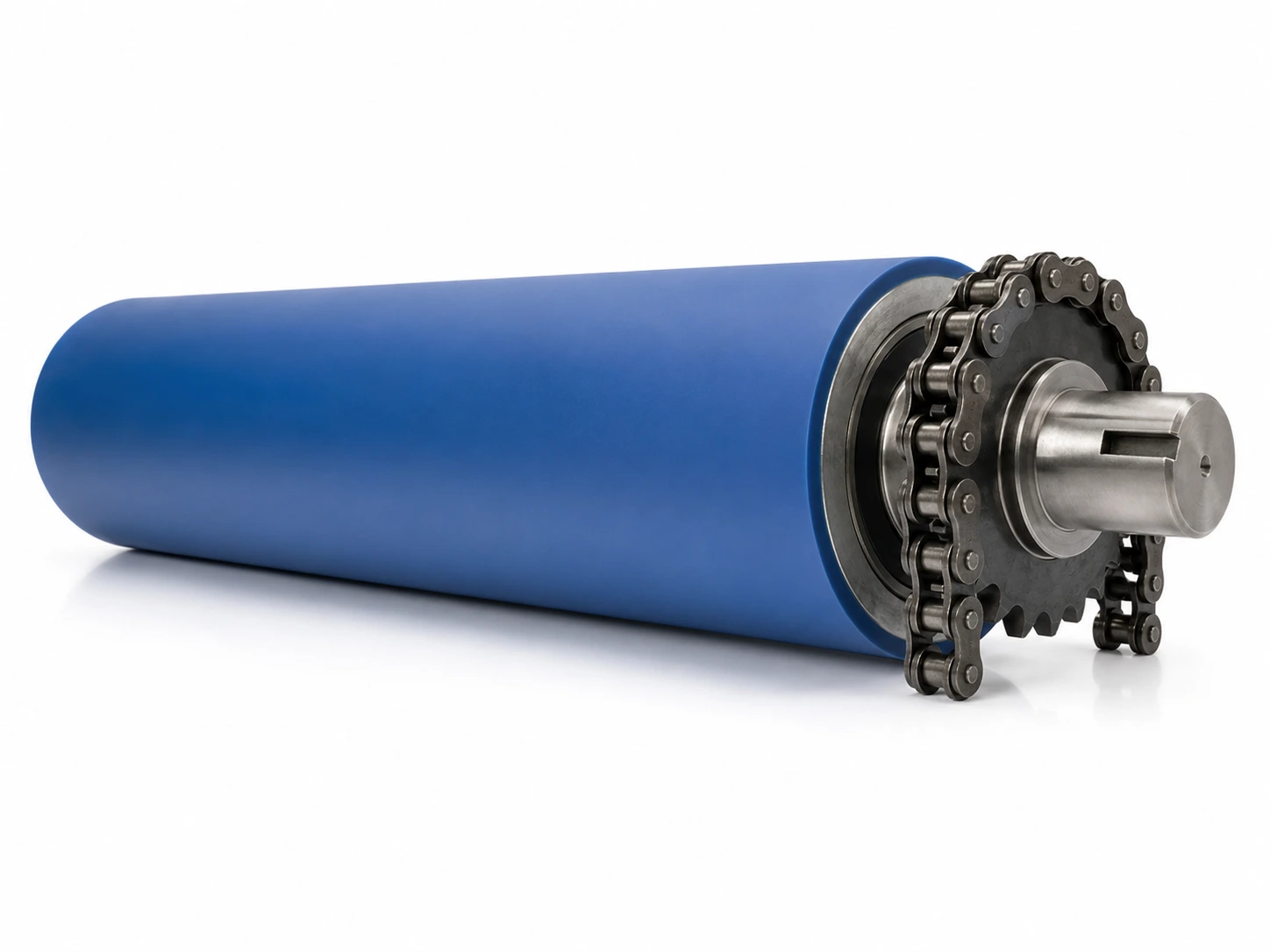
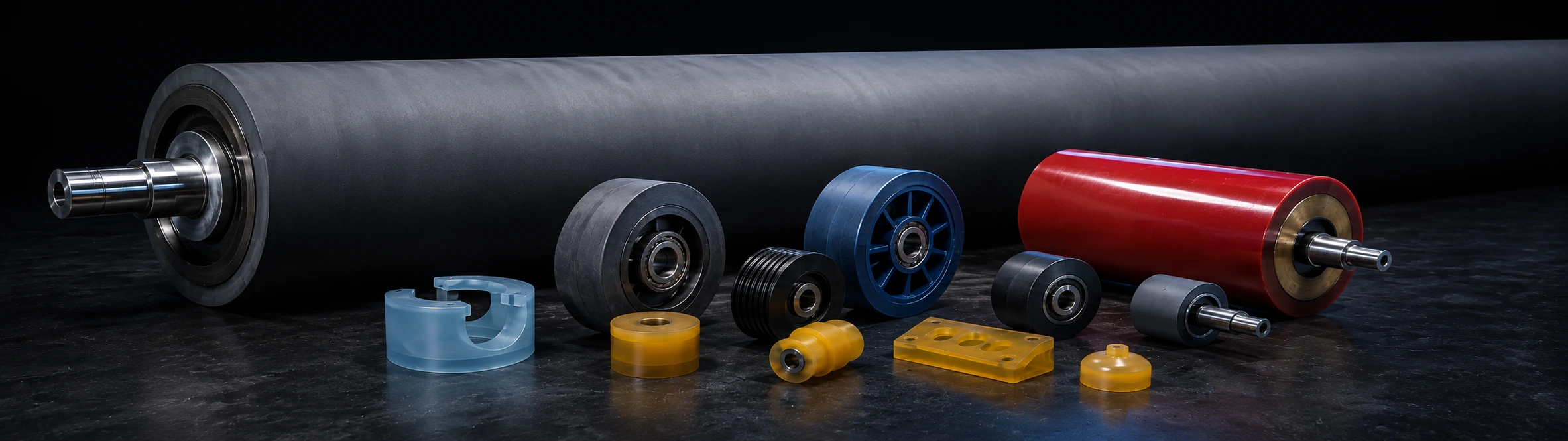
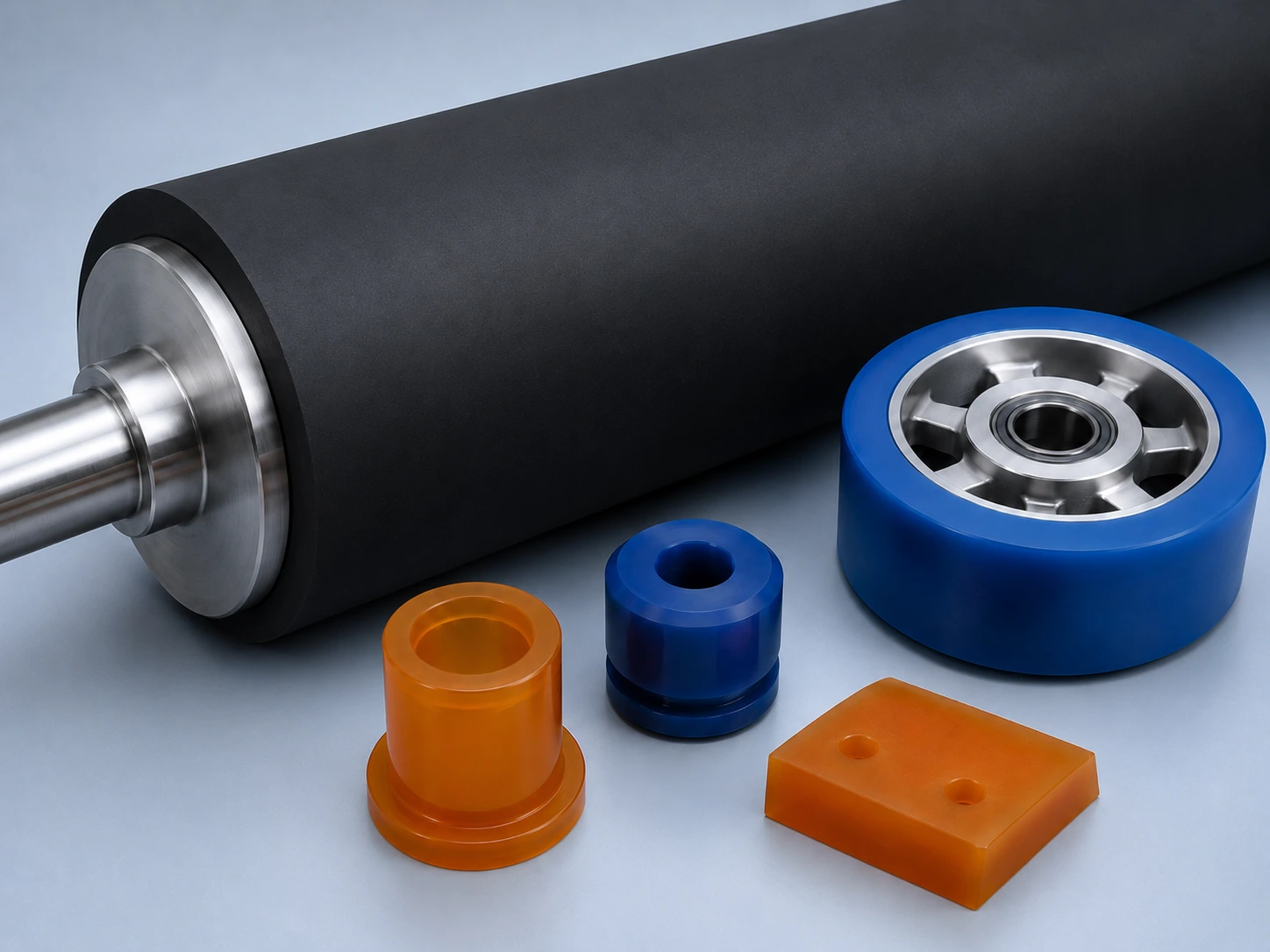
Rollers, wheels and molded parts for textiles and nonwovens

Dyeing, padding, wringing, web guiding, coating, stenter or nonwoven lines: in dyeing and finishing, a roller that marks, that deflects, that slips or that dyes unevenly shows up immediately on the finished product. We refurbish your rollers to keep your lines consistent.

In textiles, everything comes down to uniformity

Even pressure at the nip, controlled wet pickup, consistent hand and luster, a surface that leaves no marks, a web that is well guided and free of wrinkles: the smallest deviation shows up on the finished product.

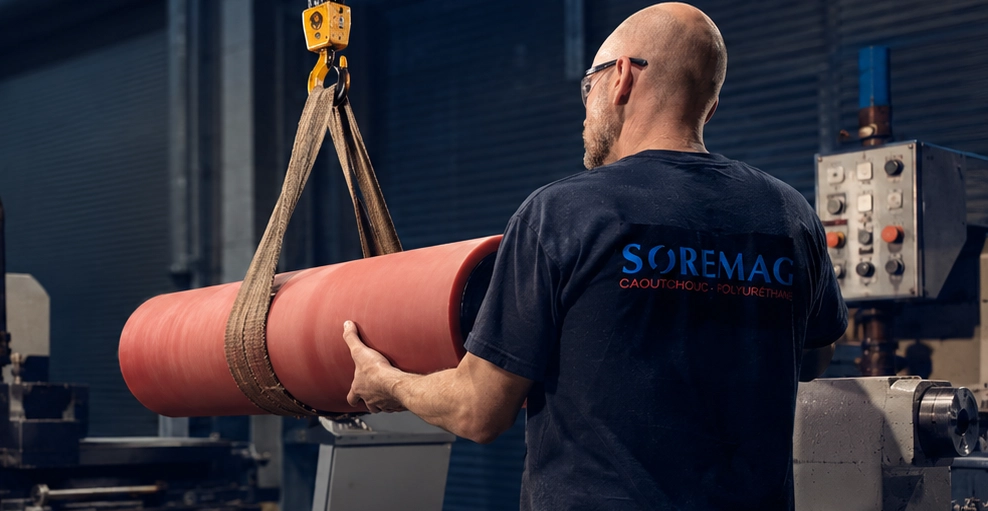
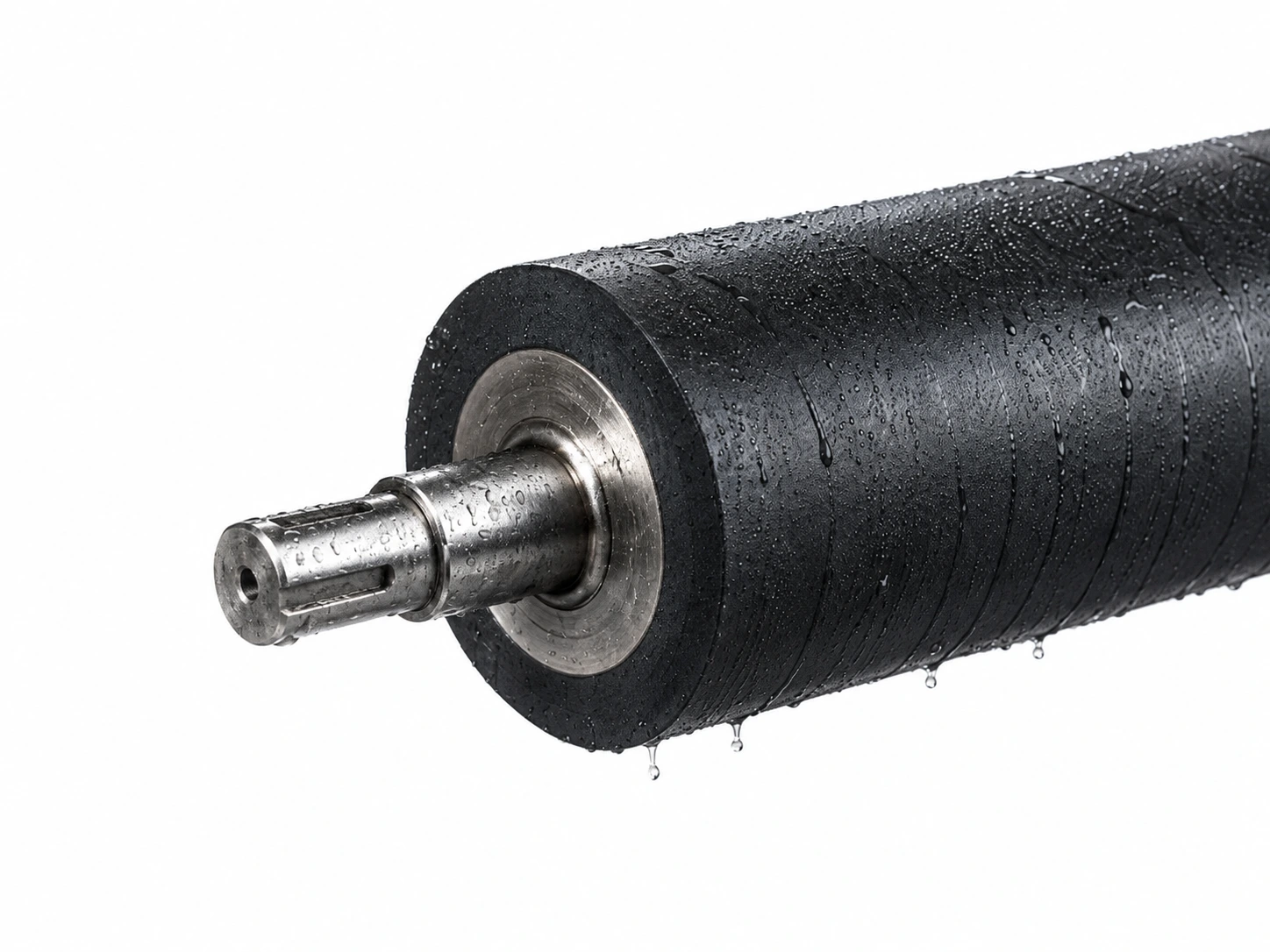
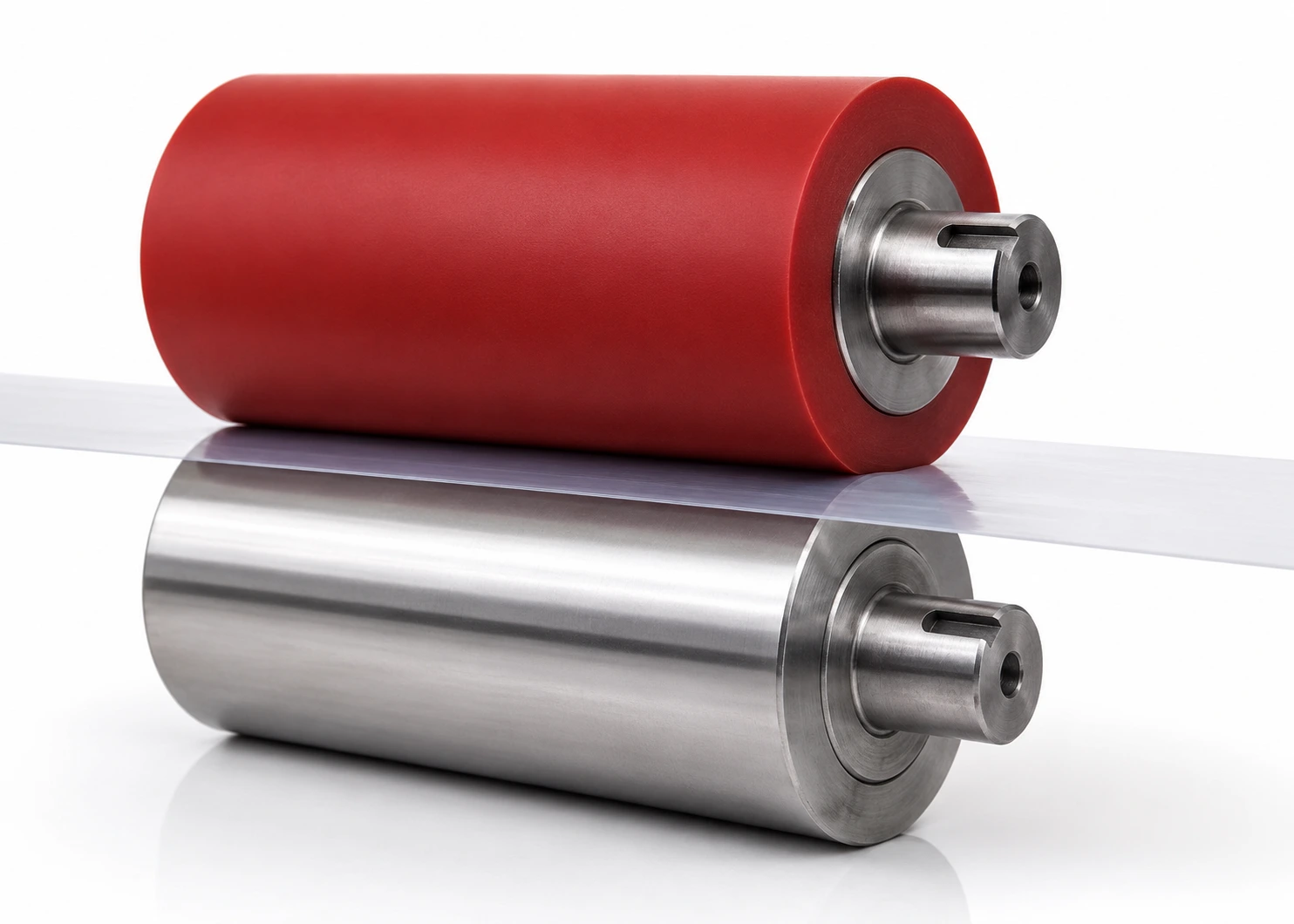
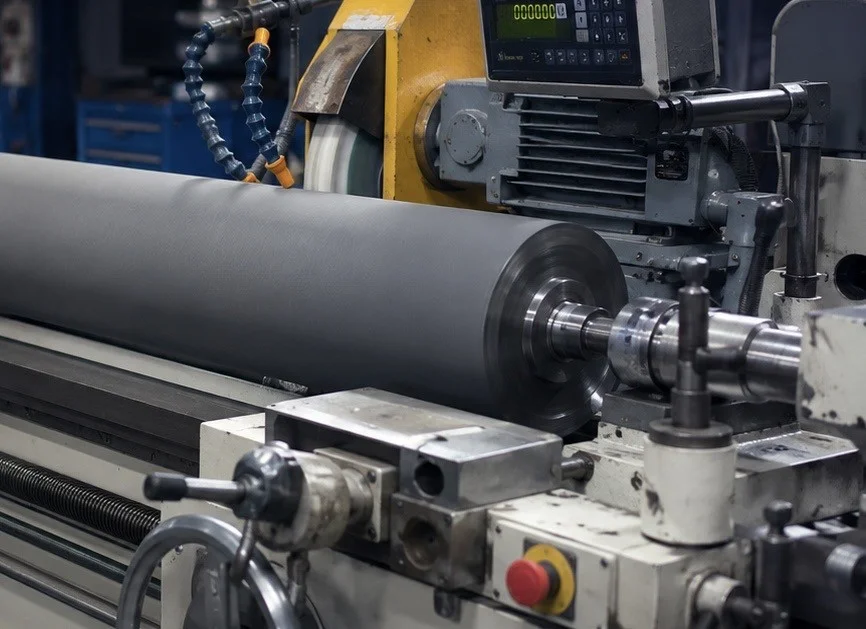
At Soremag, we cover, grind and refurbish rollers (rubber, polyurethane, silicone), and polyurethane wheels and cast polyurethane parts. We don’t pick a cover on hardness alone: we account for the fabric, the bath, the temperature, the steam, the chemistry, the speed, the pressure, the surface finish (Ra) and the problem seen on the line.

The segments we serve

Ennoblissement

Dyeing & finishing

Padders, mangles, mercerizing, washing, wringing, finishing.

Calandrage

Calendering & compacting

Backing and drive rollers for hand, luster and stability.

Enduction

Coating & laminating

Coating, heat bonding, laminating: backing rolls, nips, applicator and metering rollers.

Rameuse

Stenter & infeed/outfeed

Infeed, outfeed, overfeed, draw and guide rollers.

Non-tissés

Technical textiles & nonwovens

Spunbond, meltblown, SMS: guiding, driving, pressure, transport, winding.

Sur mesure

Another process?

Describe what the part does and the service conditions: we’ll figure it out.

Typical uses where our solutions make a difference

The rollers, wheels and parts you find in textile plants

Padder rollers (mangle)

Uniform pressure and a “just enough” hardness for a steady wet pickup.

Wringer rollers (squeeze / expressor)

High-speed water removal without marking; resilience of the compound.

Calender rollers (backing)

Hardness and surface tuned to the hand you want, when the machine design uses a cover.

Nip / press rollers & backing rolls

Pressure uniformity and geometry (crown) for coating and laminating.

Guide & drive rollers

Guide, idler, drive and pull rolls: grip without marking, without static.

Tension / dancer / overfeed rollers

Control of tension and of the web at the entry to a stenter or a compactor.

Spreader rollers

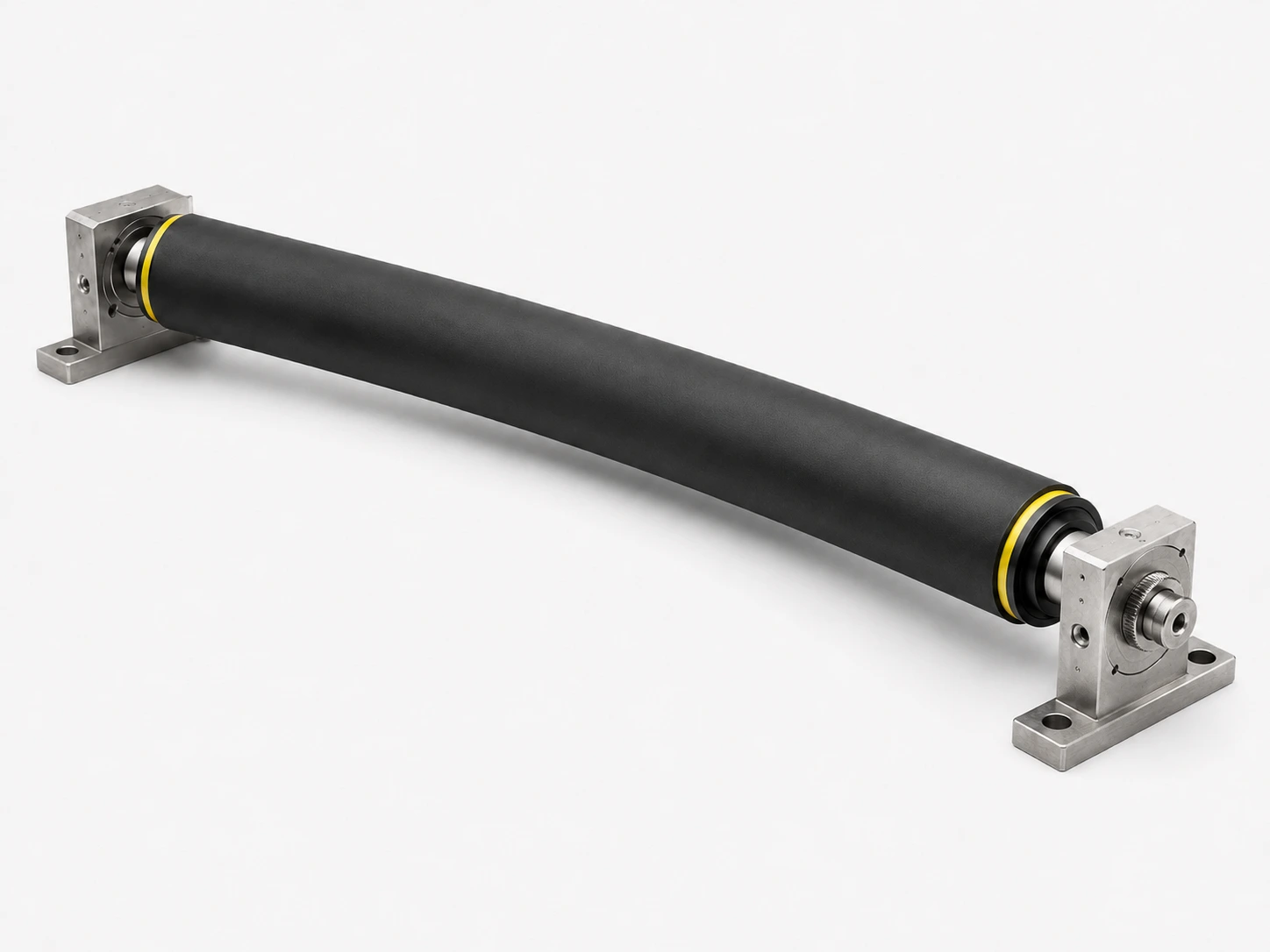
Straight rollers with crown / reverse crown or diverging spiral grooving; covering of the sleeve for bowed rollers, depending on the model.

Sleeves (sleeves)

Fast replacement on the existing shaft, when the assembly allows it.

Polyurethane wheels & molded parts

Guides, cam followers, bushings, bumpers, wear parts; reverse engineering when the OEM part is unavailable.

Sélection des matériaux

The right material for wet heat and the bath

Temperature, steam, bath chemistry, speed, pressure, oils, abrasion and the finish you need.

In textiles,

one material dominates the moment wet heat appears
. Padders, washing and dyeing call for EPDM; coating and thermal bonding call for silicone; the spin-finish zones call for nitrile.

EPDM

Padders, washing, dyeing, finishing

Excels in hot water, steam and moisture; holds up to acids, bases and ozone.

Its weakness: oils and hydrocarbons.

SiliconeVMQ

Coating, thermal bonding, lamination

Release and high heat: the standard grade holds about 200 °C; beyond that it takes a high-temperature formulation — up to

260 °C (500 °F)
.

Low resistance to cuts, abrasion and load.

NitrileNBR

Spin finishes, drive, guiding

Comes out ahead in every oily zone.

Less comfortable with ozone, UV and strong solvents.

Natural rubberNR

Cold squeeze, delicate fabrics

Resilience and grip, without oil.

Sensitive to oils, ozone and UV.

CSMHypalon®

Aggressive chemical baths

Strong acids, oxidizing agents, ozone and UV.

Treatment lines and aggressive dye baths.

Polyester urethane

Wear parts, dry service

Severe wear in dry service.

Hydrolysis in wet service.

Polyether urethane

Wet service at moderate temperature

Abrasion resistance, plus resistance to hydrolysis.

Above about 80 °C in steam, it breaks down too.

The 80 °C line

Above about

80 °C with water or steam
, even polyether urethane breaks down.
EPDM remains the reference
— no urethane replaces it under those conditions.

On nonwovens (spunbond / meltblown / SMS), the heated engraved cylinders used for thermal bonding are generally steel, so they fall outside covering. At high speed we calculate cover thickness and compound to prevent heat build-up from hysteresis, and we choose anti-ozone formulations.

Problem observed → possible fix

Symptôme en usineCe qu'on ajuste le plus souvent
Écart de nuance rives / centre (teinture, apprêt)Profil bombé (crown) parabolique + dureté + alignement + révision de la pression.
Taux d'emport (wet pick-up) instableDureté + géométrie + état du recouvrement + propreté du rouleau.
Plis / faux plis dans la nappeRouleau étaleur courbe ou rainurage hélicoïdal divergent + guidage + tension.
Marquage des tissus délicatsComposé non-marquant + dureté et pression ajustées + polissage de surface.
Glissement / entraînement instableFormulation + surface (Ra) + nettoyage + gestion de l'électricité statique.
Fissuration de surface / décollementMatériau anti-ozone + composé à faible hystérésis + optimisation de la liaison au cœur métallique.
Attaque chimique / gonflementMatériau adapté (EPDM humide, CSM agressif) + test de gonflement sur échantillon.
Vibration / faux-rond / défaut de tailleRectification, concentricité (TIR), équilibrage, réparation des portées.
Collage (enduction / thermo)Silicone anti-adhérence + fini de surface + procédé de nettoyage.
Exemple terrain — écart de nuance sur un foulard

A plant sees the dye coming out darker at the center of the fabric than at the edges. The hardness checks out, but under pressure the roll body

deflects by a few hundredths
at the center: the squeeze pressure drops there, so the fabric holds more bath in the middle of the width, and that excess sets during drying into a deeper shade. We first confirm the cause (hardness, alignment, load, journals), then we grind in a
parabolic crown profile
that compensates for the deflection and brings back pressure — and therefore shade — that is uniform from edge to edge. A real case on a padder: when the color was darker at the center of the fabric.

What we measure and validate:
hardness (Shore A / D), surface finish (Ra), runout (TIR), cylindricity, profile / crown, grooving, dynamic balancing, condition and weld build-up of the journals, adhesion of the cover to the core, and chemical compatibility (swelling, hardness and surface testing on a sample).

Our approach (fast, structured, no random trial and error)

We usually start with a call or a Zoom: understand the application before sending a team out. Depending on the case: photos/video, parameters (speed, tension, pressure, temperature), data sheets (bath, adhesive, cleaner), dimensions and tolerances, sometimes a sample (part or fluid) for a compatibility test.

Then we act at the right level: resurfacing / precision grinding / grooving, complete recovering, geometry adjustment, mechanical repair (journals), or reverse engineering when the OEM part is not available. Need a fast fix? See emergency & logistics.

Equipment and brands we see often

Even if your machines carry another name, describe the function: we will find our way around it.

MonfortsKüsters (Andritz)BenningerBrücknerSantex RimarMenzelReifenhäuser ReicofilAndritzOerlikon NeumagTrützschlerAutefaDilo

Brands listed for reference only; Soremag is an independent manufacturer and repairer of rollers and elastomer/polyurethane parts, with no affiliation with these manufacturers.

Frequently asked questions — textiles & nonwovens

Is it better to buy OEM or to have the part refurbished? +

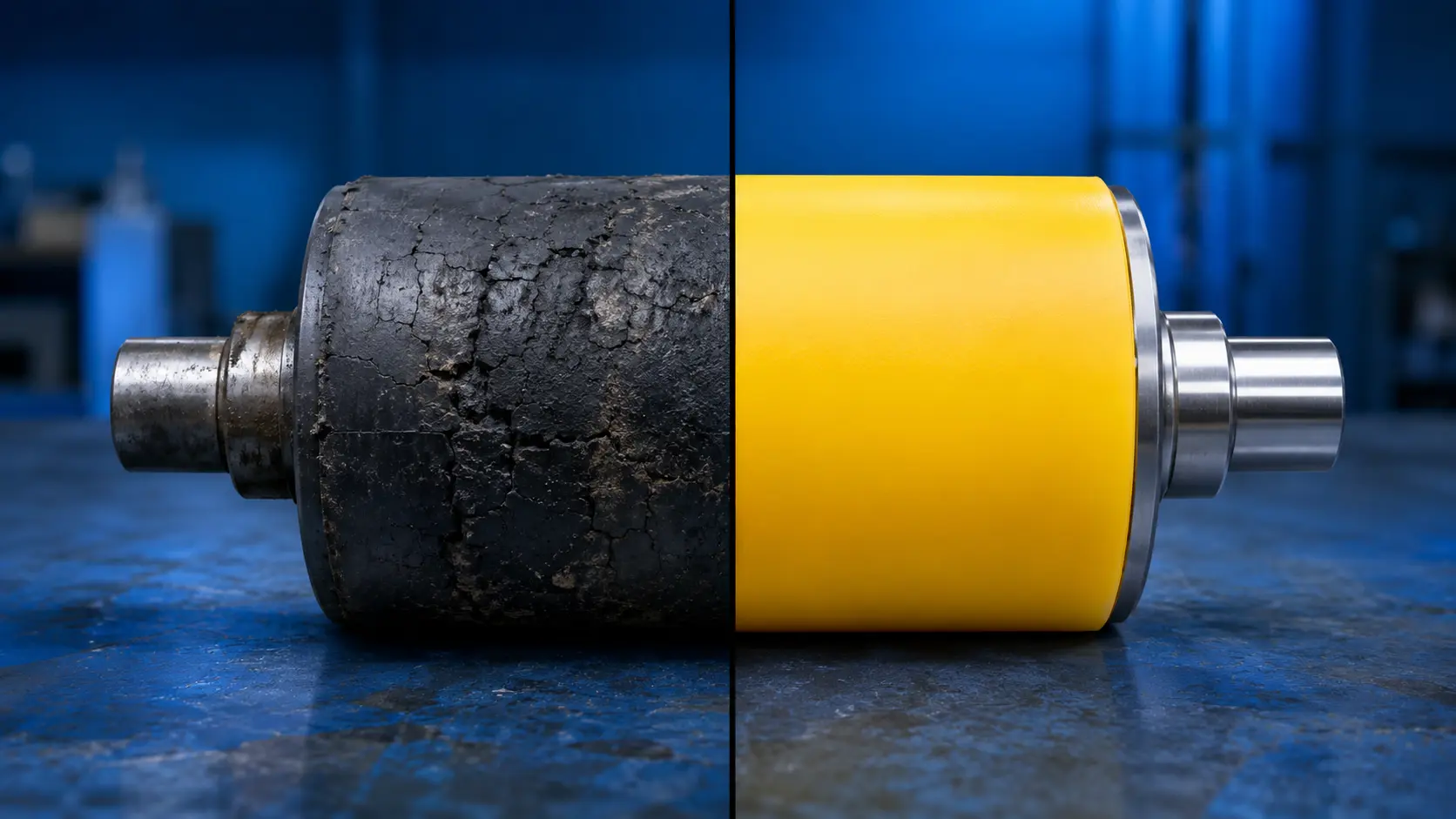
In most cases, covering and grinding your existing core is faster and more economical. We can also

improve
(material, hardness, surface, geometry) based on the real problem on the line.

My padder dyes or finishes differently at the edges: what should I check? +

Usually uneven pressure across the width: under load, the shaft deflects at the center and the wet pickup changes. We check hardness, deflection, alignment and pressure, then we generally grind with a

crown profile
calculated to even out the pressure.

What is the difference between a crowned roller and a banana spreader roller? +

A crowned roller has a larger diameter at the center: it compensates for the deflection of the shaft to give uniform pressure. The

banana
spreader roller is a roller with a curved axle that opens the web and removes the wrinkles. On straight rollers, spreading can also be done with diverging spiral grooving.

Do you cover textile calender rollers? +

Yes, the covered backing rollers, when the machine design uses them. We adjust hardness, surface and geometry to suit the hand, the luster and the pressure of the process.

Do you cover the heated engraved thermal bonding rolls (nonwovens)? +

No: those rolls are generally steel. We work on the covered rollers around the line: guiding, driving, pressure, transport, winding, as well as wheels and wear parts.

Why do rollers on nonwoven lines wear or crack so fast? +

At high speed, two stresses dominate:

internal heat build-up from hysteresis
(which can debond the cover) and
ozone attack
from the static electricity of the fibers. So we choose low heat build-up, anti-ozone formulations.

Which material for wet or steam service above 80 °C? +

The

EPDM
is the benchmark (resistance to hydrolysis and to alkalis). Beyond ~80 °C with water/steam, even ether PU degrades.

Do you do custom grooving? +

Yes:

diverging spiral
(spreading / wrinkle removal),
herringbone
(drainage at high speed) or
axial
(web relaxation). The profile is chosen according to the function.

My bearing journals are damaged: do I have to scrap the roller? +

No. We can repair, build up and remachine the journals to the original tolerances before covering.

Can you remake a part if the OEM one is not available? +

Yes. Through reverse engineering, we remake wheels, guides, bushings, stops and molded polyurethane parts, with the possibility of optimizing them.

How do you choose the right material without guessing? +

We start from the real parameters (fabric, bath, temperature, steam, chemistry, speed, pressure, cleaning, abrasion, oils) and from the problem observed, then we validate a formulation against your plant conditions.

Uneven dyeing, fabric that marks or a web that wrinkles?

Talk to a Soremag expert: we pin down the most solid option — material, hardness, surface, profile, precision grinding, grooving or mechanical repair. Service in Quebec, Ontario and the Maritimes, with shipping available.

➔ Talk to a technical expert