Covering & manufacturing · rubber and polyurethane · Quebec450 664-4000·1 800 361-5588·EN|FR
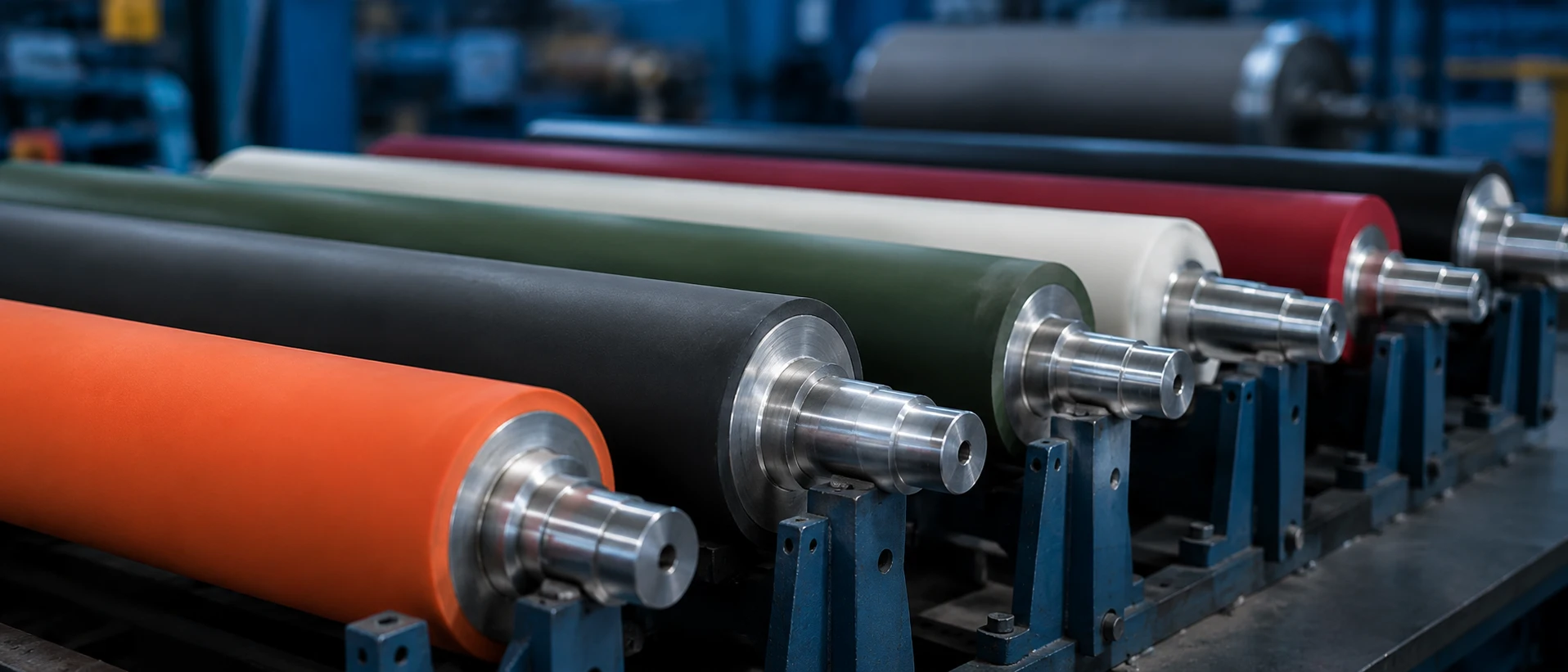
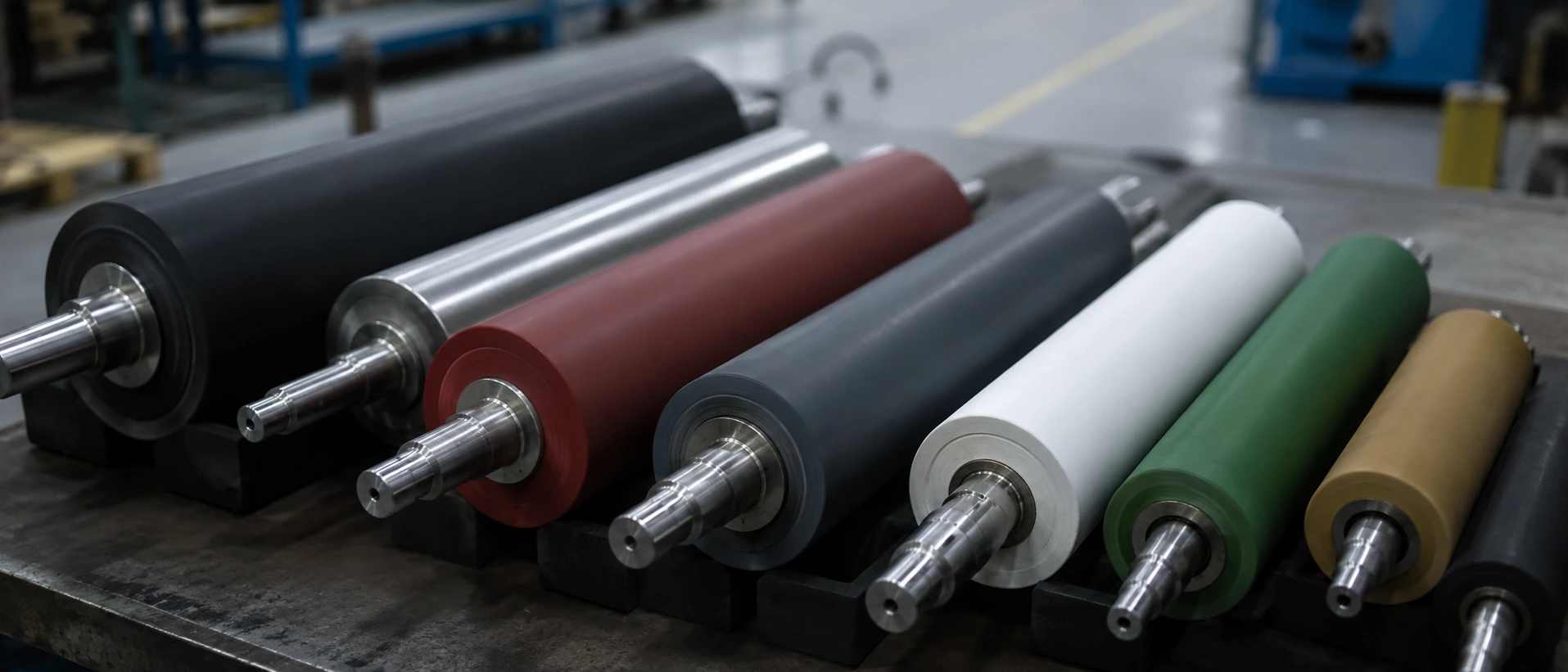
Alignement de rouleaux industriels recouverts de caoutchouc de couleurs variées — orange, noir, vert, blanc et rouge
Produits · Recouvrement de rouleaux

Rollers in rubber

Flexibility, grip, cushioning and chemical resistance, built to your process. From nitrile to EPDM, from neoprene to silicone, Soremag covers your rollers with exactly the compound family your process calls for — Shore A hardness and surface finish included.

The right rubber compound, formulated for your process

A rubber-covered roller is not simply “rubber”: it is a compound family chosen for your real conditions — oils, steam, ozone, abrasion, grip or food contact — then applied and ground in-house.

Familles de composés offertes+

Nitrile (NBR), EPDM, neoprene, CSM, SBR, silicone and natural rubber — from soft to hard, in Shore A. On request:

Viton® (FKM)
, more than
eight silicone grades
, plus
antistatic/conductive
,
FDA
(food contact) and
ebonite
(hard rubber) compounds.

Notre procédé — tout à l'interne+

Soremag selects and specifies the right rubber compound — often starting from

proven recipes
developed with our compounding partners — then prepares the core and applies the bonding system, covers,
vulcanizes
and grinds every roller in-house. The material and the durometer are
validated in the lab
(hardness, adhesion, dimensions) for your real application, instead of being guessed at.

Capacités et dimensions+

New roller covering and refurbishment of worn rollers, over a wide range of diameters and lengths — from the small roller to the heavy one. Drawings lost? We work back from the part by

reverse engineering
. Every roller is
precision ground
(concentricity, crown, surface finish), grooved when needed and
dynamically balanced
so it runs without vibration at high speed.

Tell us your dominant constraint — product in contact, temperature, speed, load and environment (dry, wet or oily) — and we pick the family, the Shore A hardness and the finish best suited to it, anywhere in Quebec and across Canada.

Why cover in rubber

What rubber does best — and the cases where polyurethane takes over.

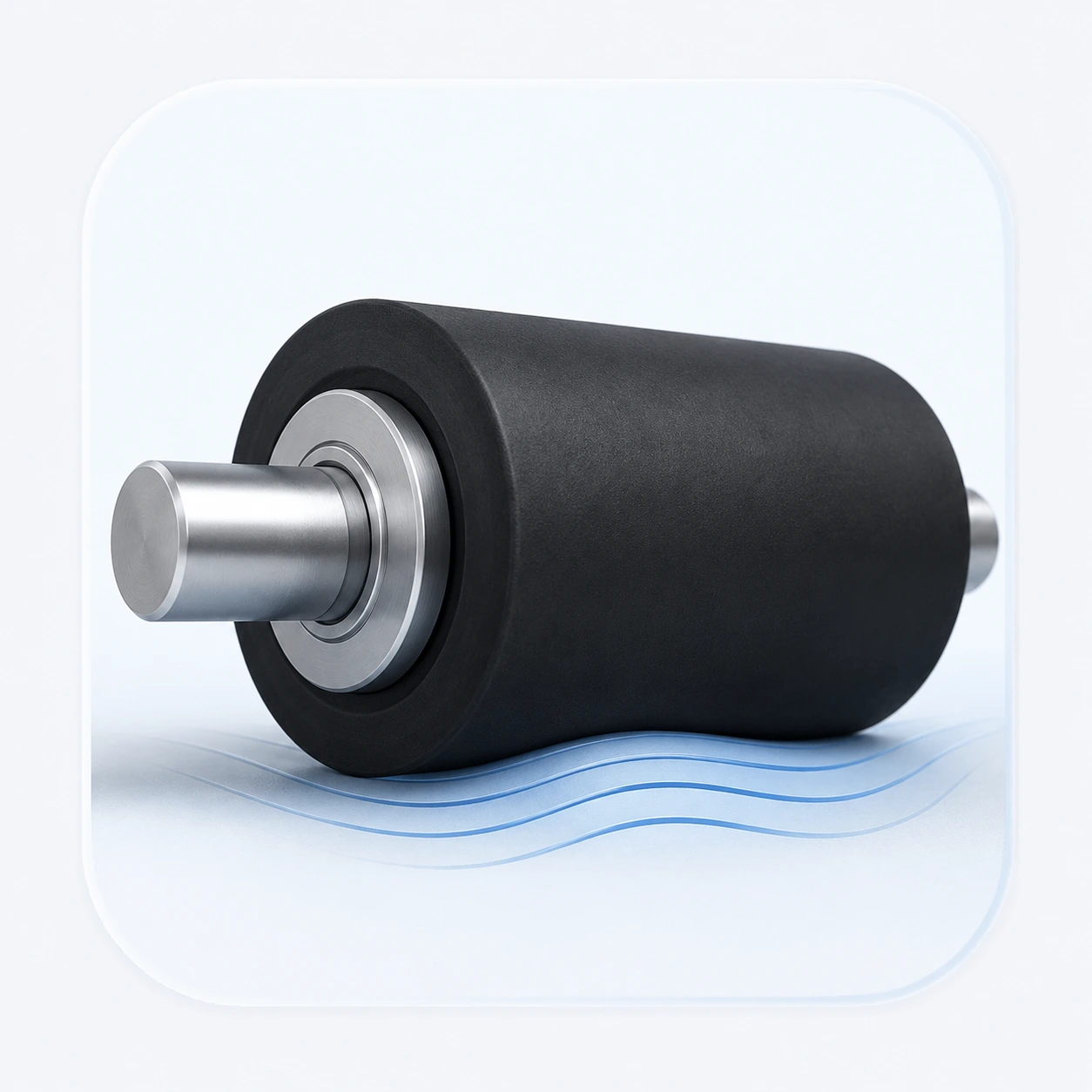
Rouleau recouvert de caoutchouc souple (caoutchouc naturel, néoprène ou nitrile) absorbant les chocs

Flexibility & cushioning

Gentle contact and shock absorption: ideal for a uniform nip and for protecting the substrate.

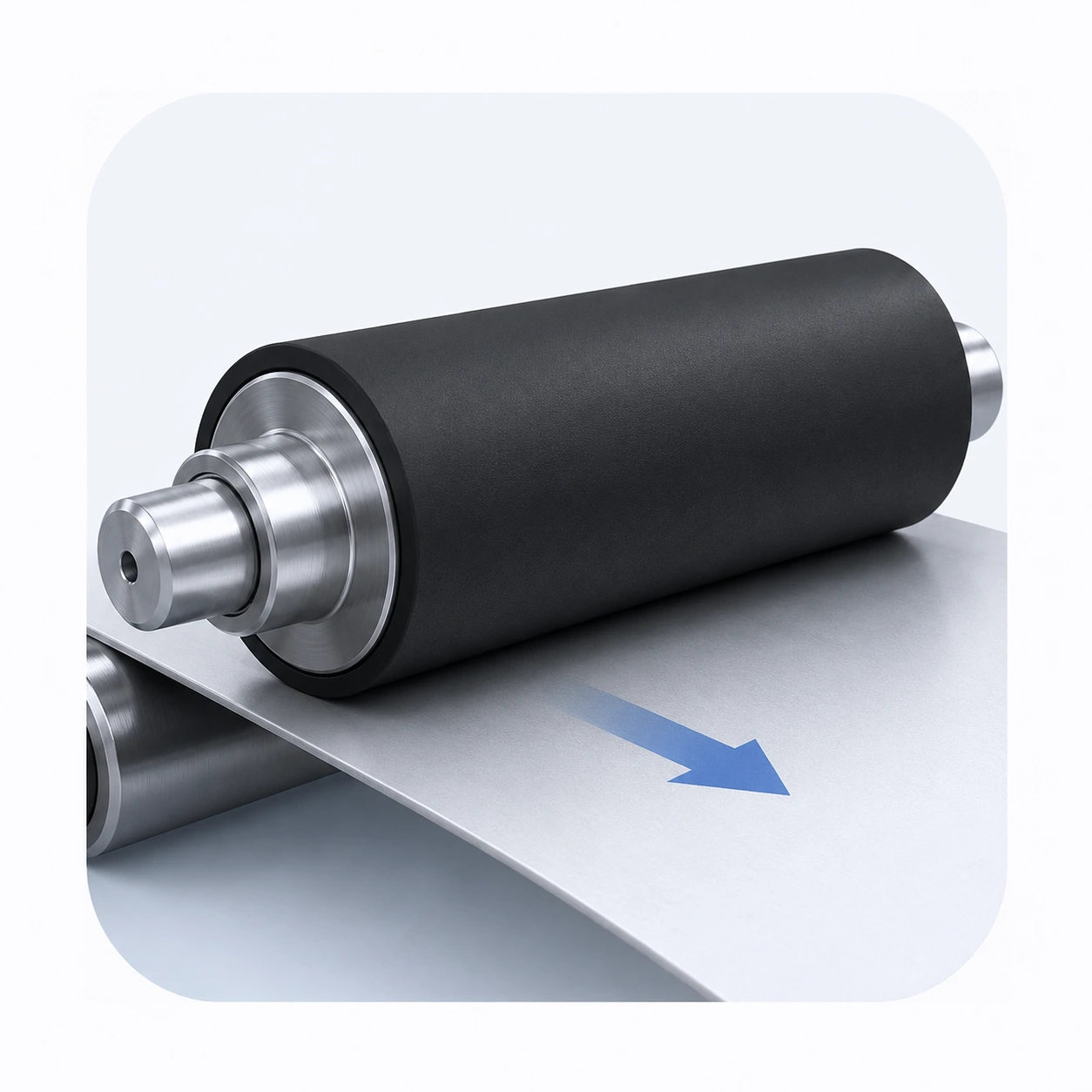
Rouleau recouvert de caoutchouc (nitrile, SBR ou caoutchouc naturel) entraînant une bande sans glissement

Grip & traction

Excellent grip on the substrate for driving, guiding and conveying without slippage.

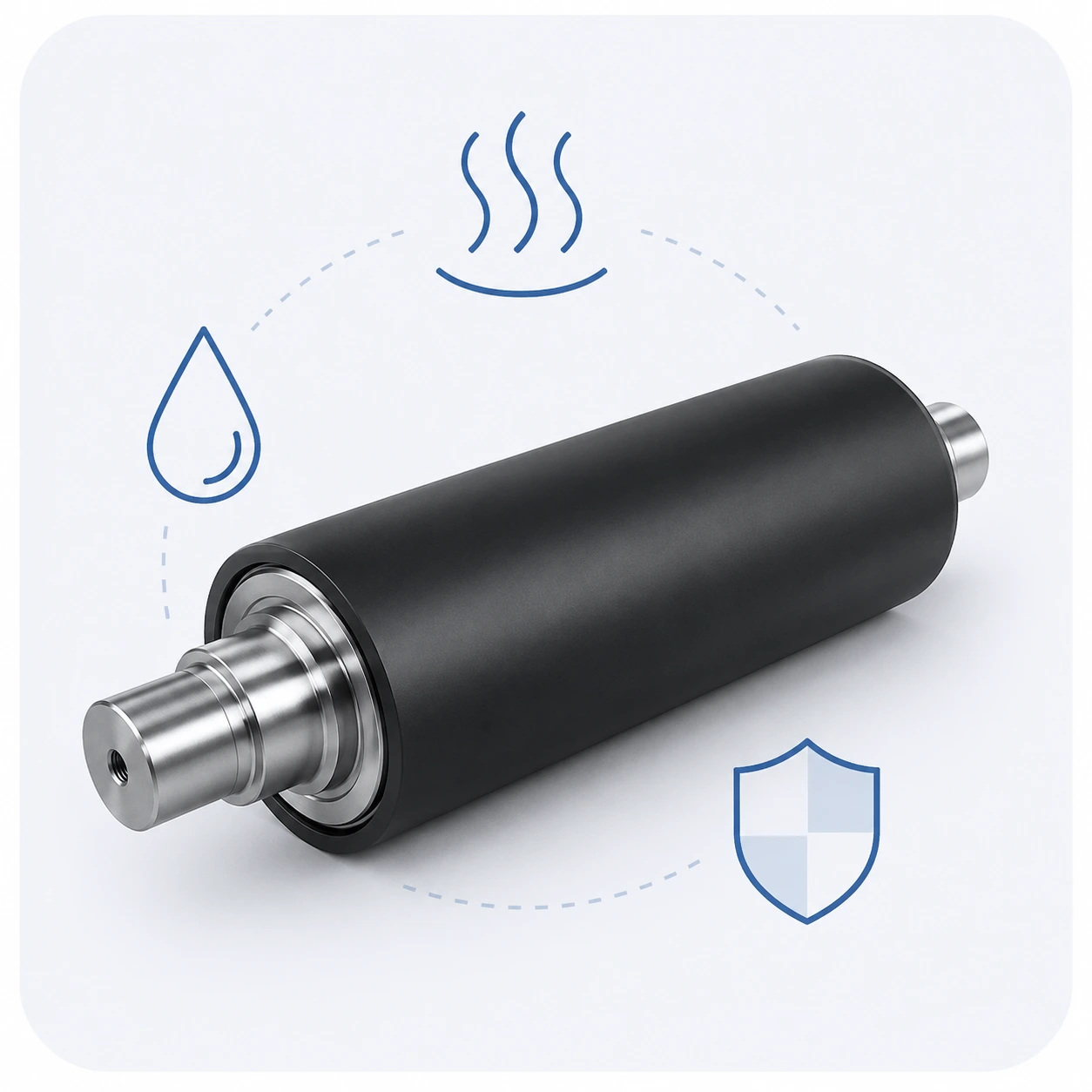
Rouleau recouvert résistant aux huiles, à la vapeur et aux produits chimiques (nitrile, EPDM, néoprène ou Hypalon)

Broad chemical range

Oils, steam, ozone, acids or hot water: there is a rubber family for every environment.

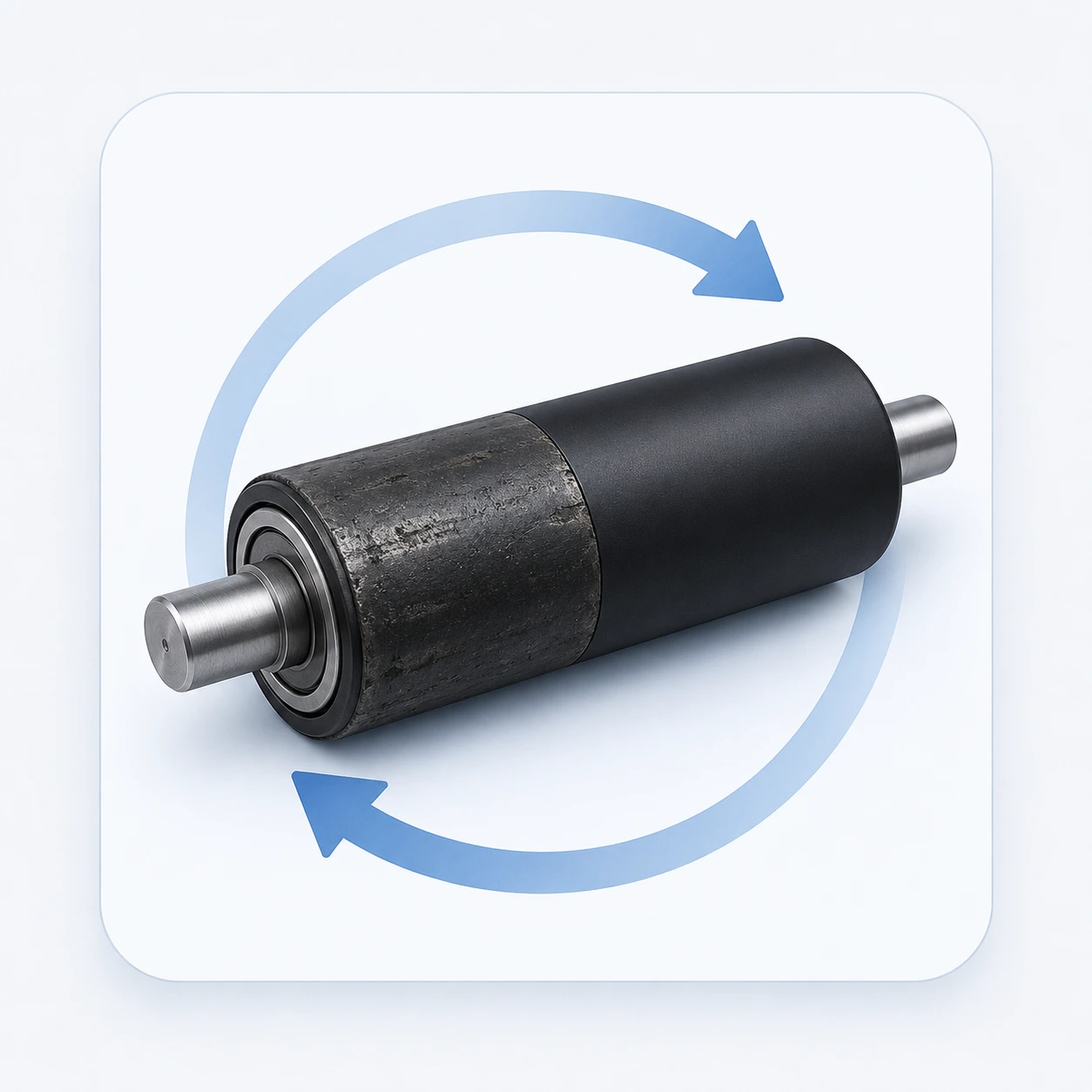
Ancien mandrin de rouleau réutilisé et recouvert à neuf en caoutchouc (nitrile, SBR ou néoprène)

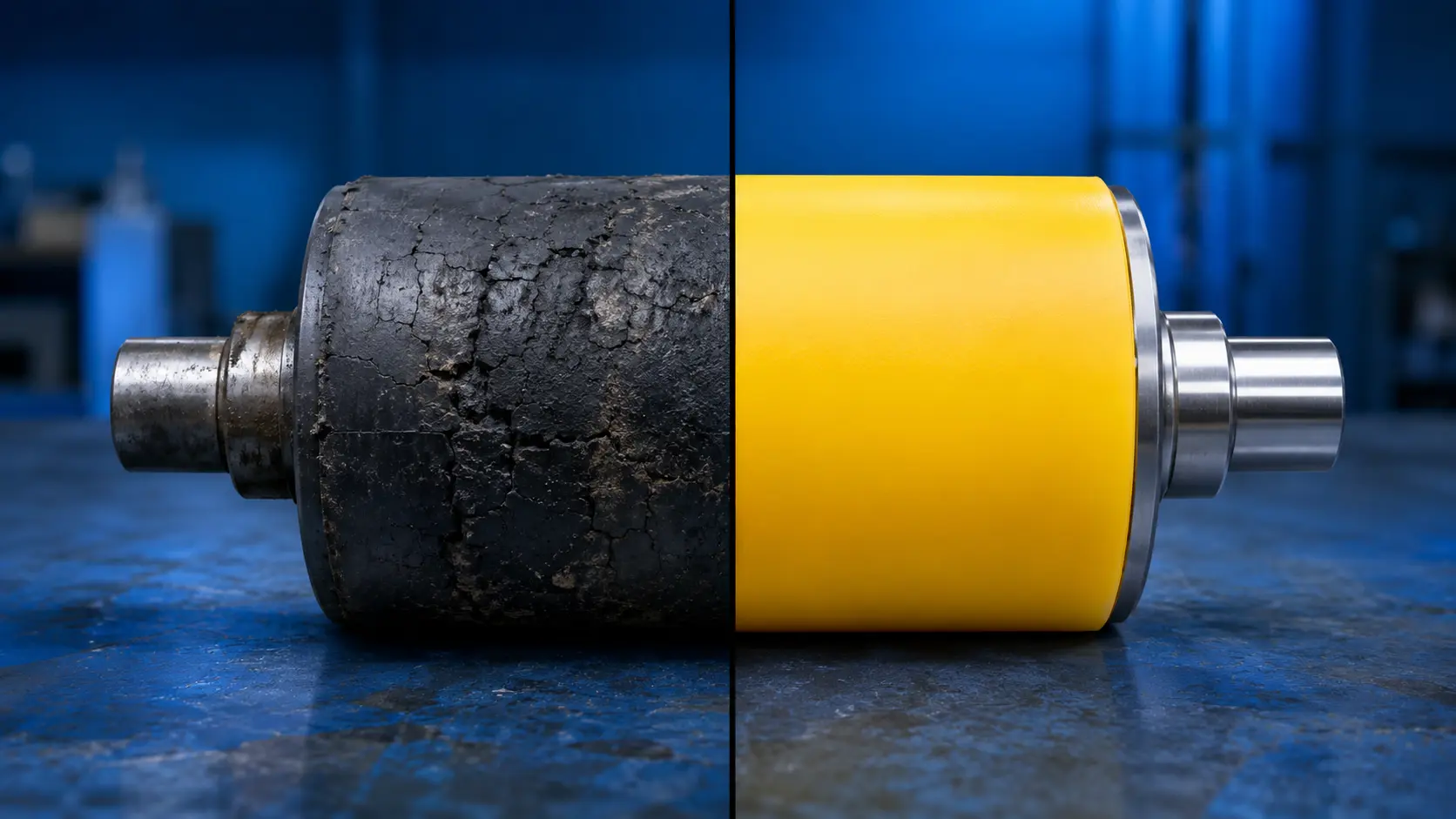
Economical & refurbished

Often more affordable than buying new: we reuse the existing core and rebuild the cover — a choice that is as economical as it is environmentally sound.

Need extreme abrasion resistance, very high loads or cut resistance? See polyurethane rollers →

Our rubber covers for your rollers

Each family answers one dominant constraint. Here are their strengths, their limits and the rollers we use them on most often.

FamilleForcesLimitesApplications les plus connues
NitrileNBR · XNBR · HNBRExcellente résistance aux huiles, graisses, carburants et hydrocarbures. Abrasion supérieure (XNBR) et tenue à la chaleur (HNBR) selon la variante.Peu résistant à l'ozone, aux UV et aux intempéries — à éviter à l'extérieur prolongé.Encrage, applicateurs et doseurs, presseurs en milieu huileux, entraînement.
Nitrile / PVCNBR-PVCRésistance aux huiles combinée à une meilleure tenue à l'ozone et aux intempéries que le nitrile pur ; beau fini de surface.Moins performant sous charges mécaniques lourdes que le nitrile seul.Imprimerie, encrage, rouleaux doseurs.
EPDMEPDMChampion de l'extérieur : ozone, UV, intempéries, vapeur, eau chaude et produits chimiques dilués.Ne résiste pas aux huiles ni aux hydrocarbures.Extérieur et intempéries, vapeur et eau chaude, lavage, extrusion.
NéoprèneCRPolyvalent : résistance modérée aux huiles, bonne tenue aux intempéries et à l'ozone, résistance intrinsèque à la flamme.N'excelle dans aucune contrainte extrême ; surpassé par les composés spécialisés.Guidage, convoyage, presseurs polyvalents, extérieur.
HypalonCSMExcellente résistance chimique (acides, oxydants) et très bonne tenue à l'ozone.Propriétés mécaniques modérées ; coût plus élevé.Milieux chimiques, extérieur, traitement de surface.
SBRSBRUsage général économique : bonne abrasion et bonne adhérence à sec.Ne résiste pas aux huiles ; tenue à l'ozone et aux UV limitée.Usage général, entraînement, guidage, presseurs à sec.
SiliconeVMQTempératures extrêmes (chaud et froid), contact alimentaire et surfaces antiadhérentes. Dedicated page →Faible résistance mécanique et à l'abrasion ; pas pour charges lourdes ; coût élevé.Contact alimentaire, contact avec produits chauds, antiadhérents, lamination chaude.
Caoutchouc naturelNRÉlasticité et résilience exceptionnelles, résistance aux coupures et à la déchirure, excellente adhérence.Sensible aux huiles, à l'ozone et aux UV.Presseurs / nip, traction et entraînement, amortissement, abrasion humide.

This table is only a quick overview. These families correspond to our in-house recipes, developed with our compounding partners — and we have hundreds, sometimes blends of materials, for very specific constraints. Beyond the compounds above, Soremag also offers Viton® (FKM), more than eight silicone grades, plus antistatic/conductive, compounds in food grade (FDA) andebonite (hard rubber), as well as other elastomers on request. Not finding your material? Tell us about your application →

Sélection rapide — par besoin+
Condition principaleMatériaux à considérer
Abrasion, impacts et tractionCaoutchouc naturel, XNBR (+ polyuréthane)
Huiles, graisses et hydrocarburesNBR, NBR-PVC, HNBR, Viton® (FKM)
Eau, humidité et lavageEPDM
UV, ozone et utilisation extérieureEPDM, néoprène (CR), Hypalon (CSM), silicone
Chaleur élevéeSilicone, HNBR, Viton® (FKM)
Produits chimiques agressifsEPDM, Hypalon (CSM), Viton® (FKM)
Surface antiadhérenteSilicone, formulations spécialisées
Charge et pression élevéesPolyurethane, XNBR, HNBR
Application alimentaire (FDA)Silicone, EPDM, nitrile blanc
Contrôle de l'électricité statiqueComposé conducteur ou antistatique sur mesure
Nitriles haute performance — NBR-PVC, XNBR, HNBR+

NBR-PVC
— combines the oil resistance of nitrile with better resistance to ozone, to weathering and to several finishing products (paints, inks, dyes, varnishes, adhesives). Not as good as EPDM in hot water.

XNBR (carboxylated nitrile)
— a reinforced nitrile for applications where abrasion, cuts and tearing wear a cover out early: high modulus and good stability under load. Rebound resilience sometimes lower than a standard nitrile, and higher cost.

HNBR (hydrogenated nitrile)
— keeps the oil resistance of nitrile while sharply improving heat, ozone and aging resistance. High cost; compatibility to be validated against the fluid.

Haute température & chimie sévère — Viton® (FKM)+

FKM (fluoroelastomer, Viton®)
— reserved for applications where the oils, fuels, solvents and high temperatures are beyond the standard rubbers. Excellent resistance to hydrocarbons, heat, aging and ozone, and good resistance to many chemicals. The trade-off: very high cost, reduced flexibility at low temperature and variable compatibility with steam, strong bases, amines and ketones.

Structures & propriétés particulières+

Ebonite (hard rubber)
— heavily vulcanized rubber, based on
natural rubber
or on
nitrile
depending on the chemical and oil resistance you need: a hard, rigid surface, dimensional stability, chemical resistance and a precise finish; little cushioning and little flexibility.

Multilayer covers
— the same roller can take a soft base layer and a harder or more chemically resistant outer layer, to combine shock absorption with wear resistance, conformability with precision, internal resilience with the right outer surface.

Functional formulations (on request)
— conductive/antistatic, food grade (FDA), white or non-marking, high or low friction, non-stick, flame resistant, hydrolysis resistant, high resilience, low rebound, metal detectable, stain and color transfer resistant.

Comment on choisit le bon recouvrement+

Two rollers that look identical can call for completely different covers. From a single family we develop dozens of recipes: an NBR at 15 Shore A designed to apply a dye does not have the properties of an NBR at 80 Shore A meant to drive a steel strip. The polymer content, the fillers, the plasticizers, the cure system and the finishing directly change chemical resistance, coefficient of friction, resilience, abrasion resistance, deformation under load, dimensional stability and service life.

To recommend the right material, we want to know: the exact function of the roller; every product it touches and their concentrations; the cleaning products; the normal and maximum temperature; the rotating speed; the load and the pressure between the rollers; the level of abrasion; exposure to UV, ozone or moisture; the hardness and coefficient of friction you are after; the dimensional tolerances; the surface finish; the food or electrical requirements. The best solution is not the most expensive one: it is the one with the right balance of performance, service life, precision and operating cost.

Compare all the compounds (chart) →

The rollers we cover, by application

The same roller changes material depending on what it touches. Here are the main types and the compounds we pair with them most often — a starting point for the discussion, never a hard rule.

Nip roller (nip)

The workhorse: it pinches the substrate between two rollers to bond, drive out air or pull the web. The cover follows what it touches — neoprene or nitrile for general service, EPDM in hot or chemical environments, Silicone when hot release is required.

Drive roller (pull / draw)

Driven, it pulls the web and sets line tension: it has to bite without slipping. We aim for grip and durability — natural rubber, nitrile or neoprene, often at a slightly higher durometer.

Idler roller & guide roller (idler / guide)

They support and align the web without marking it. A light cover is enough, chosen for grip and for protecting the substrate: neoprene or nitrile, and EPDM in wet environments or outdoors.

Bowed roller (spreader / anti-wrinkle)

Curved, it spreads the web outward to push the wrinkles out and keep the material flat. We want it soft and grippy, often herringbone grooved: neoprene or nitrile, EPDM or CSM (formerly sold as Hypalon®) if the line is hot or chemical.

Corona roller (dielectric)

The backing roll of the corona treater station: it has to be

insulating
and take continuous ozone exposure to raise the surface energy of the film. Dielectric covers: CSM (formerly sold as Hypalon®), Silicone or EPDM — knowing that the discharge slowly attacks any rubber.

Inking / printing rollers

They transfer and distribute the ink. The choice follows the ink chemistry: nitrile and neoprene for inks and solvents, EPDM for water-based or UV inks.

Applicator & metering roller (coating / metering)

One picks up a liquid (adhesive, coating, primer), the other sets its thickness. The material follows the fluid: EPDM (polar solvents, water based), nitrile (oils/solvents), CSM (formerly sold as Hypalon®) (broad chemistry), Silicone (release).

Scraper / squeegee roller (squeegee)

It wrings or scrapes off the excess liquid on a wet line (metal finishing, textile). We follow the bath: EPDM (water, steam), nitrile (oils), CSM (formerly sold as Hypalon®) (acids/bases), Viton (FKM) for the most aggressive of them.

Laminating roller (hot)

It bonds the layers under heat and pressure. Heat and release drive the choice: Silicone above all, CSM (formerly sold as Hypalon®) or EPDM, and HNBR when mechanical strength is needed too.

Chill roll & food contact roller (chill / FDA)

Cold surfaces or direct contact with the food: Silicone (extreme temperatures, compliant with

FDA
) and EPDM ; a white FDA nitrile in some cases.

Your roller type is not listed, or you are unsure about the material? Tell us about your line →

Shore A hardness and surface finish, made to spec

A roller's performance is not only about the material: the durometer and the finish count just as much. We set both to your process.

  • Dureté Shore A sur mesure, du très souple au dur, validée en laboratoire.
  • Finis poli, mat ou micro-texturé selon le Ra/Rz visé.
  • Spiral or axial grooving for drainage and grip.
  • Profil bombé (crown) ou conique (taper) pour l'uniformité de contact.
  • Dynamic balancing and runout (TIR) control at high speed.

Understanding Shore hardness →

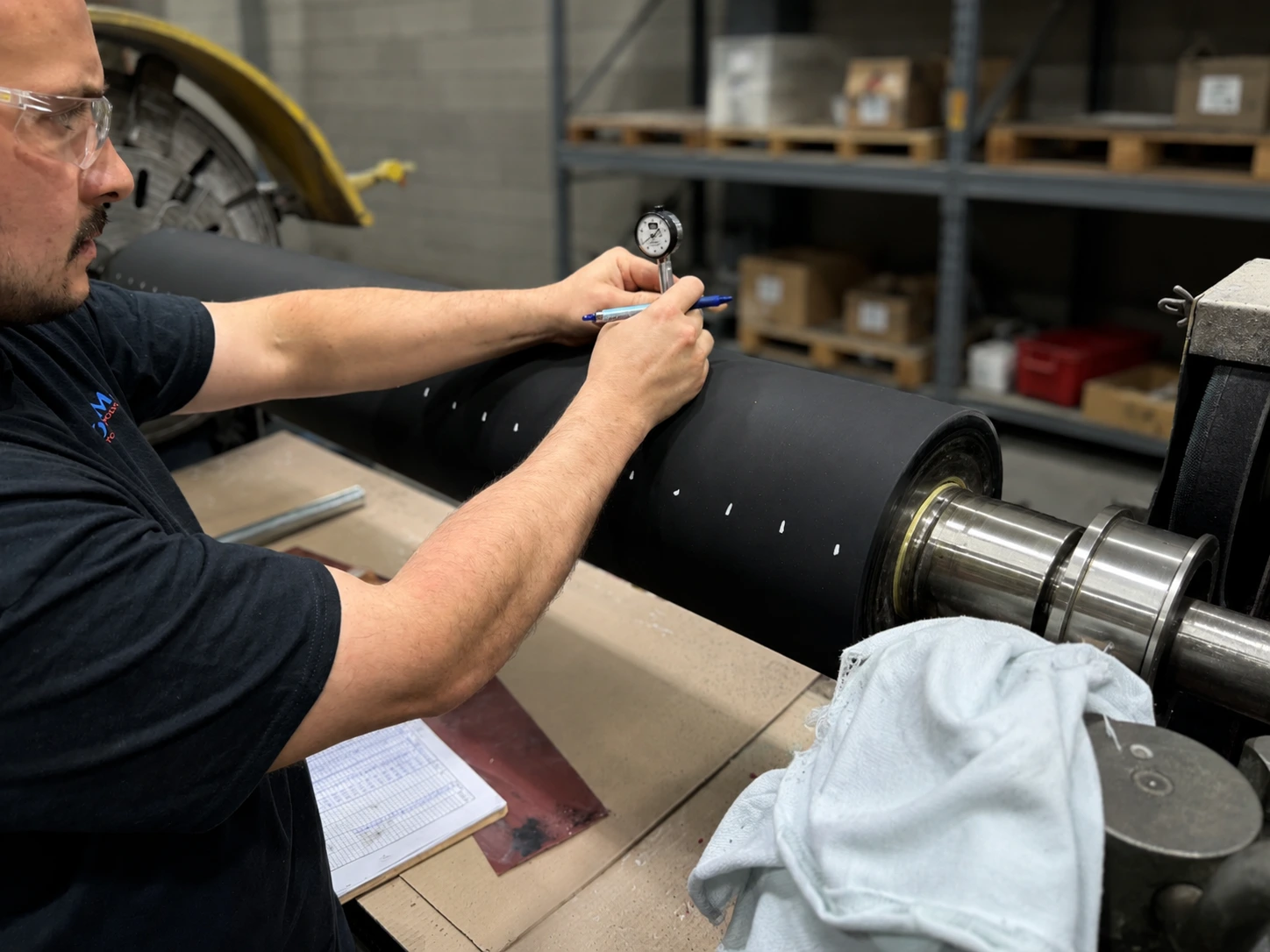
Technicien mesurant la dureté au duromètre Shore A sur un rouleau recouvert d'EPDM 65 Shore A antistatique
Rouleaux recouverts chez Soremag : nitrile nip, silicone, EPDM gris, Hypalon de qualité alimentaire, nitrile vert
Pourquoi Soremag

Rubber expertise, from the right compound to precision finishing

For more than

35 years
, Soremag is a reference in roll covering in Quebec, and the
largest manufacturing companies
— here and elsewhere — trust us with their critical rollers. What sets us apart is that we control
every processing step in-house
— from core preparation to finishing — as our know-how below spells out.

Our rubber know-how, A to Z

See our quality control (QC7) →

Go further

Choose the material, troubleshoot a problem or understand our process.

Rubber or polyurethane?

Compare the two materials on abrasion, load, chemistry and the finish you need.

See the comparison →

Is your roller slipping, marking or vibrating?

Wear, slip, marking, vibration, runout: we trace it back to the cause.

Troubleshooting →

Material Selection Guide

The right compound and the right durometer for your actual application.

See the guide →

Questions about rubber rollers

Which rubber should I choose for a roller exposed to oils? +

Nitrile (NBR) is the reference in oily environments: it resists oils, greases, fuels and hydrocarbons. To combine oils and heat, we use hydrogenated nitrile (HNBR); to combine oils and severe abrasion, carboxylated nitrile (XNBR). EPDM, SBR and natural rubber, on the other hand, are not suited to oils.

Which rubber holds up best outdoors, against ozone and UV? +

EPDM is the best choice outdoors: it resists ozone, UV, weathering, steam and hot water. Neoprene (CR) and CSM (formerly sold as Hypalon®) also hold up well to weathering, with CSM adding excellent chemical resistance. Natural rubber, for its part, degrades in ozone.

Rubber or polyurethane: which one for my roller? +

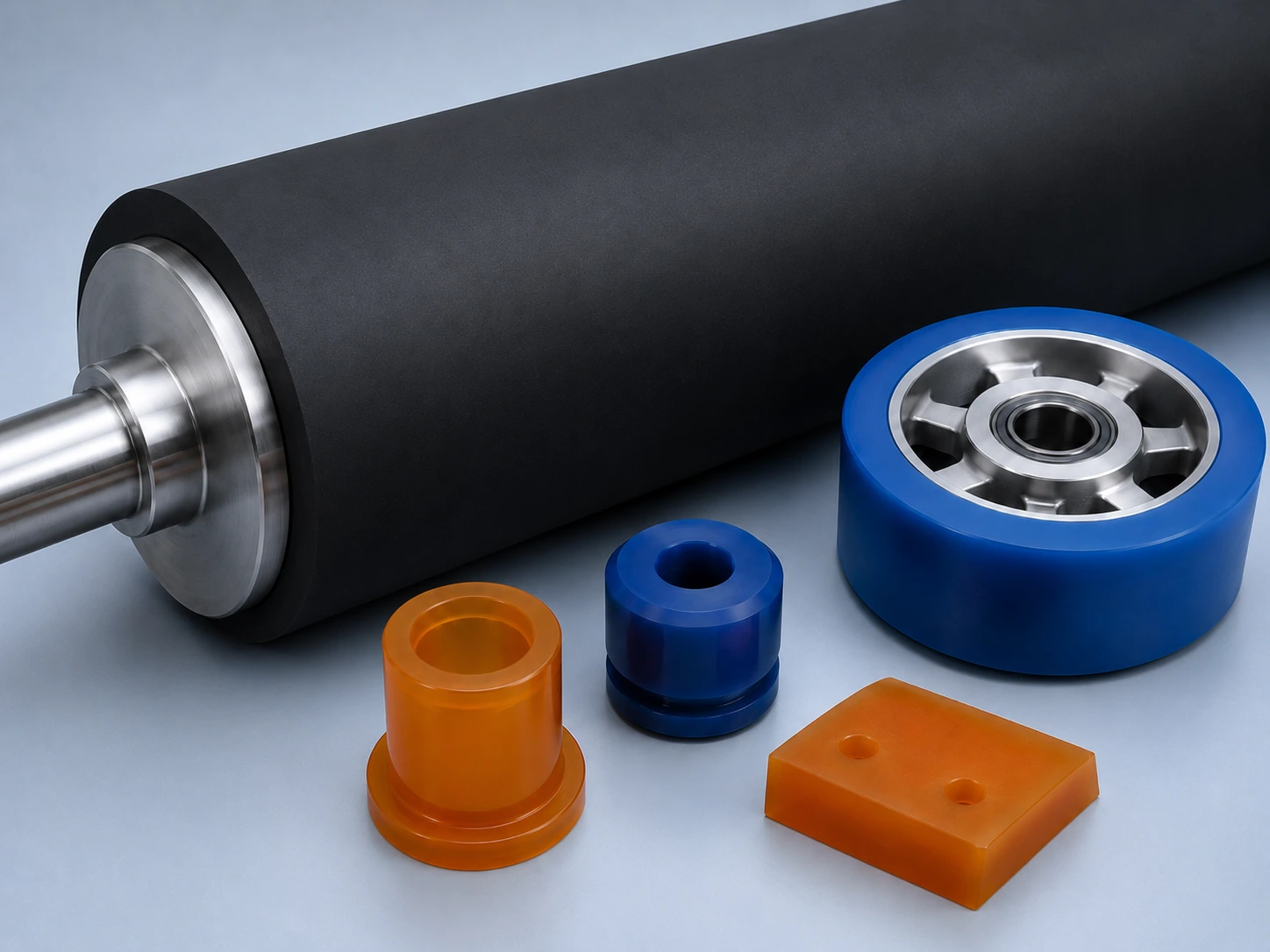
Rubber excels in flexibility, grip, cushioning and gentle contact, and covers a broad chemical range depending on the family. Polyurethane dominates for extreme abrasion, high loads and cut resistance. The right choice depends on your actual application; our Roller covering page has a detailed comparison.

Which Shore A hardness for a rubber roller? +

The durometer is set to the application: load, speed, pressure, deflection, the grip you need and the environment. Rubber compounds are measured in Shore A and run from very soft to hard. Our Material Selection Guide covers the trade-offs.

Can you cover a rubber roller without the original drawing? +

Yes. Through reverse engineering, we reproduce the dimensions, the durometer and the profile from the old roller, a part or a sample, even with no drawing. If needed, we also adapt the compound family or the finish to the current requirements of your equipment.

Not sure which compound? We will settle it for you.

Tell us about your application — product in contact, temperature, speed, load and environment (dry, wet or oily) — and we will recommend the rubber family, the Shore A hardness and the finish best suited to it.

➔ Get a technical recommendation