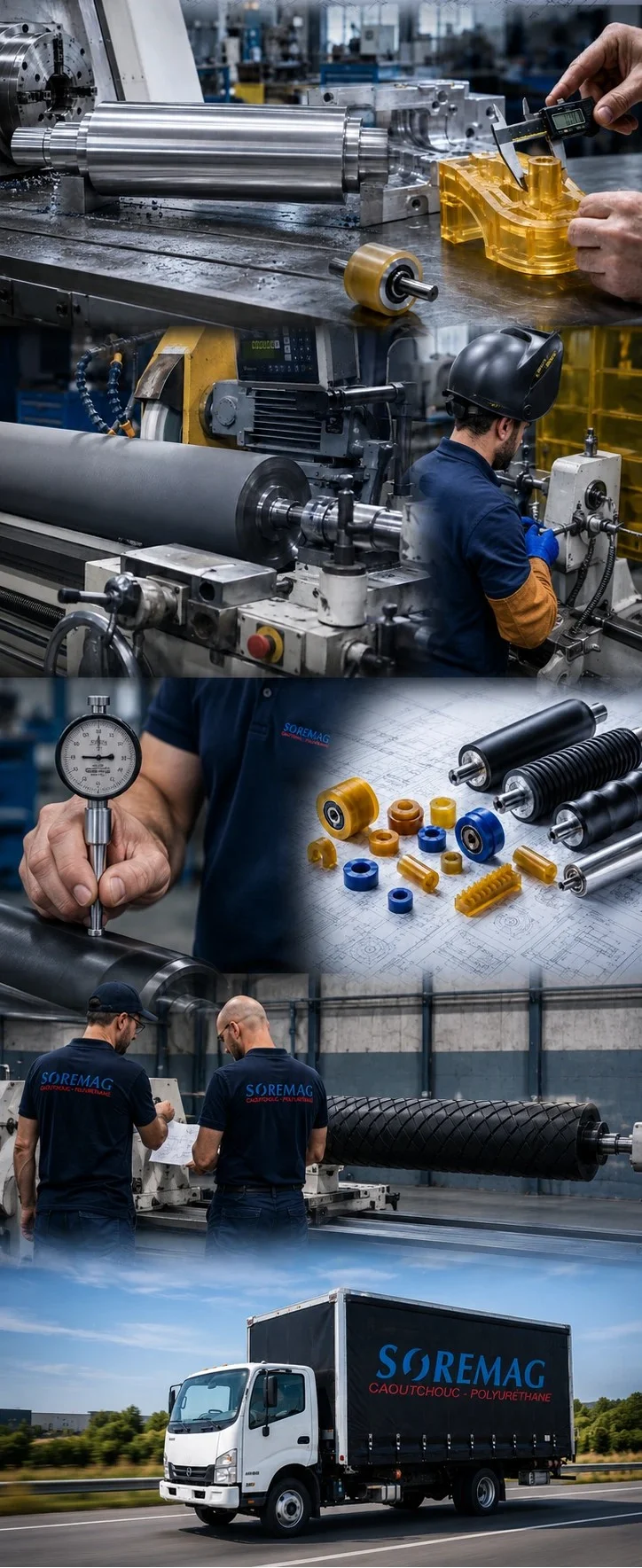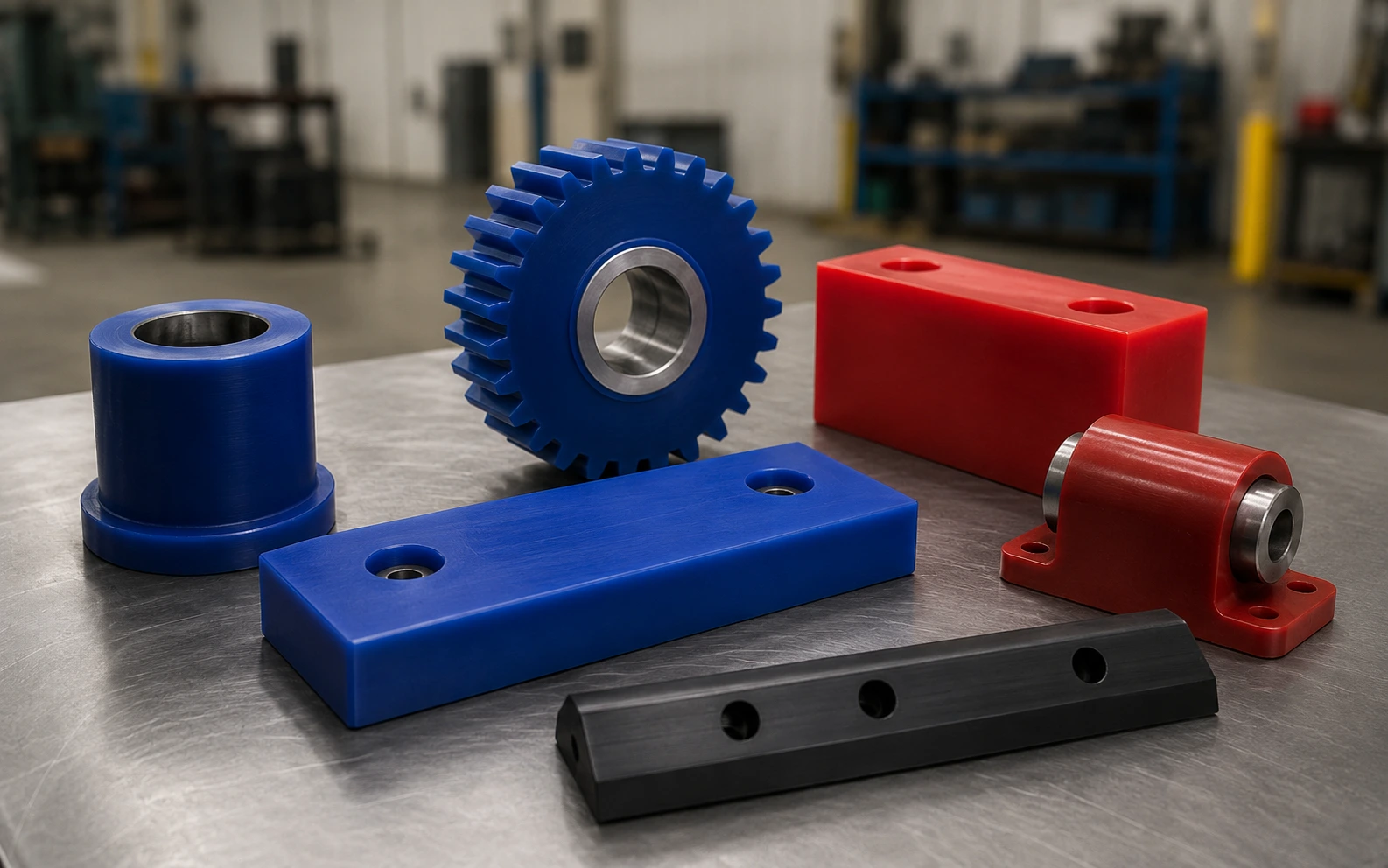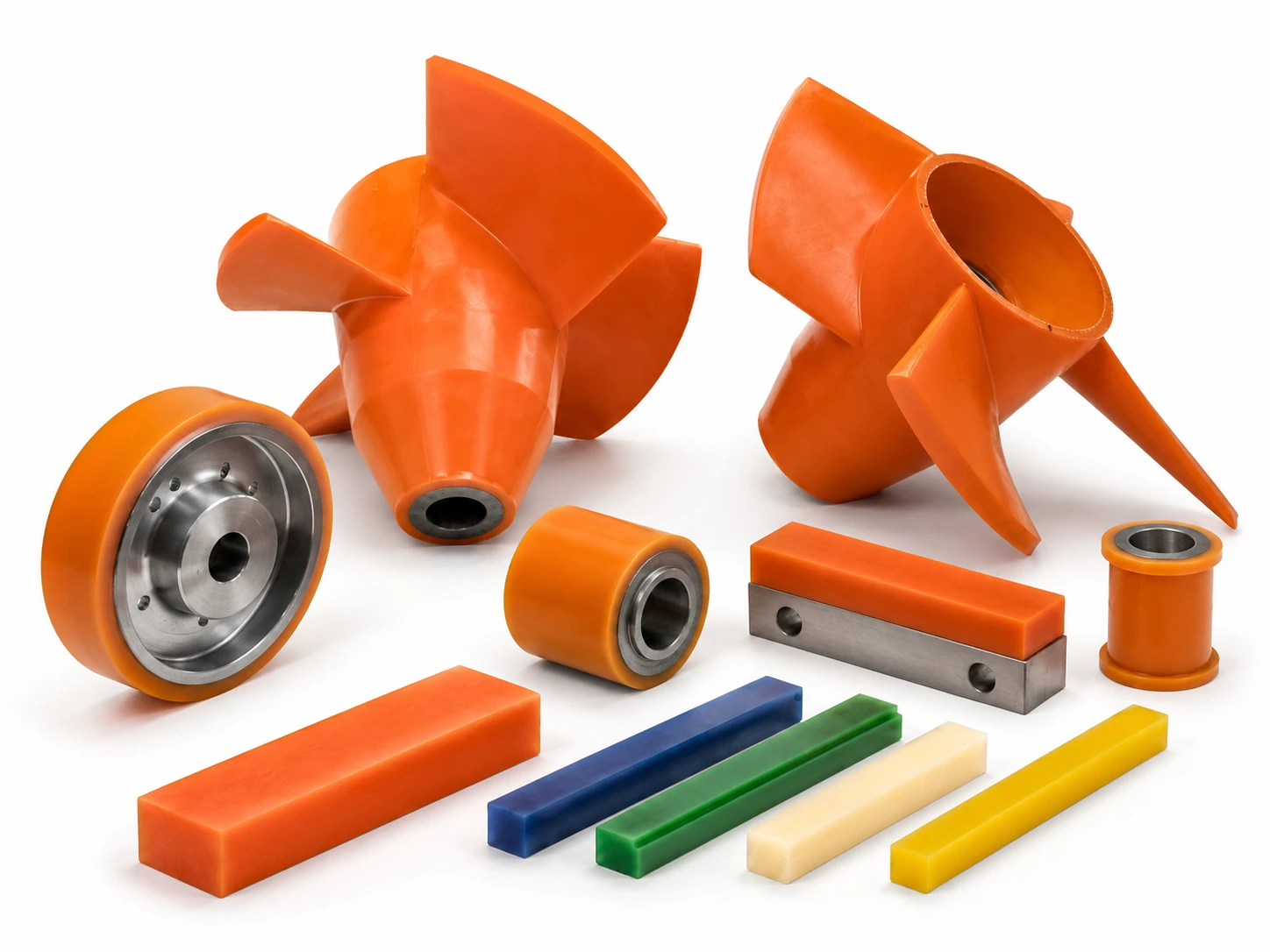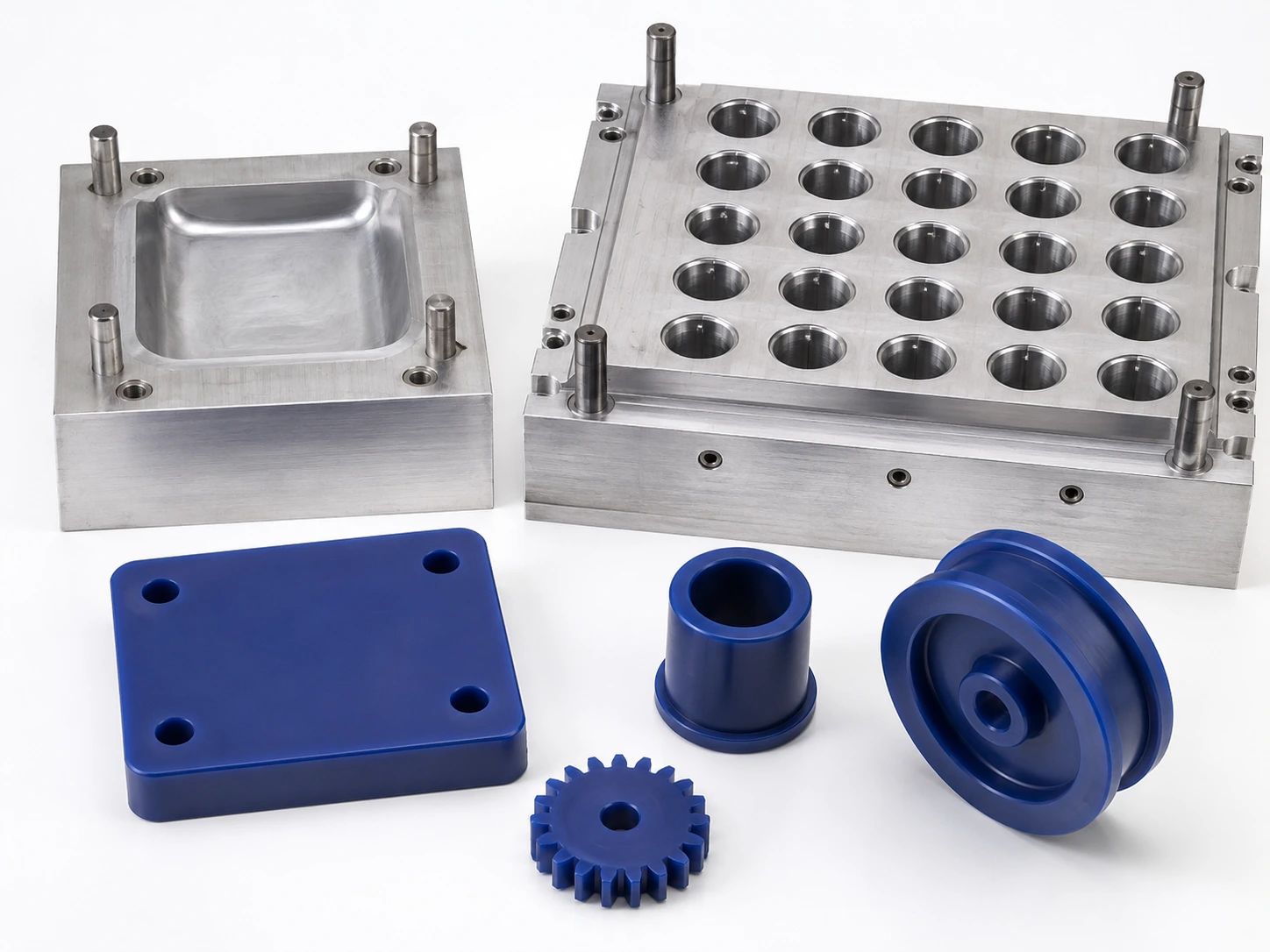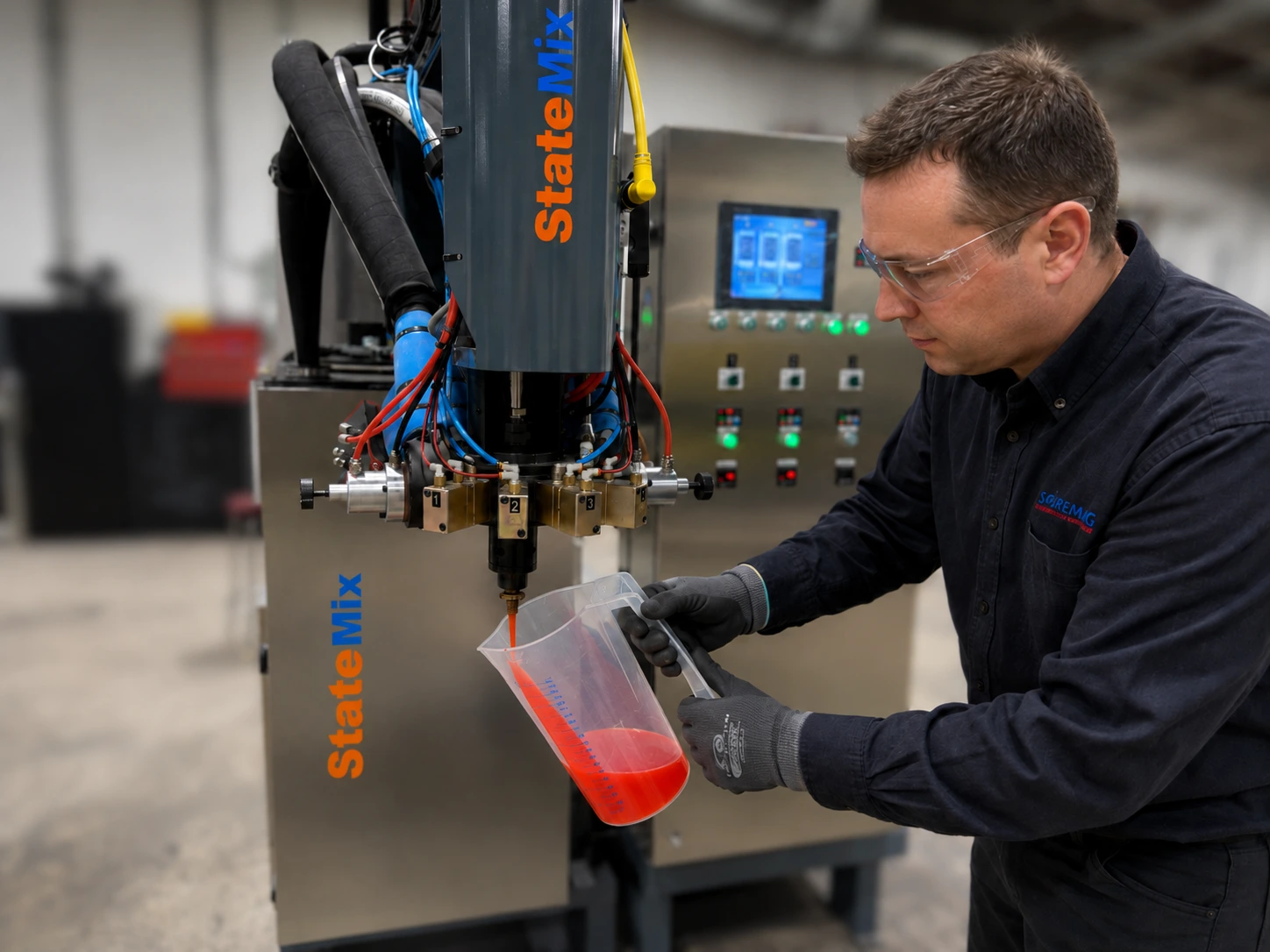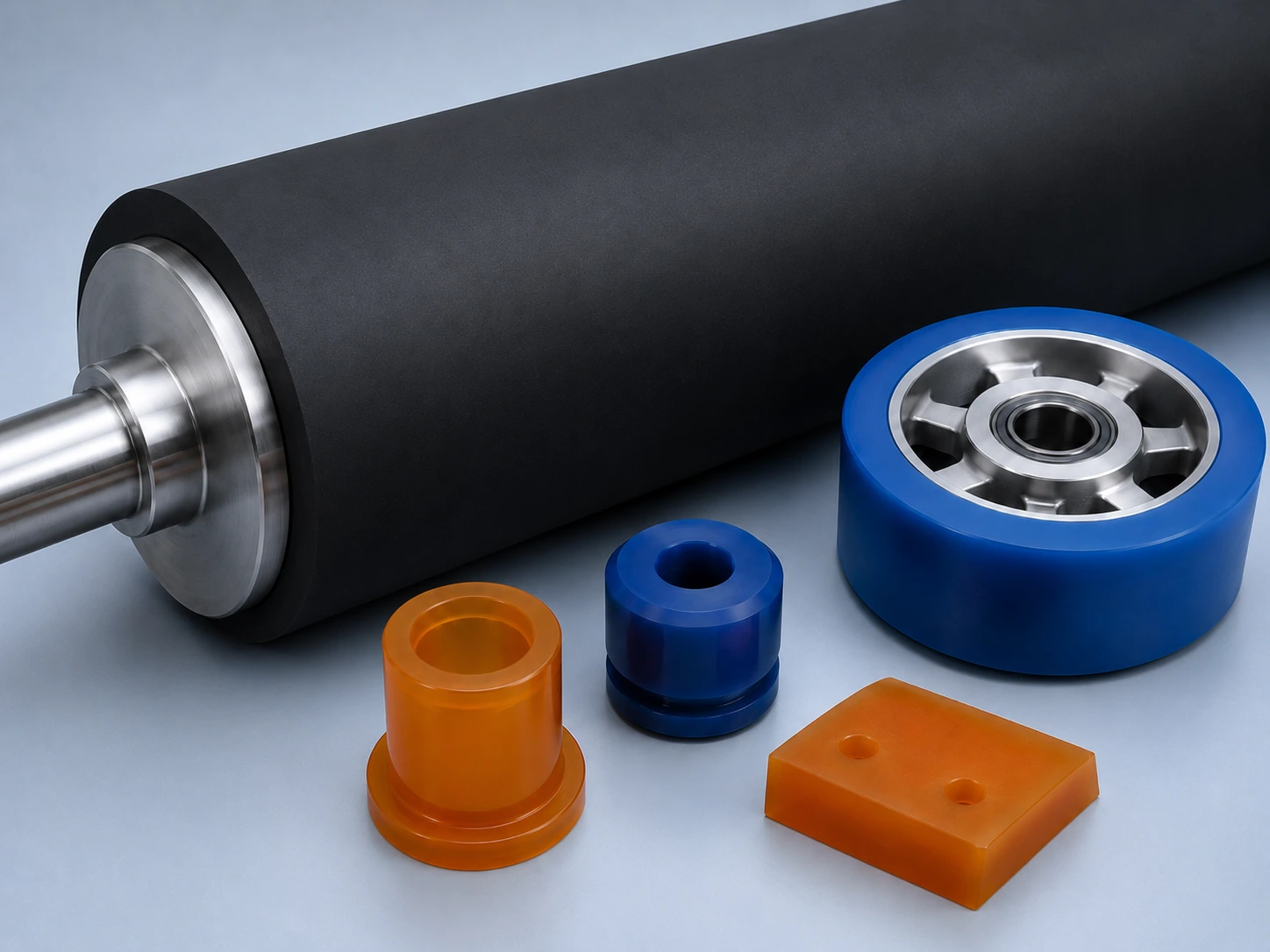
From a bushing a few millimeters across to a large part for a pump or a turbine: Soremag designs and casts your polyurethane parts to the exact shape, hardness and formulation — hot cast, in-house, in Quebec.
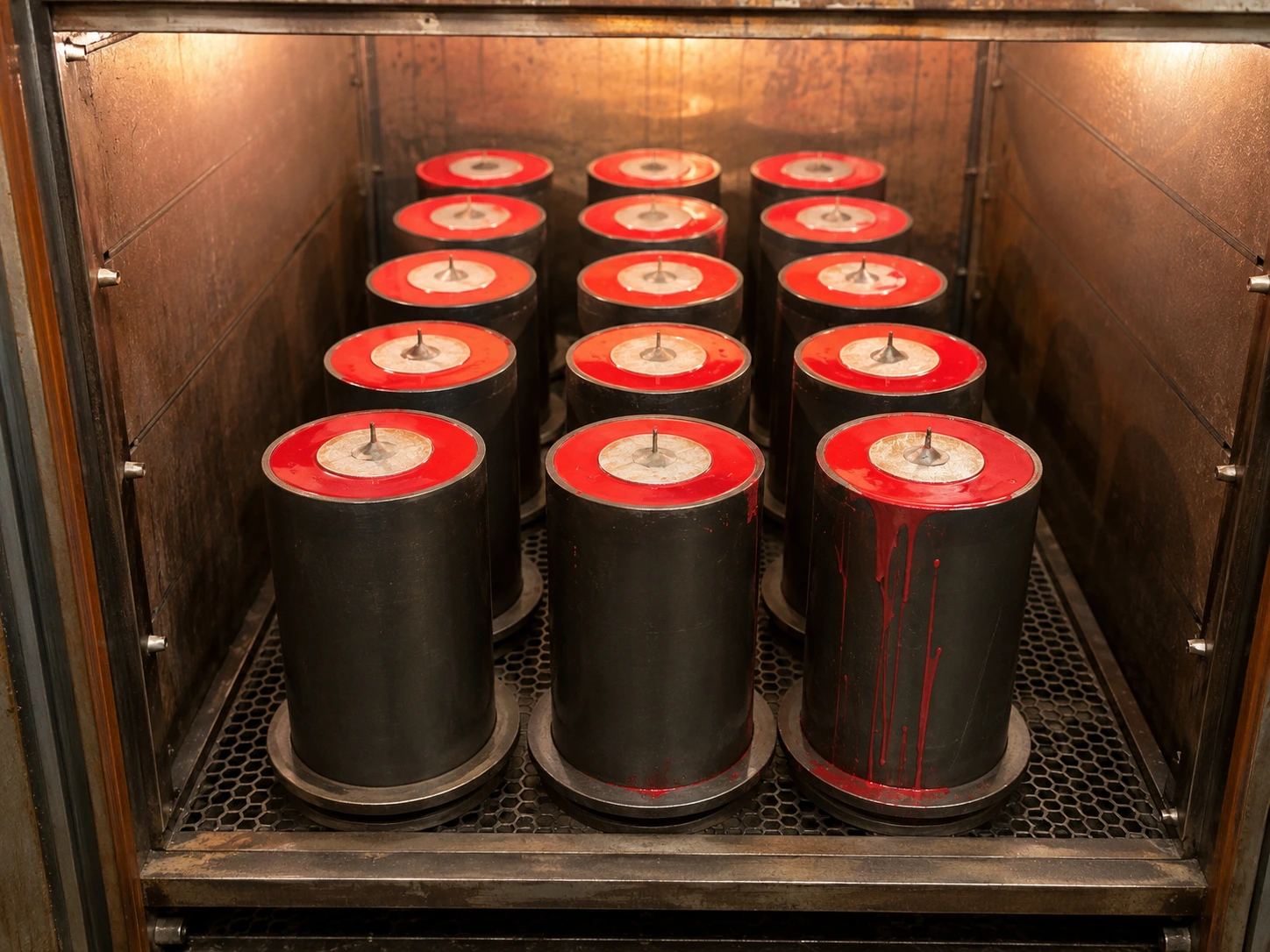
A cast polyurethane part is an industrial component made by pouring a liquid formulation into a mold, then controlling its polymerization and its cure.
It sits between an elastomer and a rigid plastic: we adjust the chemistry and the hardness to cover the whole range, from very soft to Shore D. Properly formulated, it takes abrasion, load and impact where rubber wears out too fast and plastic breaks.
Soremag casts polyurethane
We cast with
Molding polyurethane is a
We work with your reality:
Give us the function, the load, the environment and the target hardness — or simply a worn part to copy — and we select the formulation and the casting process that fit best — in Quebec, across Canada and in the United States.
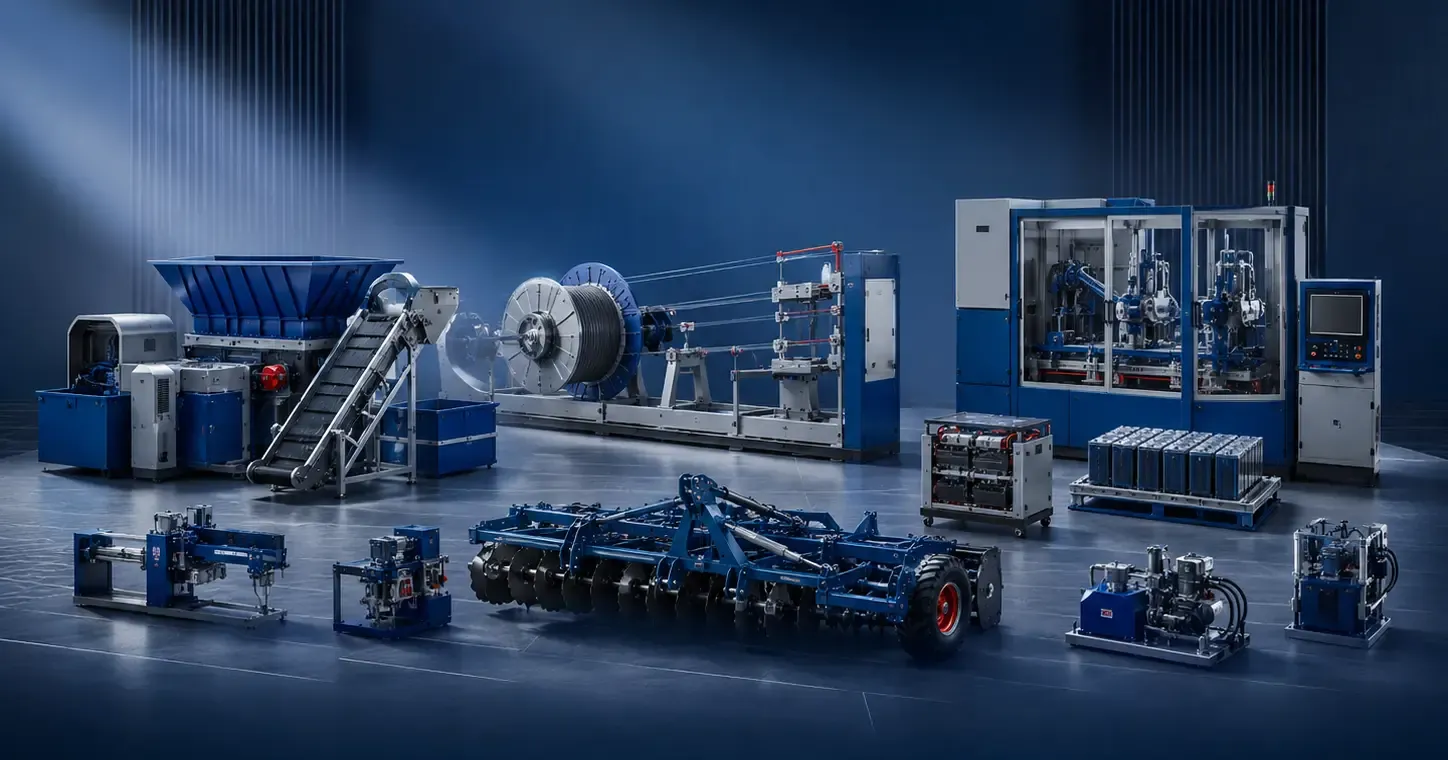
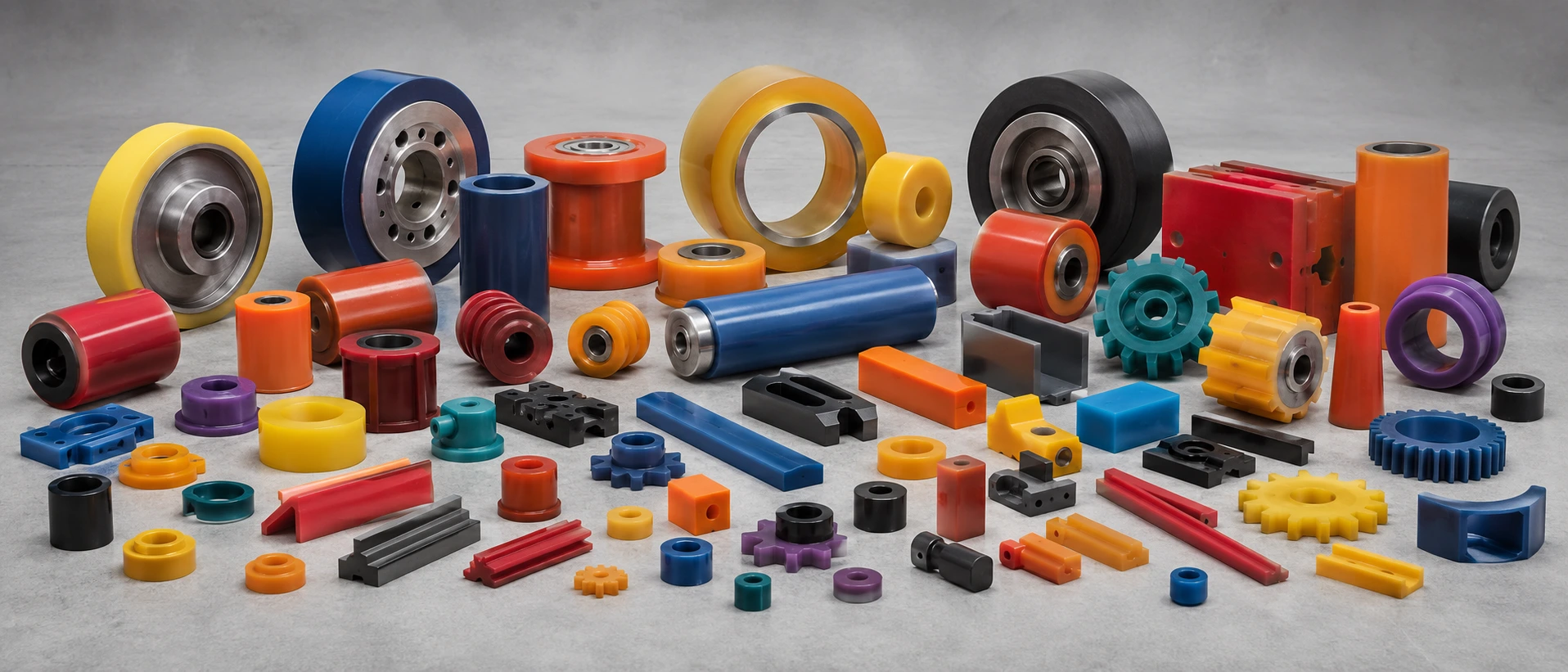
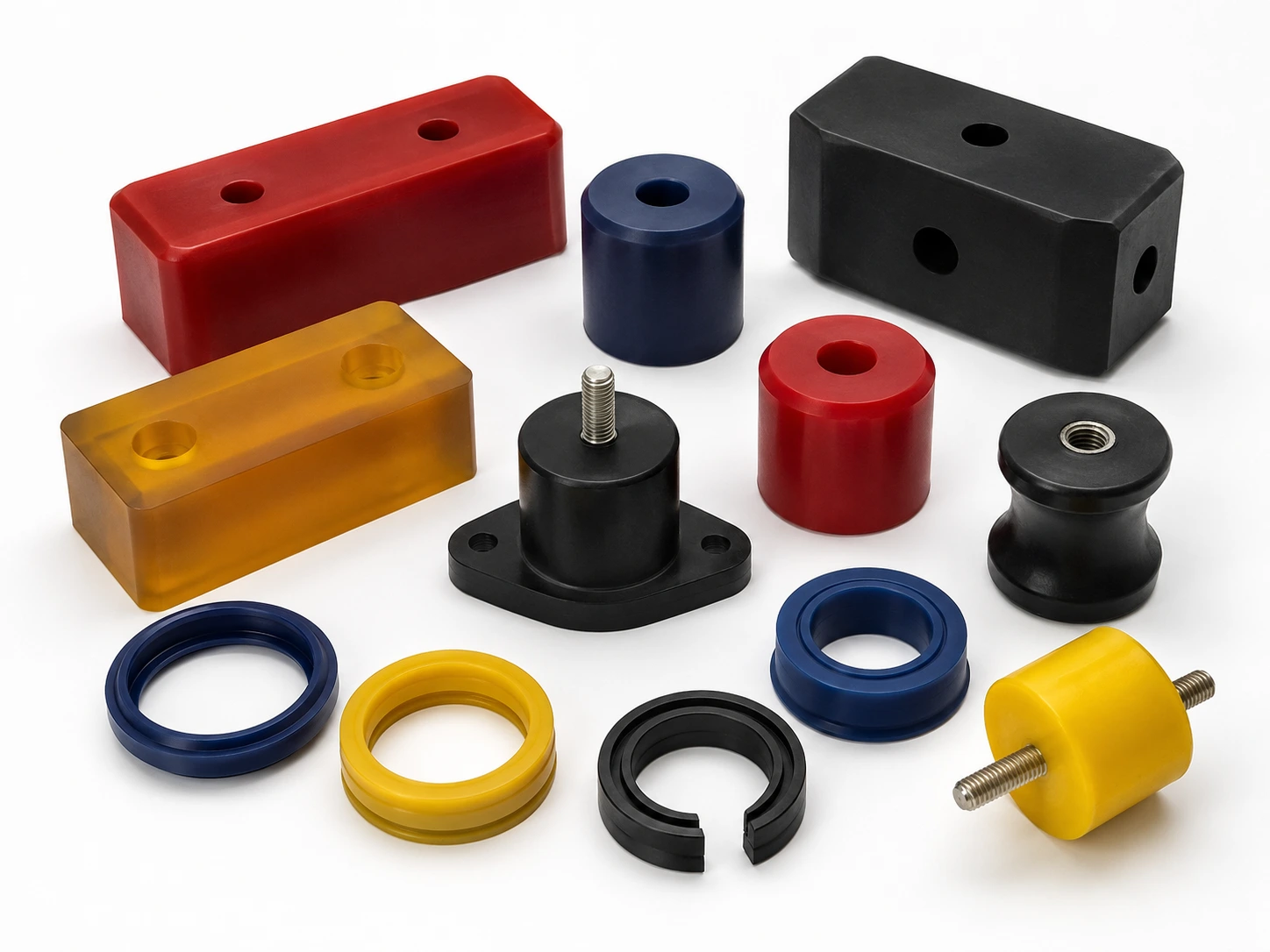
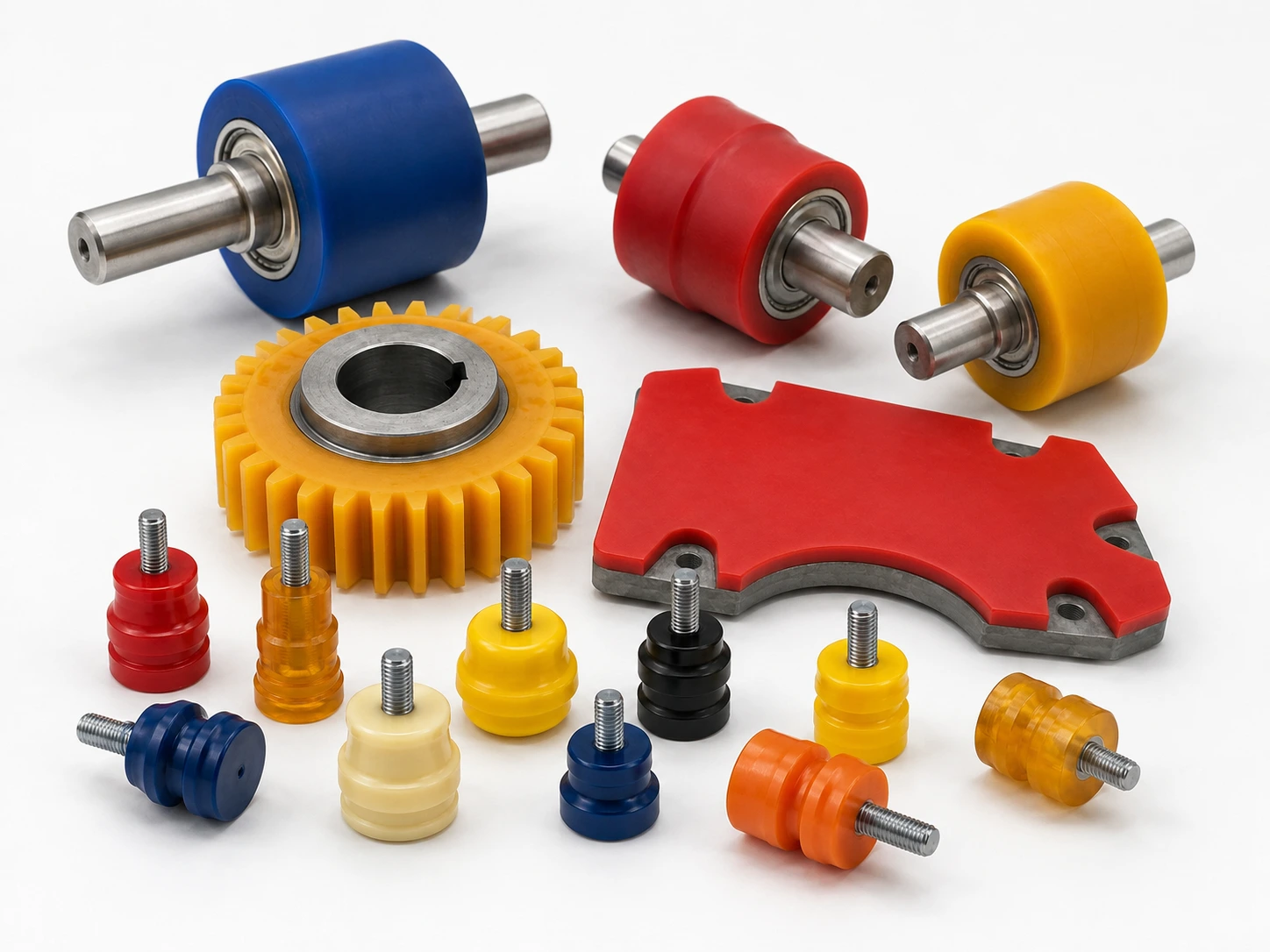
An overview of what we mold in polyurethane. The list is not exhaustive: if your part takes wear, load or impact, it can probably be cast in polyurethane.
Linings for chutes, hoppers and transfer points where material slides and strikes. Polyurethane can outlast some steels and rubbers depending on the wear mode (abrasion, impact, corrosion) — and it is lighter and modular. View the page →
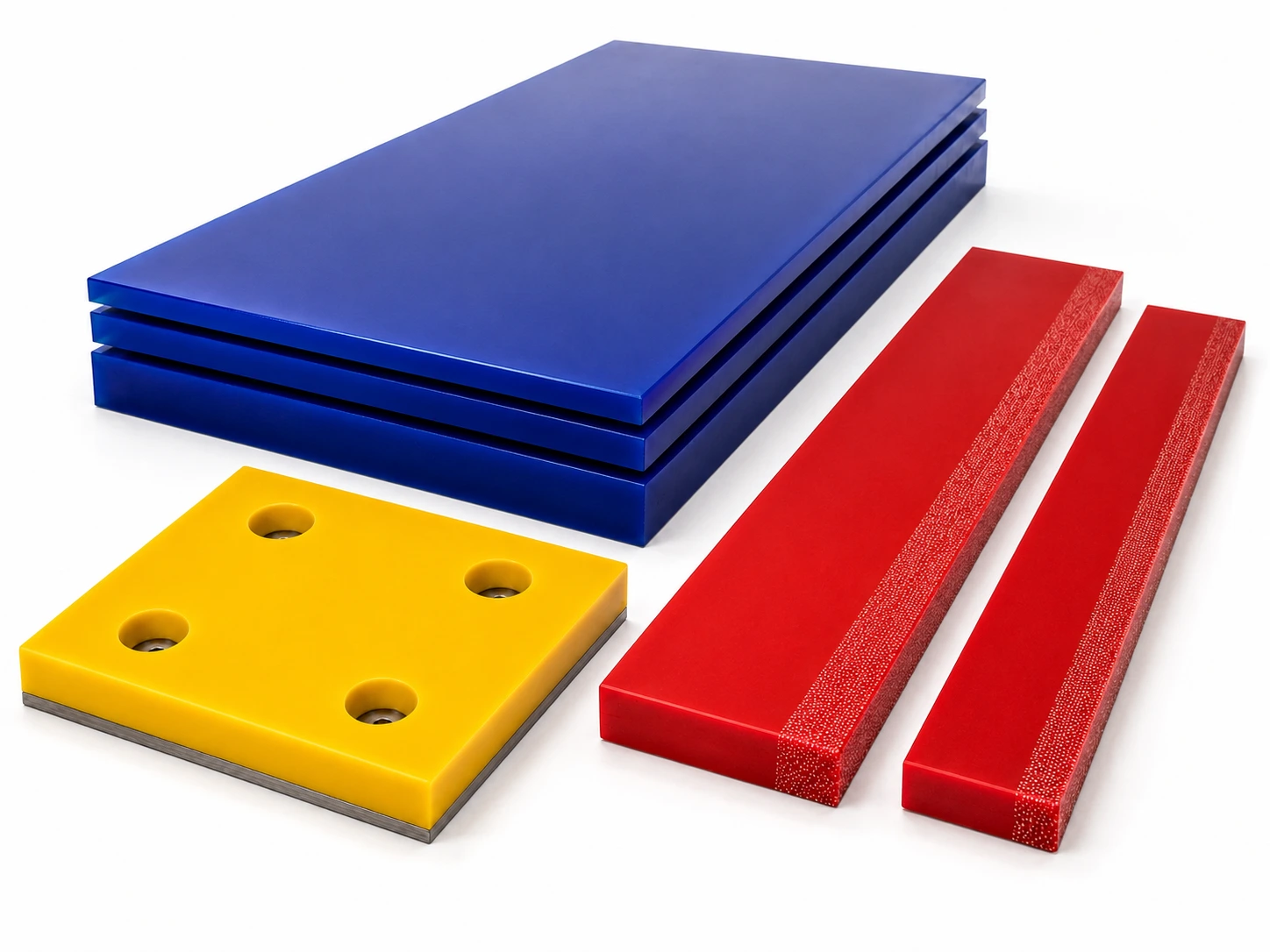
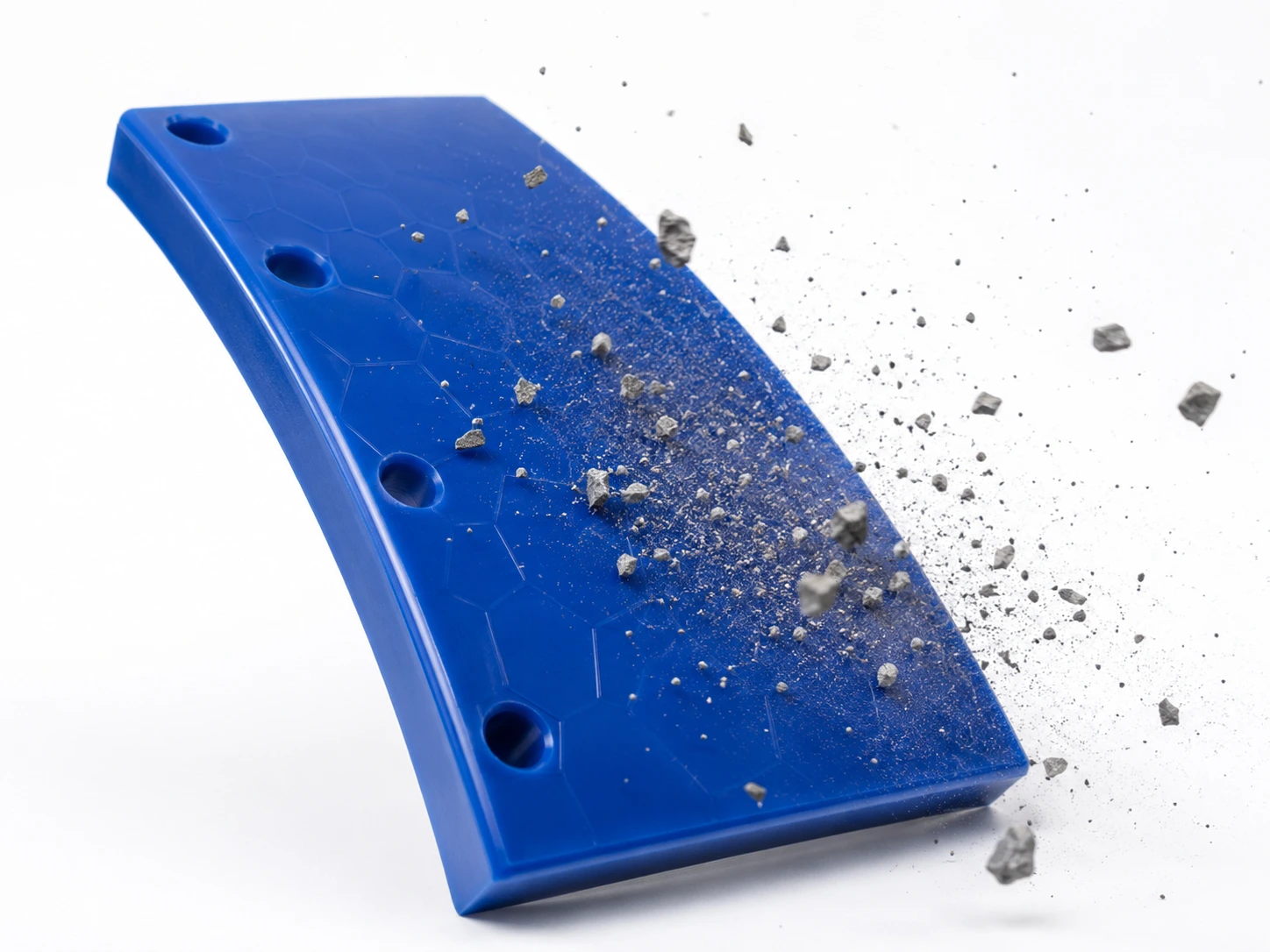
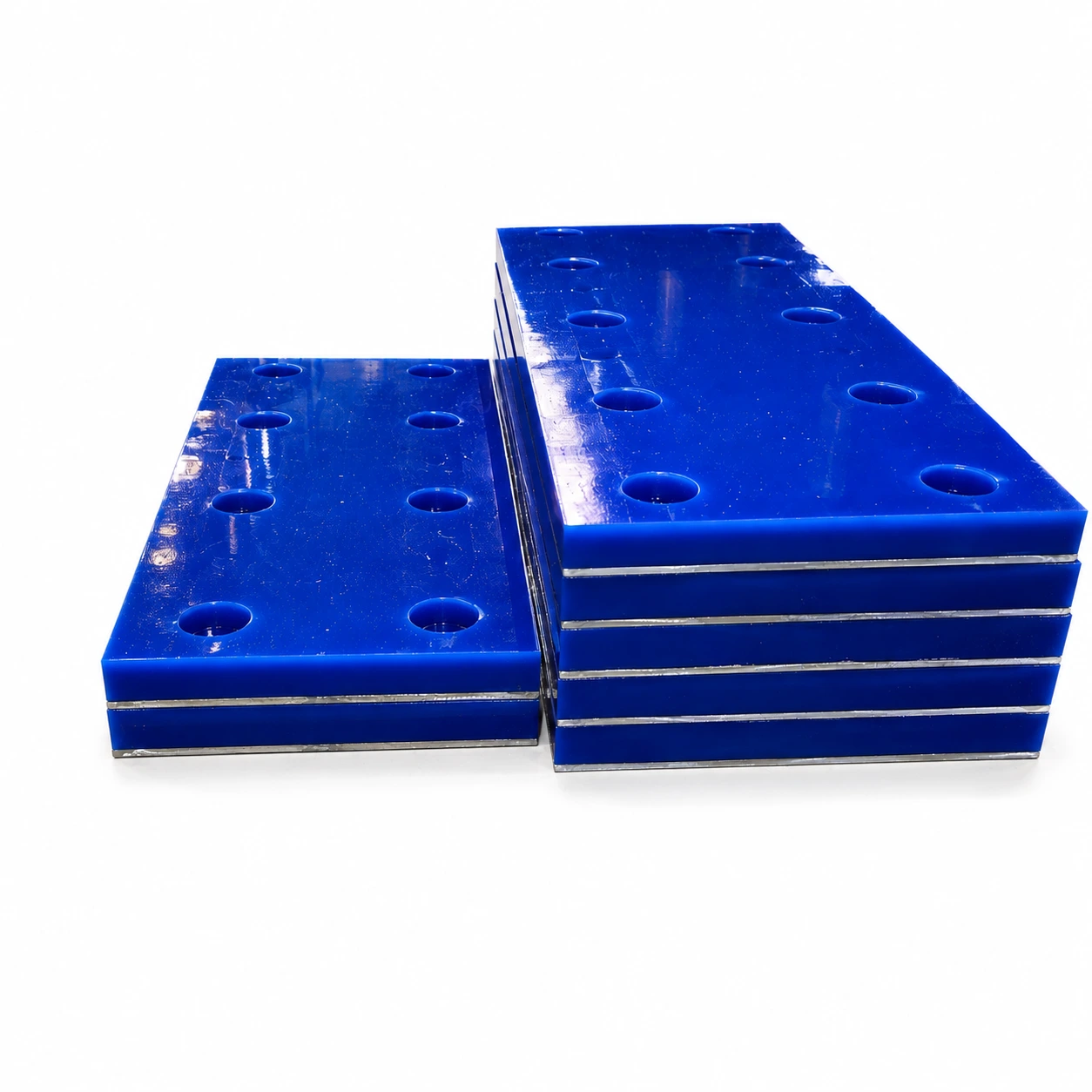
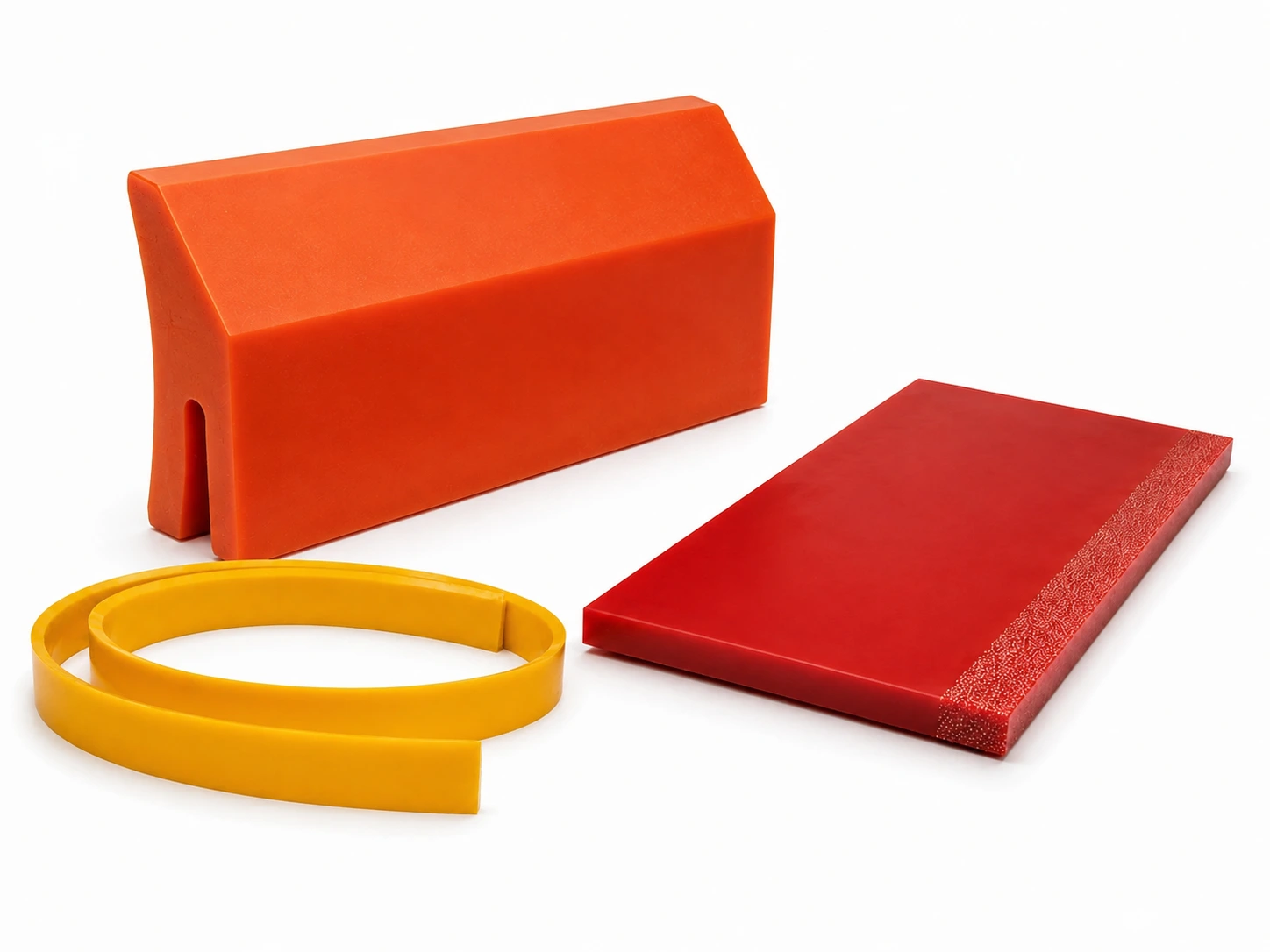
We embed ceramic beads or tiles in a polyurethane matrix: the PU absorbs the impact and holds the ceramic, which takes the sliding abrasion. Especially effective where the application combines sliding abrasion and impact (mining, bulk material handling). View the page →
Flexible blades that scrape a conveyor belt or clean a surface. Polyurethane holds its edge longer than rubber, and it does not corrode. View the page →

Modular vibrating screen panels for sizing and dewatering (mining, quarries). Polyurethane lasts far longer than steel wire mesh, reduces blinding and is replaced module by module.

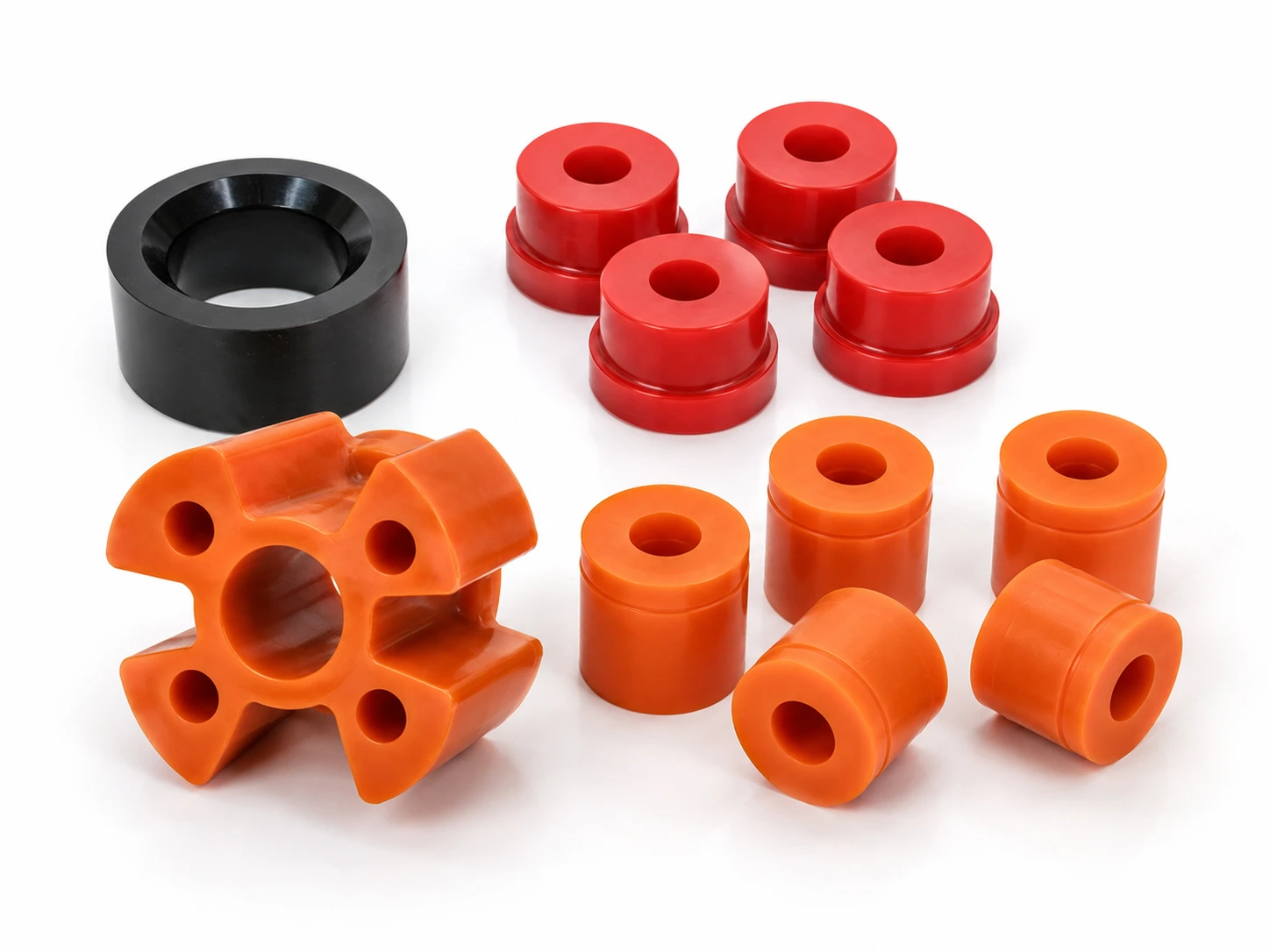
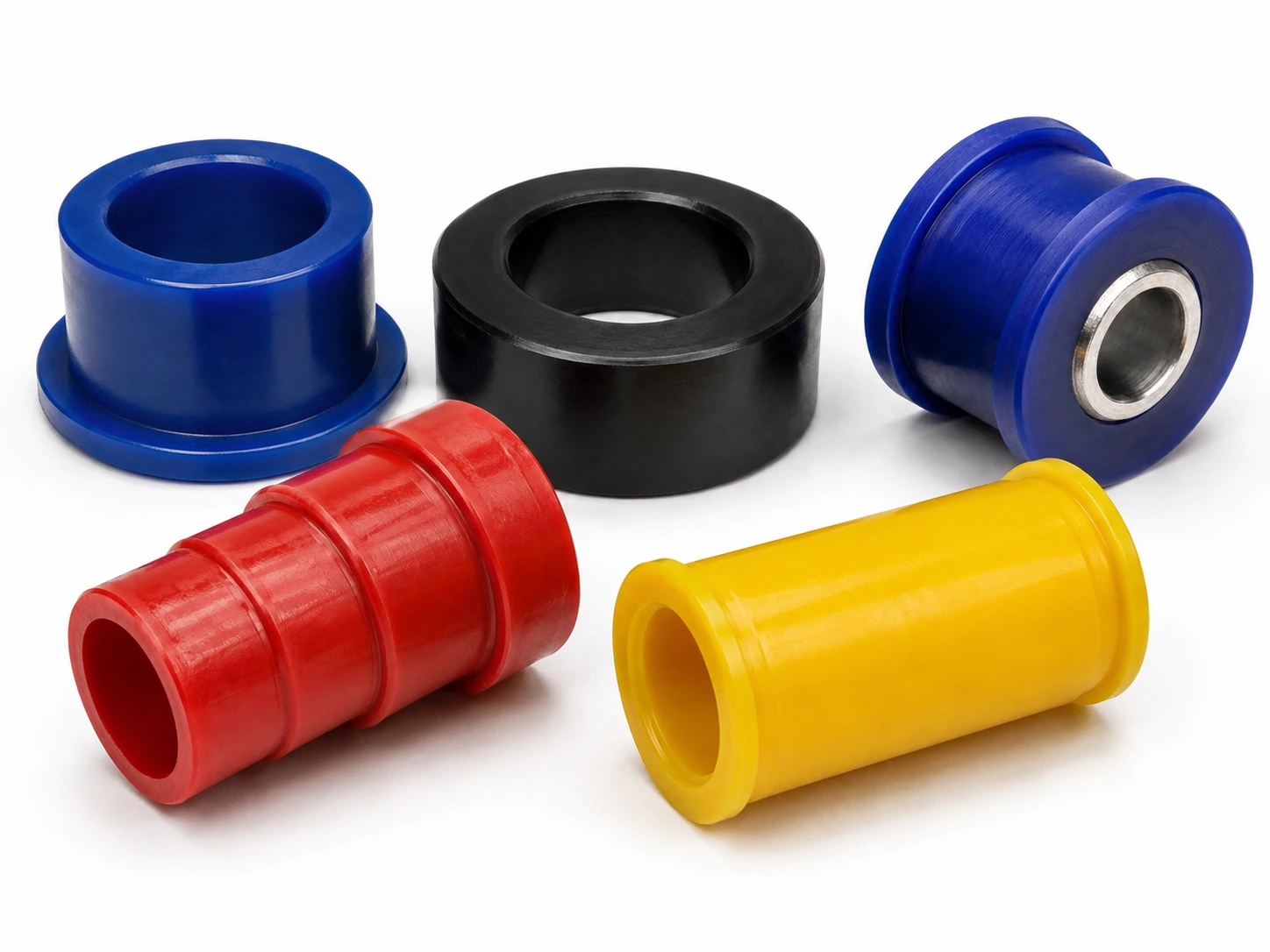
Sleeves that act as a bearing or as an interface between two moving parts, replacing bronze or rubber. Polyurethane cushions, resists wear and does not corrode, without galling. View the page →
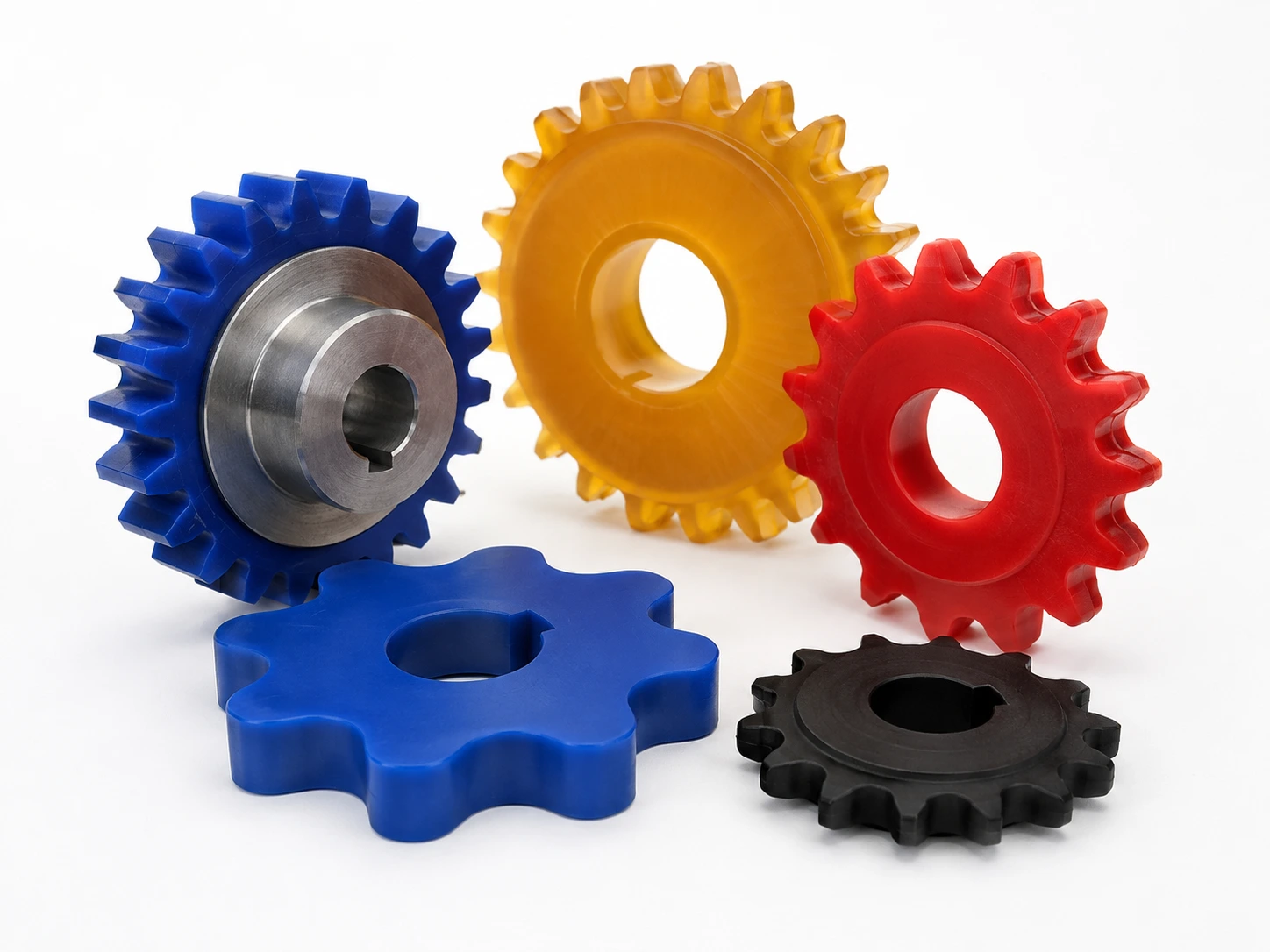
Cast gears and sprockets, often on a metal core. Polyurethane runs more quietly, absorbs shock and avoids metal tooling — practical for large diameters. View the page →
The elastomer element (the “spider” in a jaw coupling) that transmits torque while absorbing misalignment and shock. The resilience of polyurethane takes more than rubber does. View the page →
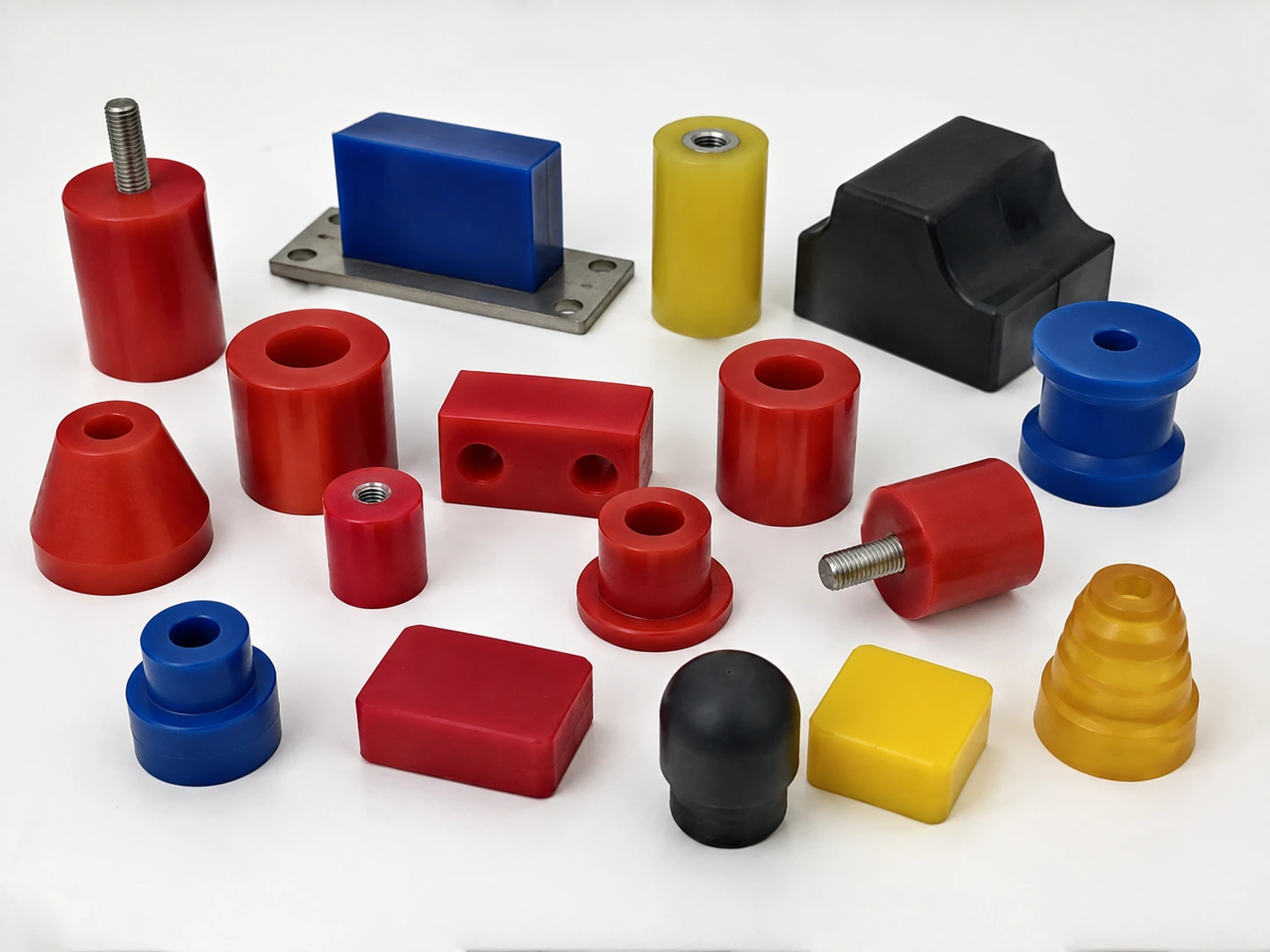
Blocks and pads that absorb impact and cushion stops. Polyurethane takes the hit, then returns to shape while cutting noise, vibration and damage. View the page →
Molded sealing elements (seals, U-cups, V-rings) to contain a fluid or keep contaminants out. The high mechanical strength of polyurethane extends the life of hydraulic and dynamic seals. View the page →
Molded vibration isolators, pads and mounts that decouple equipment and protect structures — durable even under load and in wet or oily environments.


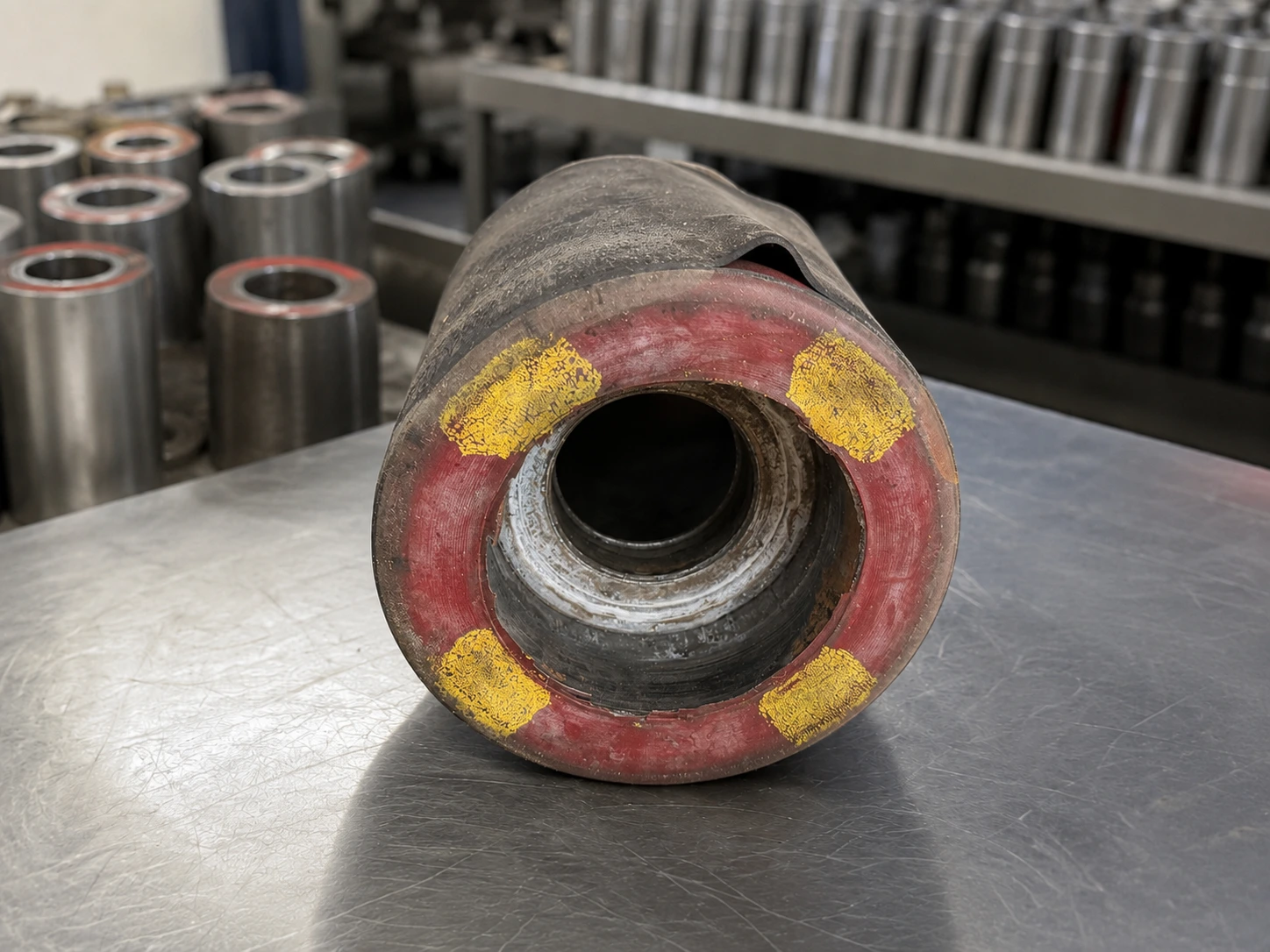
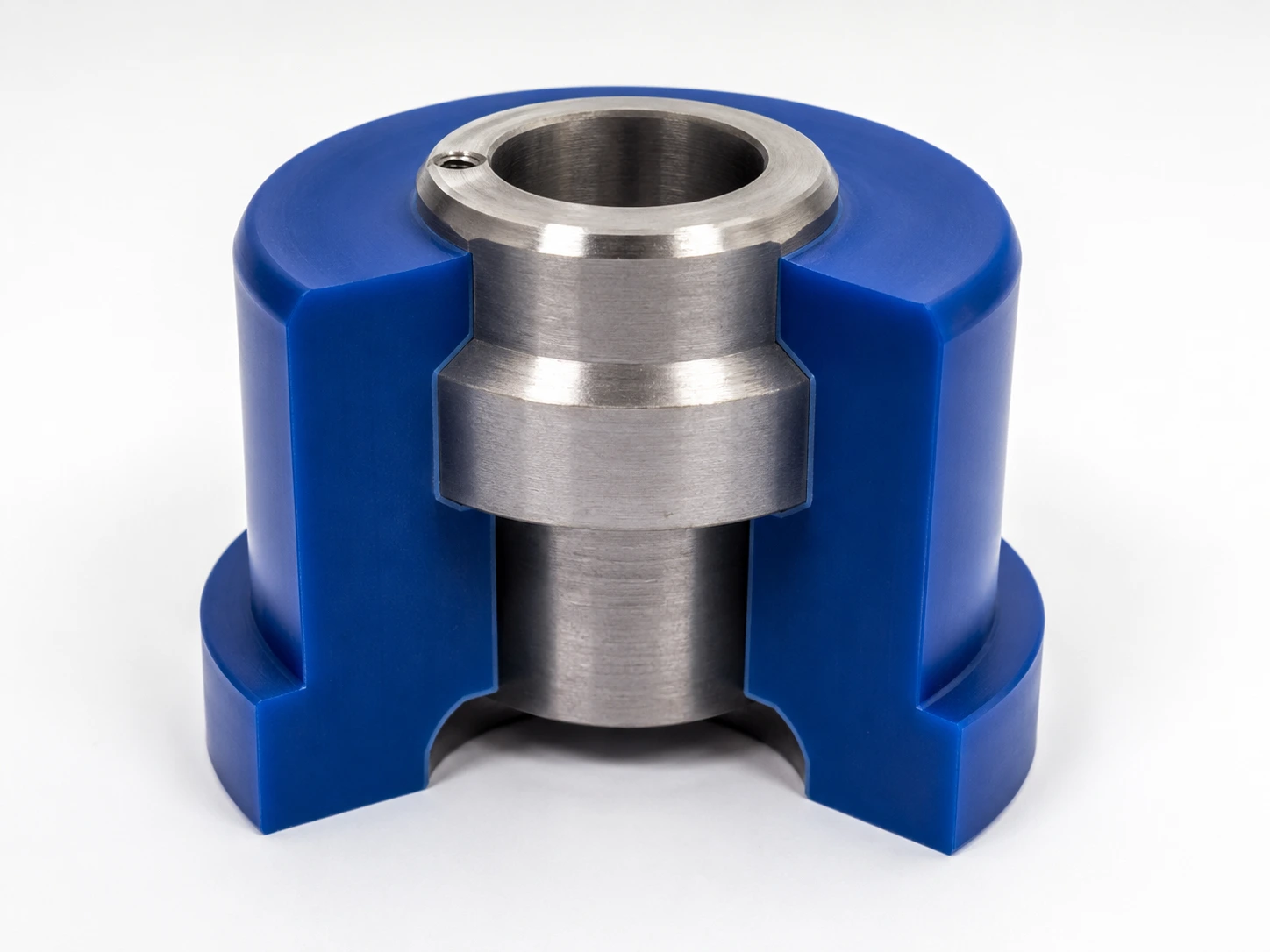
Polyurethane cast onto an insert or a core made of steel, stainless steel or aluminum : the part combines a rigid skeleton and a PU working surface. Ideal for pump liners, wheels and drive belts. View the page →
Liners, bushings, seals and wear parts for slurry pumps and hydraulic equipment — and large cast parts for turbine and hydroelectric applications, where abrasion and erosion do the damage.
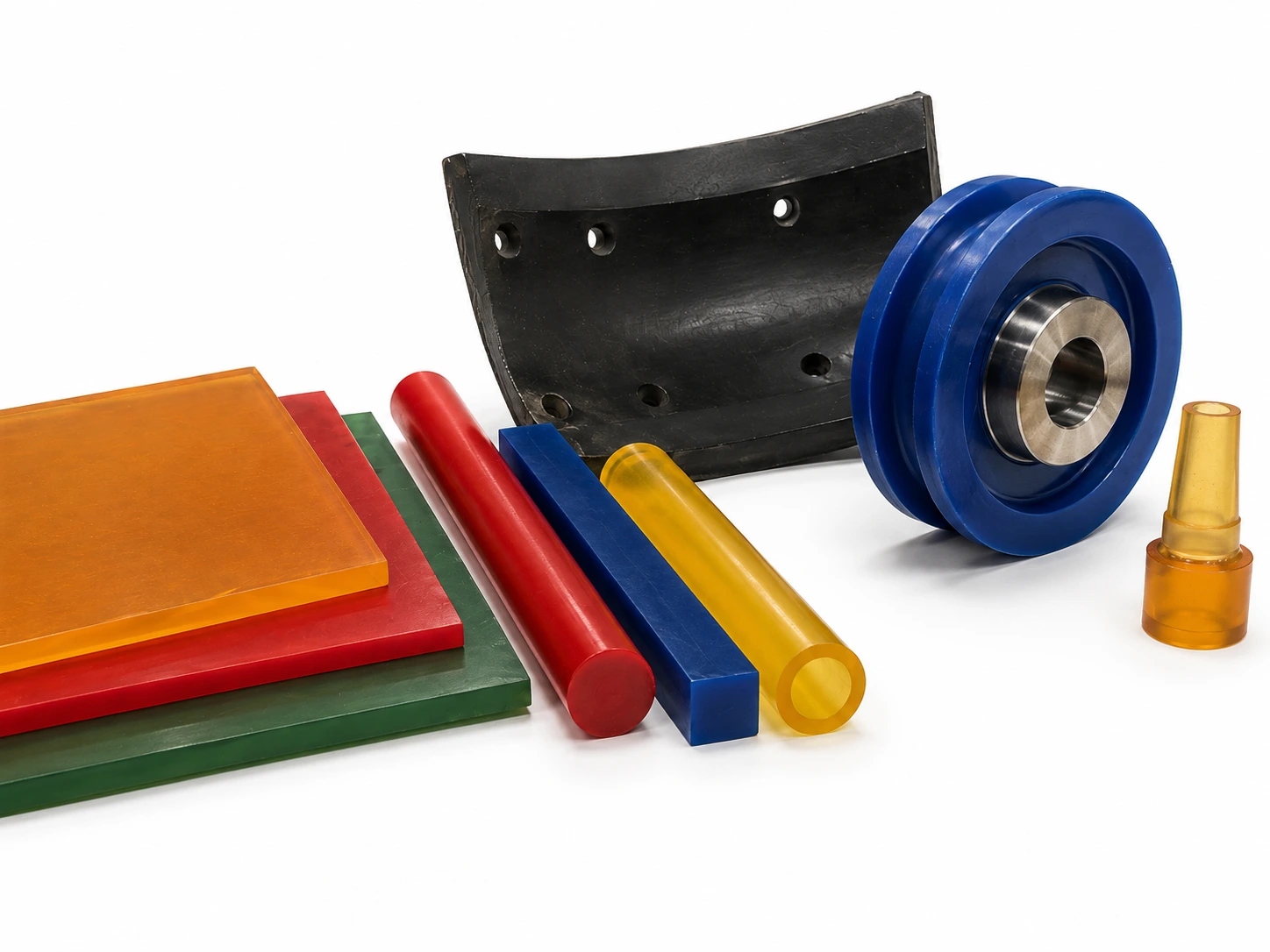
Plates, bars and cylinders in polyurethane, cast to the hardness you need, ready to be turned, milled or cut — the base material for custom parts machined on site.
A specific part in mind, or a sample to copy? Tell us about your part →
The real numbers from our shop: hardness, dimensions, weight, tolerances and finish.
From
From
From
Any metal — steel, stainless steel, aluminum and others — depending on the part.
Turning, grinding, cutting, drilling, grooving and profiling.
After molding:
We also cast parts in
Every color available, depending on the formulation and the application.
Advantages of hot cast polyurethane
Hot cast polyurethane produces engineered parts that combine wear resistance, resilience, load capacity and dimensional stability. The formulation, the hardness and the cure cycle can be matched to the actual service conditions: abrasion, impact, moisture, oils or dynamic loading.
The result: longer-lasting custom parts, made with or without a metal insert.

Engineered formulations built to resist abrasion, cutting and wear in demanding environments.

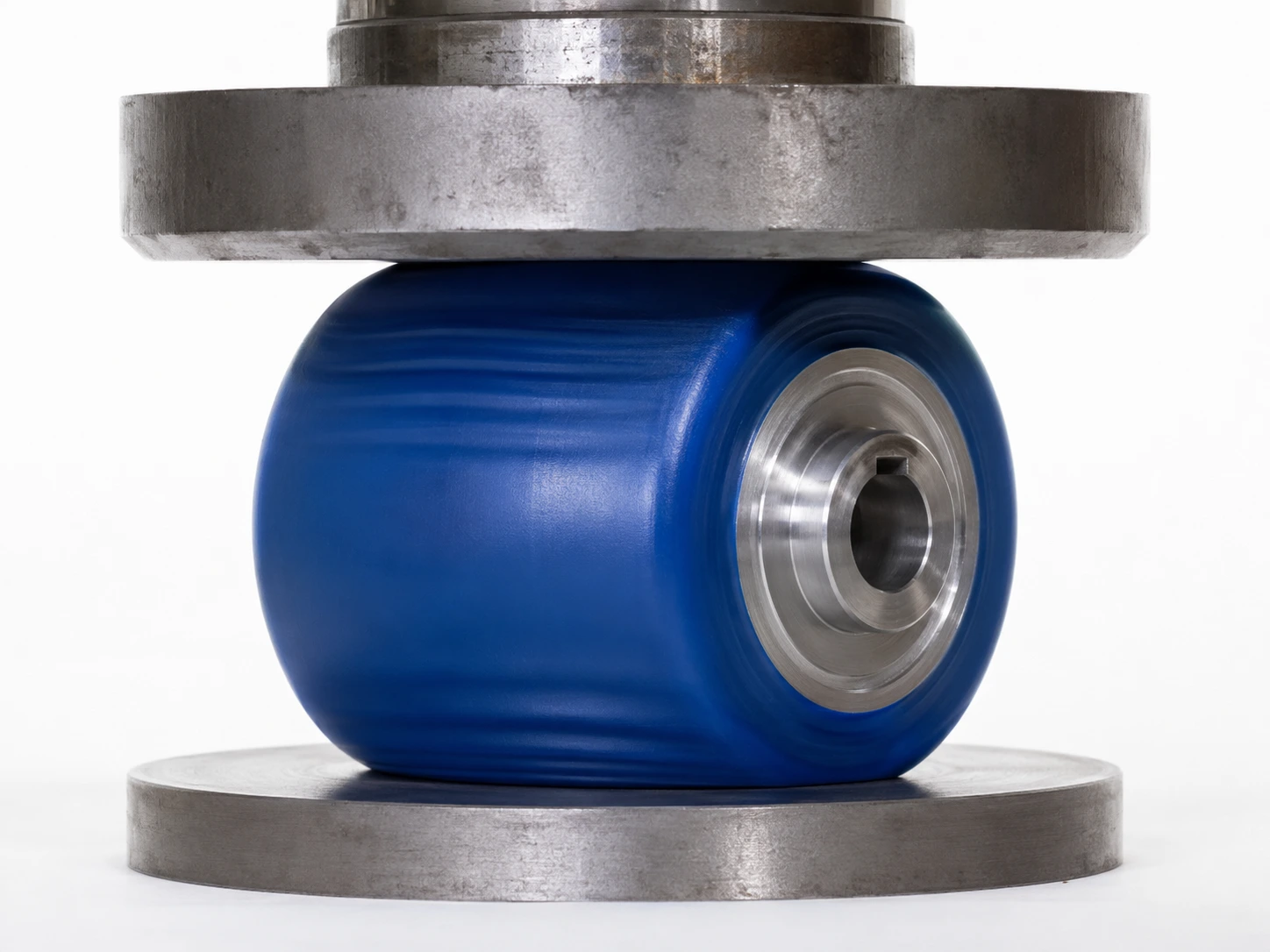
The material absorbs impact, returns to shape and carries repeated loads with excellent mechanical durability.

Polyurethane can be cast onto a metal core or insert to combine rigidity, adhesion and wear resistance.

From prototype to small or medium production runs, the process turns out simple or complex parts with optimized tooling.
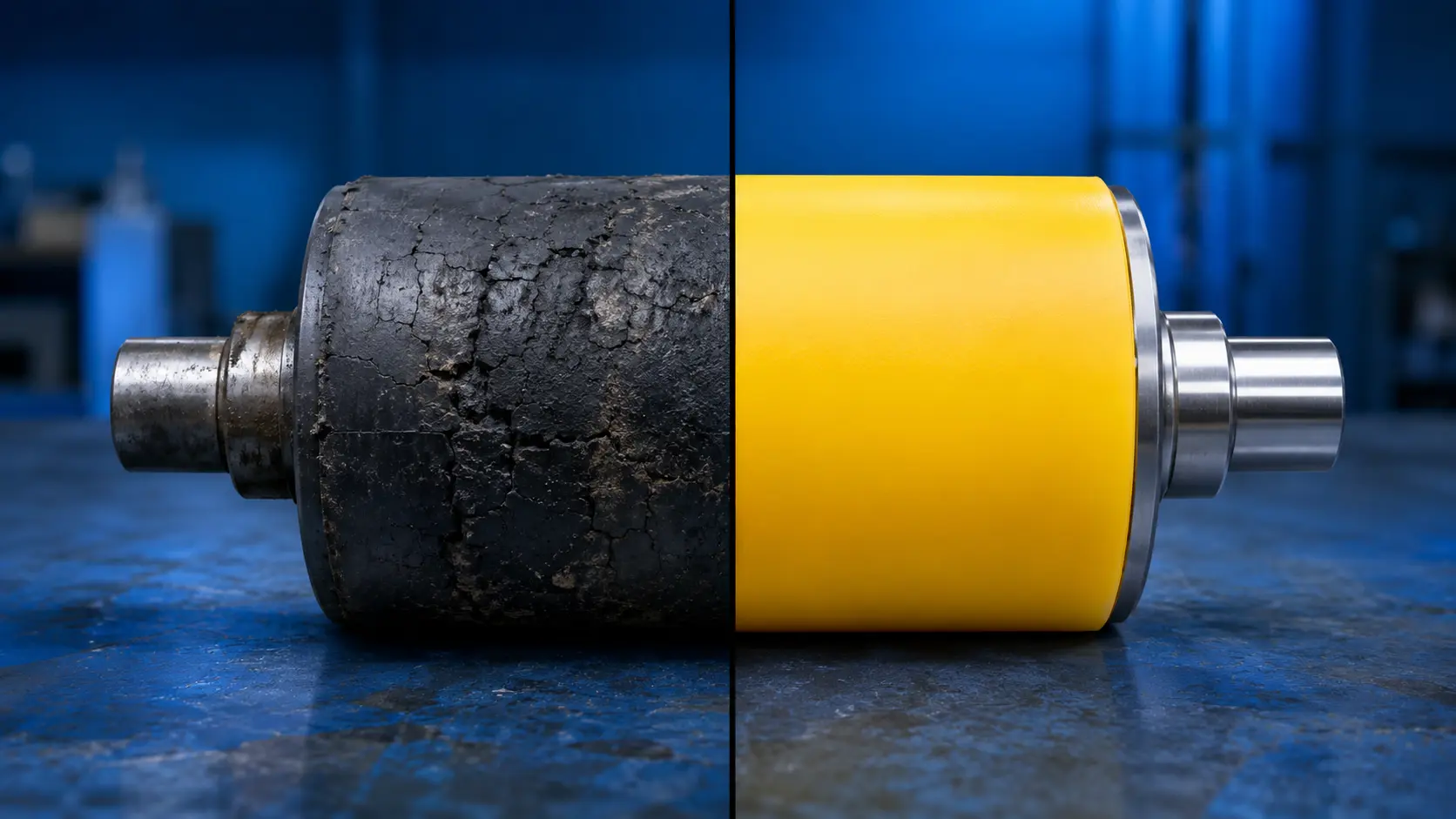
Hot cast polyurethane: up to 5× more resistant to wear and tearing than some rubbers.
Hardness is a starting point, not a formulation — we choose based on what the part actually does and the conditions it runs in.
A cast polyurethane formulation combines several elements: the
| Contrainte dominante | Propriétés prioritaires | Orientation technique à évaluer |
|---|---|---|
| Abrasion (glissement, particules, impacts) | Abrasion, coupure, déchirure, résilience | Polyester haute performance ; céramique noyée si abrasion + impacts |
| Eau, humidité, vapeur | Résistance à l'hydrolyse | Système polyéther ou polyester stabilisé |
| Charge dynamique, vitesse, cycles | Faible hystérésis, tenue en fatigue | Système dynamique TDI, MDI, NDI ou PPDI selon charge et fréquence |
| Huiles, produits chimiques | Compatibilité chimique ciblée | Formulation choisie après identification du fluide et de la température |
| Températures extrêmes (froid ou chaud) | Flexibilité ou stabilité thermique | Polyéther/MDI au froid ; formulation validée en température, parfois NDI ou PPDI, au chaud |
| Contact alimentaire, antistatique | Conformité documentée, résistivité contrôlée | Formulation FDA documentable ou antistatique/conductrice validée |
General guidance, not prescriptions: the final formulation is validated against the part, the geometry, the environment, the load and the target result.
For more than

Our cast polyurethane parts serve many industrial sectors, in Quebec, across Canada and in the United States.
Each part family has its own page — materials, sizes, overmolding and technical details.
Plates, sheets, pads and liners — polyurethane alone or overmolded on steel, with or without ceramic (bead bar).
Voir la page →Polyurethane cast on steel, stainless, aluminum, hubs, shafts and inserts — the rigidity of metal with a tough polyurethane surface.
Voir la page →Guide, protect, cushion and isolate metal-to-metal contact — machined to the exact diameter.
Voir la page →Conveyor belt scrapers, cleaning blades, flexible lips — hardness and profile to suit the application.
Voir la page →Absorb energy, limit travel, reduce impact — with or without a metal stud or plate.
Voir la page →Quieter drive components, with or without a metal hub — reproduced without a drawing when needed.
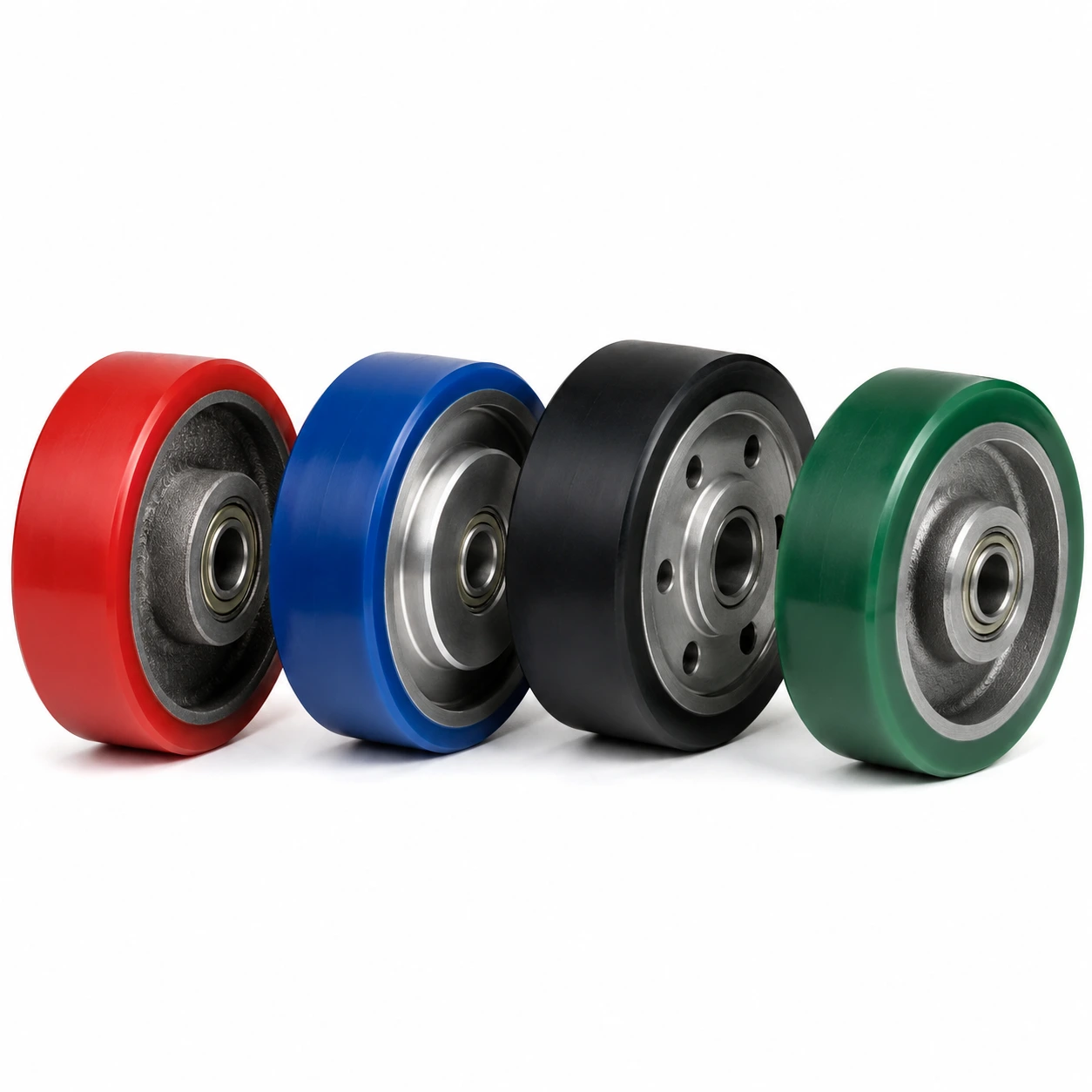
Voir la page →A wheel is a cast part too: covering on a steel, aluminum or cast iron core, hardness set by the load and the speed.
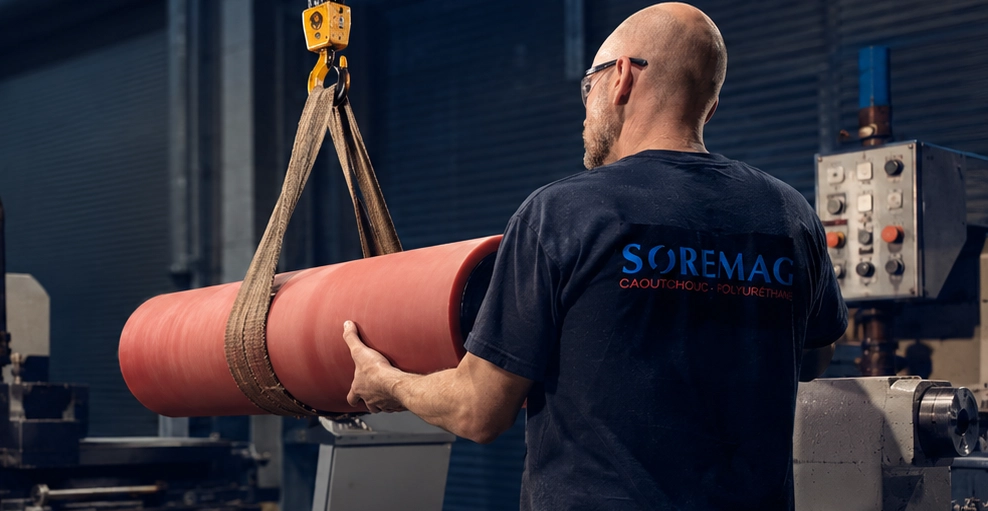
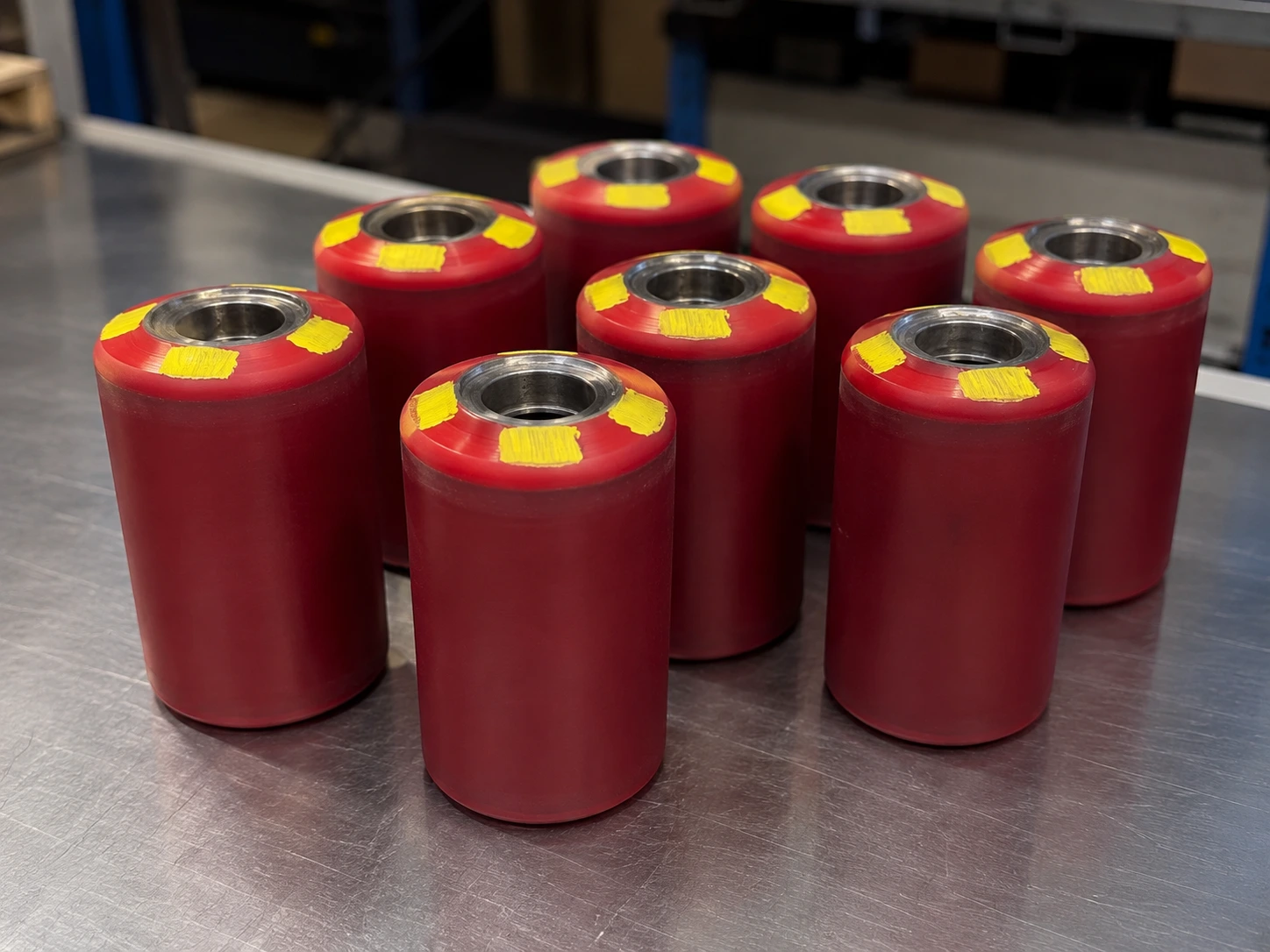
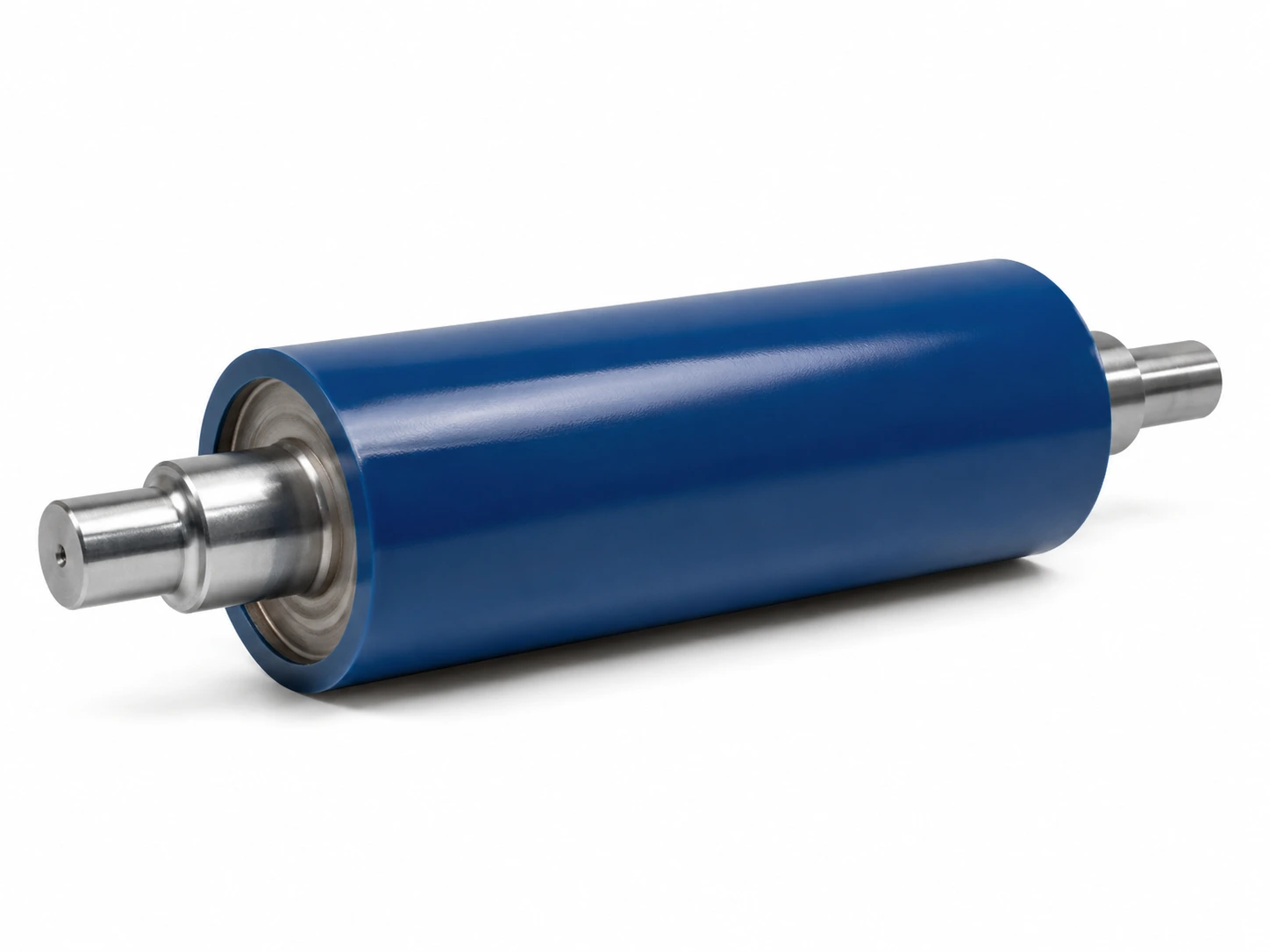
Voir la page →Cast onto your core, then ground to tolerance: roll covering is our best-known molded part.
Voir la page →OEM part, invention or off-the-shelf product: we reproduce, we adapt, we improve — seals, pulleys, couplings, liners, guide rollers and more.
Voir la page →
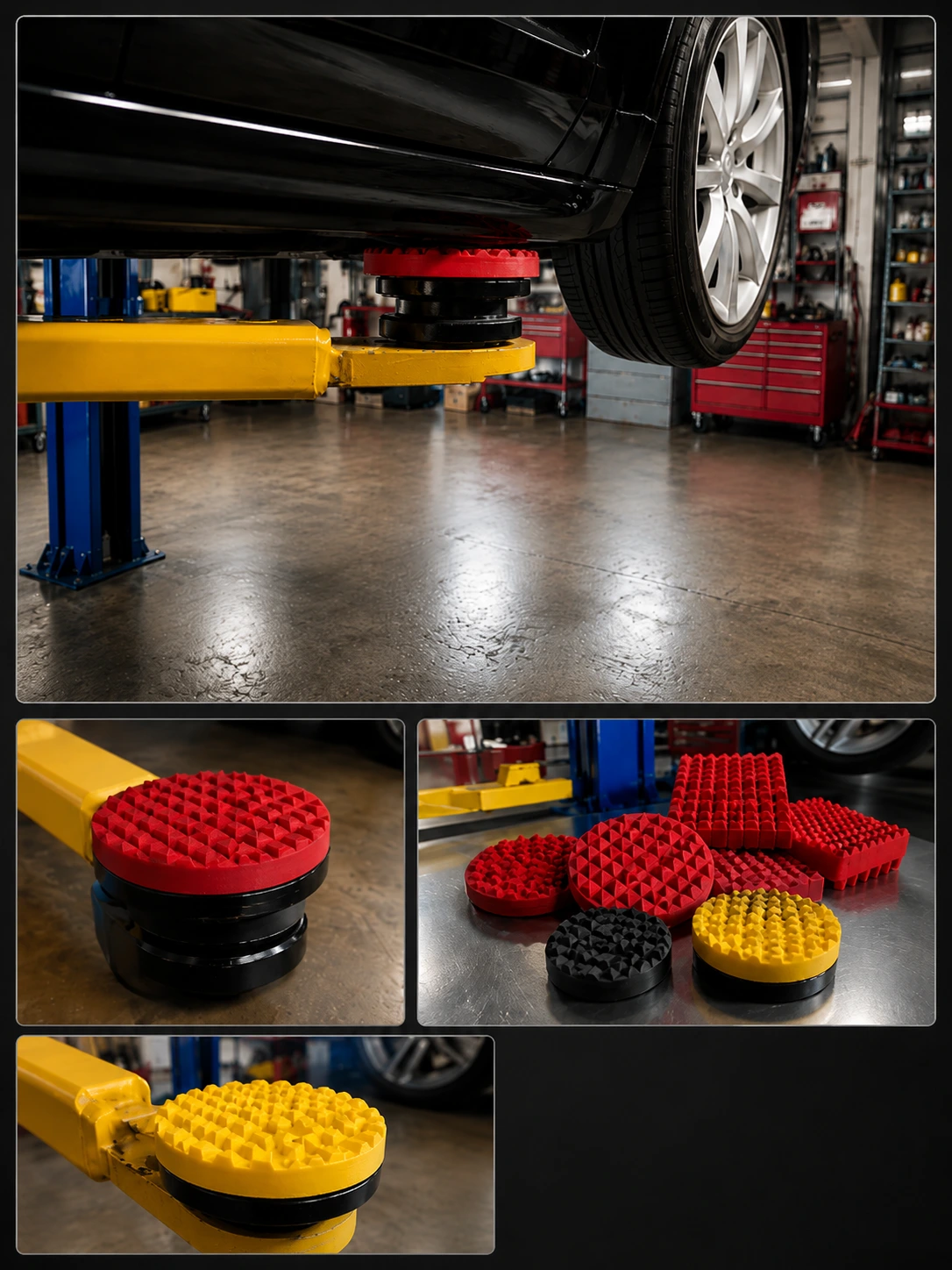
Molded polyurethane lift pads — round, rectangular, textured or custom. The durable alternative to rubber pads for dealerships, garages and repair shops.
Voir la page →Cast polyurethane combines the flexibility of rubber with the strength of a plastic. Depending on the application, the right formulation can offer abrasion and cut resistance well above rubber, high load capacity, good rebound and good resistance to many oils — the real gain is confirmed by testing or by operating data. We mold it from soft (Shore A) to rigid (Shore D), in the shape you need, with no expensive metal tooling.
Yes. The polyurethane is cast and overmolded onto a steel, stainless or aluminum insert or core, with validated surface preparation and bonding system. You get a part that combines a rigid metal skeleton with a PU working surface — tough, quiet and wear-resistant.
Yes. Through reverse engineering, we reproduce a part from a sample, a worn part or a sketch, even with no drawing — dimensions, hardness and material included.
From a small bushing a few millimeters across to large, heavy parts for pumps, mining screens and hydraulic or turbine equipment. Casting makes it possible to produce large parts that are difficult or expensive to machine from metal.
Yes. We mold wear parts that combine ceramic beads or tiles with a polyurethane matrix (“bead bar” type) for the most abrasive environments: the PU absorbs the impact, the ceramic takes the sliding abrasion.
There is no minimum: a single part is cast just as readily as a production run. Because the molds are built in-house and casting does not require expensive metal tooling, the one-off prototype, the urgent replacement part and recurring production are all economically viable.
The range runs from about 10 Shore A (very soft, cushioning) to 85 Shore D (nearly rigid). The right choice depends on the job: absorbing impact, carrying a load, resisting abrasion, scraping or guiding. We select the hardness and the formulation with you based on the actual conditions — an existing part can serve as a starting point to characterize.
In general, good resistance to many oils, greases and aliphatic solvents — often better than that of most rubbers. The exact resistance depends on the chemical family (polyester, polyether, polycaprolactone) and on the medium: hot water, steam and certain chemicals call for an appropriate formulation. We validate chemical compatibility before casting.
Yes, and that is often the real value of custom molding: if the original part wears out too fast, tears or deforms, we adjust the hardness, the formulation or the geometry to correct the failure mode observed. Reproduce, but also improve — especially when the original part was not lasting.
Everything is done in-house — molds, casting, finish machining — which shortens lead times compared with a subcontracted chain. The actual lead time depends on the complexity of the part and on whether a mold is available. For a critical breakdown, our 24/7 emergency service lets us handle the part as a priority.
Send us a drawing, a photo or the worn part, with its function, the load and the environment — we will recommend the formulation, the hardness and the casting process — in Quebec, across Canada and in the United States.
➔ Request a quote