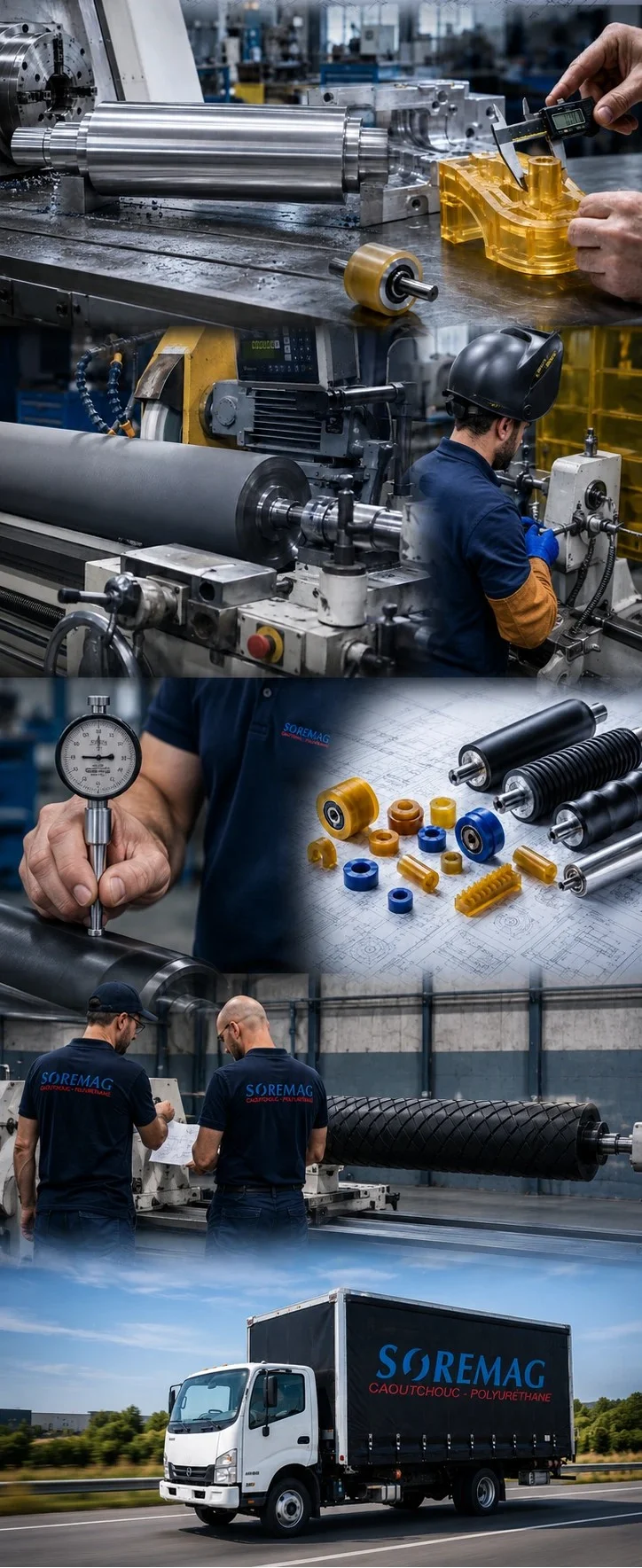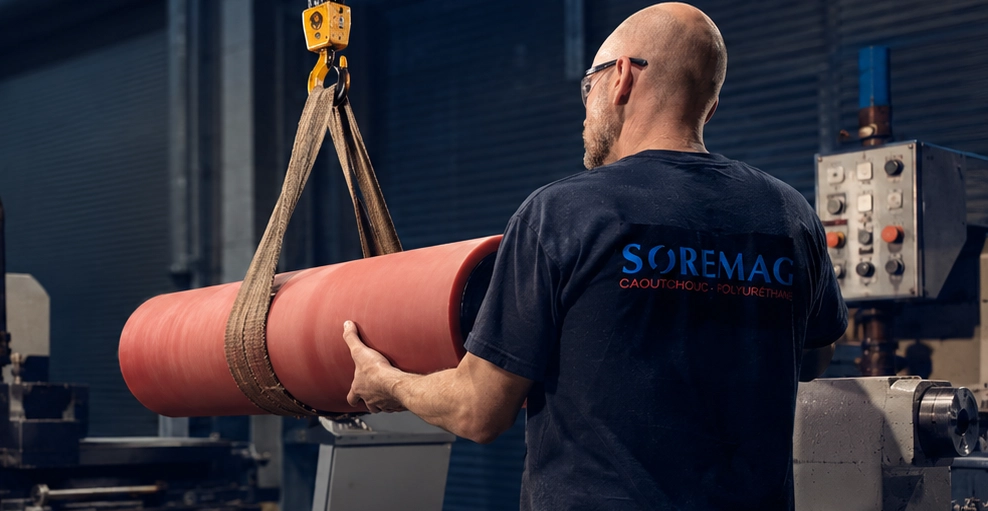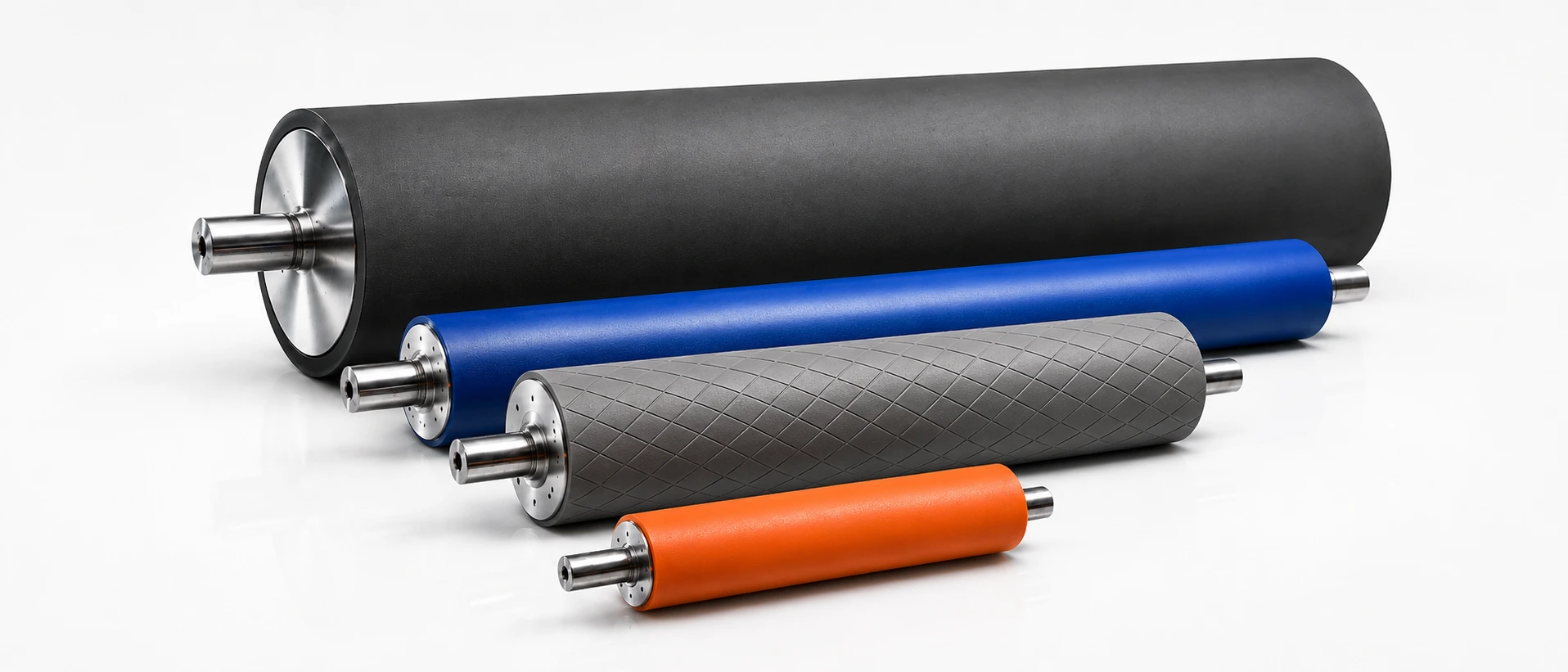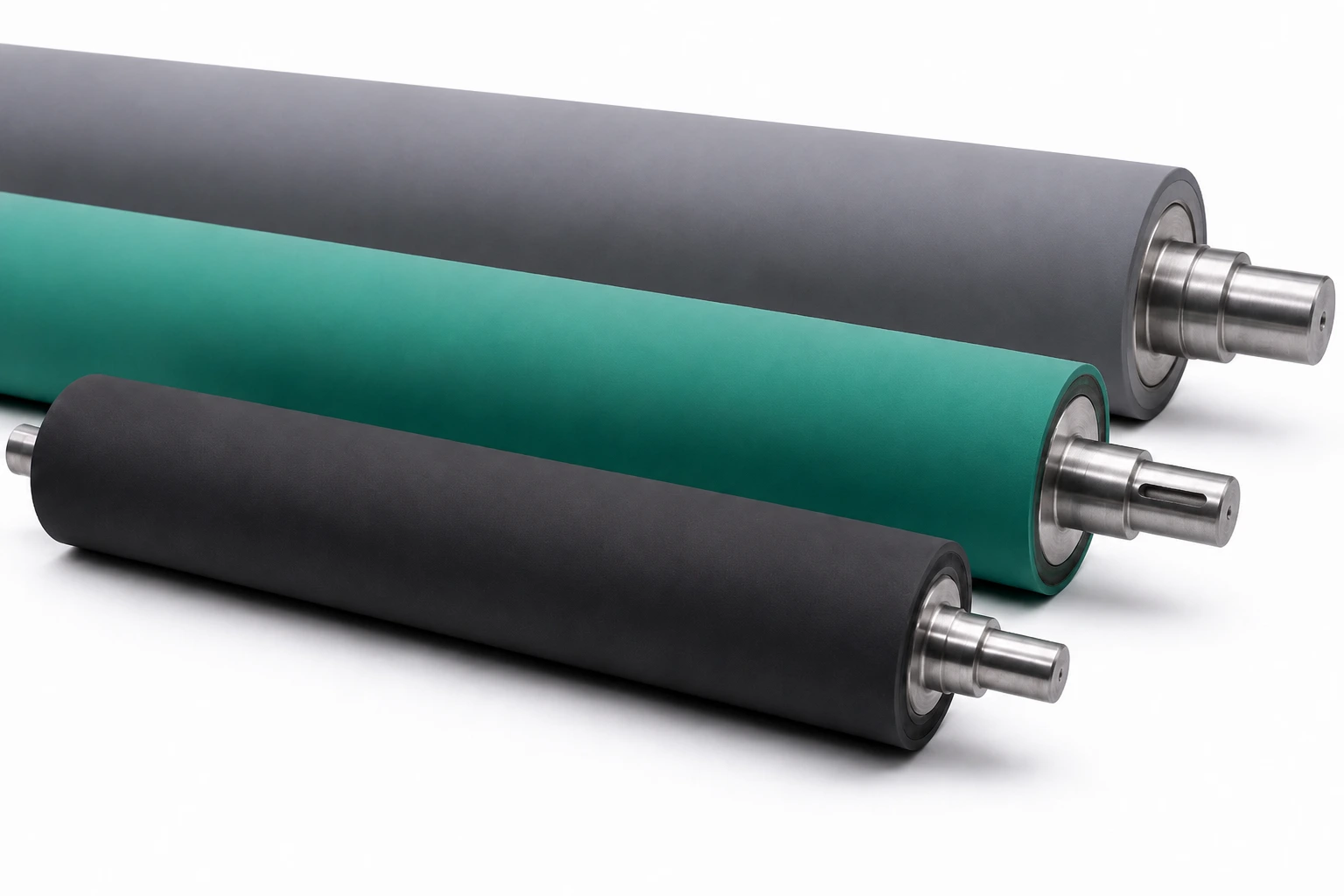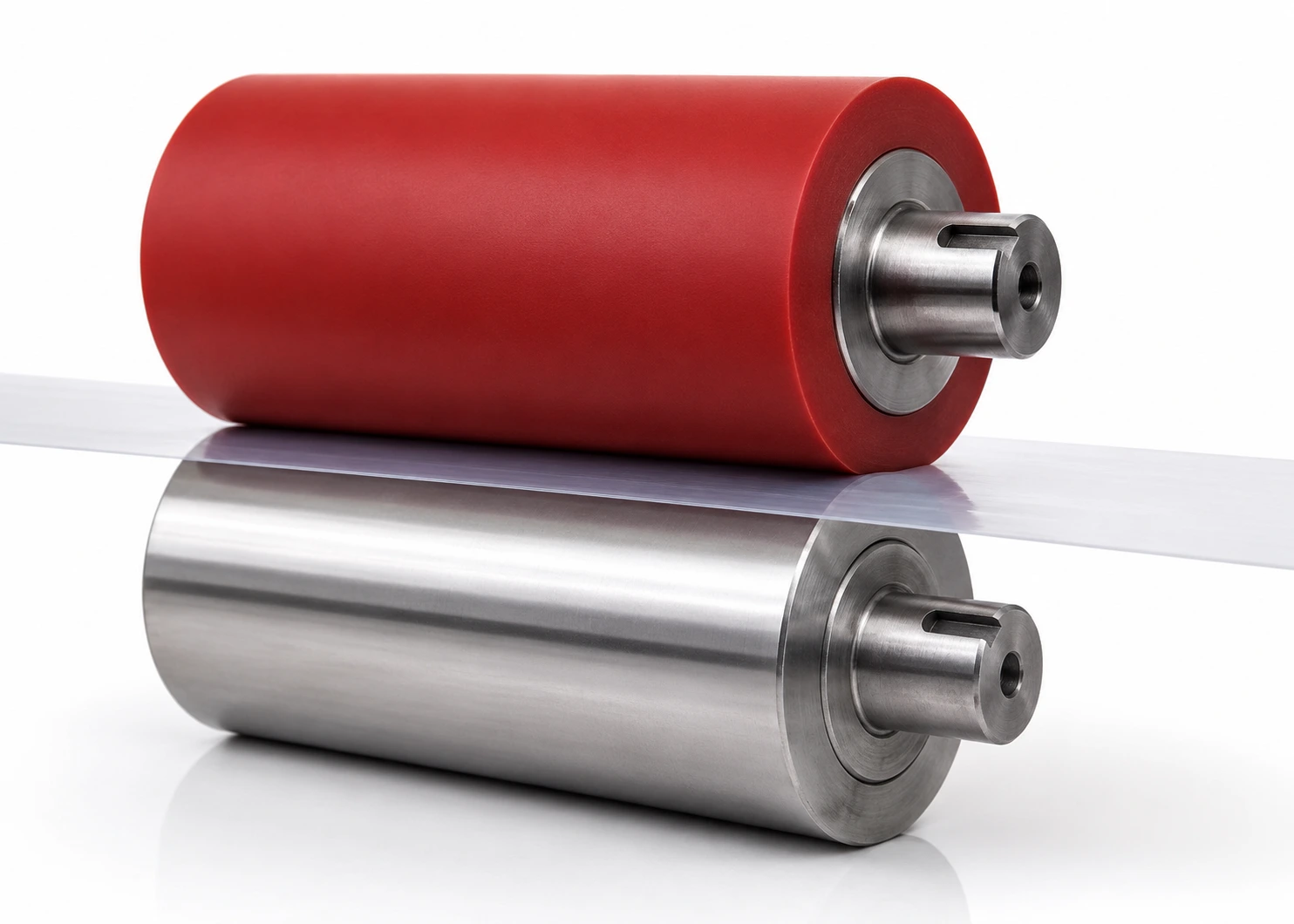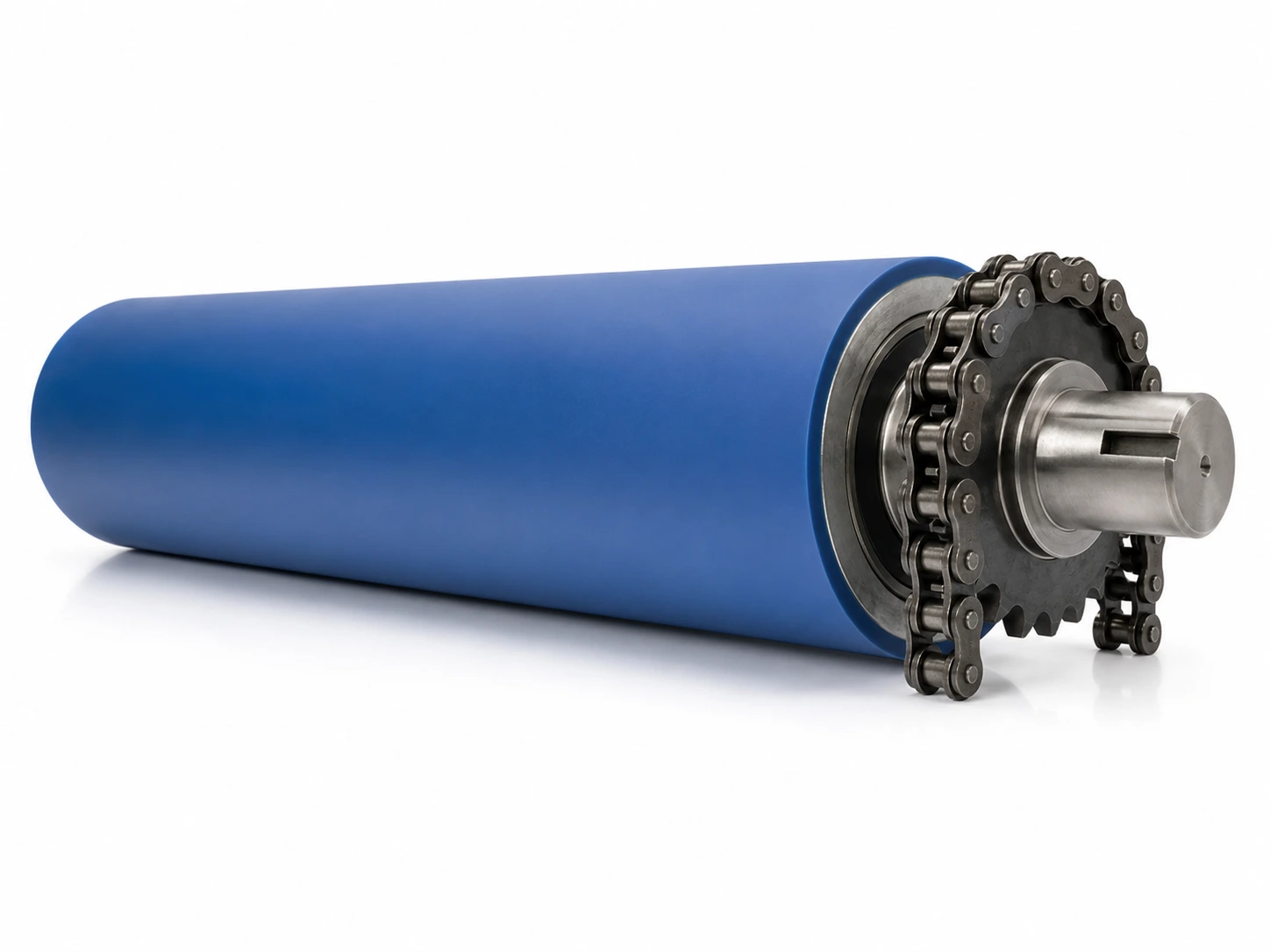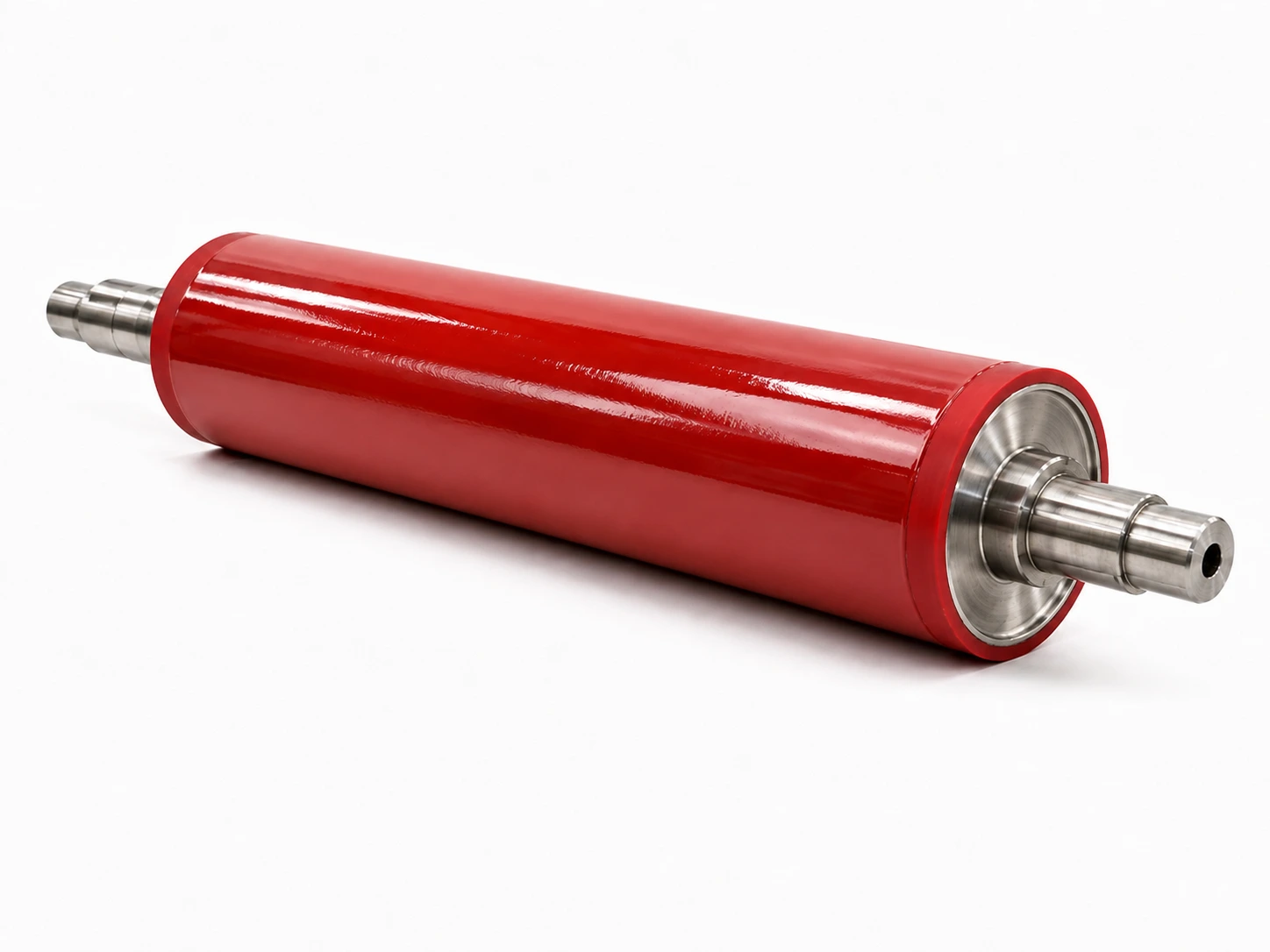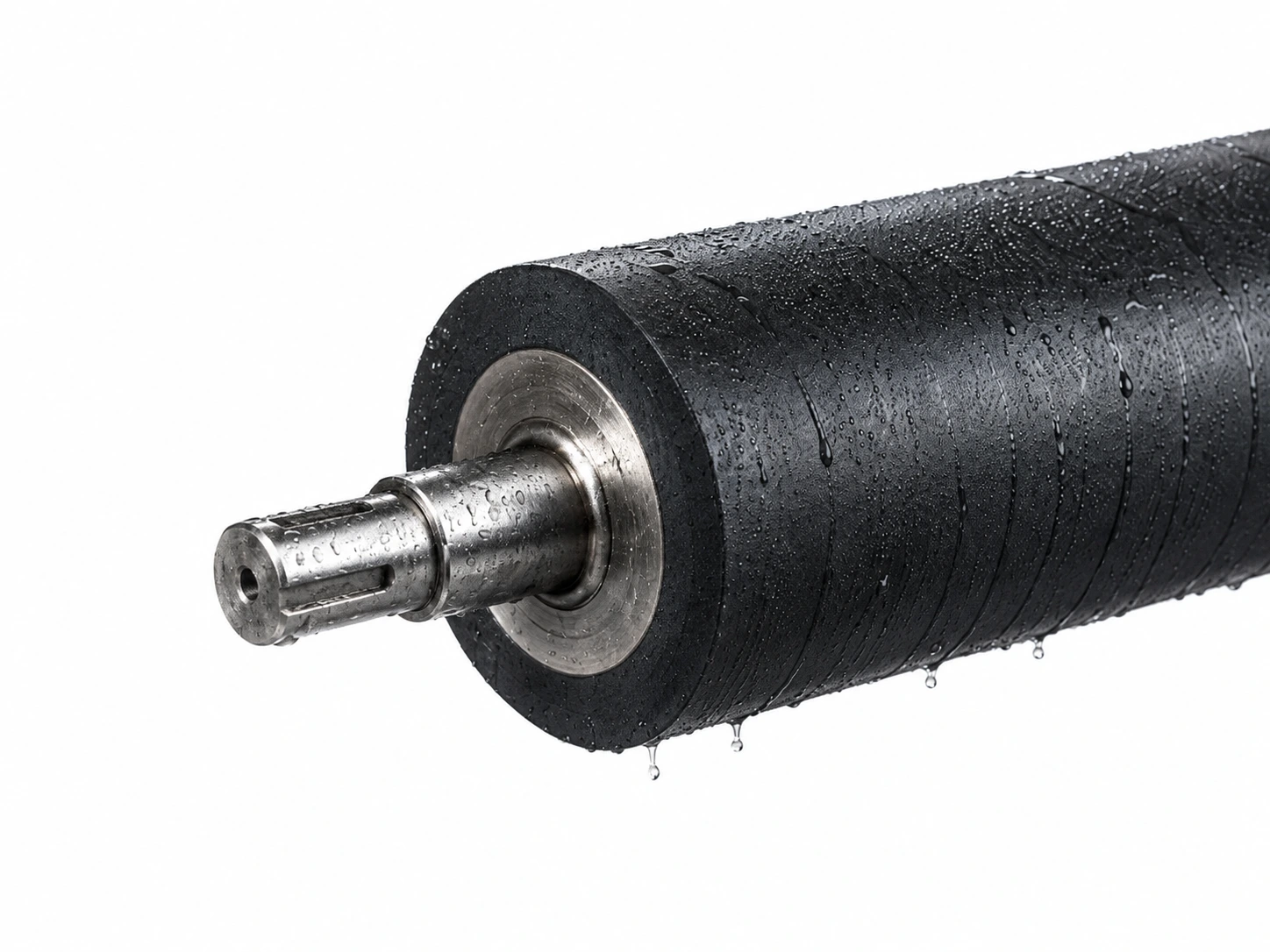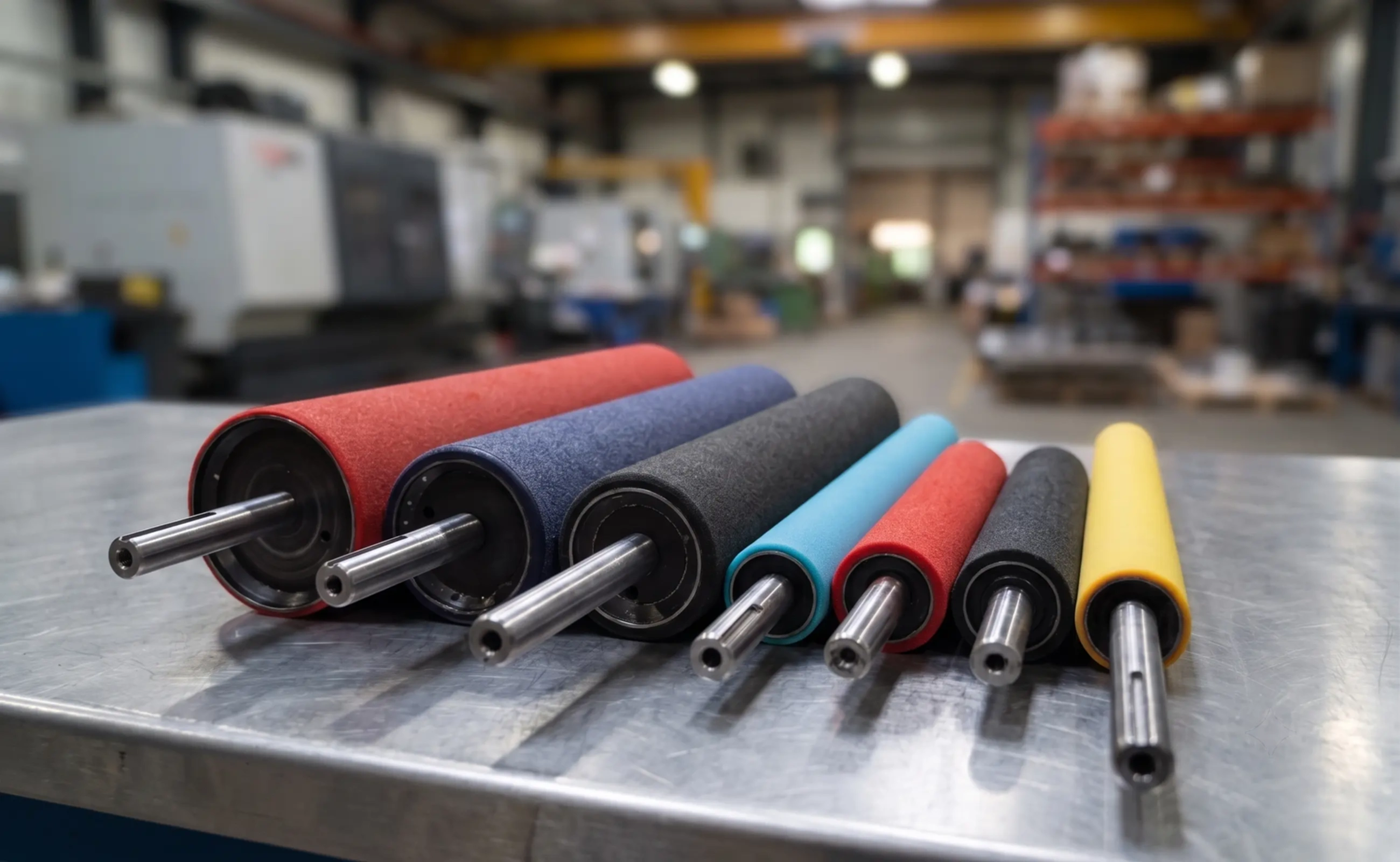
Soremag covers, refurbishes and finishes your industrial rollers in rubber or polyurethane — from material selection to precision finishing, in-house.
The right method: start from the

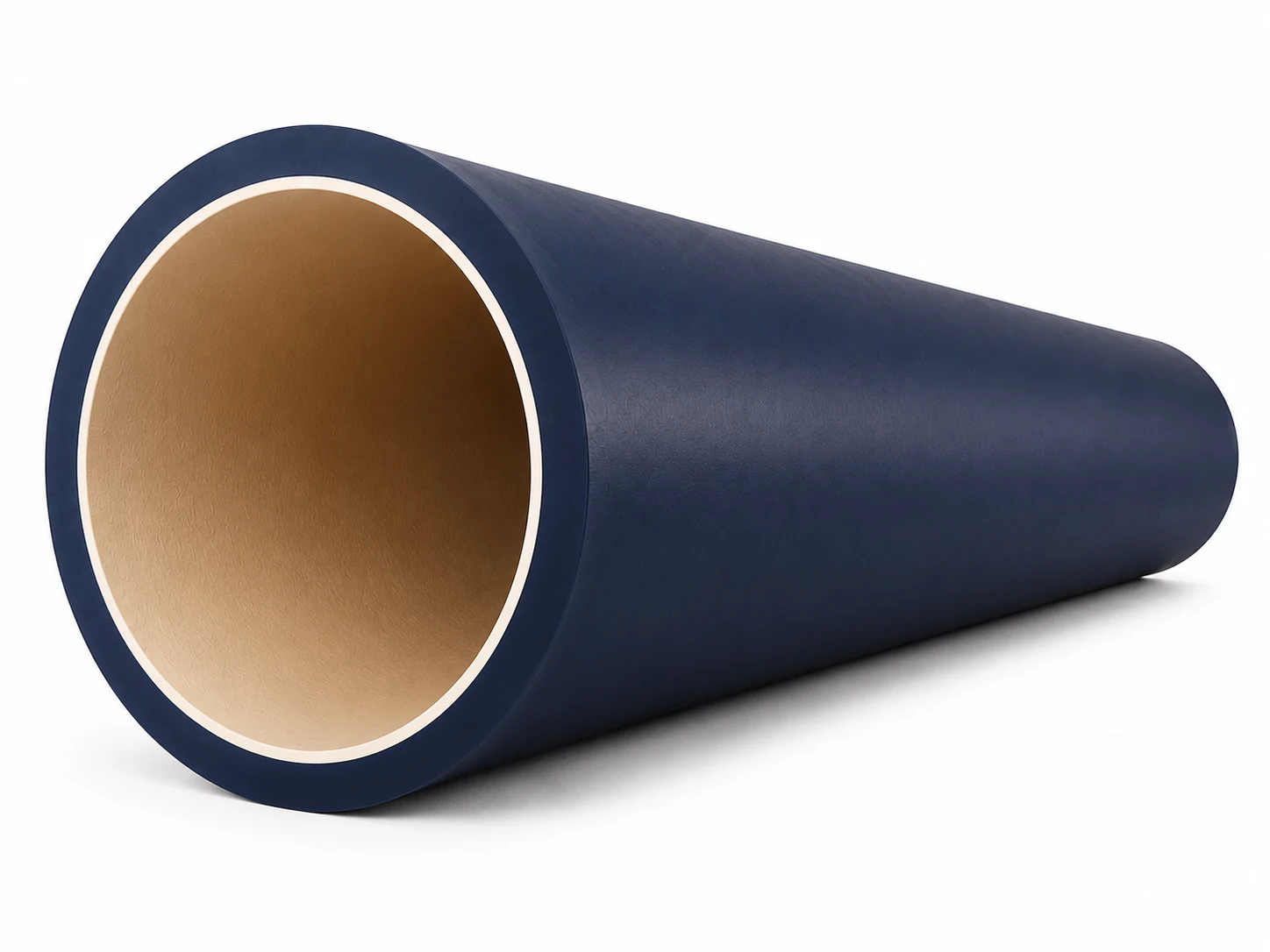
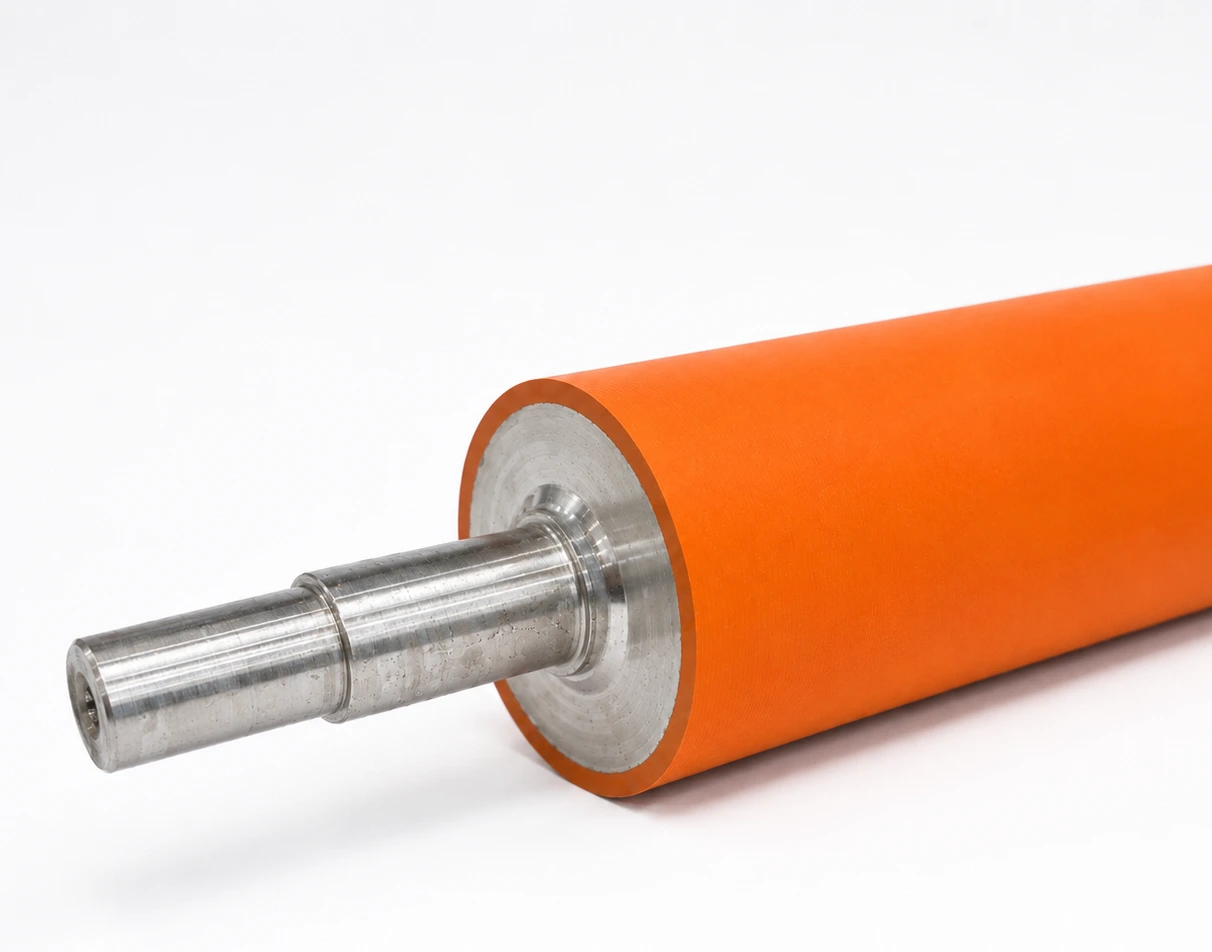
Rubber “works” with the material: it deflects under load then returns to shape, creating a stable contact footprint. You choose it when grip, damping or a specific chemical constraint comes first. Everything is decided by the compound and the Shore A hardness, matched to your application.
Learn more about rubber roll covering →
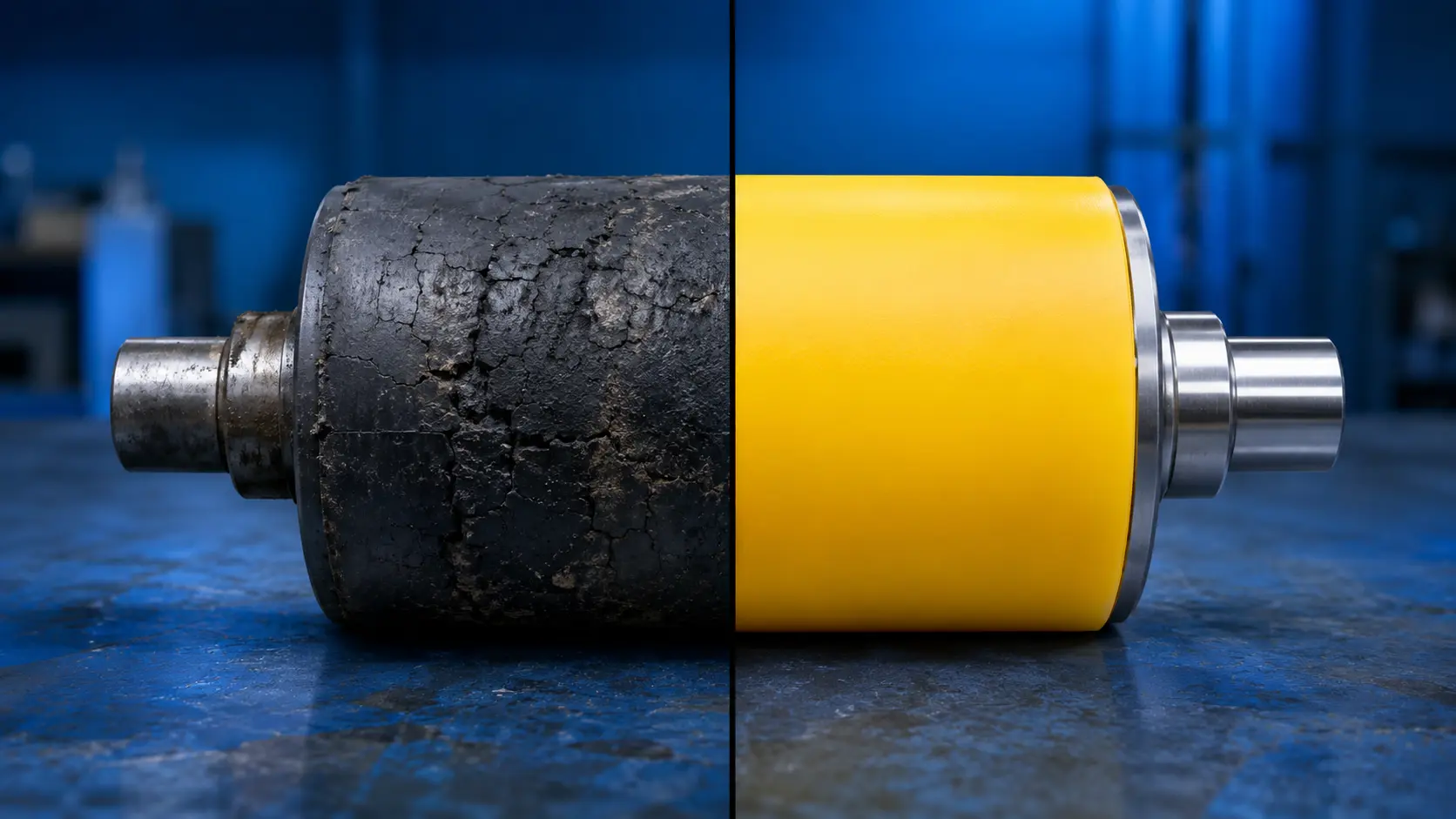
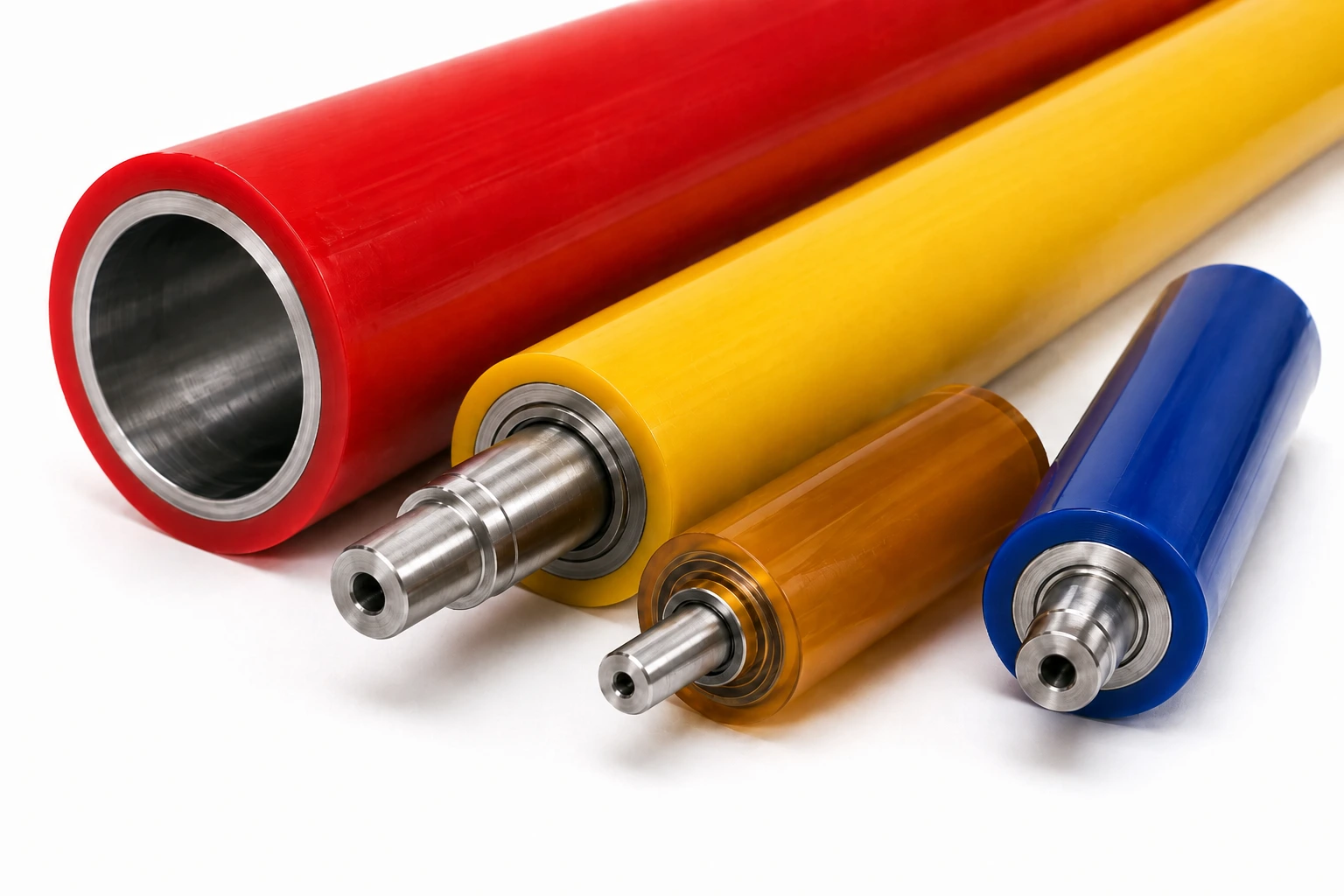
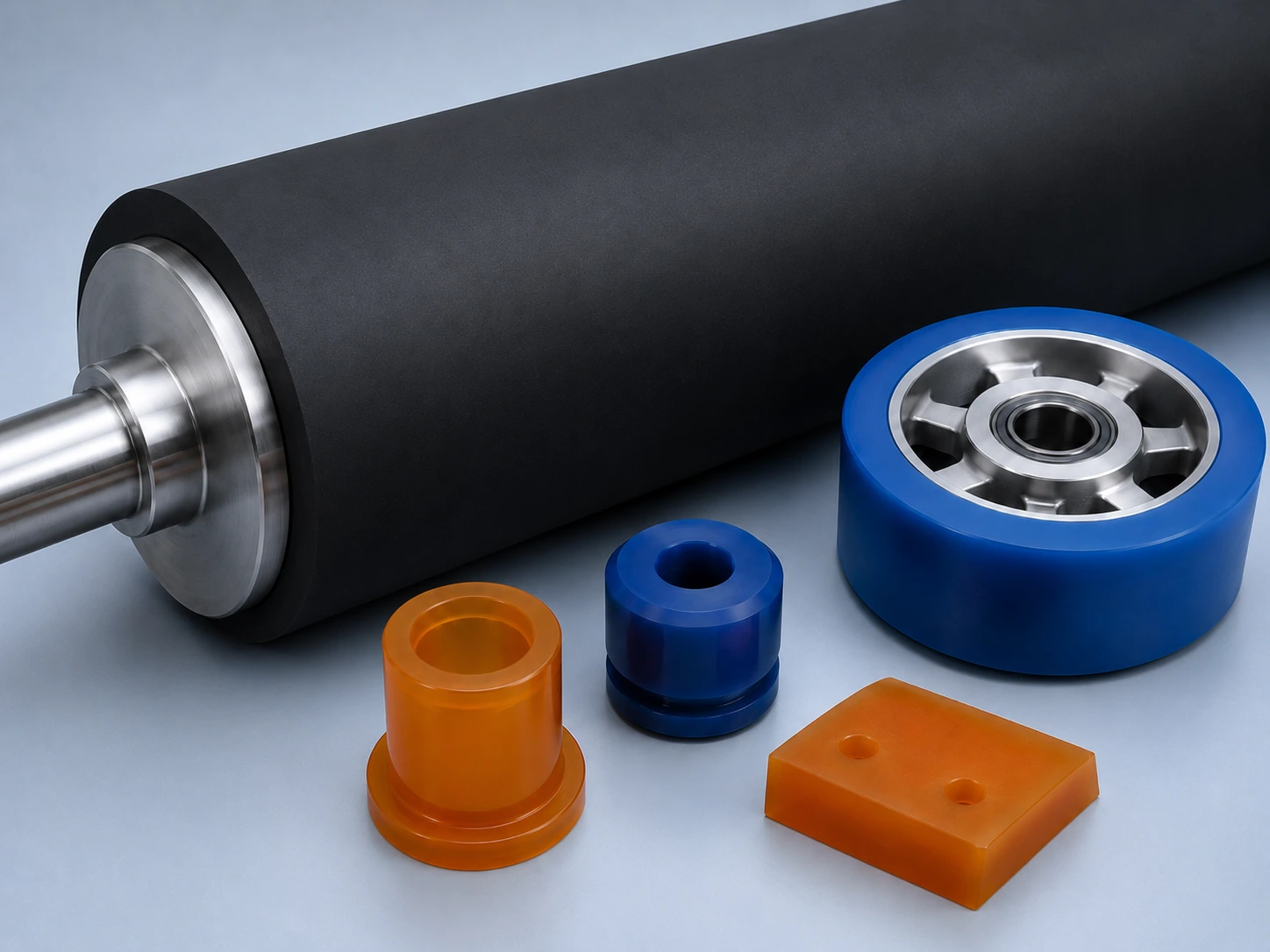
Cast polyurethane takes over as soon as abrasion, load or cutting becomes the limiting factor: at equal durometer, it carries more and resists cutting better, often with a much longer service life. Available from soft to very hard (Shore A to Shore D). Its limits: high heat and prolonged moisture (ester formulations).
Learn more about polyurethane roll covering →In a plant, a roller is almost never “just a cylinder that turns.” Here is what matters, topic by topic.
A roller can drive a material, press a product, guide a web, absorb an impact, apply pressure, protect a surface or resist abrasion. The cover acts as an
A steel or aluminum roller is strong and accurate, but its surface does not always behave the way you need: too hard, too slippery, too aggressive or a poor match for certain conditions. We keep the metal core and adapt the outside surface to the real duty. A cover can:
That is what turns a plain roller into a
A
What to look at:
For the detail compound by compound: see rubber rollers or compare polyester and polyether polyurethane further down this page.
A worn roller can keep turning while no longer doing its job — that is often where production losses start. Common signs: loss of grip, web slippage, abnormal vibration, uneven wear, cracking or hardening of the cover, marks on the product, diameter out of tolerance, delamination.
Material choice matters, but it is not the only factor. Roller preparation, grit blasting, the bonding system, the formulation, vulcanization or casting, final machining and quality control all have a direct impact on performance. A cover has to be designed as a whole:
Neglect a single element and the roller can wear out early, debond, vibrate or fall short of the expected performance. That is why it pays to work with a team that understands the materials, the mechanics of the roller and the industrial application.

From natural rubber to Viton, every family has its strengths. Identify the dominant resistance you need, then the compound that delivers it.
| Élastomère | Abrasion | Huiles | Ozone / extérieur | Température | Adhérence | Rouleaux types |
|---|---|---|---|---|---|---|
| Caoutchouc naturelNR | Presseurs / nip · Traction · Entraînement · Amortissement | |||||
| SBRSBR | Usage général · Guidage · Convoyage · Presseurs à sec | |||||
| NitrileNBR | Encrage · Presseurs (milieu huileux) · Applicateurs · Doseurs | |||||
| Nitrile carboxyléXNBR | Abrasion + huile · Entraînement lourd · Presseurs | |||||
| Nitrile hydrogénéHNBR | Chaleur + huile · Rouleaux de procédé chaud · Applications haute température | |||||
| NéoprèneCR | Polyvalents · Guidage · Convoyage · Extérieur · Presseurs | |||||
| EPDMEPDM | Extérieur · Vapeur / eau chaude · Lavage · Extrusion | |||||
| HypalonCSM | Milieux chimiques · Traitement de surface · Extérieur · Doseurs chimie | |||||
| SiliconeVMQ | Contact alimentaire · Chill / refroidissement · Antiadhérents · Lamination chaude | |||||
| VitonFKM | Haute température + chimie · Procédé agressif · Haute performance |
Indicative ratings (out of 5), based on the general properties of elastomers. Actual performance depends on the formulation, the Shore A hardness, the loads, the temperature and the type of abrasion. This is only an overview: Soremag also formulates other compounds on request.
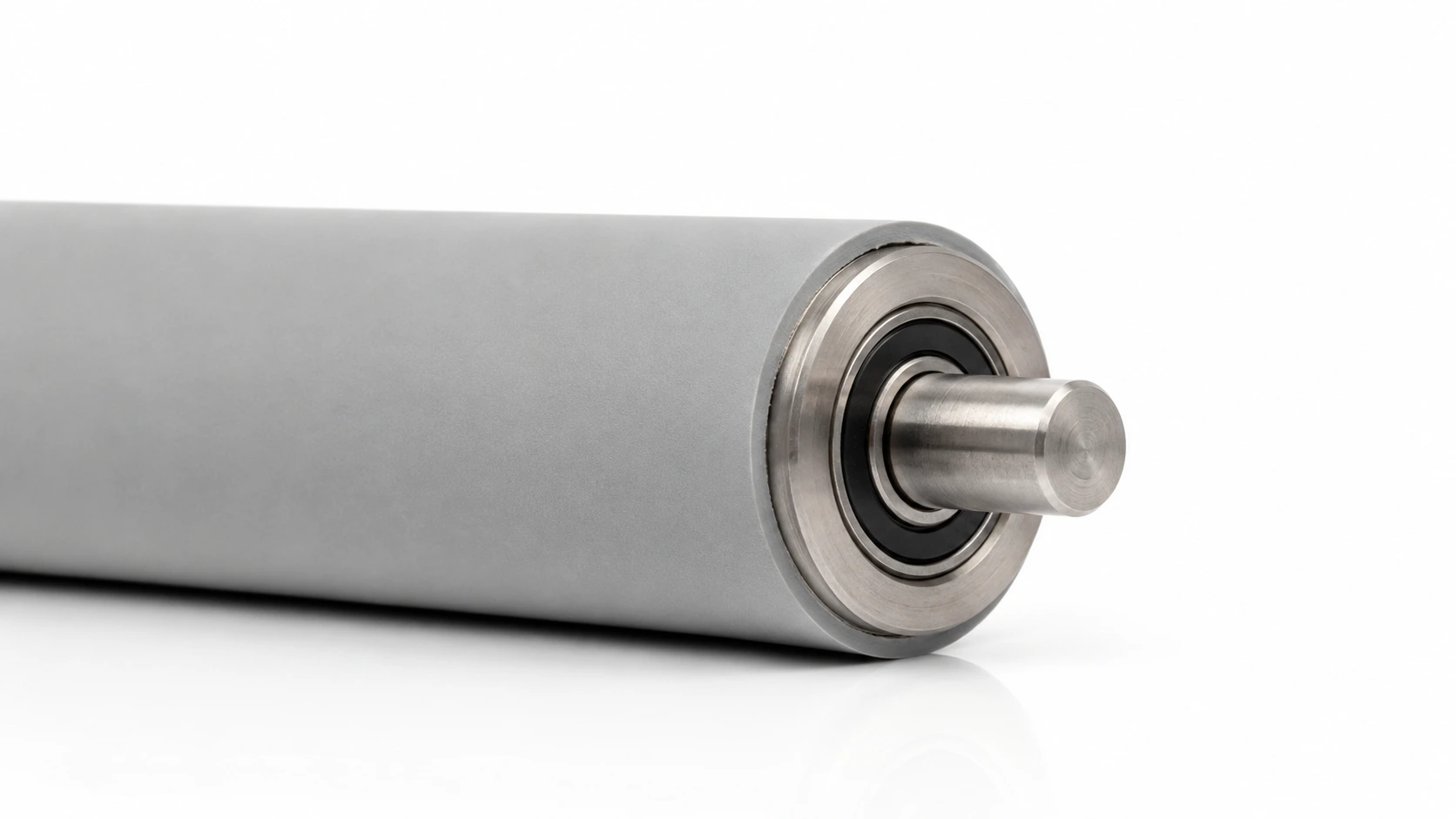
Soremag covers, rebuilds and precision-machines the interchangeable sleeves that run on applicator, printing, laminating and transfer rollers.
Your main shaft stays on the machine. With our own set of service shafts and mandrels, sized for a range of sleeve diameters, we cover and grind without tying up your shaft. The sleeve travels on its own: less handling, less freight, and the line restarts sooner.
Stripping the old cover, preparing the body, applying the new elastomer, remachining, precision grinding, profiling, grooving and final inspection. Durometer and surface finish are chosen for the application, not carried over from a standard.
A full range of rubbers and polyurethanes, silicones, foams and other specialty materials. The choice follows the fluid being applied, the temperature, the pressure and the finish you need — the same criteria as a solid roller.
Applying dye, paint, varnish, adhesive or other coatings; wood finishing; printing; flexible packaging; laminating and converting film, paper or industrial sheet.
A worn sleeve or a new application? Send us your operating conditions and our technical team will assess the material and the finish.

Not all polyurethanes are equal. The choice comes down mainly to two base families — ester and ether — depending on whether you want pure mechanical performance or resistance to moisture.
Built on ester polyols, it is the best in abrasion, in cut resistance and under heavy load, with good resistance to oils and hydrocarbons. Its Achilles heel is
Built on ether polyols, whose bonds resist hydrolysis: it is the choice as soon as there is water, steam, prolonged moisture or cold (better flexibility at low temperature, good rebound resilience, good resistance to microbes and mold). The trade-off: abrasion and load capacity slightly behind ester — a gap the right formulation and the right durometer close.
| Polyuréthane | Abrasion | Coupure / déchirure | Charge | Huiles | Hydrolyse (eau) | Basses températures | Rouleaux types |
|---|---|---|---|---|---|---|---|
| Esterpolyester | Entraînement haute charge · Abrasion sévère · Idlers · Nip durs | ||||||
| Étherpolyéther | Milieu humide / eau · Basses températures · Lavage · Applications immergées |
Indicative ratings (out of 5), based on the general properties of cast polyurethanes. The cover durometer, the cure system and the formulation shift these trade-offs. Soremag also develops dedicated formulations (e.g. PolySorNip for nip rollers).
Lost your original drawings? Your roller has a special formulation and you no longer know whether it is XNBR, SBR or something else? No panic: through


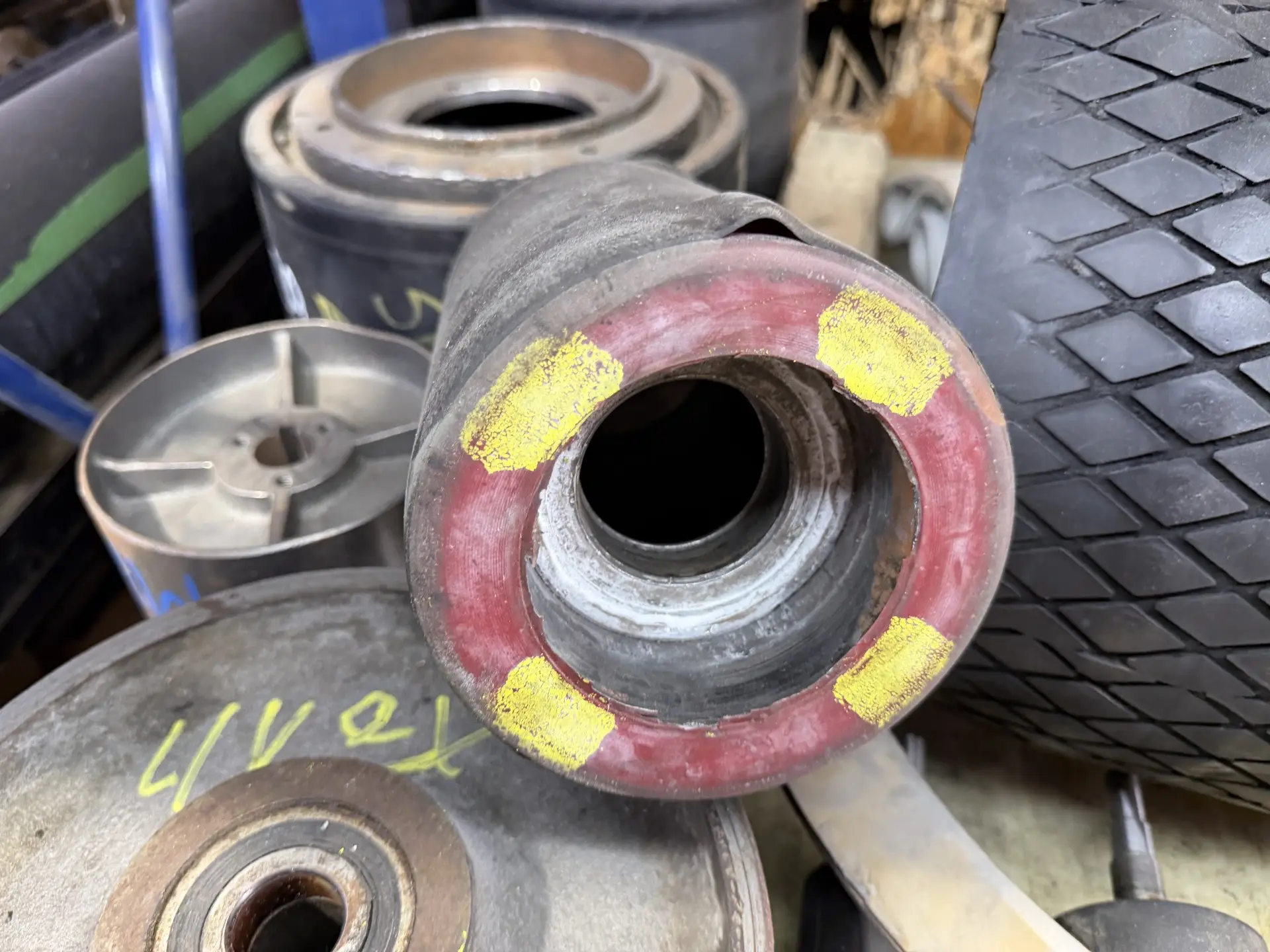
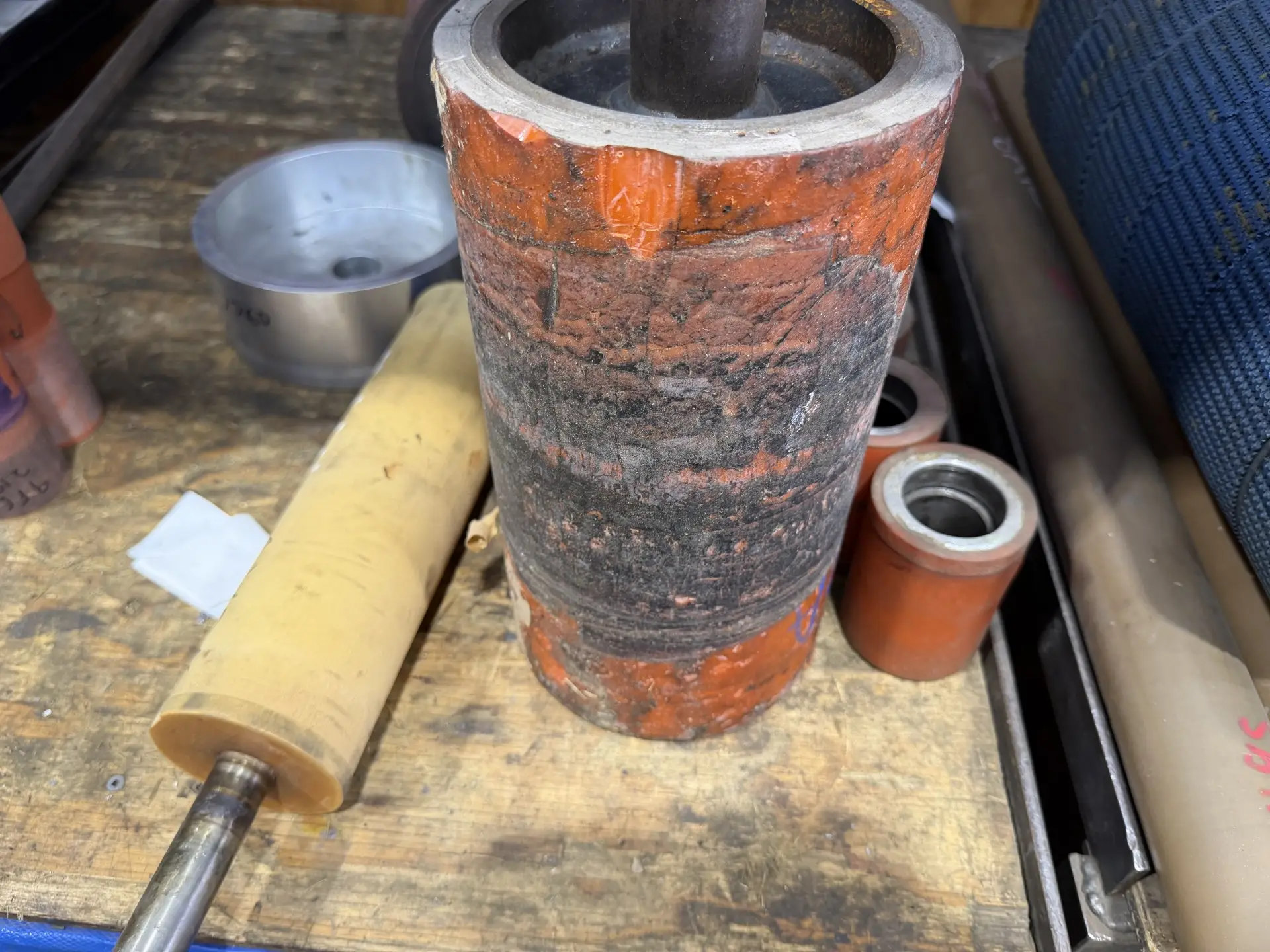
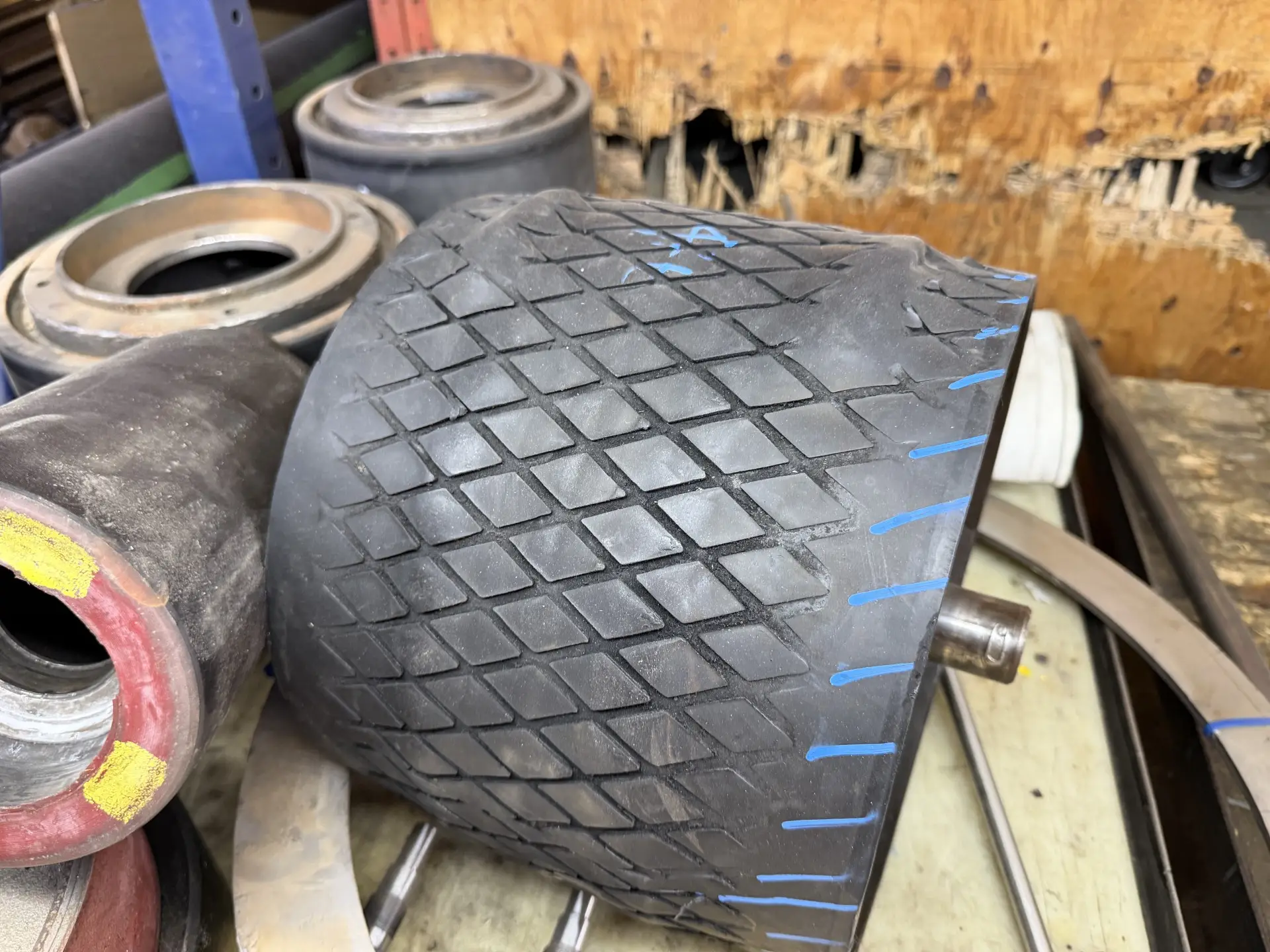
Real parts received at the shop: worn, cracked or debonded, often with no original drawings — we start from the part and rebuild everything.
We measure your roller and redraw it completely: dimensions, profile, target durometer and tolerances.
The existing cover is analyzed in the lab to identify its family and its properties — even with no documentation at all.
We reproduce the right material, the right durometer and the right finish for an identical roller — or an optimized one if your conditions have changed.
Driving, nipping, coating, squeezing, spreading, cooling: every position on a production line sets its own durometer, its profile, its surface finish and its groove pattern. A nip roller and an applicator roller can carry the same material and have nothing else in common. So we cover for the work the part has to do, not for a catalog category.
Applying uniform pressure across the full width without marking or digging in: diameter, concentricity, crown profile and the elastic recovery of the cover all work together.
Voir la page →Transmitting torque without slipping or marking the product: grip is built from the wrap angle, the surface finish and the pattern — not from load alone.
Voir la page →Laying down an even film of adhesive, paint, varnish, ink or oil — and standing up to the transferred product without swelling or losing its finish.
Voir la page →Pulling out the water, the bath or the excess liquid on a continuous line — and surviving wet service, hydrolysis and edge cuts.
Voir la page →The non-driven rollers, the ones the product has to turn by itself. The whole job is taking resistance out of them — otherwise they scuff.
Voir la page →Drive and secondary rollers on a pallet stretch wrapper: diameter and grip govern the stretch ratio, and therefore your real film consumption.
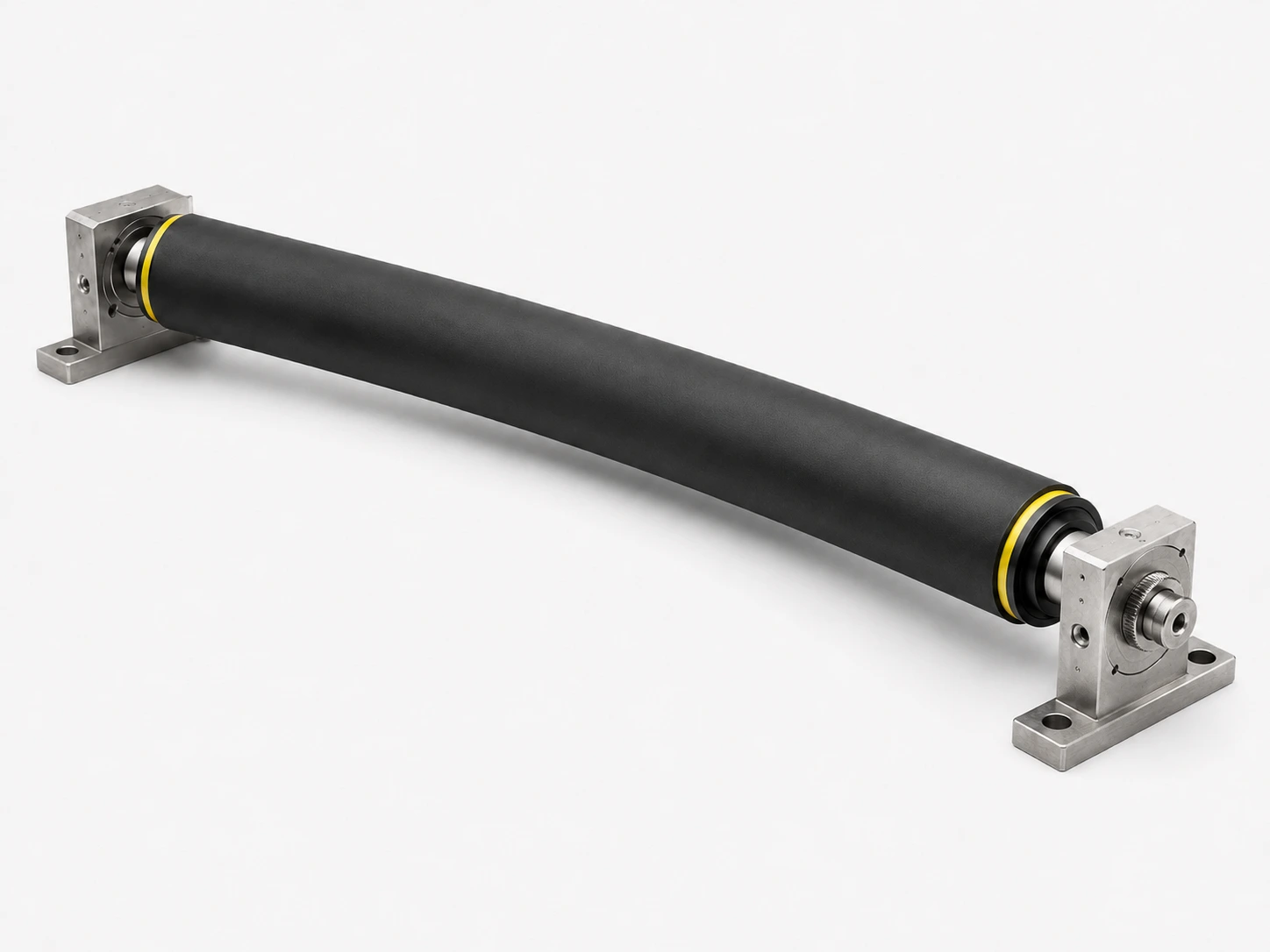
Voir la page →Curved rollers that spread the web and pull the wrinkles out: covering, precision grinding, grooving and refurbishment of the bowed core.
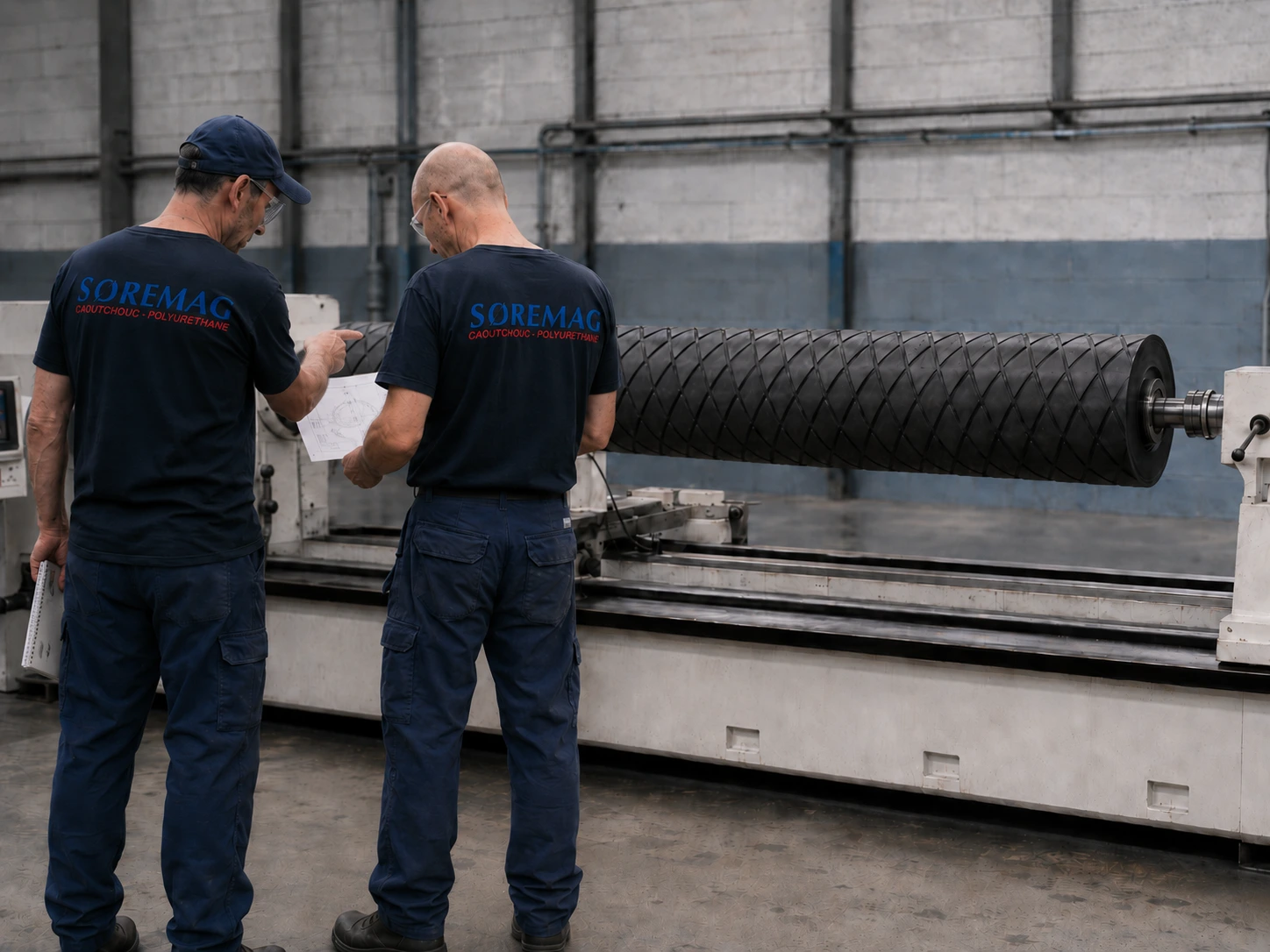
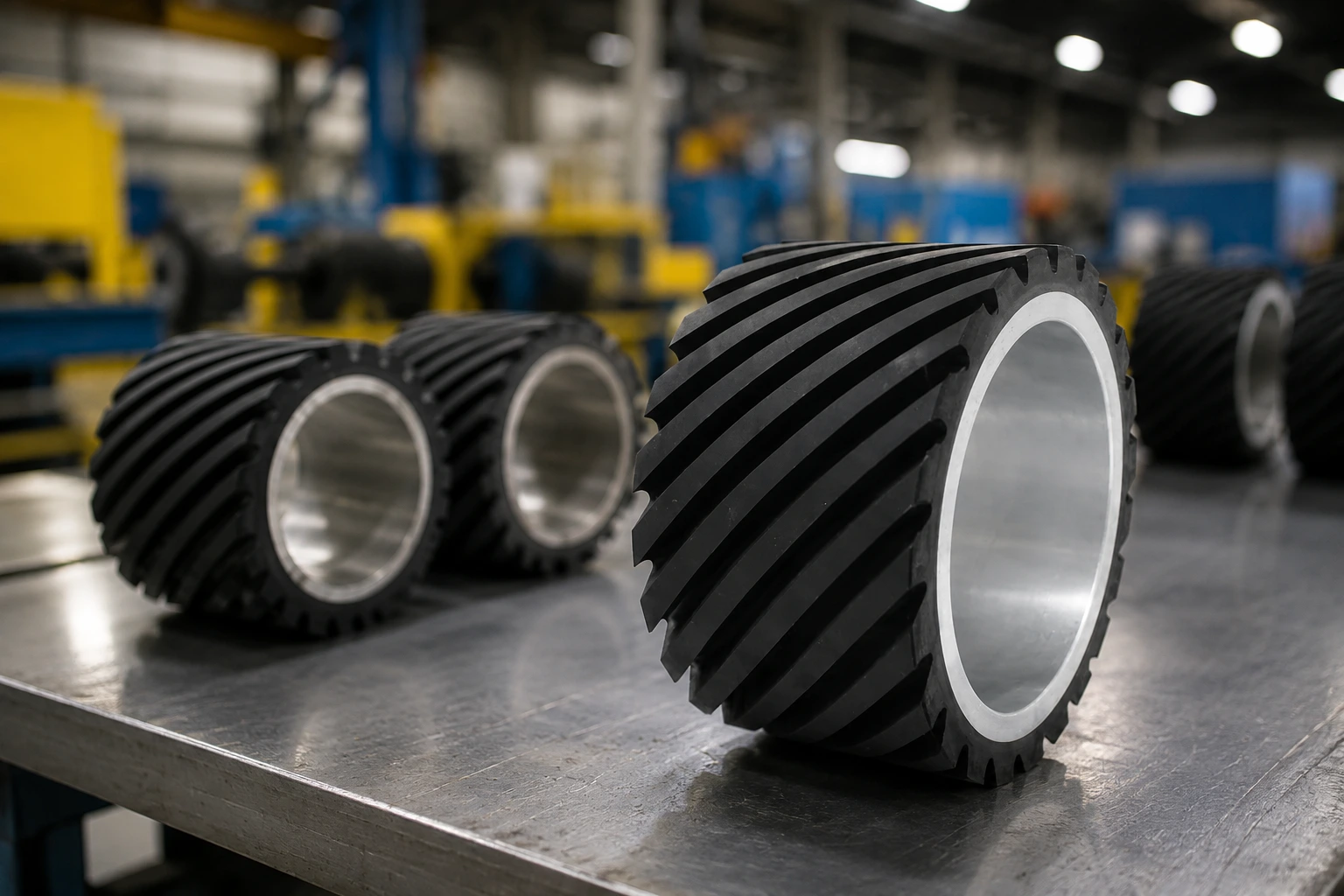
Voir la page →Diamond, herringbone, spiral, circumferential or axial patterns — to release air, drain water or drive without slipping.
Voir la page →Contact rollers for wide belt sanders and calibrating sanders: profile, land width, spiral and dynamic balancing decide the finish of the panel.
Voir la page →When abrasion, load or cutting decides service life. From soft to very hard, cast directly onto your existing core.
Voir la page →Natural, SBR, nitrile, neoprene, EPDM or silicone: the compound is chosen for the chemistry in contact, the temperature and the kind of contact support you need.
Voir la page →When heat, tack or food-grade requirements rule out everything else: heat sealing, hot lamination, corona treatment and FDA food contact.
Voir la page →A problem to diagnose, a process to understand, a finish or a tolerance to hold? Each topic has its own page. Two real cases that show the whole approach: a textile padder roller losing pressure at the center and a film line roller that should not have been copied as-is.
Bringing an existing core back to life usually costs less than buying new, cuts the carbon footprint tied to manufacturing a complete part and shortens your supply lead times. A cheaper, greener and often faster choice.
From the material to the part back in service — precision, balancing and traceability controlled in-house.
Precision grinding to the required durometer, tolerance and surface finish, with no subcontracting.
Roller balancing to eliminate vibration and marking at high speed.
Covering built from the old roller or from a sample, even without a drawing.
The material and the durometer are validated in the lab, with traceability on every part.
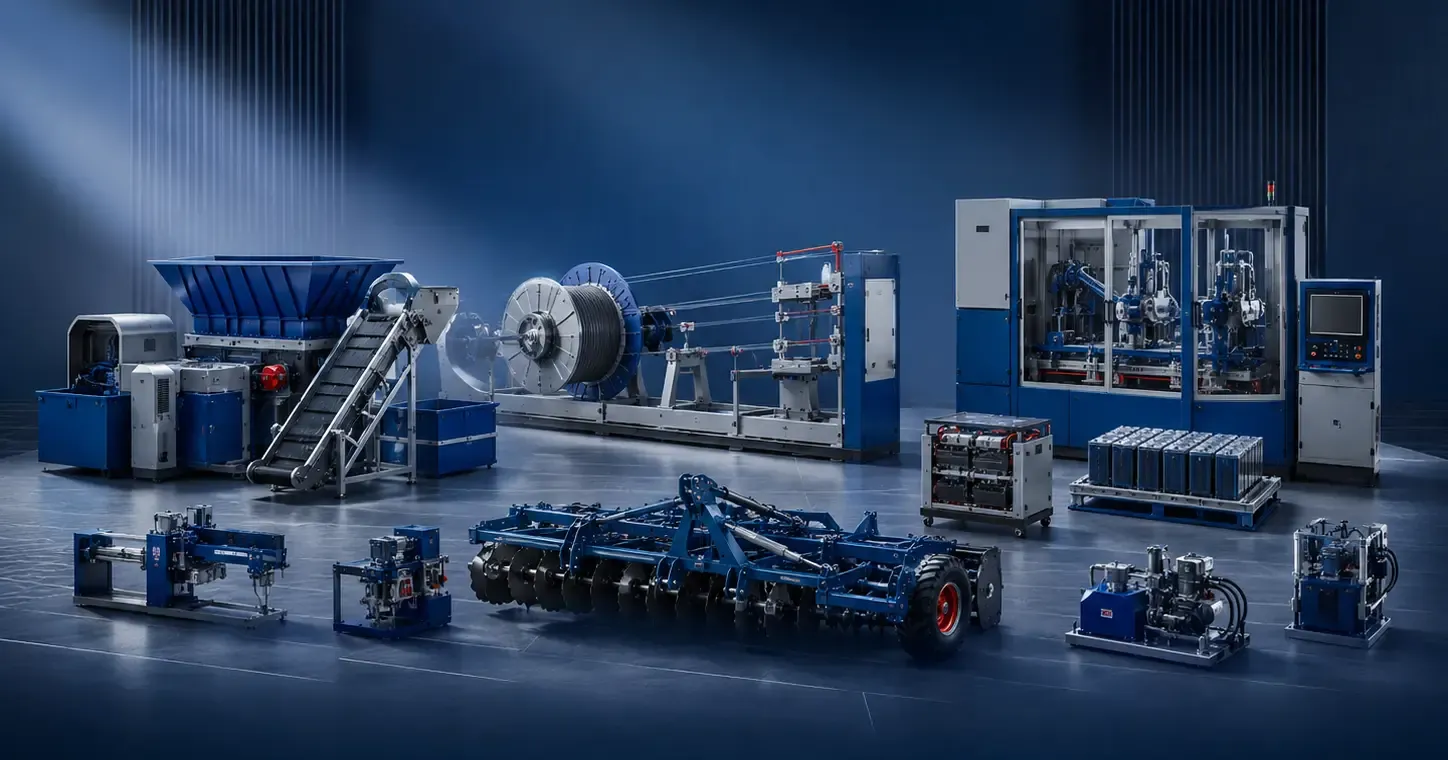
A material and a finish matched to the constraints of each industry.
Yes. Through reverse engineering, we reproduce the dimensions, the durometer and the profile of your roller from the old roller, a part or a simple sample, even with no drawing. If needed, we also adapt the material or the finish to the current requirements of your equipment.
Service life and lead time depend on the type of cover, the durometer and the application. We offer pickup and delivery in Laval and Montreal, as well as service in Quebec, Ontario and the Maritimes, with emergency intervention available to cut your downtime.
The durometer is set to your application: load, speed, pressure, deflection, the grip you need and the environment. We recommend the material, durometer and surface finish package best suited to your process. Our Material Selection Guide details the trade-offs.
Ideally: the roller dimensions, the target durometer, the product in contact, the temperature, the speed, the load, the environment (dry, wet or oily) and the problem you are seeing. With that, we recommend the right material, durometer and finish. If needed, we also work from your old roller or from a sample.
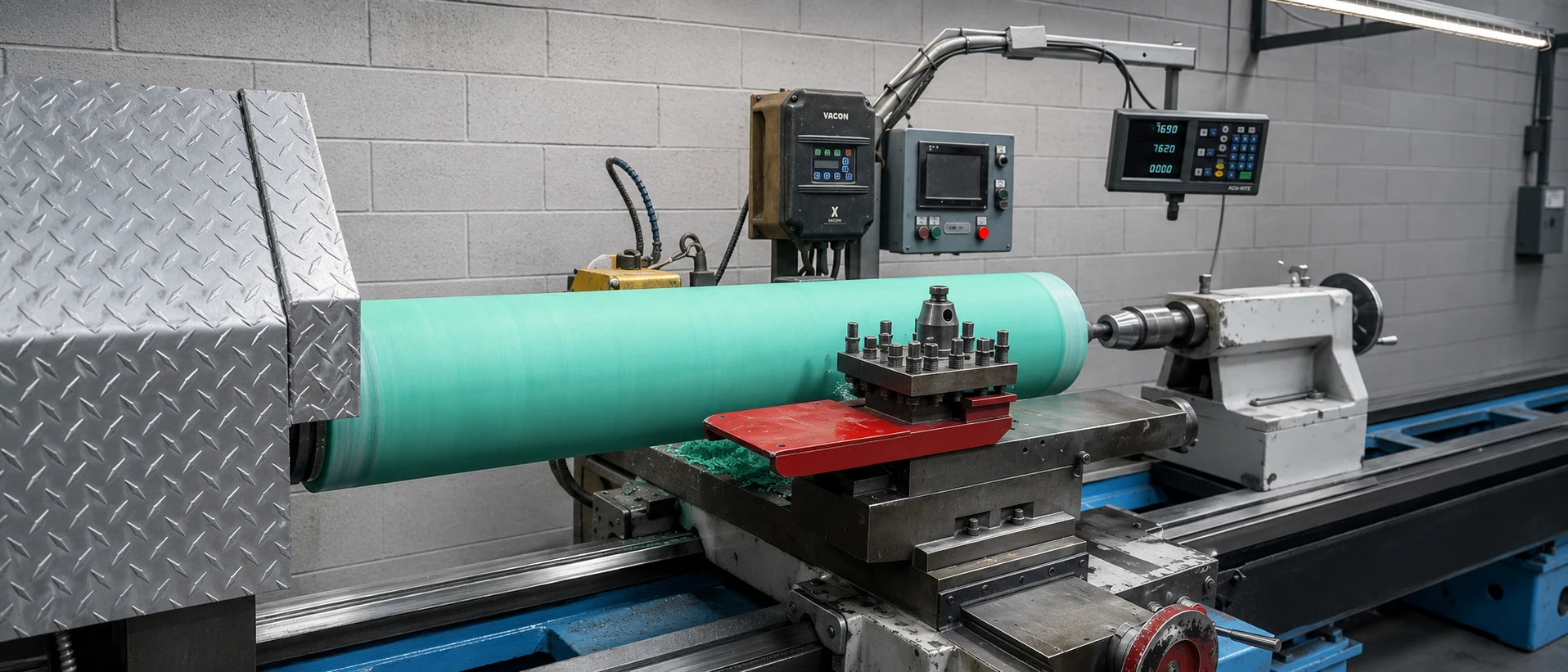
We run the largest multi-function CNC lathe linked to an in-house server, dedicated to rubber finishing, with a finished diameter up to
In most cases, we take your existing roller and repair it and rebuild it to new — or simply resurface it if the core and the cover allow. Reusing the core cuts cost and lead time.
Choosing the wrong material means risking early wear, quality rejects and costly downtime. Stop spending your budget on standard covers that do not hold up to your real conditions.
The verdict? There is no miracle material, only the right solution for YOUR equipment.
Stop guessing and let the Soremag specialists make the call. Tell us your worst production challenges (severe abrasion, extreme load, chemicals), and we will recommend