Covering & manufacturing · rubber and polyurethane · Quebec450 664-4000·1 800 361-5588·EN|FR
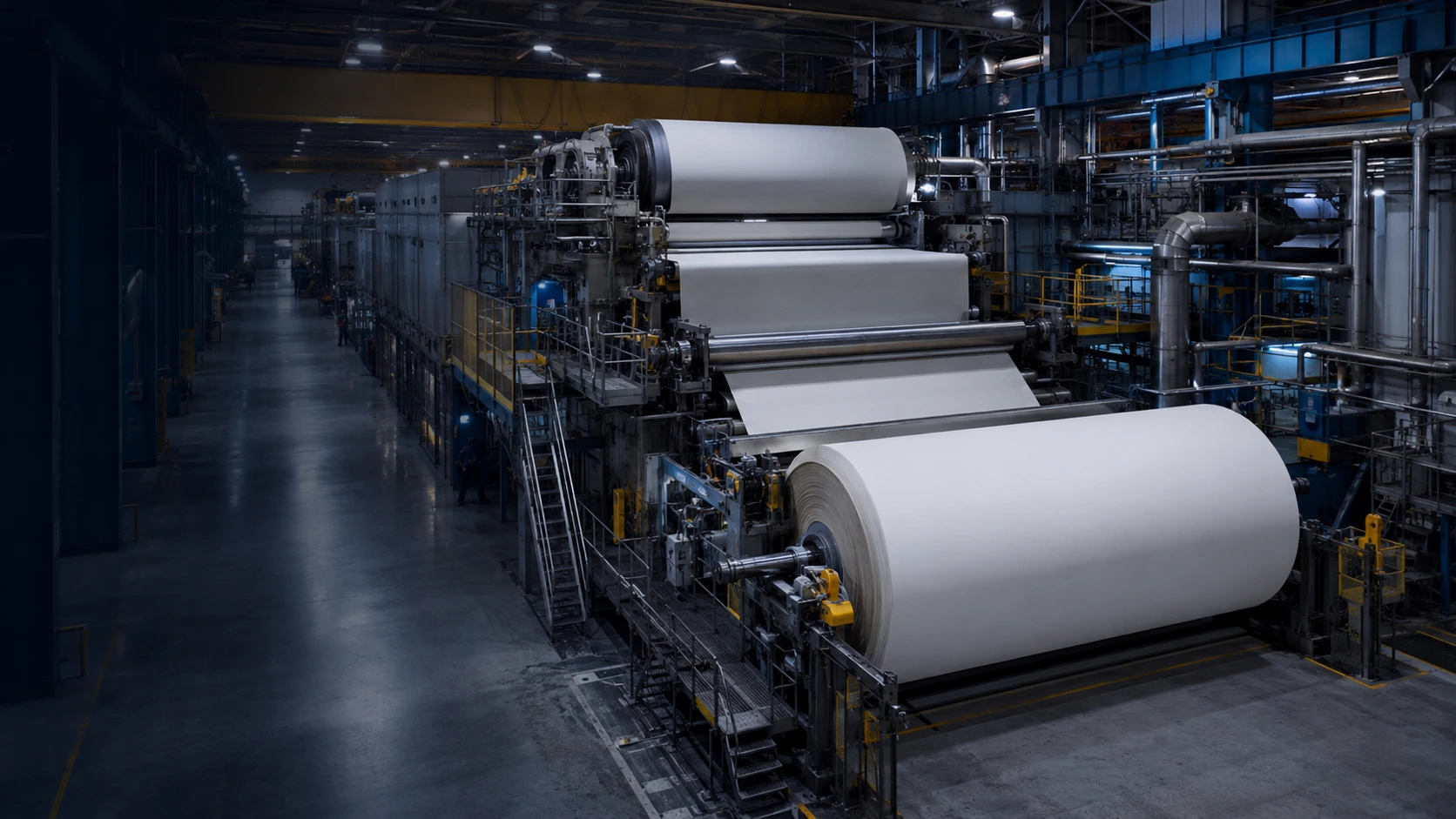
Machine à papier en production dans une papeterie : grande bobine (reel) et rouleaux de séchage et de finition
Industries · Pâtes et papiers

Rollers, wheels and molded parts for pulp and paper

Everything runs fast, hot… and often wet. A roller that vibrates, a surface that “glazes”, an unstable profile or a cover that will not take your wash cycles: defects, downtime and lost consistency, immediately.

Fast, hot and wet: three product families for your operations

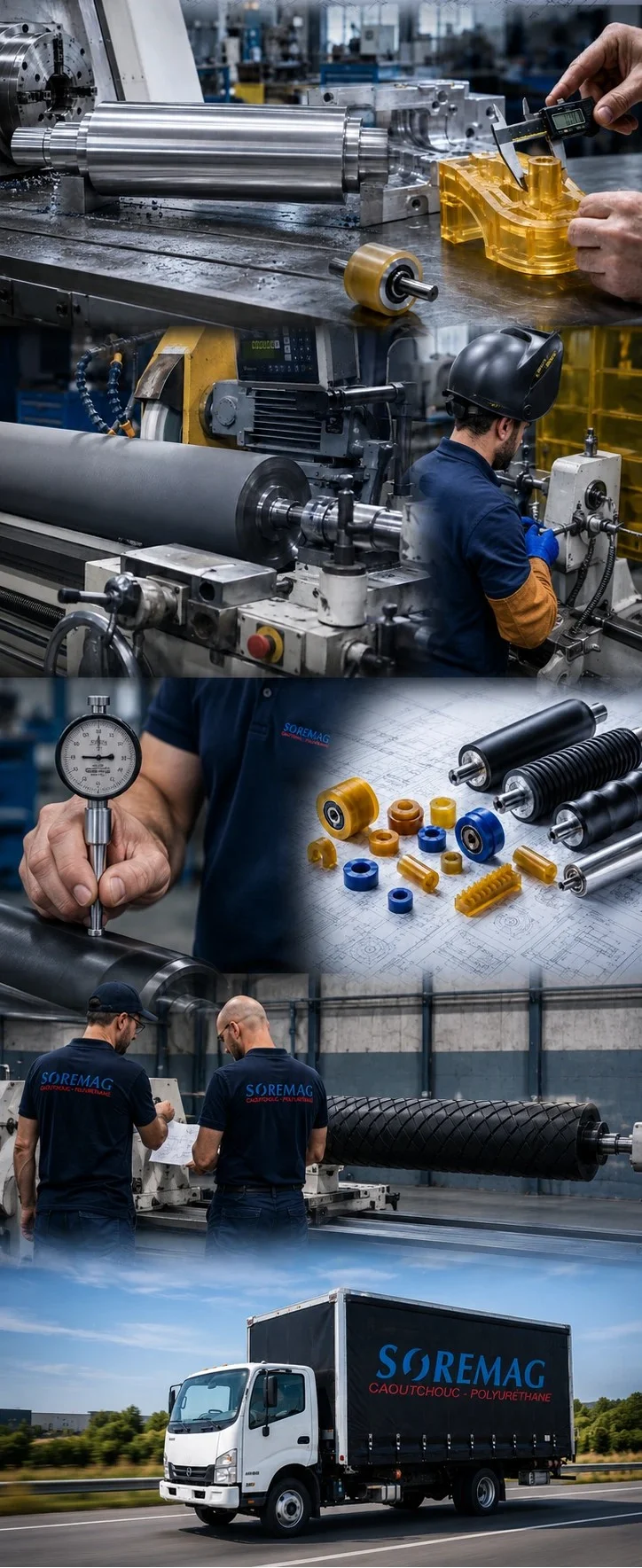
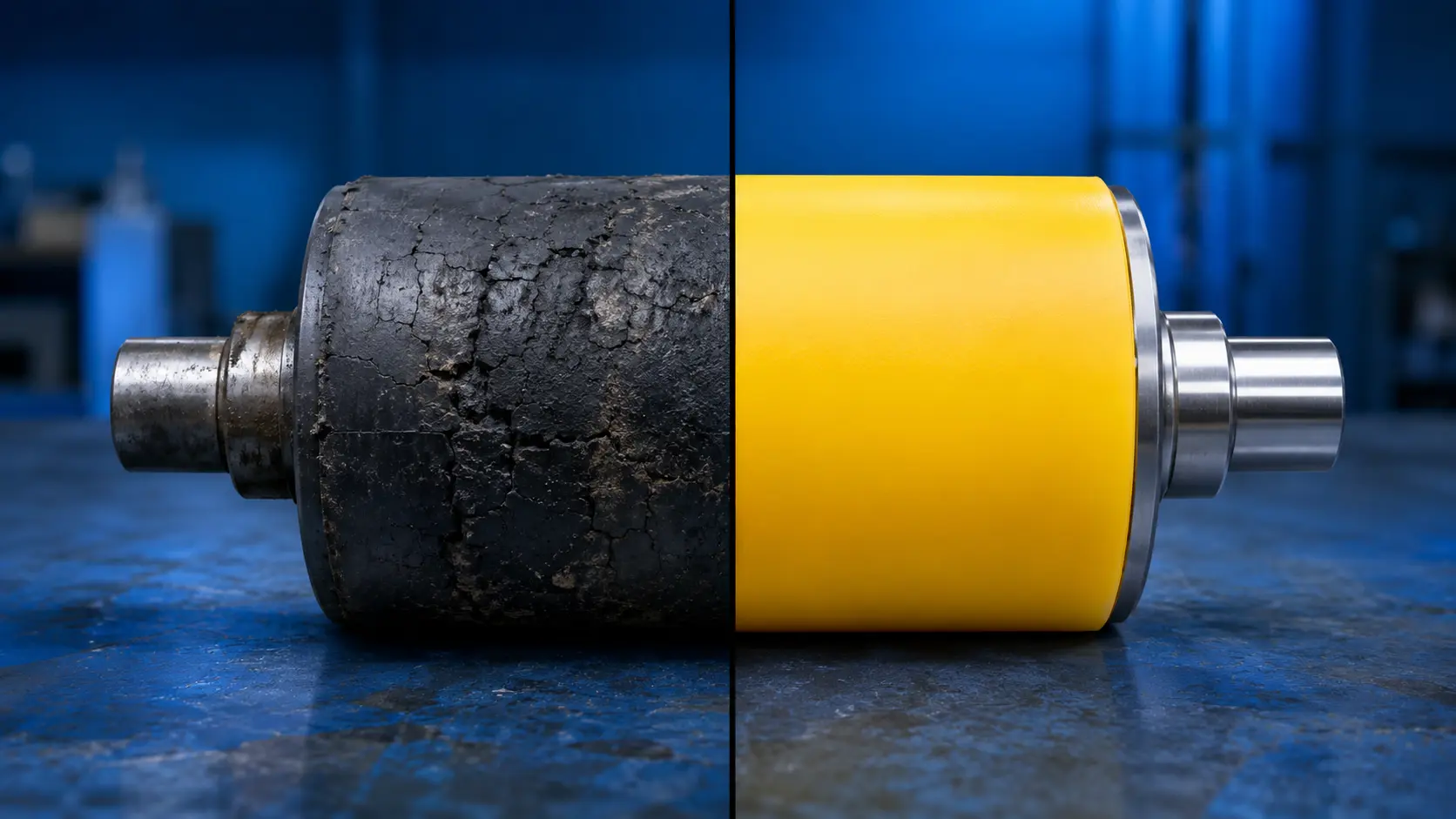
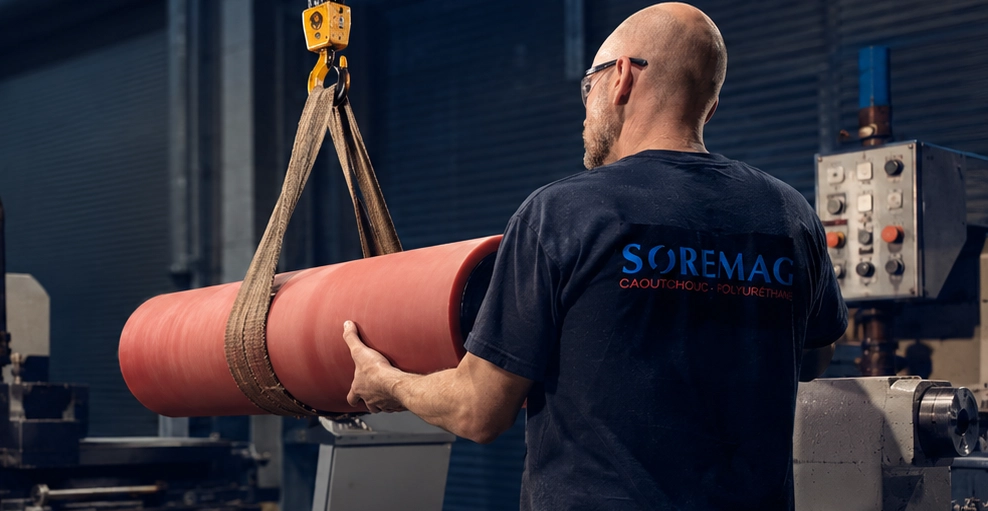
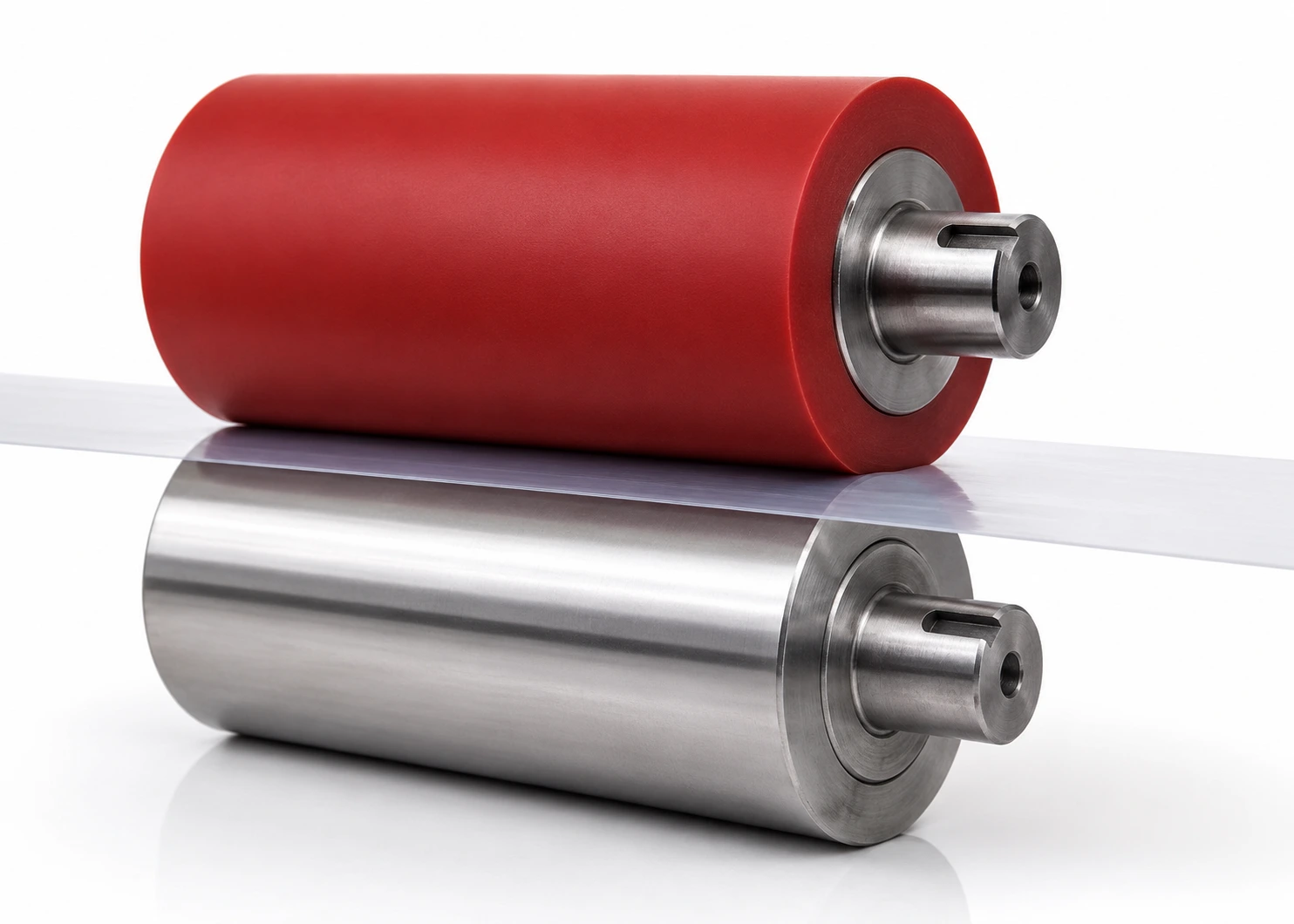
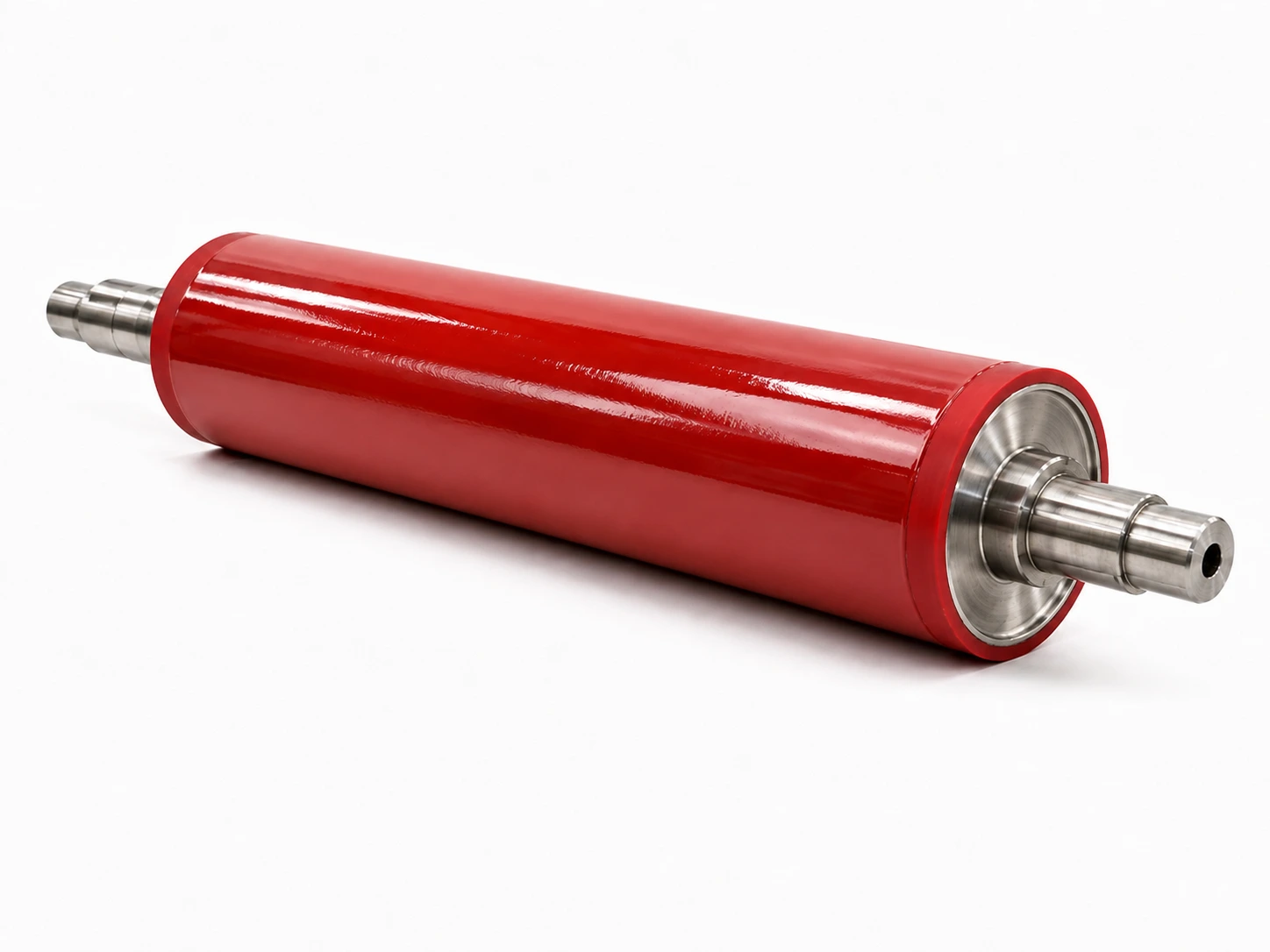
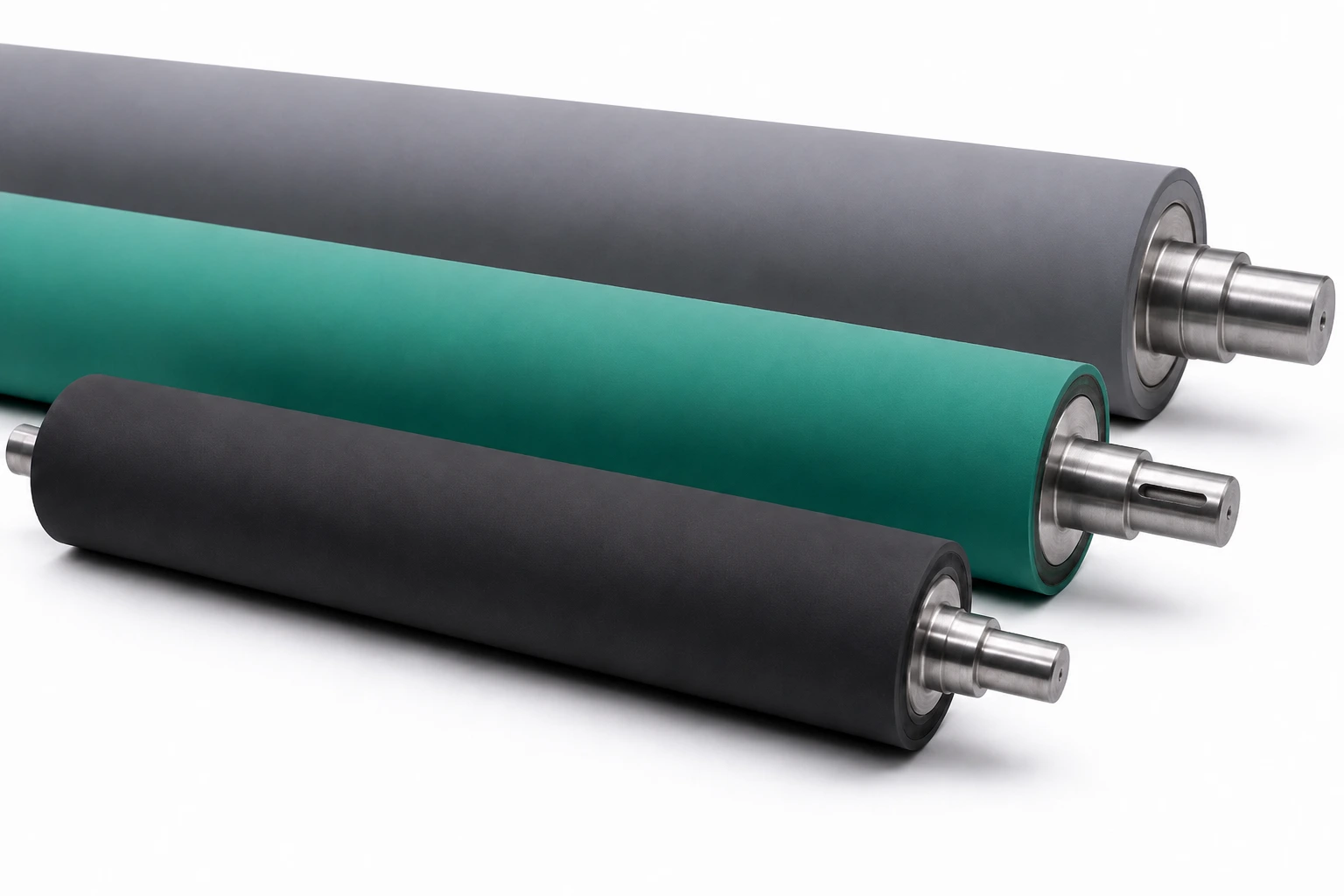
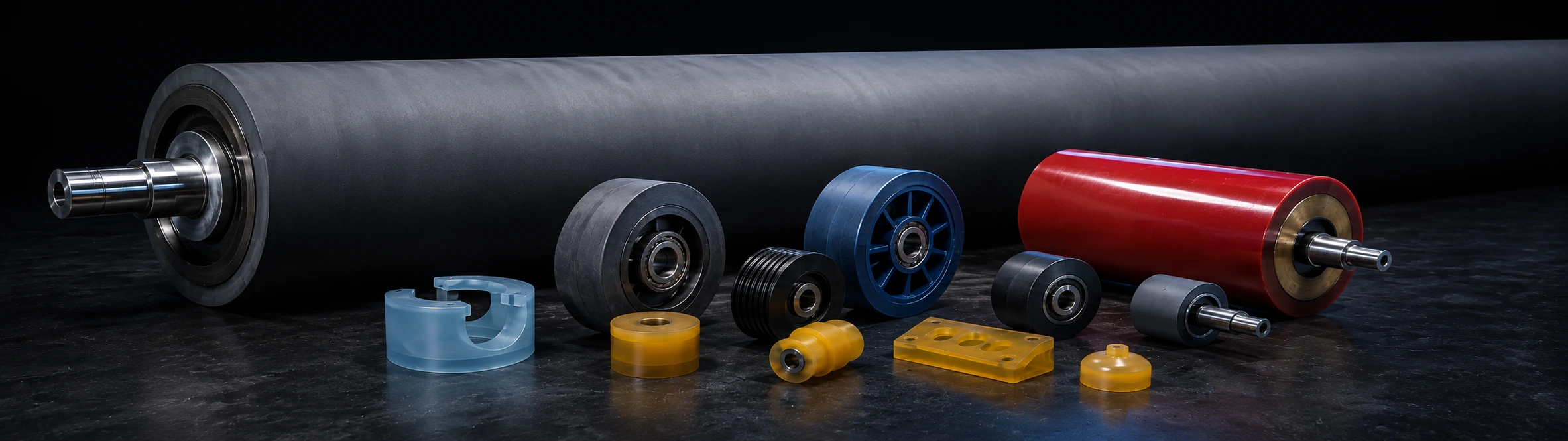
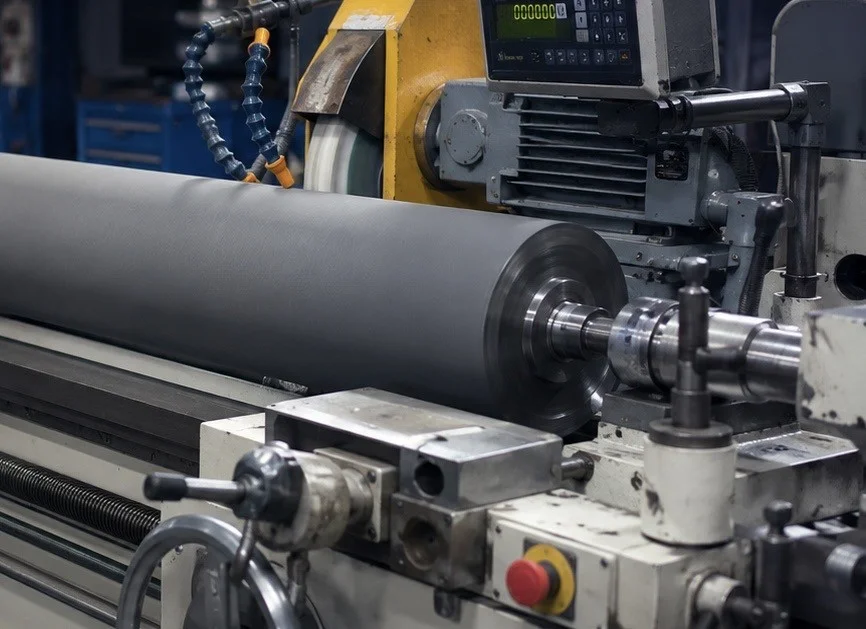
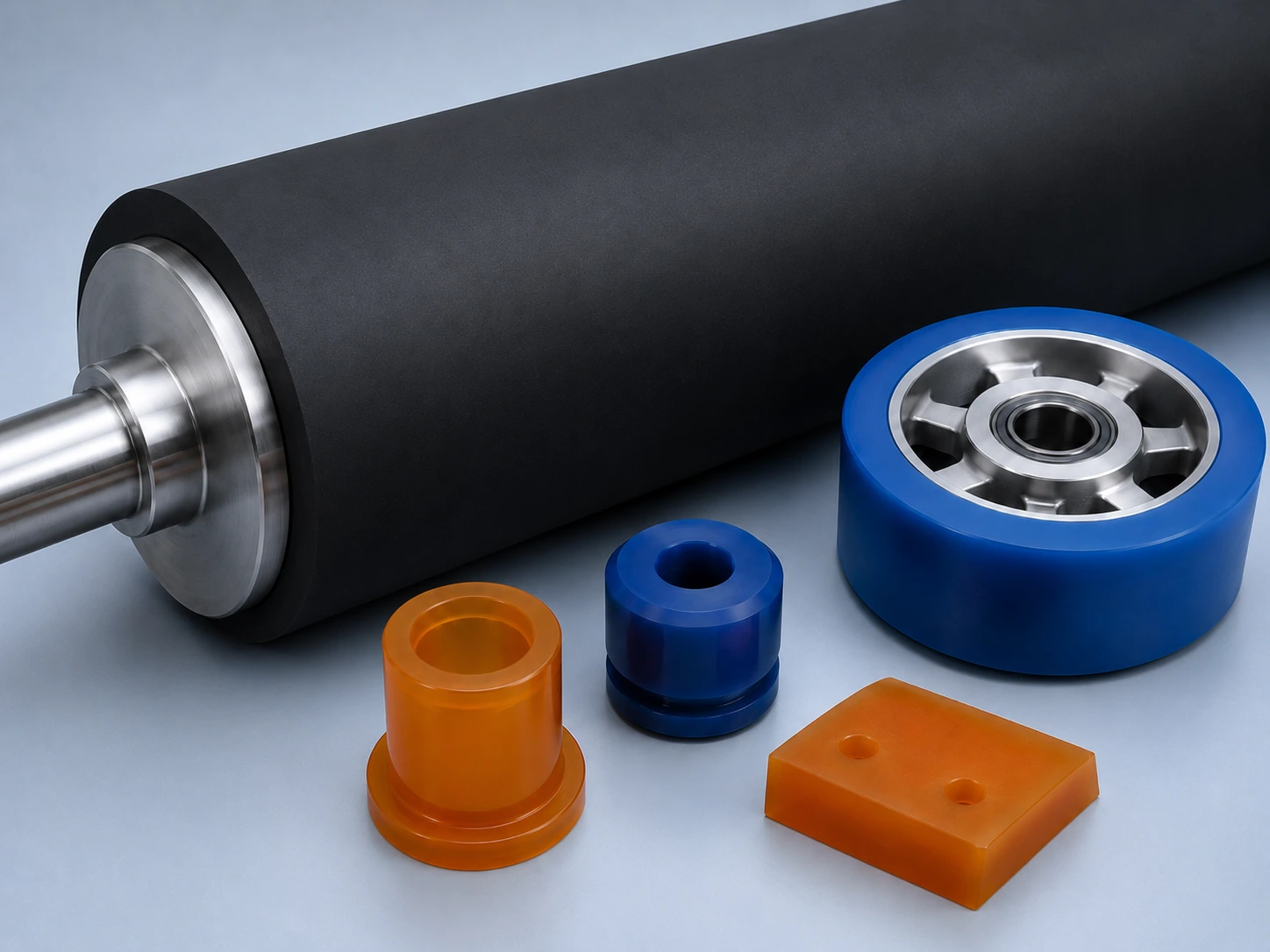
At Soremag, we always work around three families to support your lines: covered rollers (rubber, polyurethane, silicone) — refurbishment, precision grinding, grooving, profiles; polyurethane wheels (rubber and polyurethane) — traction, guiding, conveying, material handling; and cast polyurethane parts — wear parts, supports, scrapers, bumpers, replacement components by reverse engineering.

The “pulp and paper” sectors we serve

Pâtes

Pulp mills

Stock prep, material handling, wet areas, conveying, auxiliary equipment.

Papier

Paper mills

Printing grades, specialties, kraft, etc.

Tissue

Tissue

Production + converting.

Conversion

Slitting & rewinding

Slitting, rewinding, packaging, roll handling.

Sur mesure

Another need?

Describe what the part does: we'll figure it out.

Typical uses where our solutions make a difference

Cerathane was in fact born in a paper mill: read how polyurethane wheels avoided a rail rebuild estimated at between $750,000 and $1.2M.

The machine sections we know well

We can organize your needs by major process areas, depending on your line.

Wet end

Forming section

Wire / forming rolls, table rolls, breast rolls, couch and suction couch, dandy roll, drive rolls, lumpbreaker — exposed to water, chemistry and contaminants.

Press

Press section

Press rolls (top / bottom), suction press, felt rolls, center press — loads, moisture, heat and wash cycles.

Dryer

Dryer section

Auxiliary guide and tension rollers; hot positions of the Yankee type (HNBR covers up to ~150 °C).

Size / coating

Sizing & coating

Size press, backing rolls, coating rolls, fountain, distributor, applicator — Ra, profile and chemical compatibility.

Calender

Calendering / finishing

Calender stack and contact/backing rolls; surface and concentricity determine the defects.

Winder

Winding / rewinding

Pull, support, guide and tension rollers (reel / winder / converting).

The rollers, wheels and parts we come across

Guide & turning rollers (guide / turning)

Sheet transport, stability; wet and dry areas.

Drive / pull rollers

Depending on the layout; controlled grip, moisture resistance.

Transfer / stabilizing rollers

Exposed to loads, moisture, heat and wash cycles.

Contact / backing rollers (finishing)

Sensitive to surface roughness (Ra), to the profile and to the chemistry of the products applied.

Sizing & coating rollers (applicator / metering)

Size press and coating: surface (Ra), profile and consistent metering of the product.

Spreader / anti-wrinkle rollers (spreader / bowed)

Spreading the sheet or the felt; sleeve covering for bowed rolls depending on the model.

Winding / rewinding rollers

Traction, support, guiding, tension; concentricity and stability at high speed.

Conveying & material handling wheels

High load polyurethane; on a steel or aluminum core, refurbishment possible.

Cast polyurethane wear parts

Guards, supports, guides, anti-vibration components.

Polyurethane scrapers / blades (depending on the process)

Contact, abrasion; compounds matched to the process.

Bumpers / shock absorbers / pads

Shock absorption, mechanical strength.

OEM replacement parts

Reverse Engineering + improvement (material, durometer, geometry) when the OEM part is unavailable.

Sélection des matériaux

The right material for water and heat

Real chemistry, temperature, wash cycles, pressure, speed and the finish you need.

In pulp and paper,

it all comes back to water and heat
. Wet zones, hot positions and wash cycles don't call for the same families — and the dry abrasive position calls for a third.

EPDM

Wet zones and frequent washdown

The safe bet: very good in wet service, solid across the board.

Variable against certain specific solvents.

HNBR

Hot positions — Yankee cylinder (~150 °C)

High-temperature, high-performance service. Our

HeatTuff
compound holds
160 °C (320 °F)
.

Costs more than standard nitrile.

Polyether urethane

Endurance in wet service

Excellent hydrolysis resistance over long cycles.

Wheels and rollers in wet service, belt press rollers.

NitrileNBR

Compatible oils

Oils, greases and fuels; good abrasion resistance.

Less comfortable with ozone, UV and strong acids.

Natural rubberNR

Traction and conveying without oil

High rebound, low heat build-up, strong grip.

Oil, ozone and UV break it down.

CSMHypalon®

Intensive chemical cleaning

Strong acids, oxidizing agents, ozone and UV.

Rollers on chemical lines and surface treatment lines.

SiliconeVMQ

Hot release zones

Release and heat: about 200 °C in a standard grade,

260 °C (500 °F)
with our high-temperature compound
ThermoSil
.

Low cut and abrasion resistance.

Polyester urethane

Severe wear in dry zones

Very high abrasion and cut resistance.

Keep it away from wet heat — hydrolysis.

The P&J scale — the reverse of Shore

In paper, we work in

Shore A
as readily as on the
P&J
scale (Pusey & Jones), which belongs to the industry.

Watch which way it reads:

0–1 P&J is very hard
(hard rubber),
200–250 P&J is very soft
. The higher the P&J, the softer the cover — exactly the reverse of Shore.

Problem observed → possible fix

To be validated on your application.

Problème observé en usinePiste de solution fréquente (Soremag)
Glissement / manque de tractionAjustement surface + formulation + dureté.
Usure prématurée (abrasion / coupures)Polyuréthane spécialisé ou caoutchouc haute résistance selon la chimie.
Encrassement / contaminationMatériau + fini (Ra) + compatibilité lavage/nettoyage.
Vibration / battementRectification, concentricité, inspection des portées, équilibrage.
Défauts de surface / marquesAjustement Ra + dureté + profil/géométrie.
Dégradation chimiqueMatériau ciblé + validation des produits de lavage et conditions réelles.
Usure aux extrémitésLargeur utile + réglages + profil/géométrie selon besoin.
ADN Soremag

The solution isn't just “another material”. Very often, it's the right combination:

hardness + finish (Ra) + geometry + (sometimes) dual hardness
, validated with your actual parameters.

What we measure and validate:
hardness (Shore A / D), surface finish (Ra), runout (TIR), cylindricity, profile / crown, dynamic balancing, condition of the journals, and chemical compatibility (swelling, hardness and surface testing on a sample).

Common symptoms (and what we check first)

Click a category.

Surface +

Marks, streaks, “glazing”, contamination, uneven transfer → we look at the Ra, the chemistry, the cleaning and localized wear.

Dimensional +

Diameter variation, profile error, unstable contact → precision grinding, profile, concentricity.

Mechanical +

Runout (TIR), vibration, damaged journals, alignment → bearing journal repair, balancing.

Process +

Wash cycles, temperature, actual chemistry, recent changes (product, speed, pressure) → we frame the cause before proposing anything.

The full “problem → diagnosis → solution” approach → Roller & Wheel Diagnostics

Our approach & the equipment we often see

Even if your machines carry another name, describe the function: we will find our way around it.

Valmet / MetsoVoithANDRITZBellmerToscotecConverting OEMs (slitter / rewinder)

Brands listed for reference only; Soremag is not affiliated with any of these manufacturers.

Frequently asked questions — pulp and paper

Can a cover really beat the OEM part? +

Yes — an OEM cover is often “standard”. When we know your chemistry, your washes, your speeds and your constraints, we adjust the formulation, the durometer, the finish (Ra) and the geometry to aim for longer life.

Precision grinding: what exactly is it for? +

To restore the concentricity (TIR), the profile and the surface. A pass of precision grinding reduces vibration, unstable contact and the associated defects.

Grooving: in which cases is it useful? +

When your process needs evacuation, drainage, contact control or a specific surface behavior. The right pattern depends on the objective and the material.

How do you choose the right material? +

We combine your process data (chemistry, heat, washing, pressure, speed) with our internal database and, when needed, technical discussions with the makers of the products used on the line.

Do you make industrial wheels for in-plant material handling? +

Yes. We build and refurbish wheels in rubber and polyurethane, aiming for traction, durability and mechanical strength according to the load and the environment.

Do you make cast polyurethane parts for the sector? +

Yes. Wear parts, pads, bumpers, scrapers, replacement components — and reverse engineering when the OEM part takes too long or is discontinued.

Can you work from a worn part (with no drawing)? +

Yes. It is one of Soremag’s strengths: analyze the part, understand the function, remake it and often improve it (material, durometer, geometry). See reverse engineering.

Can you help without coming on site at first? +

Yes. We often start by phone, email or Zoom, then we ask for the key information (photos, conditions, product, washing). It speeds up the analysis a lot.

A performance issue or an OEM part that takes too long to get?

Talk to a Soremag expert: we help you pin down the most solid option, quickly.

➔ Talk to a technical expert