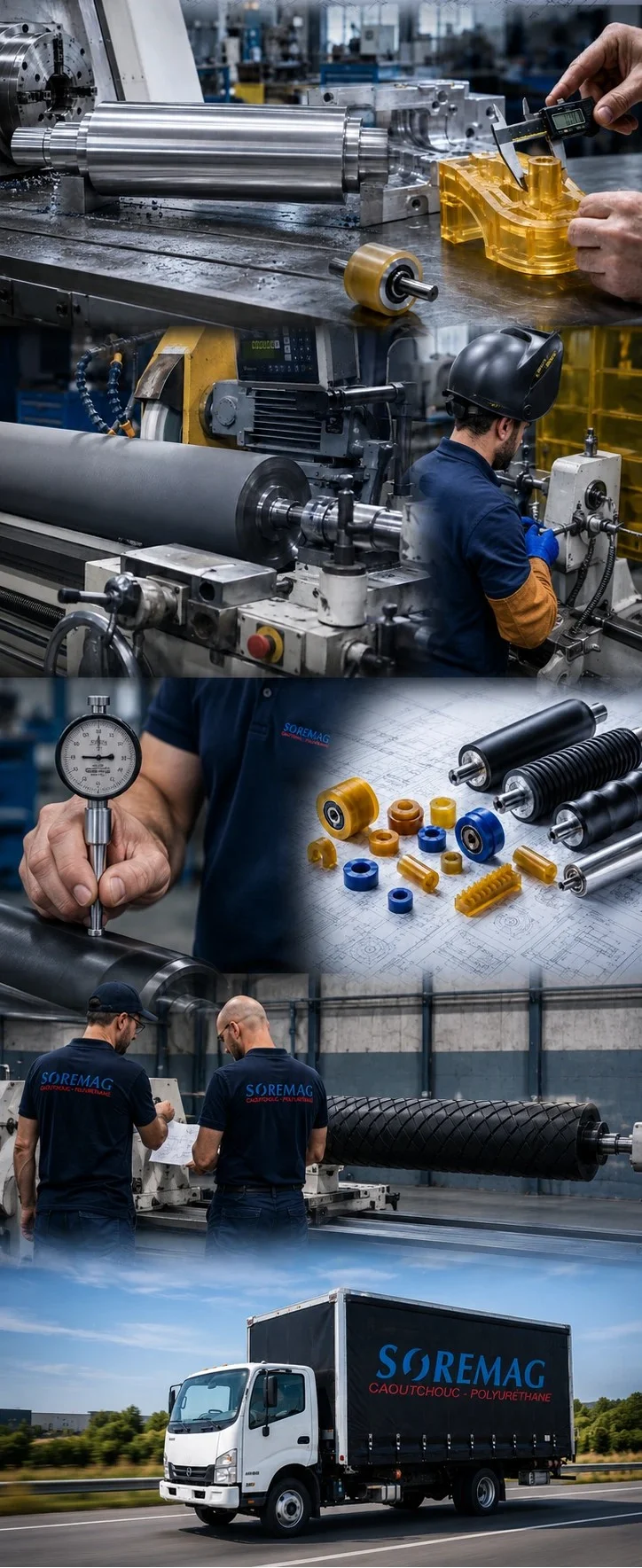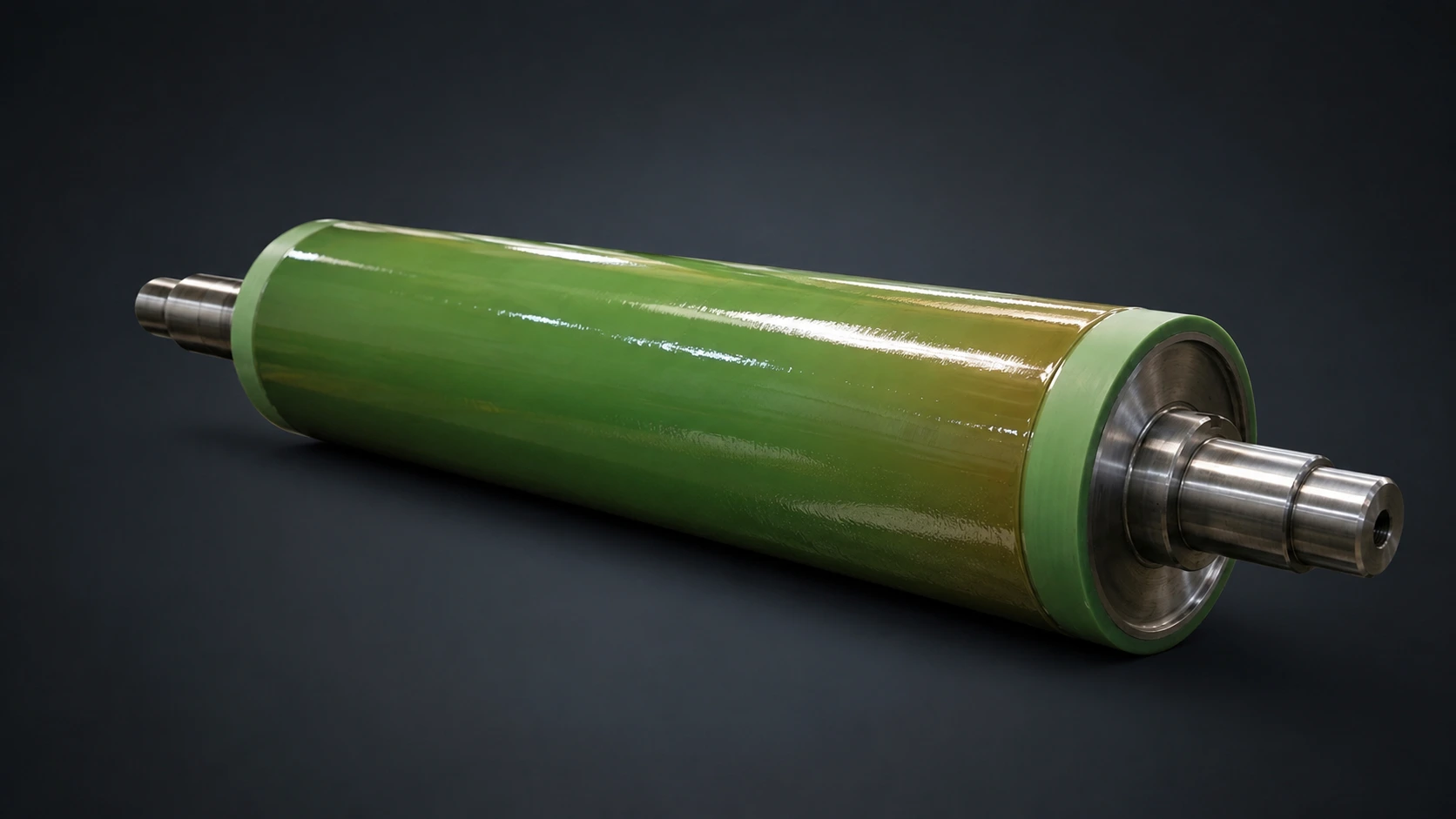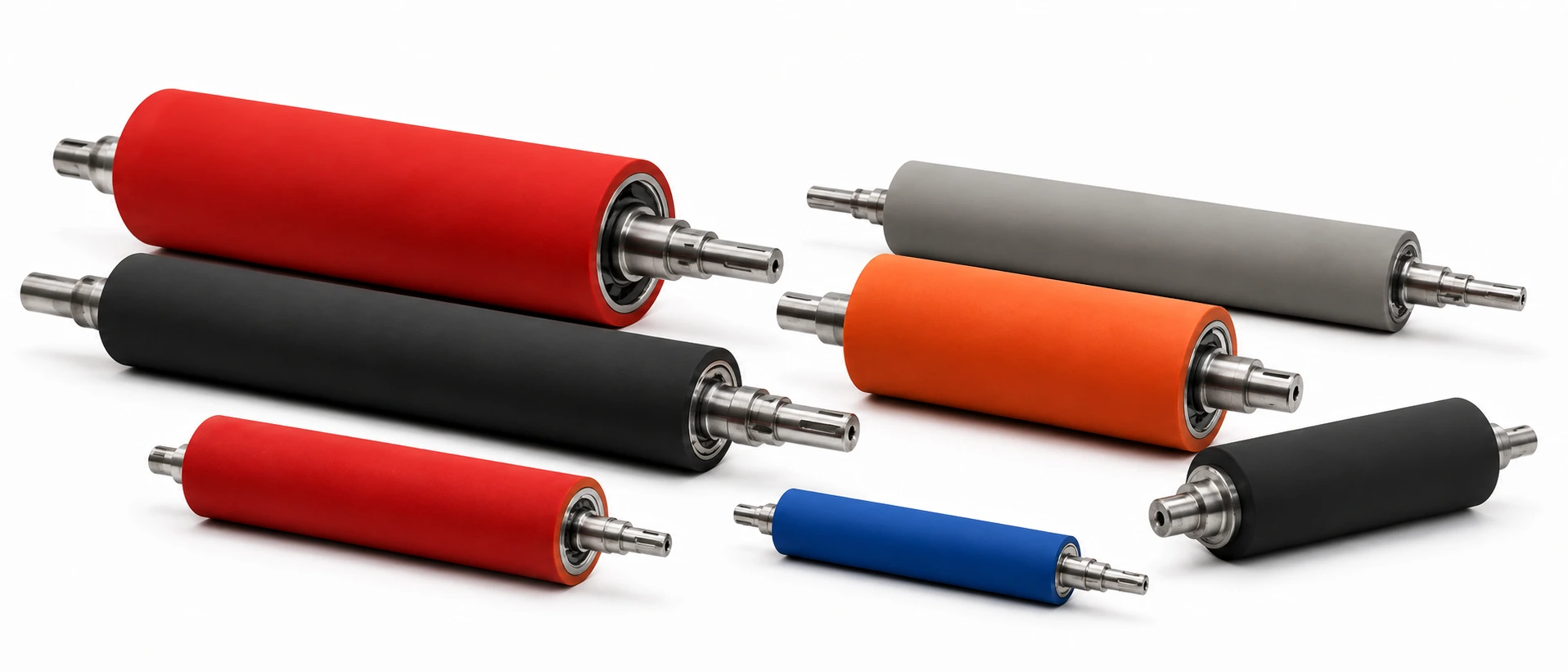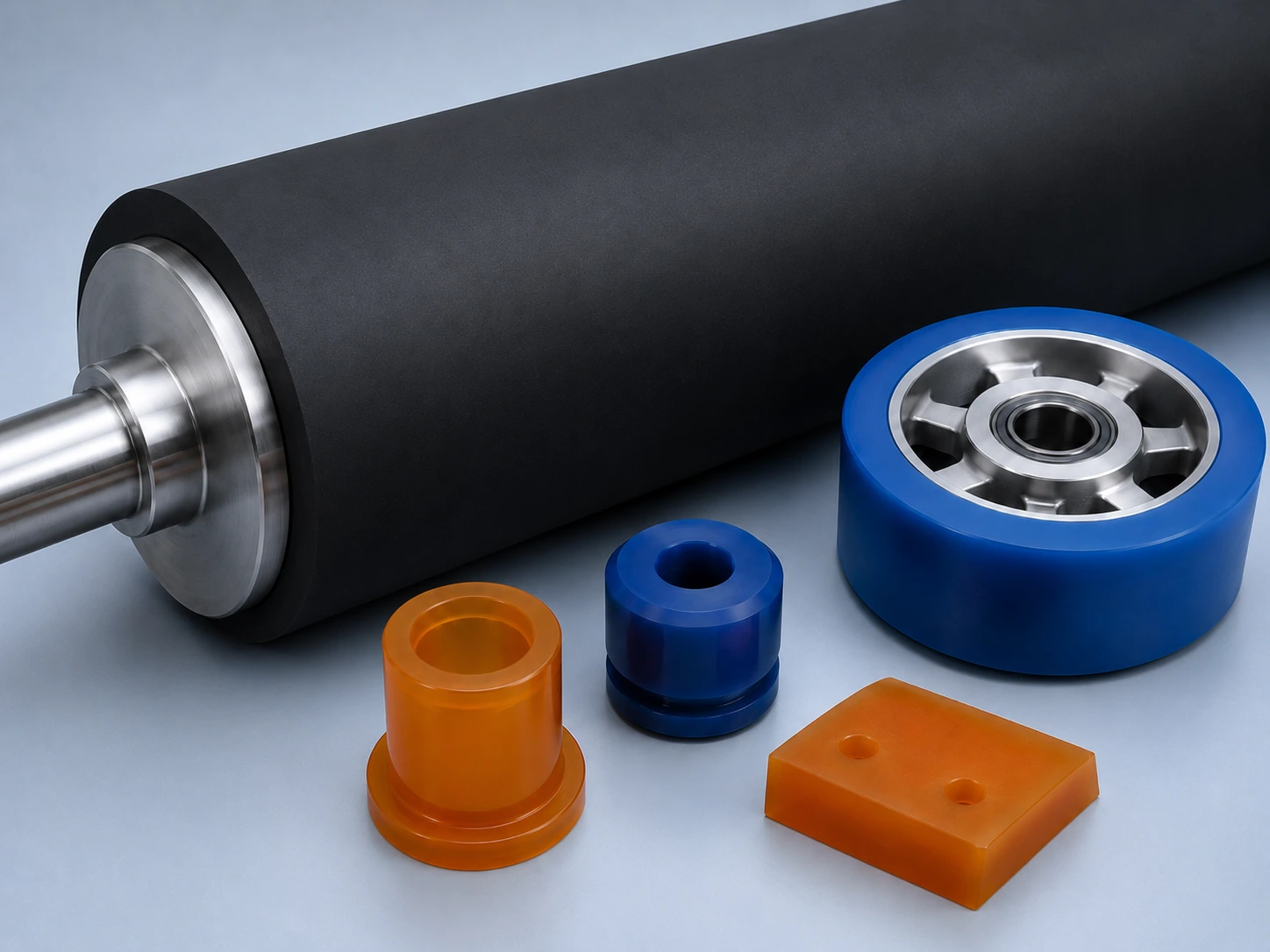
Applicator rolls, metering rolls, coating rolls, glue rolls: we cover, grind and groove the rollers that lay down glues, paints, varnishes, inks, oils and stains — for a steady film thickness that doesn't drift.
On a coating roller, the cover isn't just a working surface: it is part of the measuring instrument. Its hardness and its diameter decide how much product gets through. If it changes, the recipe changes.
That is what makes this family different from every other one. A nip roller that ages presses a little less well. A drive roller that ages slips a little. An applicator roller that ages
Soremag brings these rollers back to size and, above all, picks the compound so it will
Unlike a nip roller, a coating roller does not meter by squeezing. It meters by controlling a gap, a speed and a volume. Tightening further does not lay down less: it deforms the cover, it heats up, and it ends up opening the effective nip gap.
It is what sets the wet film thickness carried to the substrate. And it depends on both diameters and both hardnesses — so on the real condition of the two rollers, not just on the setting shown on the machine.
A metering roller running slower, at the same speed or in reverse does not let the same amount through. It is a powerful adjustment, and often the fastest one to try before touching anything mechanical.
A smooth surface carries a thin, continuous film. Grooving or engraving carries a volume set by the geometry of the cavity. It is the most repeatable metering there is — but the pattern has to stay sharp.
A fourth factor cannot be adjusted, only dealt with:
Recognizing yours helps diagnose transfer, metering and wear — and tells us which part to recover.
The applicator picks the liquid up out of a pan and transfers it straight to the substrate. With no separate metering roller, thickness depends on speed, wetting, viscosity and the contact area. Simple and rugged, less precise than independent metering.
The product is fed between the two rollers, often from a small reservoir in the V. They turn in opposite directions: their surfaces run down into the nip gap together. At the contact point, the applicator runs in the same direction as the substrate.
Here both rollers turn the same way: their surfaces move against each other in the nip gap and wipe the film down to the thickness wanted. At the substrate, the applicator runs against the direction of travel — which is what gives the thinnest and most even films.
The cells fill, the doctor blade wipes off the excess, and it is the engraved volume that does the metering. Very repeatable as long as viscosity, speed and blade setting stay stable. Engraving is done on a hard surface, not on elastomer.
In engraved or anilox systems, our work is on the
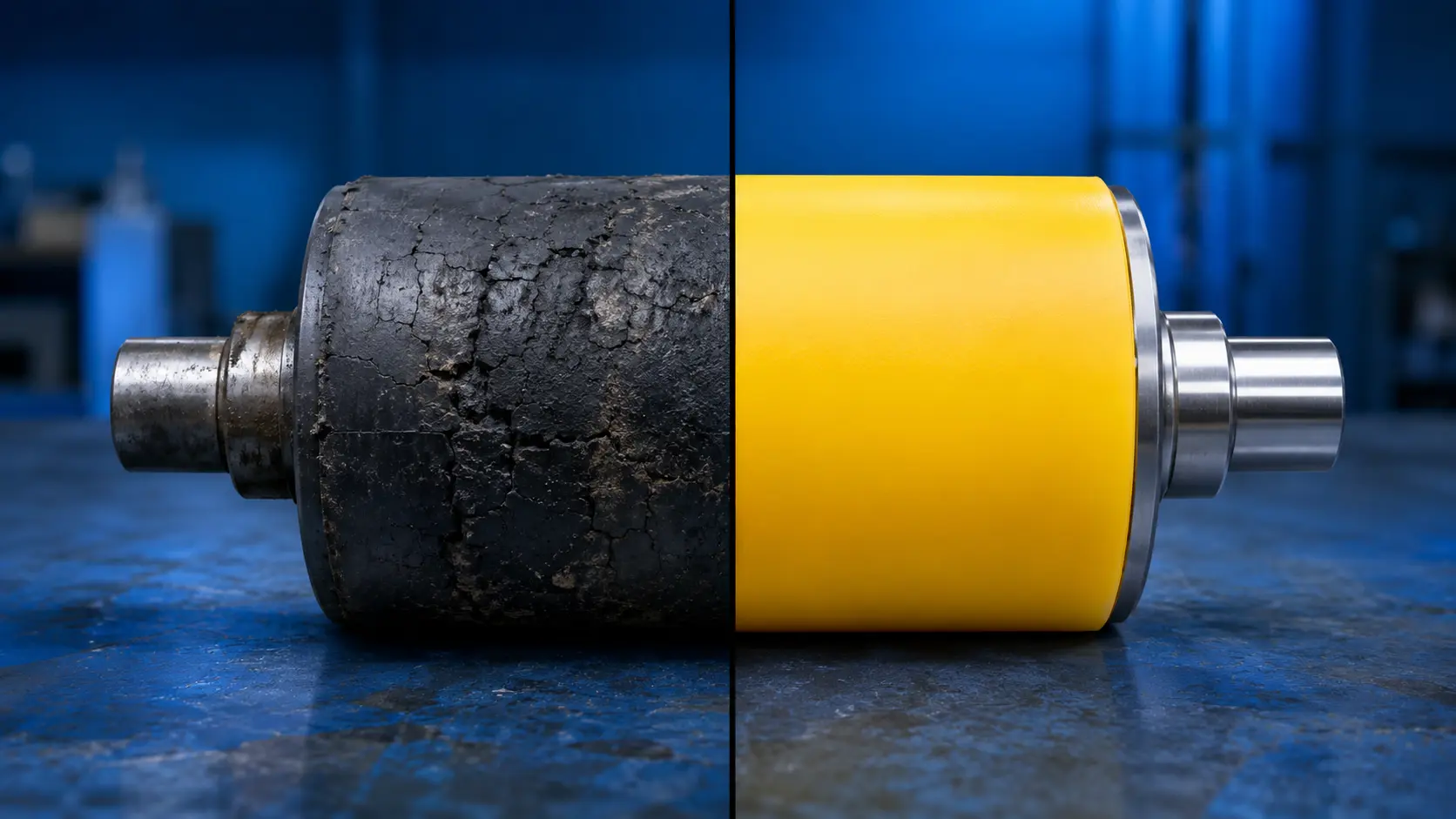
It is the mechanism specific to this family of rollers, and the most misunderstood one on the plant floor. A roller that swells does not just wear: it throws off the measurement. Here is the full chain, from the chemical to the defect on the finished product.
Thinner, solvent or plasticizer from the applied product works its way into the cover.
It swells. The diameter grows slightly, often unevenly across the face.
The elastic modulus falls: the same load now flattens the cover much more.
Between metering roller and applicator, the real pressure falls and the effective nip gap opens up.
More product gets through. You tighten the setting, the swelling keeps going, and the target never stops moving.
An applicator roller laying down more and more product is not out of adjustment: it is
The right sequence is the reverse: identify the product in contact and its temperature, validate the compound with an
Swelling shows up in three simple signs: the diameter has grown, the durometer reading is lower than original, and the surface has turned tacky or spongy to the touch. Our diagnostic guide goes through the signatures in detail.
Apply, meter, transfer, wipe — one family of functions under names that change from one industry to the next.
They carry the product to the substrate and lay it down. It is their surface and their chemical compatibility that decide film quality.
They set how much the applicator carries. Their diameter and their hardness are part of the metering equation — recover them and the recipe changes.
The generic term on coating lines: coating, varnishing, impregnation. Often in a pair, or in a three-roller train.
Cold glues, hot glues, PVA, hot melt. The challenge is twofold: stand up to the chemistry and clean off without damaging the surface.
Water-based, solvent-based or UV varnishes. UV and solvent-based formulations are the hardest on the compound.
Printing vocabulary: they build and distribute the ink film. Hardness and finish are critical here.
They carry the fountain solution in offset. Hydrophilic surface, film consistency, resistance to bath additives.
Wood, textile, leather. The product has to penetrate without overloading, which puts metering front and center.
They take the excess off instead of laying product down. The cover has to stay sharp and dimensionally stable.
They carry the substrate opposite the applicator, and their runout shows up directly in the applied film. Worth noting: on precision reverse coaters, the metering roller and the applicator are both steel — the elastomer cover is right here. It is often the only part we are asked to do on those machines.
They even out or take back an excess already laid down: oiling, lubrication, wiping after a bath.
They pass the product from one roller to the next in a train. Every transfer splits the film — which is why their condition matters.
Your position goes by another name? Send a photo, a drawing or the data sheet for the product being applied. See also the other roller families.
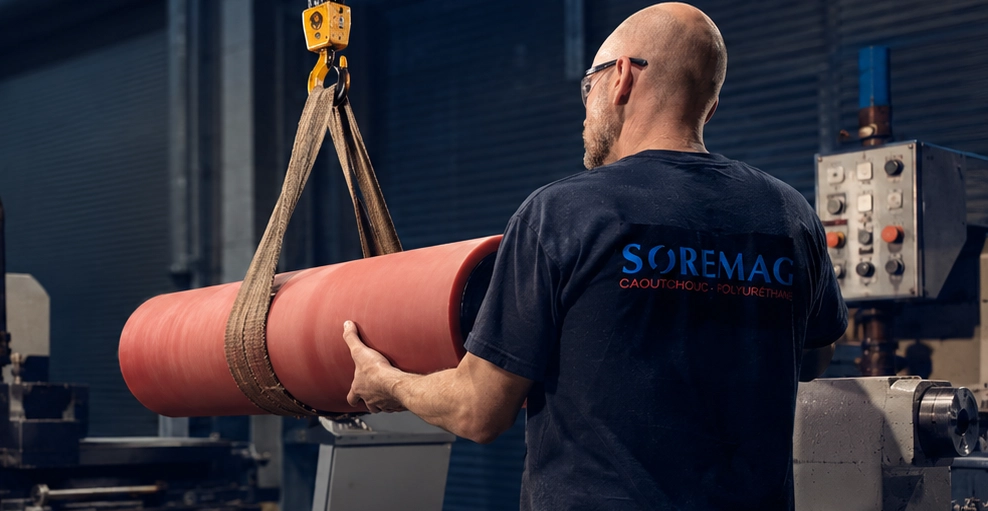
We start from your core, and we pick the material according to what the roller is going to touch.
| Intervention | Ce que ça règle sur un rouleau d'enduction |
|---|---|
| Essai d'immersion sur échantillon | Validation de la compatibilité chimique avant de refaire la pièce : variation de masse, de volume, de dureté et état de surface. |
| Recouvrement caoutchouc ou polyuréthane coulé | Composé retenu pour tenir votre produit, sa température et vos cycles de lavage — sans gonfler ni durcir. |
| Rectification de précision | Diamètre, cylindricité et faux-rond remis aux cotes : c'est la base d'un film uniforme. |
| Fini de surface contrôlé | Rugosité visée selon le produit à transporter — un fini trop poli ne mouille plus, un fini trop rugueux dépose trop. |
| Rainurage sur mesure | Motif et pas reproduits ou repensés quand le dosage passe par un volume porté. |
| Diamètres et duretés appariés | Sur une paire doseur/applicateur, l'appariement redonne le réglage d'origine au lieu d'obliger à le retrouver par essais. |
| Réparation du mandrin, des portées et des tourillons | Un faux-rond mécanique produit une strie que ni la matière ni le réglage ne corrigeront. |
| Reverse engineering | Identification de la famille du composé et de sa dureté à partir du rouleau usé, sans documentation. |
| Contrôle et traçabilité | Relevés de dureté sur la face, diamètre, faux-rond, rugosité — consignés pour la pièce. |
Capabilities: from
Here, chemical compatibility comes before everything else. A mechanically perfect compound that swells in your product is the wrong compound.

None of these families is good everywhere: each one has fluids that make it swell. That is why we ask for the data sheet on the product being applied, its temperature and your cleaning products — then we validate by test. See the material selection guide and the page on rubber rollers.
The mechanisms specific to coating — the ones behind most of the uneven films described to us.
When two wetted surfaces separate, the liquid bridging them splits between the two. On a roller train, each transfer therefore passes on only a
Practical consequence: the amount that reaches your substrate depends on
That is also why we ask for the full layout of your coating station before recommending anything.
To form an even film, the product has to
Three things ruin wetting: a surface
The reflex to tighten up fixes nothing: if the product will not spread, no pressure will force it to. It is the surface that has to be redone.
The amount a roller carries depends on the viscosity of the product, and viscosity depends on temperature. A colder shop in the morning lays down thicker; a bath that heats up during the run lays down thinner.
Line speed works the same way: the faster it runs, the more product the roller carries, up to a point where the film destabilizes and leaves regular marks.
Before concluding that the roller is at fault, it is worth checking whether the defect tracks the bath temperature or the line speed. If it does, it is not the roller.
A pattern machined into the cover carries a volume set by its geometry. It is more repeatable than a smooth film, because the volume barely depends on pressure anymore.
But a pattern fills in — with cured product, with creep of the compound under load, with wear. Metering then drops off gradually, and unevenly across the face.
We record the existing pattern, its pitch and its depth, and we reproduce it — or we revise it if the wear shows it was not right for the job. See the page on grooved rollers.
A lot of applicator rollers die less from the product they apply than from the
So compatibility has to be validated against two liquids, not one: the product applied
Our cleaning and storage recommendations are in the maintenance guide.
1. Condition survey: hardness at several points, diameter, runout, roughness, condition of the pattern — and comparison with the original values if we have them.
2. Identification of the existing compound, and validation of the compound chosen by immersion test if the chemistry is involved.
3. Stripping of the old cover, inspection of the core, the bearing journals and the journals.
4. Mechanical repair as needed, surface preparation and bonding system.
5. Application of the new cover — vulcanization for rubber, hot cast for polyurethane.
6. Grinding to the target diameter and finish, then grooving if the application calls for it.
7. Final inspection and traceability. Full detail in our roll covering process.
What we hear most often about a coating station, and what it usually means.
| Symptôme | Cause probable | Correction |
|---|---|---|
| Le dépôt épaissit avec le temps | Gonflement du recouvrement, chute de dureté | Essai d'immersion, changement de composé, retour au réglage d'origine. |
| Le dépôt s'amincit progressivement | Motif comblé, surface glacée, mouillage dégradé | Rectification à la rugosité voulue; reprise du rainurage. |
| Film plus épais au centre ou aux rives | Usure inégale, faux-rond, déflexion sous charge | Rectification; profil revu — voir grinding and profiles. |
| Stries dans le sens de marche | Racle usée ou encrassée, méplat, joint de recouvrement | Rectification; révision de la racle et de son appui. |
| Marques répétitives à intervalle régulier | Faux-rond, balourd, méplat local | Rectification, réparation des portées, équilibrage dynamique. |
| Le produit ne s'étale pas, forme des plages | Perte de mouillage : glaçage, dépôt sec, gonflement | Reprise de surface; révision du protocole de nettoyage. |
| Surface collante ou spongieuse au toucher | Attaque chimique avancée par le produit ou le solvant de lavage | Changement de composé, validé sur les deux liquides. |
| Recouvrement décollé du mandrin | Produit infiltré à l'interface, adhérisation dégradée | Retrait complet, remise en état du mandrin, nouvelle adhérisation. |
Every wear signature is covered in detail in the roller and wheel diagnostic guide.
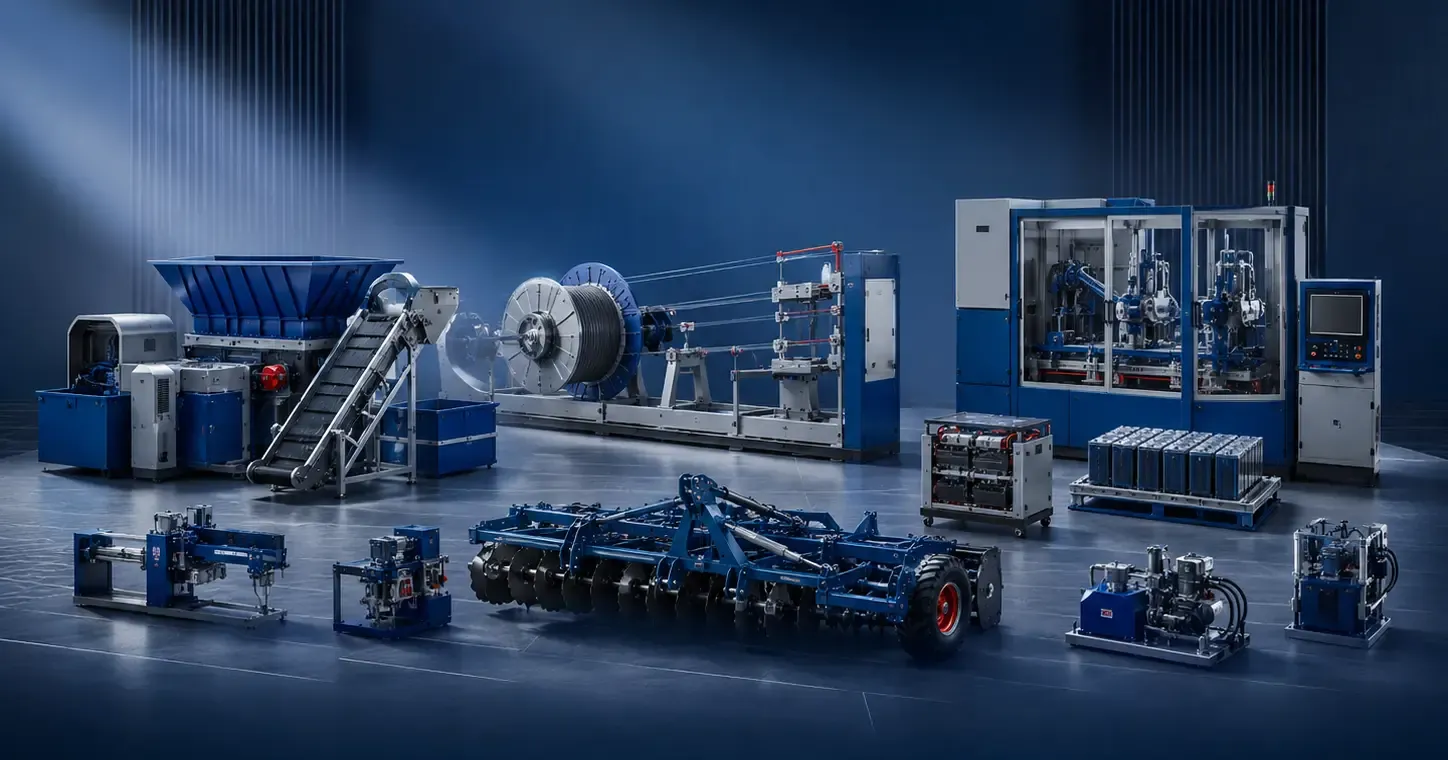
Anywhere a liquid has to be laid down at a controlled thickness on a surface that is running past.
It's almost always
Through three levers, and pressure isn't one of them: the
It depends on the chemistry, the temperature and the exposure time. Water-based products are the most forgiving; aromatic solvents and ketones, the most aggressive. Nitrile handles oils and inks well, EPDM handles hot water and alkalis but not oils, polyurethane is mechanically excellent but reacts to certain solvents. The only reliable answer is an
To check compatibility
We reproduce
Three causes come up again and again: a
It is strongly recommended. The amount laid down depends on the nip gap between the two, so on their respective diameters and hardnesses. Recovering only one roller changes the equation and forces you to find the setting again by trial, on real product. Recovered together and matched, they give you back the original setting.
More than people think. An aggressive wash solvent used every day often attacks the compound faster than the applied product itself. And dry scraping glazes the surface, which destroys wetting. So we validate compatibility on
Send us the data sheet for the product being applied, your cleaning product, the operating temperature, the roller dimensions and its current hardness. We validate compatibility by test before proposing a compound — rather than letting you discover swelling in production.
➔ Request a quote