Covering & manufacturing · rubber and polyurethane · Quebec450 664-4000·1 800 361-5588·EN|FR
Plaques et garnitures d'usure en polyuréthane coulé
Produits · Polyuréthane moulé

Wear plates and liners in polyurethane

Protection against abrasion, sliding wear, impact and material flow — in polyurethane alone or overmolded on a steel plate. Custom cast wear plates, sheets, pads and liners, matched to your equipment.

We start by looking at how your plate wears

A wear plate protects a surface where material slides, strikes or rubs. Before proposing anything, we read the wear on your current part: polished by sliding, gouged by rock, chipped by impact, swollen by moisture? Each wear signature calls for a different answer — material, thickness, geometry and mounting method.

A well-chosen plate is replaced less often — and in modules, without tying up the equipment.

Products we make to order, matched to your need

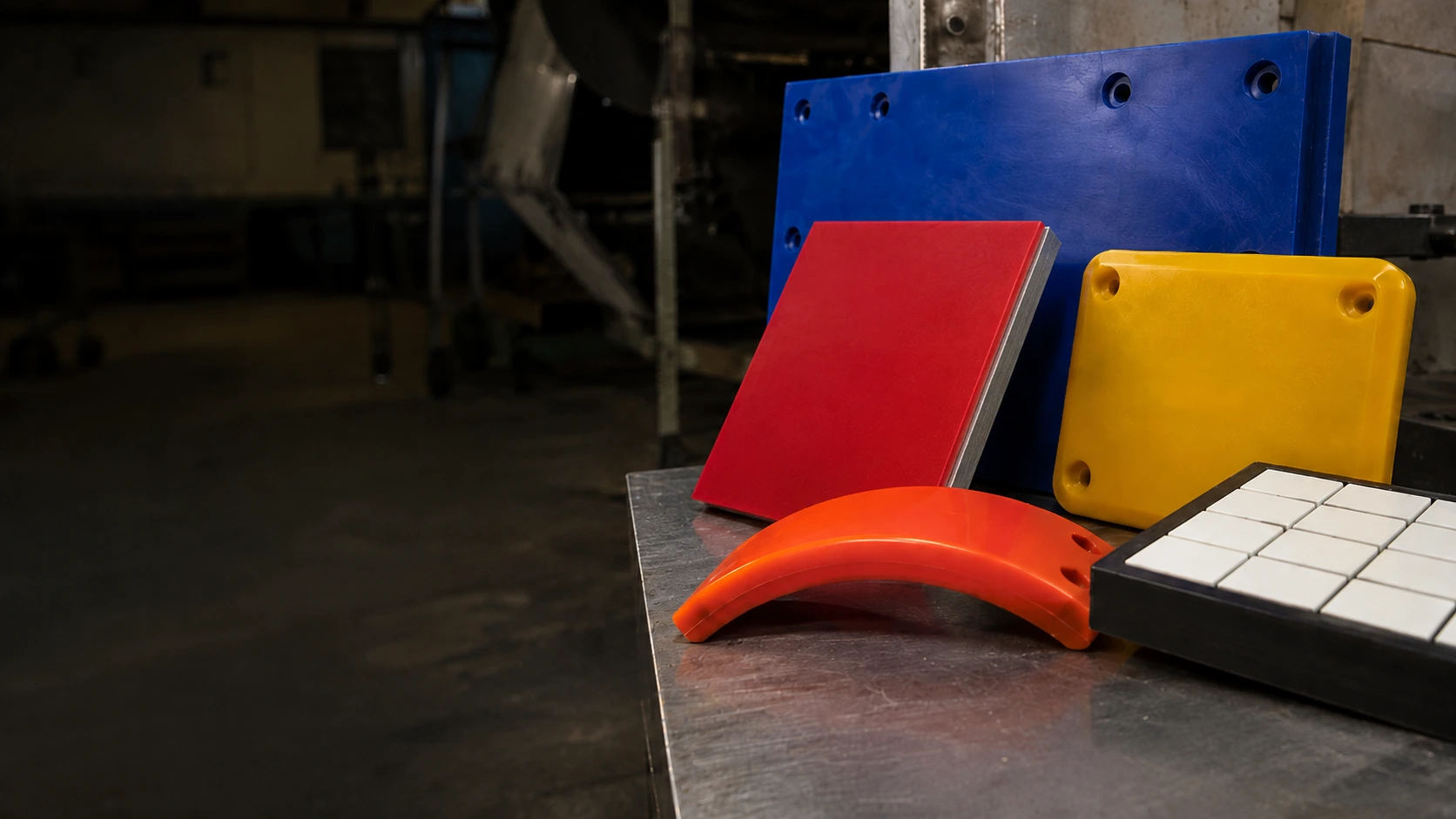
An overview of the wear plates and liners we cast in polyurethane. The list is not exhaustive: describe your wear point and we will propose the right product.

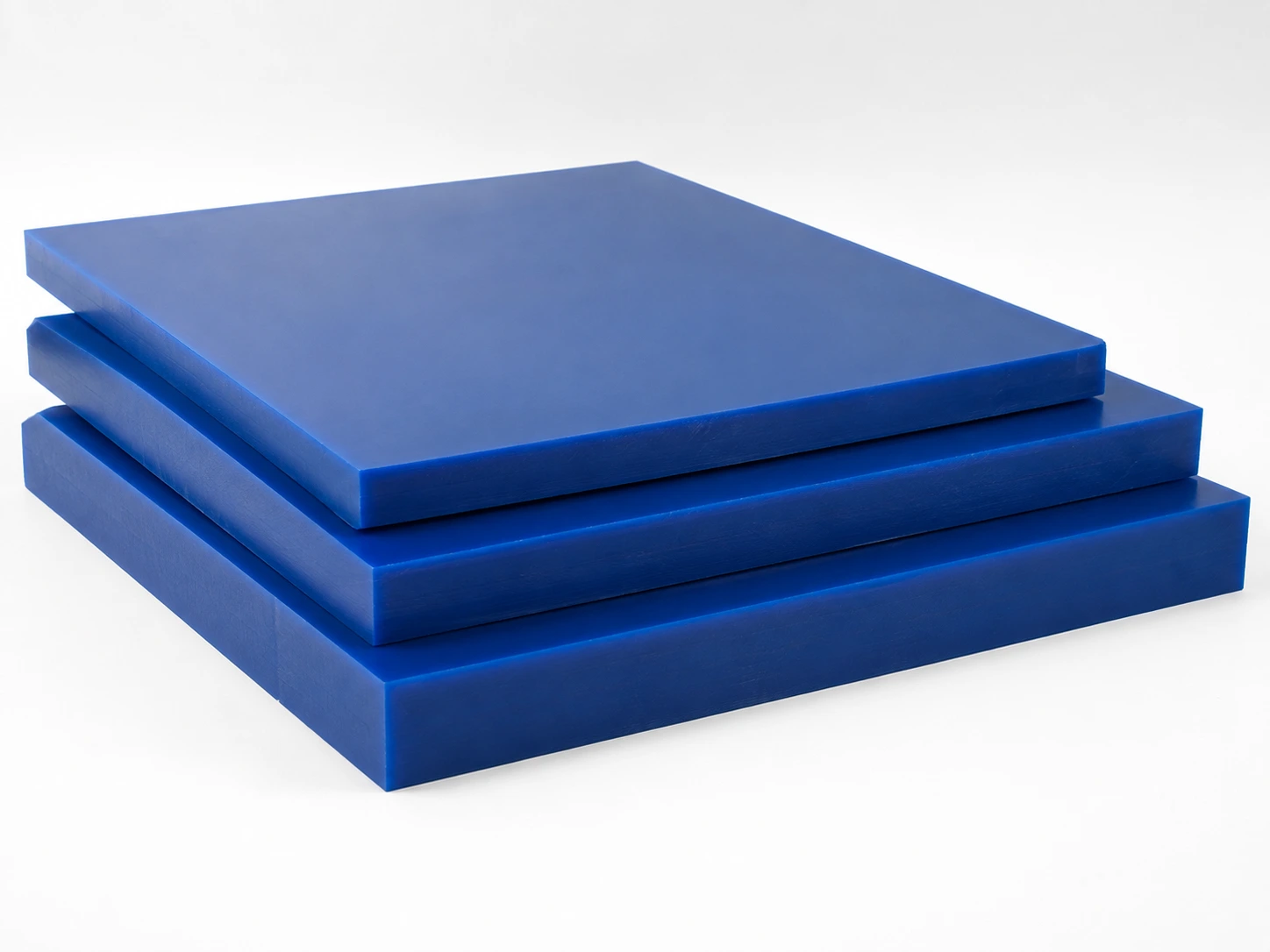
Feuilles de polyuréthane bleu coulées en plusieurs épaisseurs, empilées
Feuilles de polyuréthane sur mesure, plusieurs épaisseursPU sheet — jusqu'à 4 × 8 pi, à découper, percer ou usiner
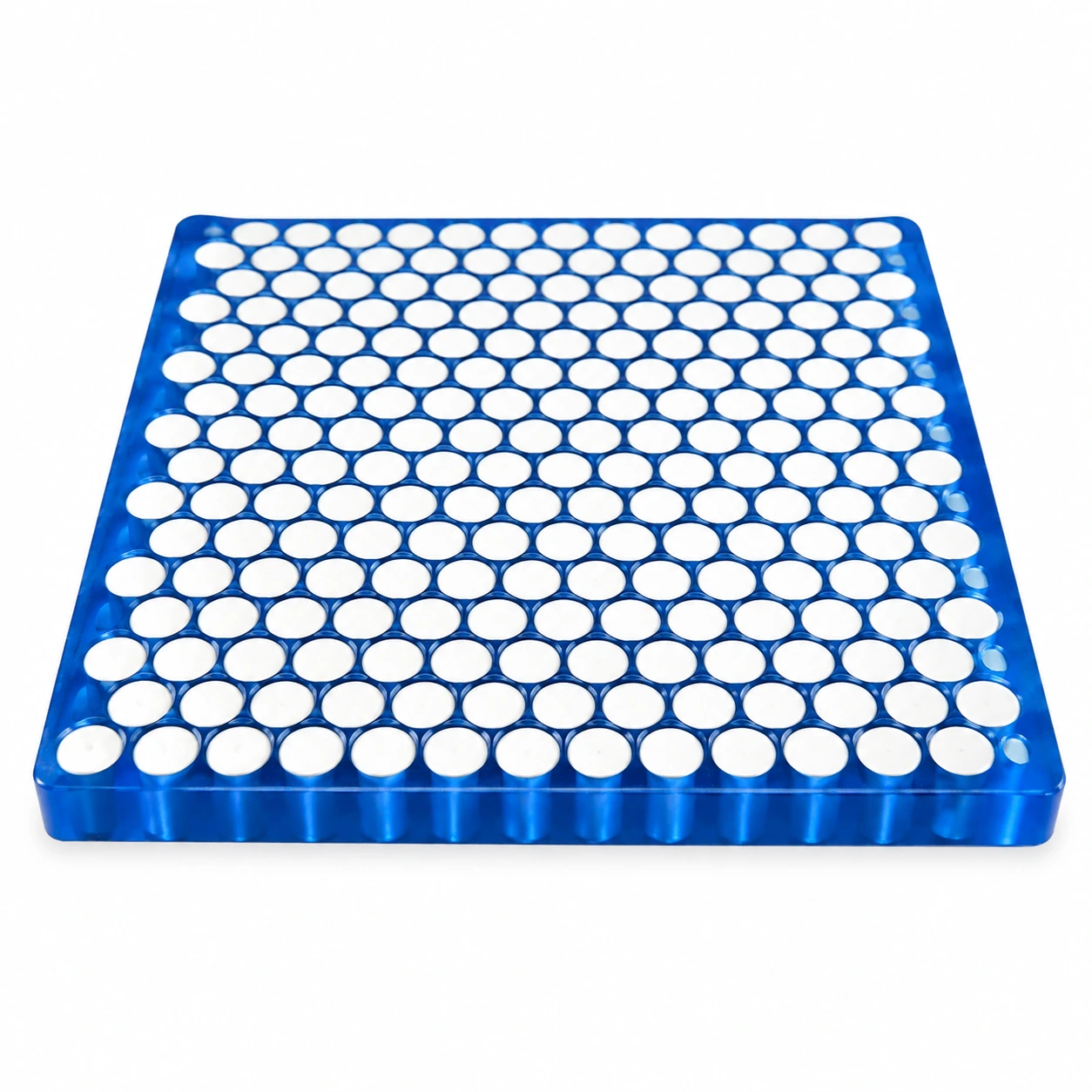
Plaque d'usure en polyuréthane bleu avec tuiles de céramique blanches noyées en grille serrée
Plaque d'usure céramique + polyuréthane sur mesureCeramic wear plate — tuiles noyées dans la matrice de polyuréthane
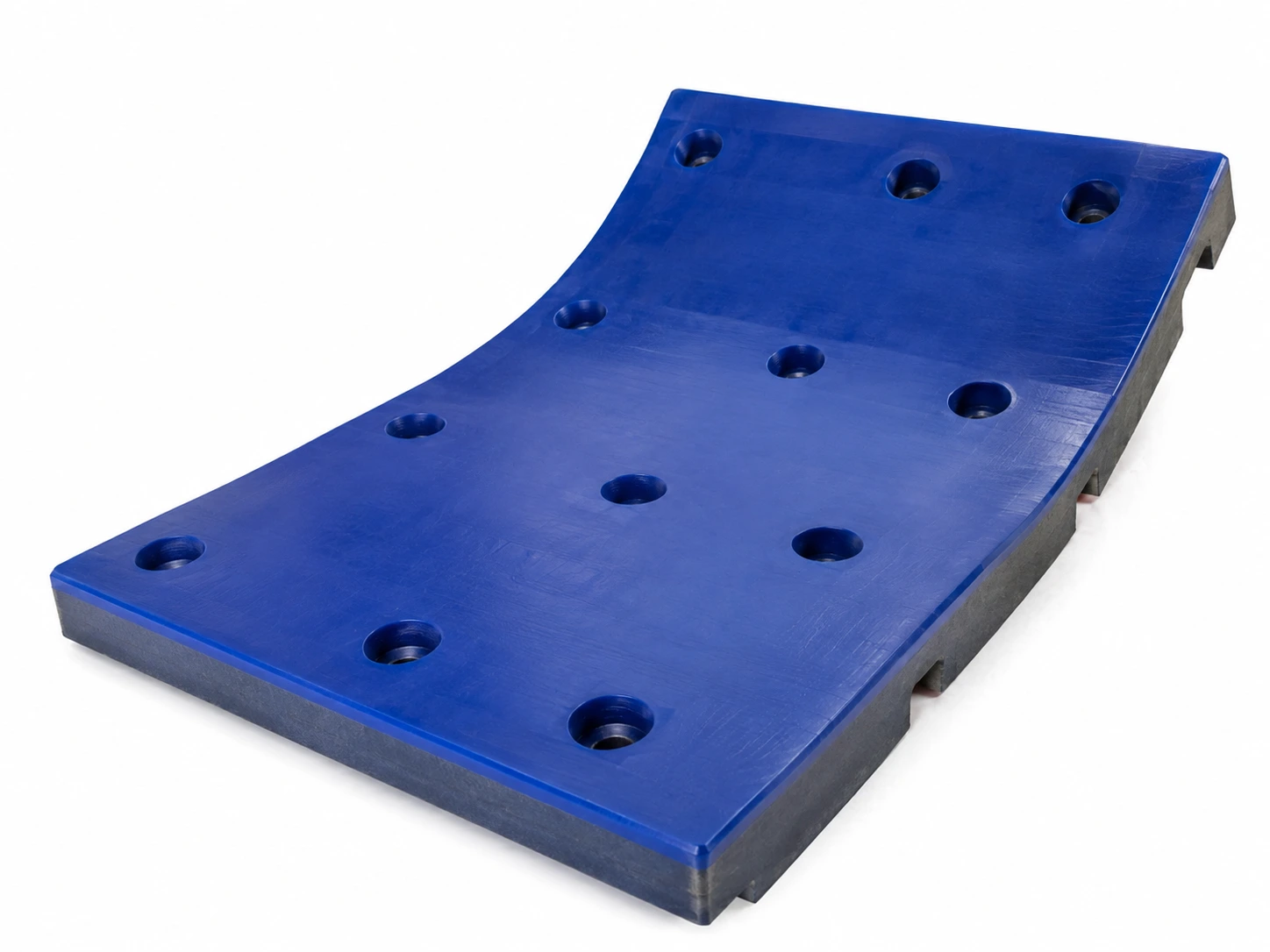
Garniture d'usure en polyuréthane bleu coulé à chaud et adhérisé sur une forme d'acier cintrée, trous fraisés
Garniture d'usure coulée sur forme d'acier spécialeSteel-backed liner — forme cintrée et trous fraisés selon votre modèle

Wear plates (wear plates)

Protection plates for surfaces subject to sliding wear and impact. In cast polyurethane, they can absorb impact and resist abrasion, in the sizes and thicknesses suited to the equipment — depending on the project.

Polyurethane sheets (PU sheet)

Sheets cast up to 4 × 8 ft., in several thicknesses (½, ¾, 1 in. and more, depending on the project). To cut, drill or machine into custom liners, slides, guards and pads.

Wear bars and skid pads (wear bars / skid pads)

Wear bars and pads for friction and material handling points. Polyurethane slides without marking and is replaced in modules — in polyurethane alone or fixed to a backing, depending on the mounting.

Steel-backed plates (steel-backed plates)

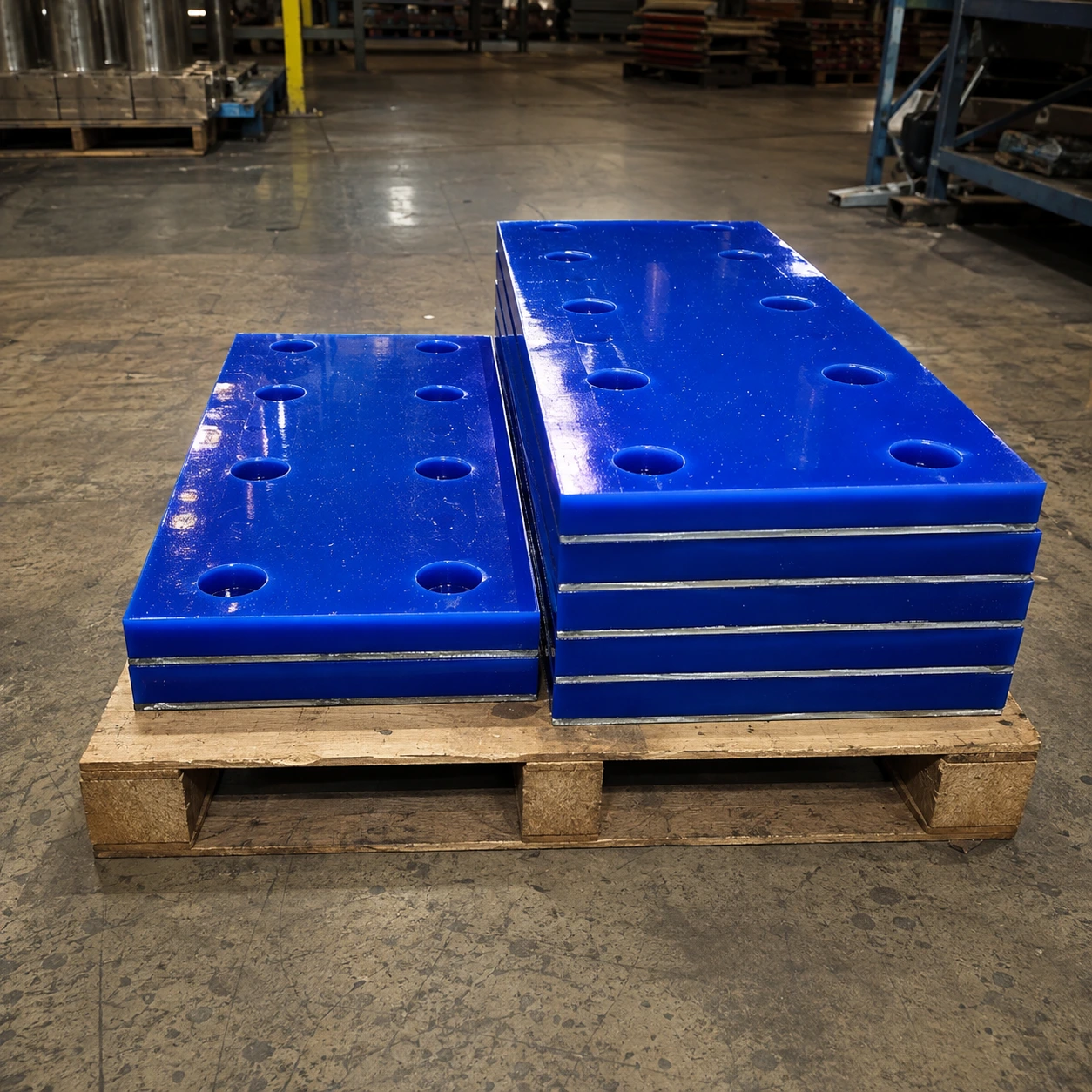
Steel plates covered with a layer of cast polyurethane, with countersunk holes for flush-mounted bolts or inserts. The steel skeleton provides the rigidity and the mounting; the polyurethane becomes the wear surface.

Ceramic + PU panels and bars (bead bar)

Beads or tiles of ceramic embedded in a polyurethane matrix : the PU absorbs the impact and holds the ceramic, which takes the sliding abrasion. Useful in the most abrasive zones — with or without ceramic, depending on the application.

Chute, drop and transfer point liners (chute liners)

Linings for chutes, drops, hoppers and transfer points where material slides and strikes. Modular formats, fixed with countersunk bolts or overmolded on a steel plate, depending on the duty.

Have a specific plate in mind, or a sample to copy? Tell us about your wear part →

Plates overmolded on steel

A rigid steel skeleton and a polyurethane wear surface, in a single part.

Polyuréthane + acier

Steel rigidity, polyurethane wear surface

The steel plate provides the rigidity and the mounting; the layer of cast polyurethane becomes the working surface, tough and non-marking.

countersunk holes
allow flush mounting, with bolts or with inserts.

The bonding between the polyurethane and the metal is prepared and controlled according to the type of metal, the loads and the intended duty. Dimensions, polyurethane thicknesses and hole patterns are defined project by project.

Learn more about overmolding on metal →
Plaques d'usure en polyuréthane bleu adhérisées sur dosseret d'acier, empilées sur palette à l'atelier

Choosing the material

The chemistry and the construction are chosen according to the environment and the wear mode. Here are the guidelines we use.

Ester or ether

The chemistry is chosen according to the environment: where there is moisture or water, ether tends to hold up better than ester. The right choice is confirmed project by project.

Hardness and thickness

Hardness and thickness are chosen according to particle size, speed, pressure and impact — a starting point to validate for the application.

Ceramic when it helps

Ceramic can help when sliding abrasion combines with impact. Elsewhere, polyurethane alone is often enough — with or without ceramic, depending on the application.

See the materials guide →

Pourquoi Soremag

From raw plate to finished liner

Soremag formulates, casts and machines polyurethane in-house. For wear plates and liners, that means a material chosen for your wear point, a construction matched to the job (polyurethane alone or on steel) and inspection defined by the function of the part.

See our quality control (QC7) →

Where our wear plates work

Three application families where cast polyurethane proves itself — and the industries where you find it.

Conveyors & material handling

Chute and transfer point liners: where material strikes and slides on every cycle, a polyurethane liner protects the steel and cuts the noise.

See the conveyor industry →

Steel, metals & heavy loads

Plates overmolded on steel for impact zones: the backing gives the rigidity and the mounting, the polyurethane takes the impact and the abrasion.

See the steel & metals industry →

Mining, quarries & other industries

Ceramic embedded in polyurethane and screen liners: for the most abrasive environments, where polyurethane alone reaches its limit.

See the other industries →

Questions about wear plates and liners

Polyurethane alone or overmolded on steel? +

It depends on the mounting and the loads. A plate in polyurethane alone is easy to cut, drill and replace; a plate overmolded on steel adds a rigid skeleton and a solid mounting, with countersunk holes for flush mounting. The right choice depends on the supporting structure, the loads and the duty — we recommend it case by case.

With or without ceramic? +

Ceramic can be useful when sliding abrasion combines with impact, in the most severe zones. The polyurethane absorbs the impact and holds the beads or tiles; the ceramic takes the sliding abrasion. In many cases, polyurethane alone is enough. We offer both options, with or without ceramic, depending on the application.

What sizes and thicknesses are possible? +

Polyurethane sheets are cast up to 4 × 8 ft., in several thicknesses (½, ¾, 1 in. and more, depending on the project). Plates, pads and liners are made to the dimensions and thicknesses that suit your equipment. Exact capabilities are confirmed based on the part and the application.

Do you reproduce an existing plate? +

Yes. Through reverse engineering, we can reproduce a plate from a sample, a worn part or a sketch, even without a drawing — dimensions, hole pattern, hardness and material depending on the project.

A wear plate to make or to copy?

Send us a drawing, a photo or the worn plate, along with the function, the material handled and the environment — we recommend the material, the hardness, the thickness and the construction (polyurethane alone or on steel, with or without ceramic), for your project.

➔ Request a quote

See also: Cast Polyurethane Parts · Metal Overmolding · Conveyors & material handling · Pulp & Paper