Covering & manufacturing · rubber and polyurethane · Quebec450 664-4000·1 800 361-5588·EN|FR
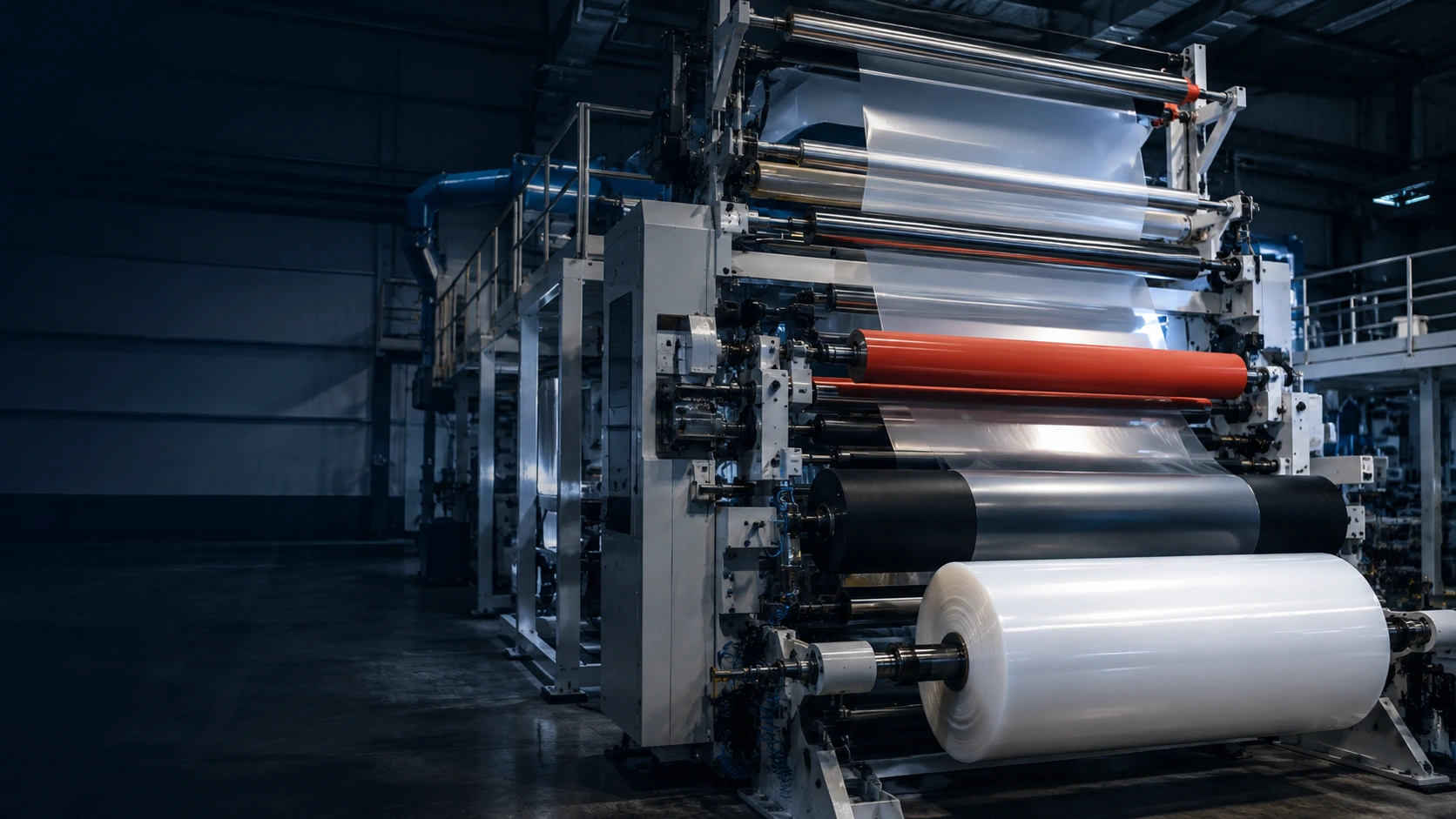
Ligne d'extrusion et de bobinage de film : rouleaux recouverts, cylindres chromés et nappe de film sur mandrin
Industries · Emballage, film & extrusion

Rollers, wheels and molded parts for flexible packaging, film and extrusion

Stretch/shrink film, bags, extrusion, laminating, converting: in flexible packaging, a “small” defect shows up right away. Wrinkles, slippage, marks, unstable tension, adhesive sticking… We keep your lines consistent.

In packaging, a “small defect” shows up right away

Wrinkles in the film, slippage, marks, unstable tension, adhesive sticking, wear at the ends, or a roller that starts to vibrate… and the line rate drops (or quality collapses).

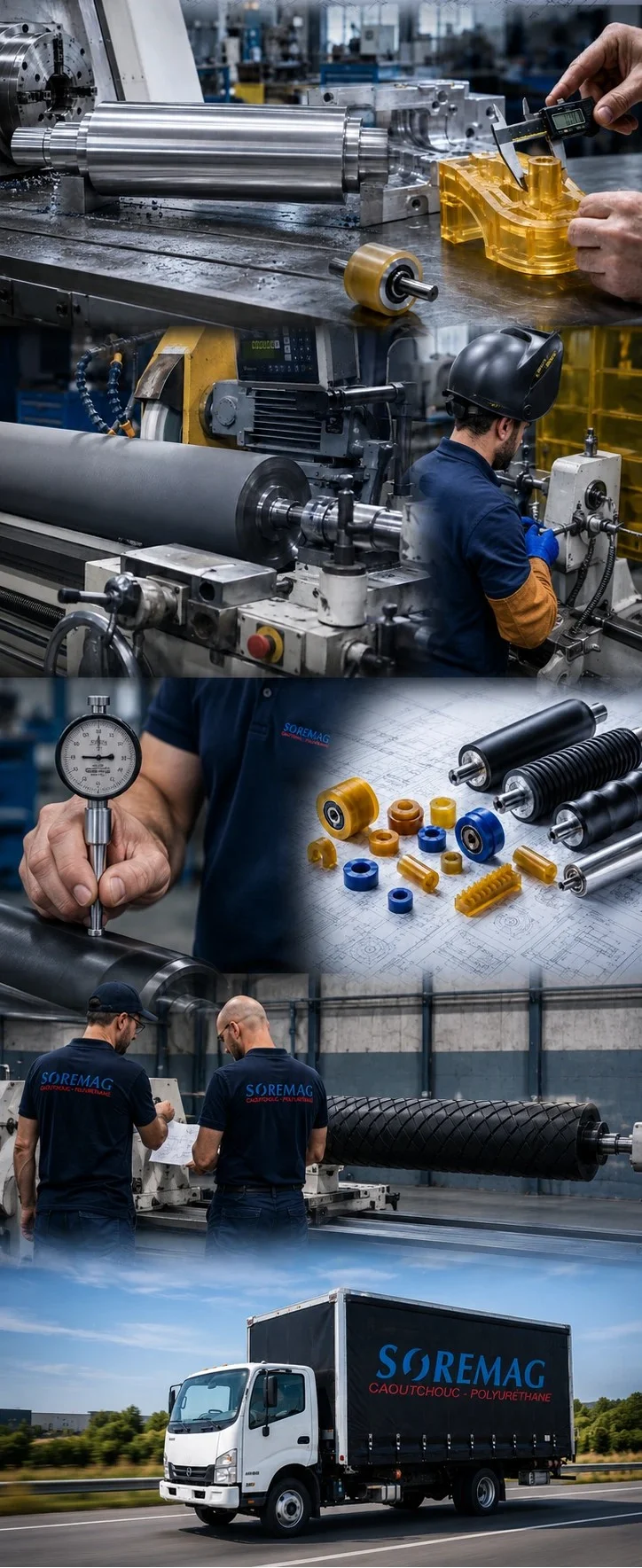
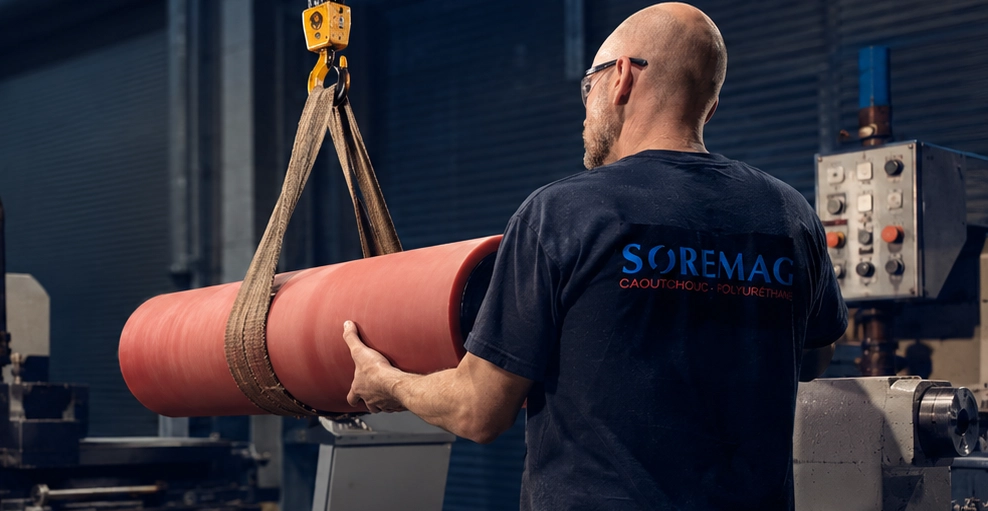
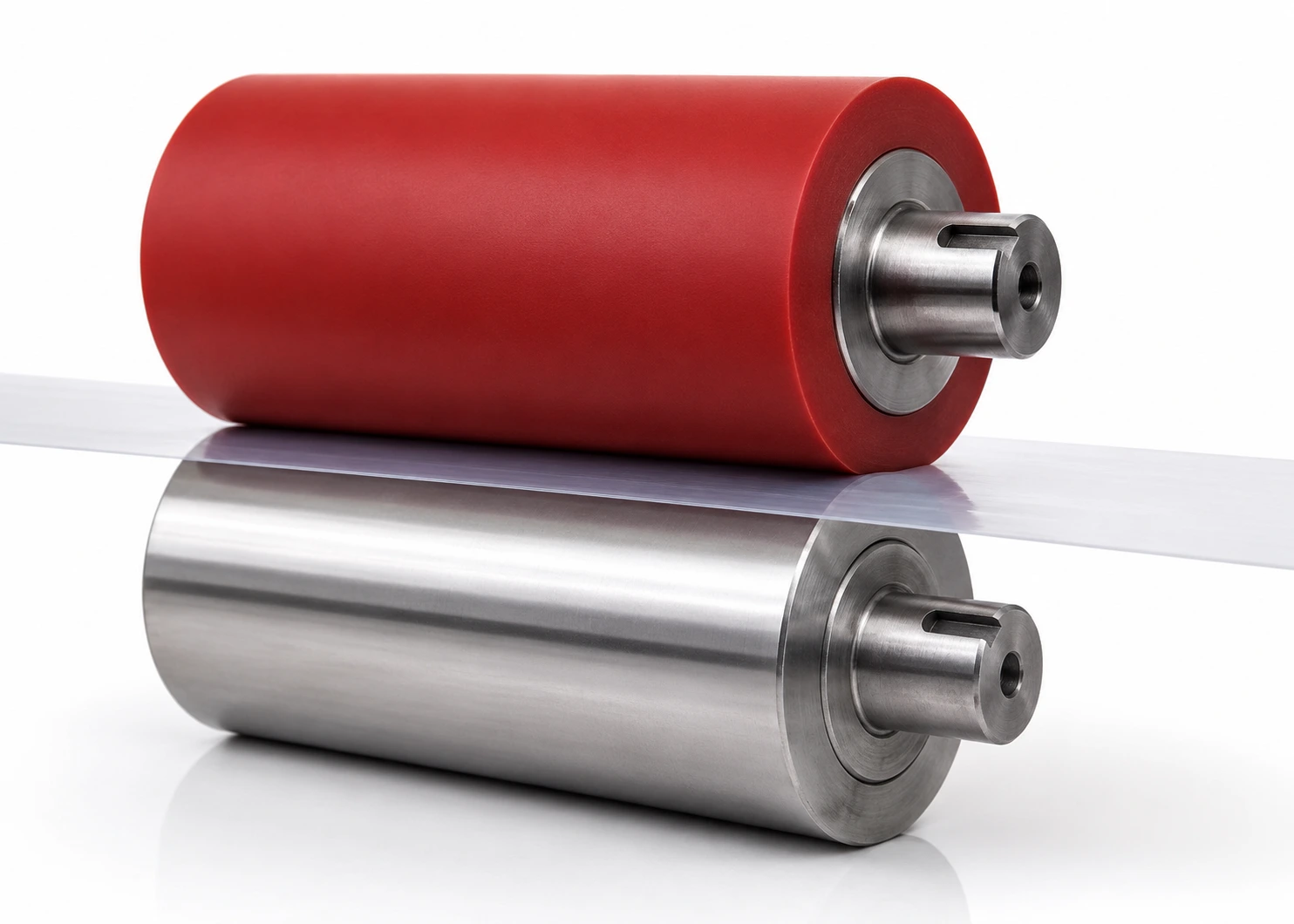
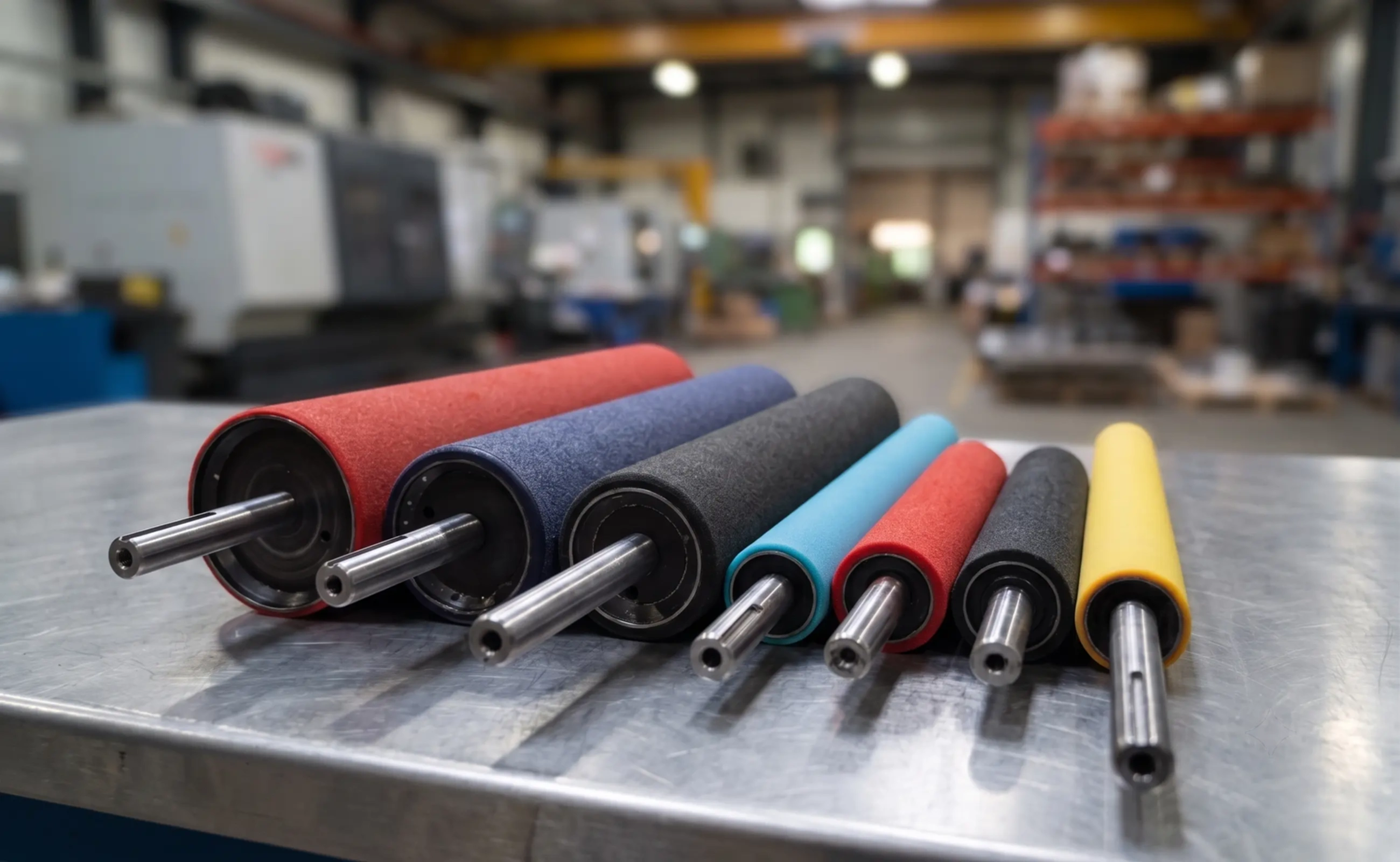
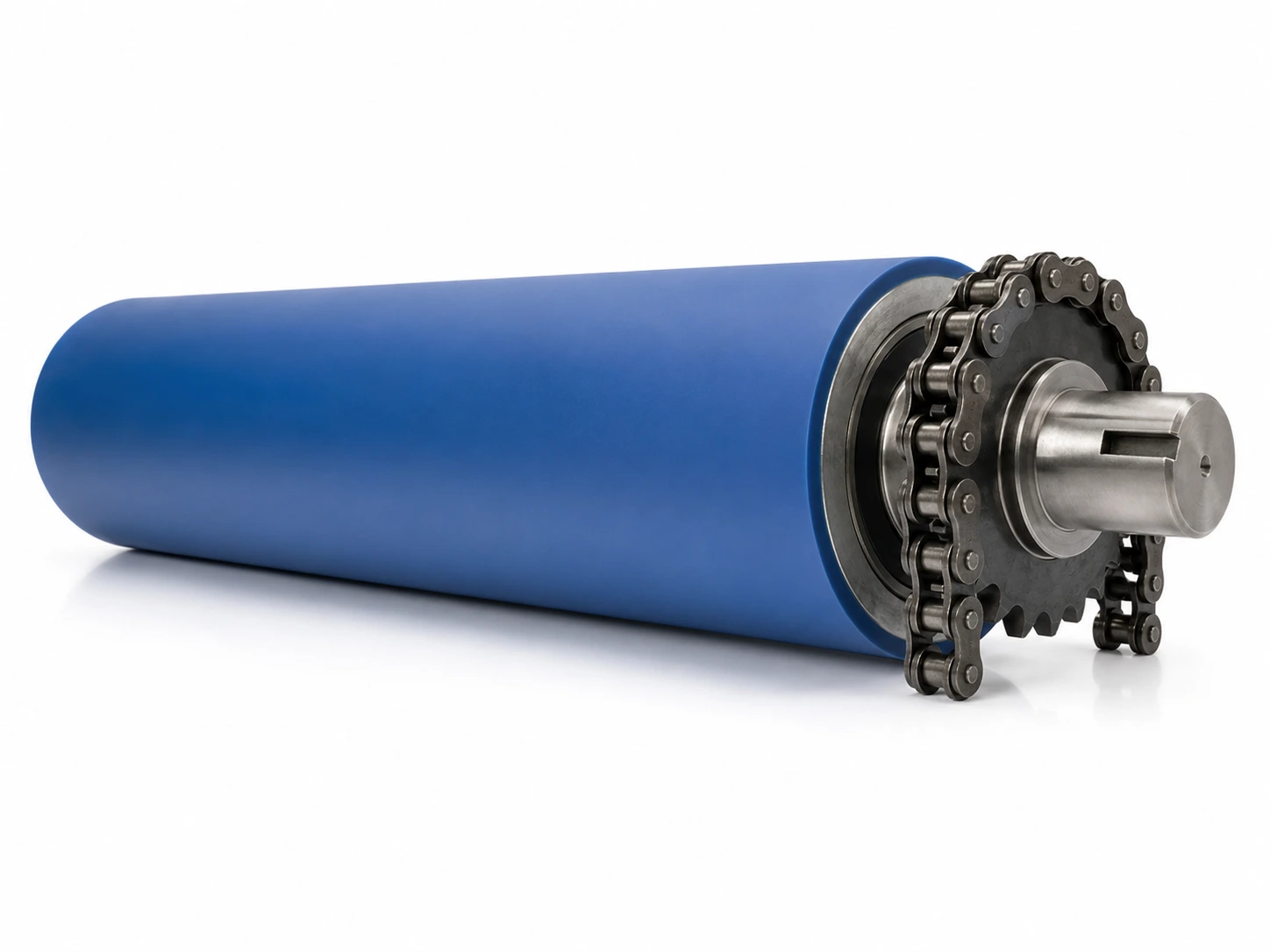
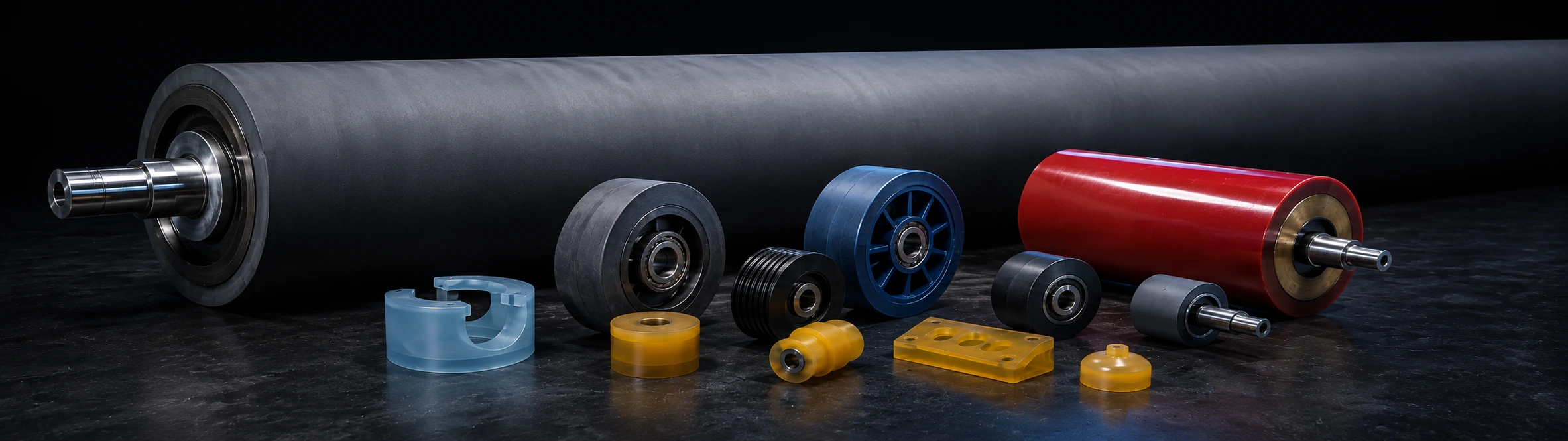
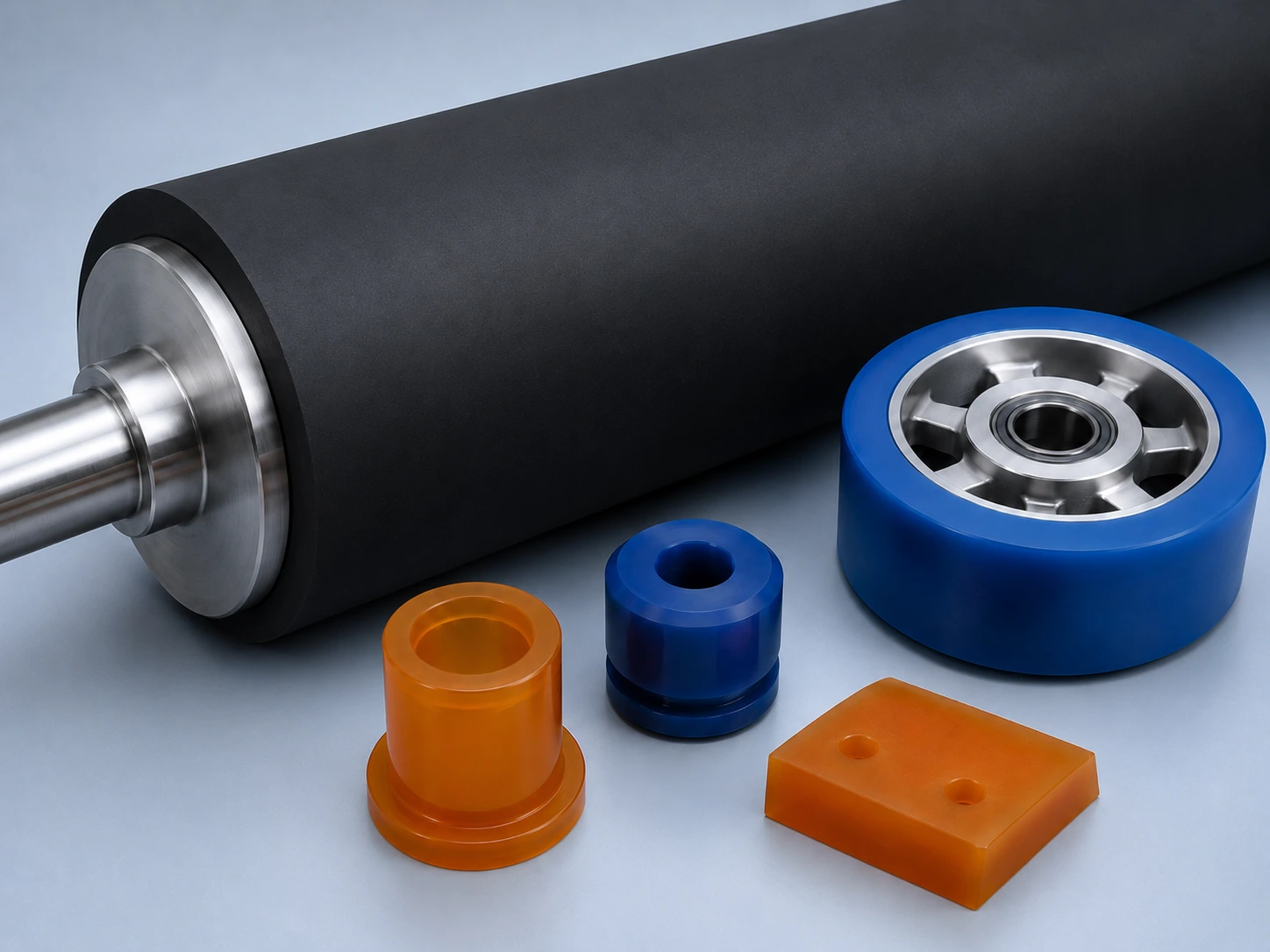
At Soremag, we build and refurbish covered rollers (rubber, polyurethane, silicone), and polyurethane wheels and cast polyurethane parts with shop-floor logic: hardness + surface (Ra) + geometry + alignment + real conditions (speed, tension, heat, cleaning, chemistry, dust, abrasives).

The flexible packaging segments we serve

Film flexible

Stretch, shrink and barrier film

Technical films and converting (slitting / rewind).

Sacs

Bags, sachets, pouches

Bag making / pouch making: food, pharma, industrial.

Conversion

Slitting & winding (slitting / rewind)

Stable tension, controlled surface and Ra, fewer wrinkles.

Extrusion

Extrusion & blown film

Process rollers, nip, haul-off, cooling (chill rolls).

Lamination

Lamination & adhesive laminating

Nip, applicators, coating and laminating rollers.

Sur mesure

Another process?

Describe what the part does: we'll figure it out.

Typical uses where our solutions make a difference

The rollers, wheels and parts you find in packaging

Winding & unwinding rollers (winder / unwind)

Stable tension, controlled surface, fewer wrinkles at the wind.

Pull & guide rollers

Surface and hardness “just enough” — without marking or slipping.

Nip rolls / pressure rollers

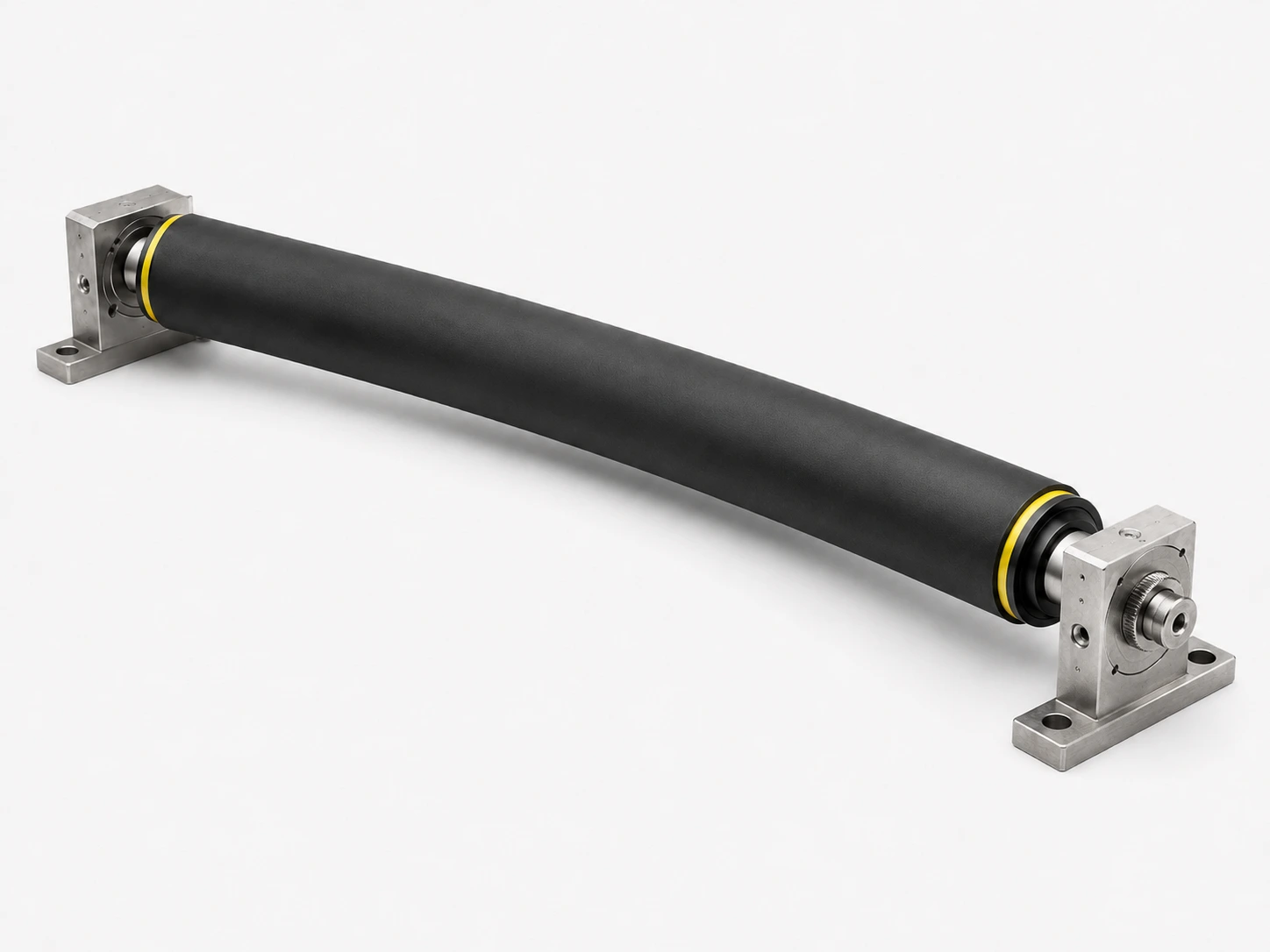
Pressure uniformity, geometry (crown / crowning / parabolic).

Laminating / coating / applicator & metering rollers

Controlled surface (Ra), steady metering, chemical compatibility, release properties when needed.

Spreader / anti-wrinkle rollers

Wrinkle control: profiles reverse crown / concave and grooved designs to spread the web.

Sleeves (sleeves)

Fast replacement, simplified maintenance.

Drive & conveying wheels

Stable traction and abrasion resistance on packaging lines.

Guide / transfer wheels

Less vibration, longer service life; on a steel or aluminum core.

Cast Polyurethane Parts

Bumpers, pads, shock absorbers, guides, bushings/spacers; reverse engineering when the OEM part is unavailable.

Cooling rollers (chill / cooling)

Consistent surface and thermal resistance for extrusion and blown film.

Sélection des matériaux

The right material for each zone of the line

Temperature, adhesives or solvents, speed, contact pressure, moisture, abrasion and the finish you need.

In packaging, two criteria almost always drive the selection:

how well the product sticks
and
how well the cover resists wear
. Each zone of the line is assessed for its real conditions — what runs over it, how fast, how hot and under what pressure.

SiliconeVMQ

Hot melt, adhesives and heat

Non-stick, and it keeps its flex through thermal cycle after thermal cycle. Standard grades to about 200 °C, high-temperature formulations to

260 °C (500 °F)
.

Watch for cuts, tearing and abrasion.

Polyester urethane

High traction, abrasion and cuts

Excellent resistance to abrasion, cuts and mechanical wear — the repeated pass of film.

Avoid in prolonged moisture: hydrolysis shortens its life.

Polyether urethane

Moisture and endurance

Good hydrolysis resistance; keeps the mechanical advantages of urethane.

Takes over when the ester reaches its limits.

Compatibility to be validated with certain solvents and chemicals.

Natural rubberNR

Traction and conveying

Resilience, elasticity and excellent grip — drive, pressure, conveying.

For zones without oil or incompatible contaminants.

EPDM

Water, steam and frequent cleaning

Takes water, moisture, repeated washdown and higher temperatures.

Incompatible with oils and hydrocarbons.

NitrileNBR

Oils, greases and contaminants

The reference in contact with oils, greases and petroleum-based contaminants.

Formulation and durometer chosen for the product, its concentration and the temperature.

Silicone migration — the craters called fisheyes

In an integrated plant, some silicones can migrate to a neighboring finishing, printing, painting or coating line. That contamination causes surface defects, notably the craters known as

fisheyes
.

Depending on the adhesive, the temperature and the production environment, we recommend a

low-migration silicone
or evaluate a replacement — a specialty urethane or a
fluoroelastomer (FKM / Viton®)
.

Problem observed → possible fix

Symptôme en usineCe qu'on ajuste le plus souvent
Plis / instabilité du webGéométrie (crown / concave / reverse crown) + guidage + fini de surface.
Glissement / manque de tractionFormulation du composé + dureté + surface (Ra) + revue du nettoyage.
Usure prématuréePolyuréthane spécialisé ou caoutchouc haute résistance selon l'abrasif.
Build-up / collage d'adhésifSilicone anti-adhérence ou formulation dédiée + surface + procédé de nettoyage.
Usure aux extrémitésLargeur utile + alignement + ajout d'une géométrie (crown / taper).
Vibration / battement / défaut de tailleRectification, concentricité (TIR), équilibrage, réparation des portées.
Marquage / empreintesMatériau non-marquant + ajustement de la dureté et de la pression.

A real case on an imported machine, where the wear concentrated at the film edge positions: service life doubled by no longer copying the original part.

Exemple terrain — plis & air emprisonné en conversion de films

At high speed, wrinkles often come from the

roller geometry
or from trapped air. We first confirm the source (tension, alignment, contamination), then we apply the most cost-effective correction: machining a
concave / reverse crown
profile to act as a spreader roller and push the film outward, or adding a specific
grooving
to release trapped air and stabilize the web.

What we measure and validate:
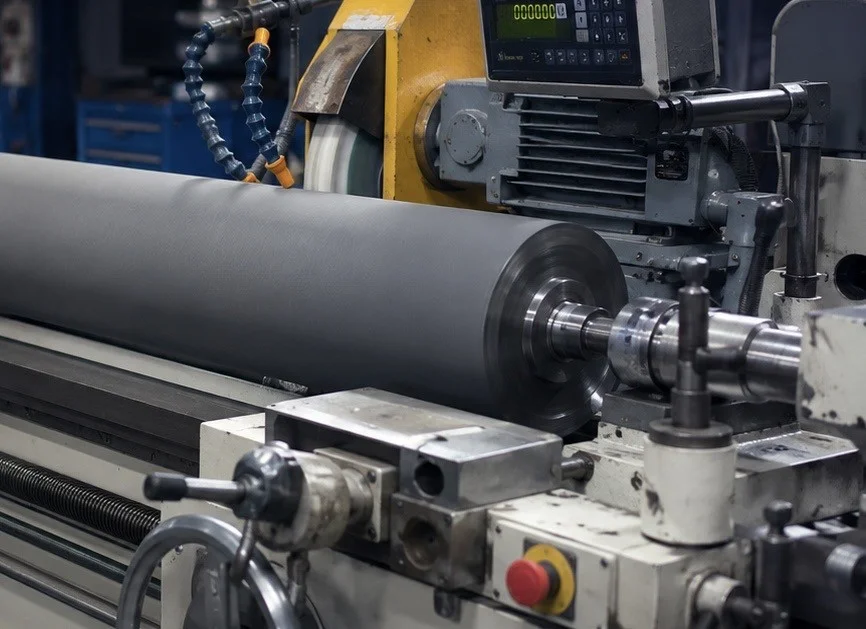
hardness (Shore A / D), surface finish (Ra), runout (TIR), cylindricity, profile / crown, dynamic balancing, condition of the journals, and chemical compatibility (swelling, hardness and surface testing on a sample).

Our approach (fast, structured, no random trial and error)

We usually start with a call or a Zoom: understanding the application before sending out a team. Depending on the case: photos/video, parameters (speed, tension, pressure), data sheets (film, adhesive, cleaner), dimensions and tolerances, sometimes a sample (part or fluid).

Then we act at the right level: resurfacing / precision grinding / grooving, complete recovering, geometry adjustment, mechanical repair, or reverse engineering when the OEM part is not available. Need a fast fix? See emergency & logistics.

Equipment and brands we see often

Even if your machines carry another name, describe the function: we will find our way around it.

BobstNordmeccanicaComexiWindmöller & HölscherReifenhäuserDavis-StandardKampfAtlas ConvertingKROENERTSOMAWulftecLantechSignode

Brands listed for reference only; Soremag is not affiliated with any of these manufacturers.

Frequently asked questions — packaging, film & extrusion

Is it better to buy OEM or to have the part refurbished? +

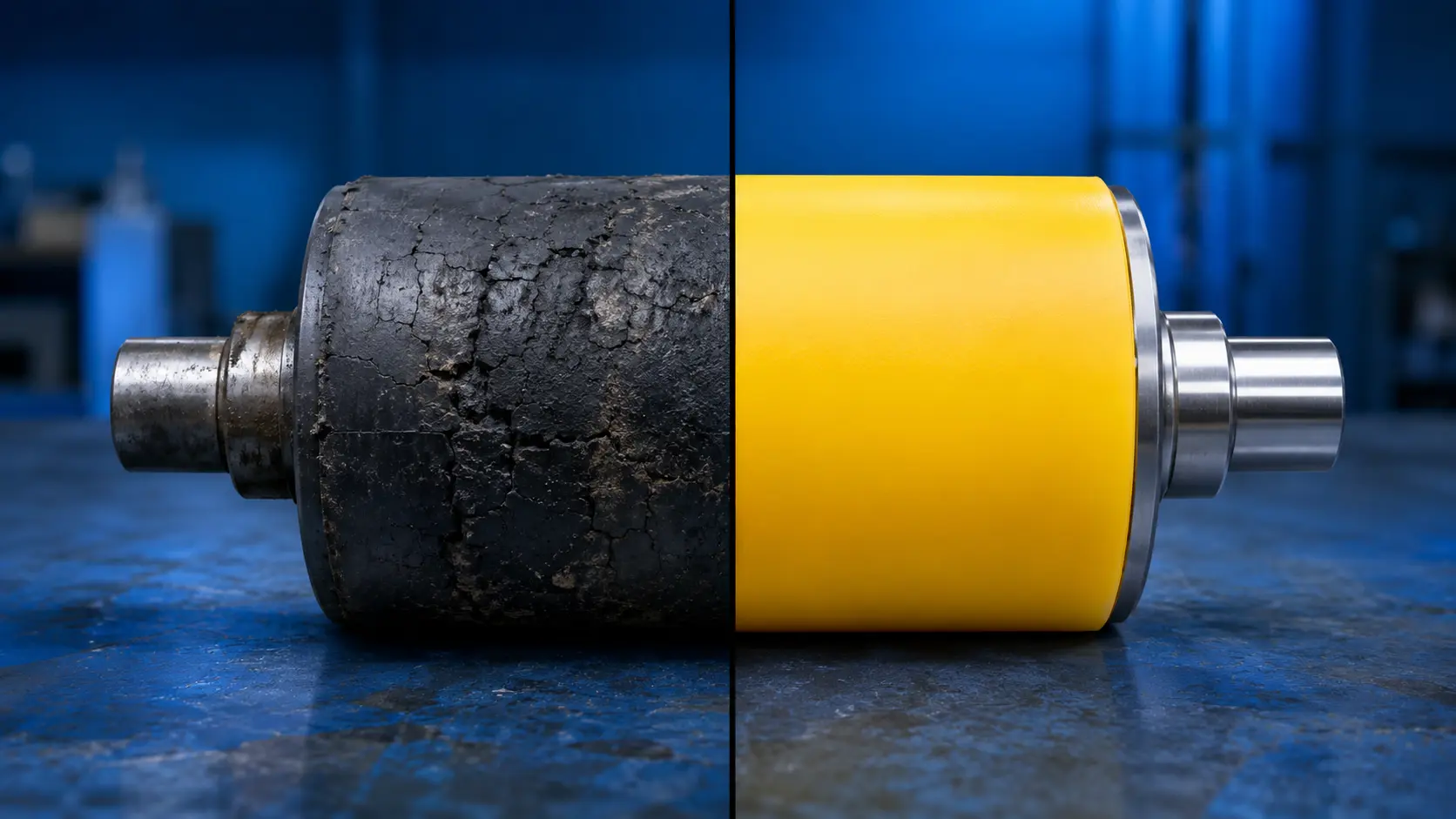
On a flexible packaging line, covering and grinding your existing core is often faster and cheaper than buying the OEM roller again — and we can

match material, hardness and surface to the film you run
rather than reproducing a standard.

A pull roller is slipping: what should you check first? +

Contamination (dust, additives, wax), hardness, surface (Ra) and the actual pressure. Often the answer is a combination: formulation + surface + cleaning.

Why do my rollers wear at the ends? +

Often tied to the ratio of face width to film width, to alignment, to tension or to geometry. We assess whether a parabolic crown profile or a web guiding adjustment is needed.

Film that wrinkles: is it always the roller? +

Not always, but often. The cause comes down to geometry, alignment, tension or surface. We diagnose where the wrinkle forms, then we correct it (concave / reverse crown, grooving, web guiding).

Adhesive / hot melt build-up: why does it stick so much? +

Temperature, chemistry and surface finish. Depending on the position, a high temperature release silicone cover greatly reduces adhesion and makes cleaning simpler.

Resurfacing instead of a complete recovering? +

Yes. If the cover is sound and the tolerances allow it, resurfacing extends the life of the roller. Otherwise, we strip it and we recover from scratch.

Do you do custom grooving? +

Yes: functional grooving (traction, air release, film control) matched to your application and your process.

My bearing journals are damaged: do I have to scrap the roller? +

No. We inspect the core, then we build up and remachine the journals to the original tolerances before covering — useful for keeping the accuracy of a film roller without buying a new one.

Can you remake a part when the OEM one is not available? +

Yes. Through reverse engineering, we remake the part and we can optimize it (material, geometry) for the actual duty.

How do you choose the right material without guessing? +

We start from the actual parameters of your line (temperature, chemistry, cleaning, speed, pressure, abrasion), then we choose a formulation validated against your plant conditions.

Is your film wrinkling, are your rollers slipping or fouling?

Talk to a Soremag expert: we help you pin down the most solid option, quickly. Service in Quebec — Greater Montreal, Laval, north of Montreal, the South Shore, the Laurentides, Lanaudière — and shipping available.

➔ Talk to a technical expert