Covering & manufacturing · rubber and polyurethane · Quebec450 664-4000·1 800 361-5588·EN|FR
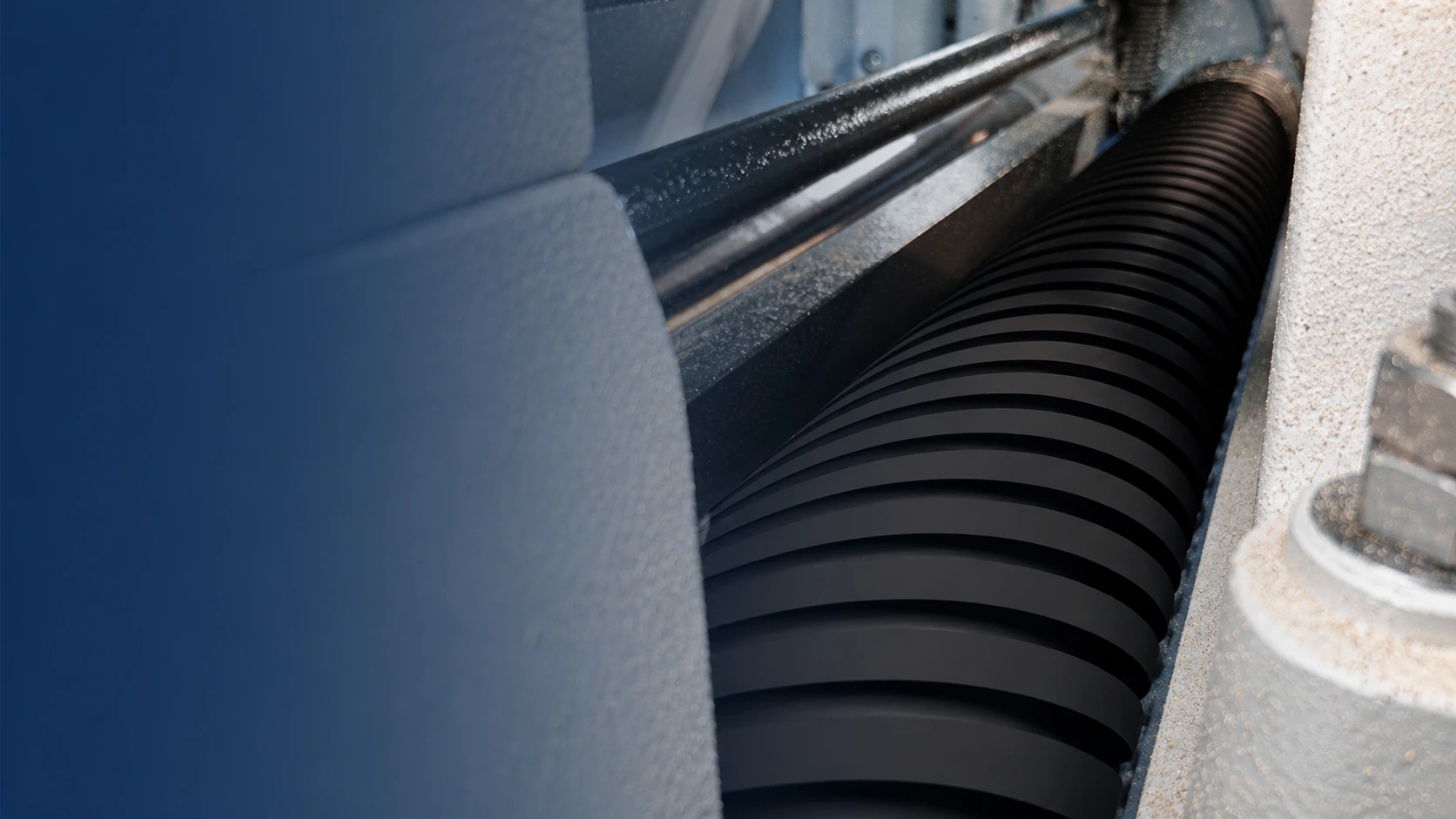
Rouleau de contact en caoutchouc rainuré en spirale dans une sableuse à large bande (wide belt sander)
Spécialité · Recouvrement de rouleaux

Contact rollers for wide belt sanders & calibrating sanders

The contact roller decides the aggressiveness of the cut, the finish, the cooling of the abrasive belt and the evacuation of the dust. We cover, we groove in a spiral and we balance — so your sander cuts true, without burning or marking.

The contact roller makes the cut

In a wide belt sander or calibrating machine (

wide belt sander
;
wide belt sanding machine
in Europe), the
contact roller
(
contact roller
,
contact drum
or
sander roller
) supports the abrasive belt at the sanding point. Its
roll covering
and its
serration
control four things at once: the
aggressiveness of the cut
,
quality of the finish
, the
cooling
of the abrasive belt and the cover, and the
evacuation of the abrasive dust
out of the contact.

Basic rule: the

harder
the cover, the more
aggressive
the cut; the
softer
it is, the more it
forgives
the irregularities of the workpiece and softens the finish. We cover the core, we grind to diameter, we groove on CNC and we
balance
— dynamic balancing is critical at high belt speeds.

How a wide belt sander works

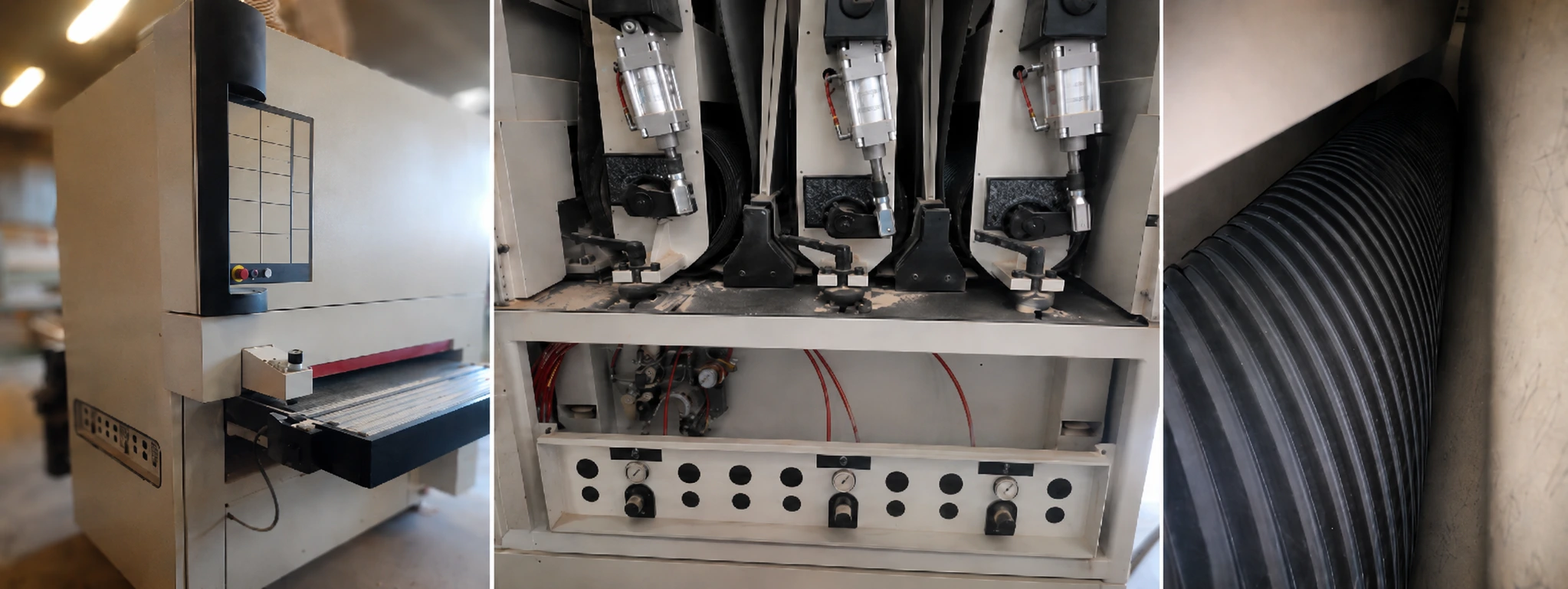
Sableuse à large bande vue sous trois angles

The abrasive belt (

wide belt
) is tensioned around the rollers of the machine, and the
contact roller
presses it against the workpiece traveling on the conveyor. Everything is decided at that contact point: the
stiffer
the roller, the more material it removes; the
softer
it is, the better the finish. That is why two identical machines can give very different results — depending on the durometer, the serration geometry, the rubber compound and the balancing of their contact roller.

Why the contact roller is decisive

The contact roller (also called a

sander roller
,
rubber contact roller
or
calibrating roller
) controls much more than just supporting the abrasive belt.

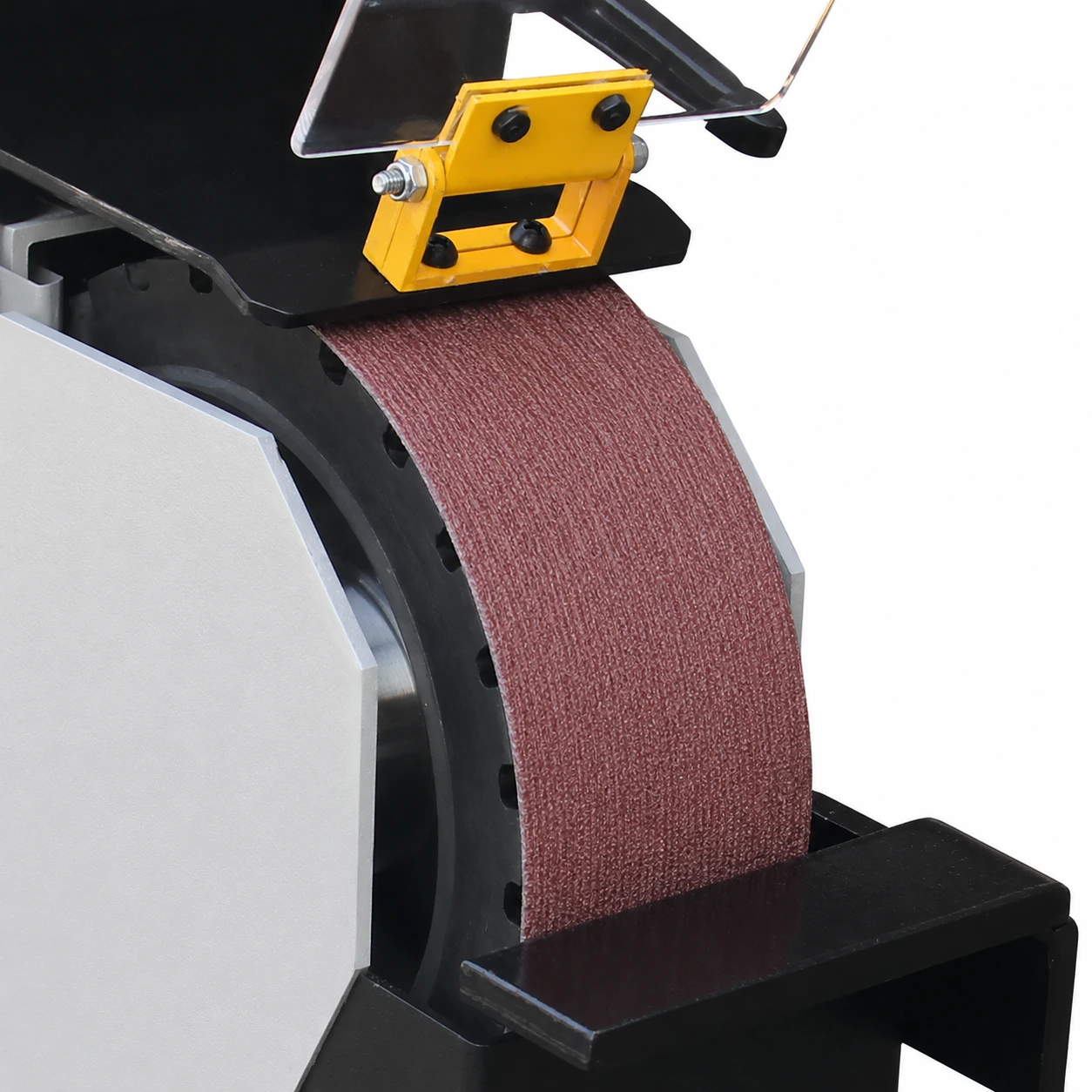
Roue de contact en caoutchouc derrière la bande abrasive d'une sableuse à bande — recouvrement et rainurage Soremag
  • Applied pressure and the real width of the contact area
  • Sanding aggressiveness and material removal
  • Uniformity and final thickness of the workpiece
  • Surface quality and sanding marks
  • Stability of the abrasive belt
  • Heat generation and abrasive consumption
  • Vibration and belt service life

Durometer & serration: setting the aggressiveness

We combine cover durometer and serration profile according to the result you want.

ObjectifRecouvrementRainure
Enlèvement agressif (calibrage)Plus durSpirale à ratio plein élevé, coupe soutenue
Fini plus doux, suit les irrégularitésPlus soupleSpirale plus ouverte, contact qui pardonne
Refroidir & évacuer la poussièreSelon coupeSpirale / serratée : volume de fuite pour l'air et la poussière
Haute vitesse de bandeÉquilibré dynamiquementPas régulier, faux-rond (TIR) maîtrisé

A

land-to-groove ratio
and
angle
of the serration directly affect the aggressiveness and the finish; a
rounded root
prevents crack initiation and heat build-up. Details on the page Grooved Rollers.

Which durometer should you choose?

The durometer (Shore A) affects material removal, the real pressure, the deformation of the roller and the finish.

ApplicationTendance de dureté
Calibrage lourdPlus dur
Enlèvement rapidePlus dur
Ponçage intermédiaireIntermédiaire
PlacagePlus souple
FinitionPlus souple

As a rough guide, we often see serrated contact rollers around

85 Shore A
for calibrating, and as soft as
~45 Shore A
for more versatile combination units. The final choice depends on the machine, the pressure, the belt speed, the
roller diameter
and the material: a smaller diameter concentrates the pressure on a narrow area, a larger one spreads it out.

Contact roller profiles

We choose the profile according to the aggressiveness, the finish and the dust evacuation.

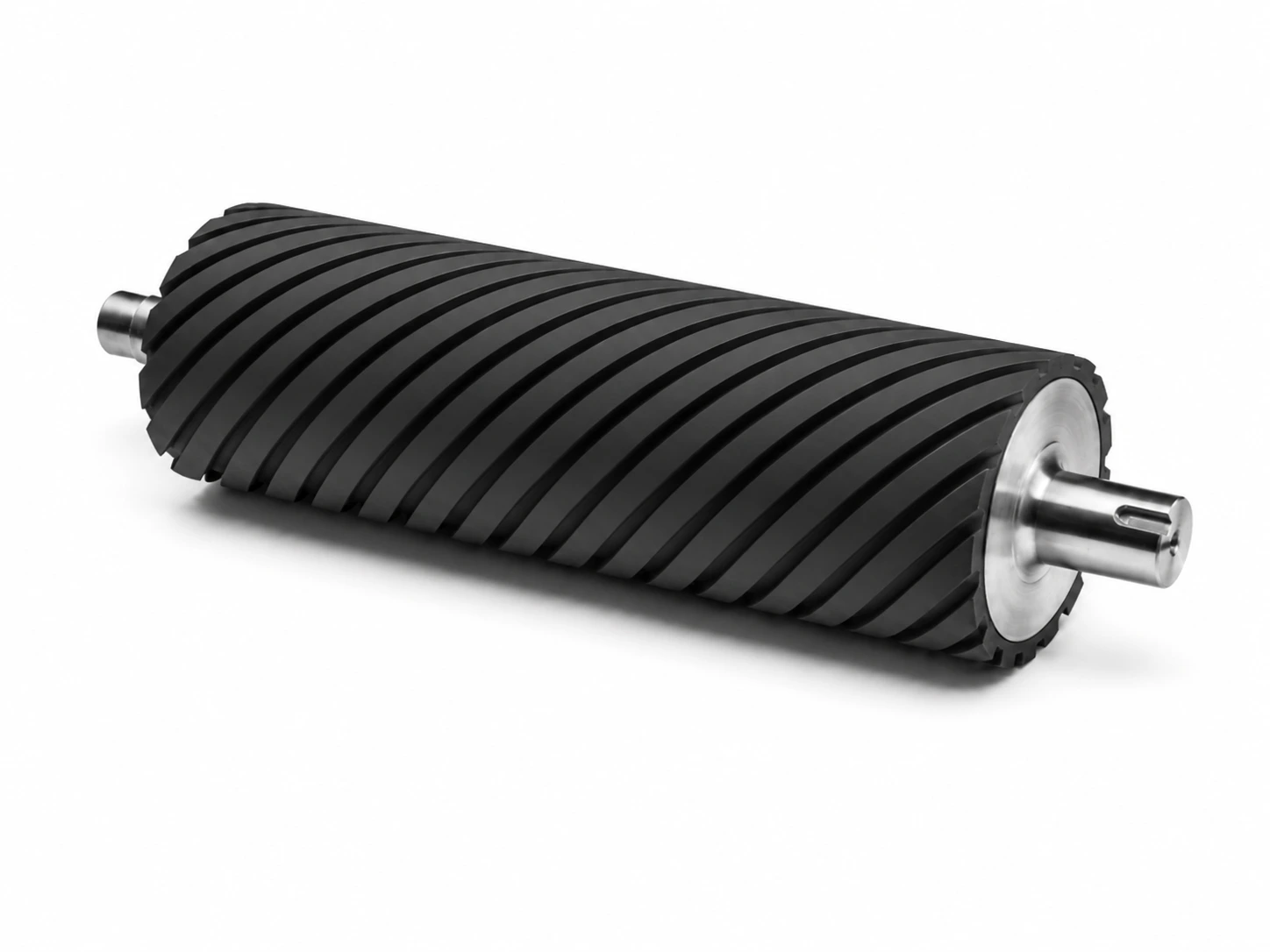
Rouleau de contact en caoutchouc à rainure hélicoïdale sur arbre d'acier

Smooth (smooth)

Solid surface: uniform pressure and the best surface quality — finishing, lacquer, veneer and delicate panels.

Straight serration (straight groove)

Parallel grooves: good dust evacuation, ventilation and less heat build-up.

Spiral serration (spiral / helical)

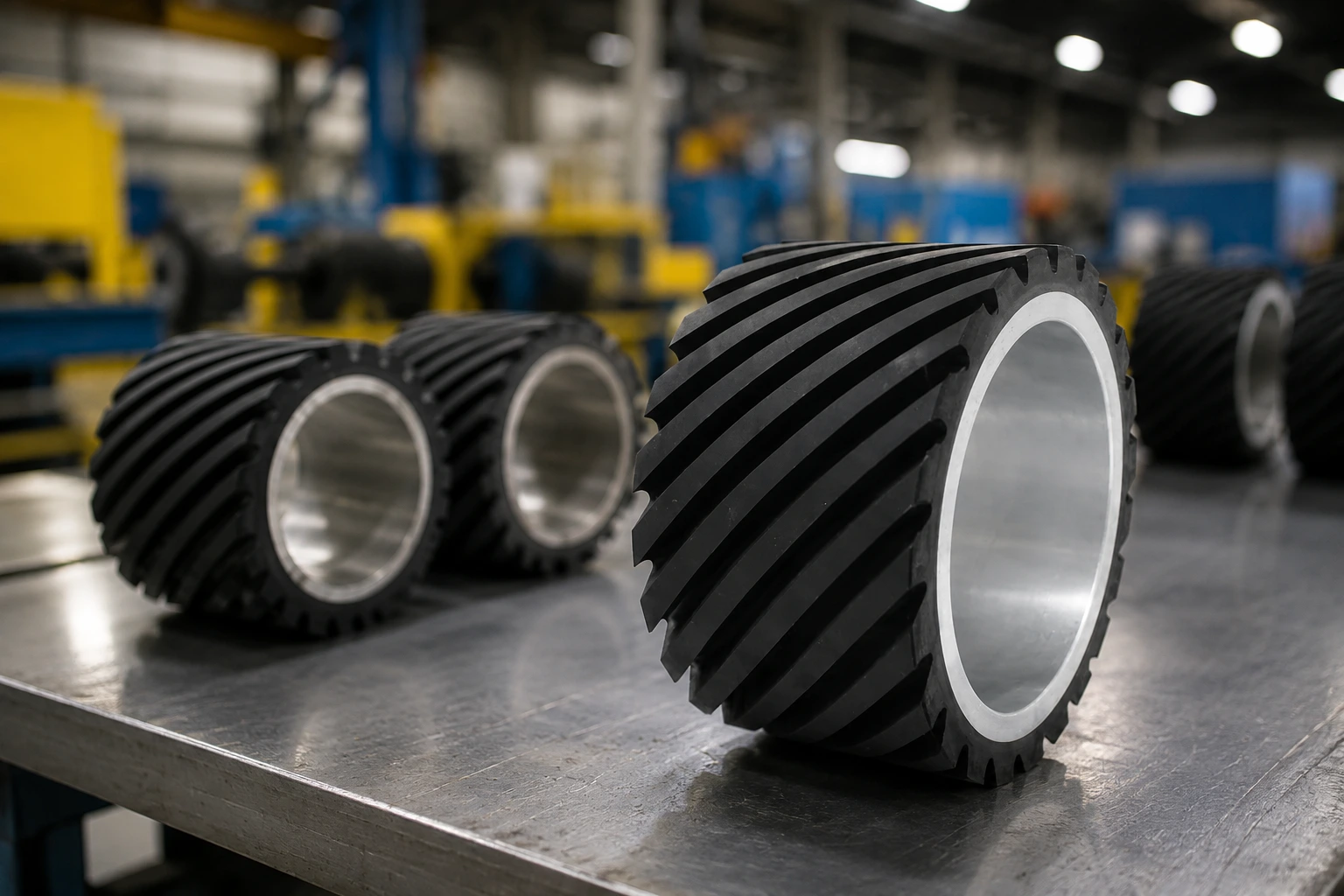
The most common profile: even pressure, quiet running, little vibration and excellent dust evacuation — ideal for calibrating.

Diamond (diamond)

Crossed grooves for difficult materials, high production and heavy dust.

Custom (custom)

Width, depth, angle, pitch and geometry fully customized to suit your process.

The full theory of the patterns (land-to-groove ratio, angle, root radius) is detailed on the page Grooved Rollers.

Why groove a contact roller?

The serration is not decorative — it sets the cut and protects the abrasive belt.

  • Reduce the heat at the contact point
  • Improve air circulation
  • Reduce loading of the abrasive belt
  • Clear the dust
  • Reduce the contact area and meter the aggressiveness
  • Extend the service life of the abrasive belt

The sander rollers we cover

Rouleaux de contact (contact rolls) recouverts de caoutchouc et rainurés pour sableuses à large bande — atelier Soremag

Contact roller (contact drum / sanding head)

Supports the abrasive belt; spiral serration to cool and clear the dust. Durometer = aggressiveness of the cut.

Hold-down roller (hold-down / pinch)

Holds the panel against the table or the conveyor to prevent slippage, kickback and vibration.

Conveyor drive roller

Pulls the conveyor belt or the workpiece with a steady grip; a diamond or herringbone pattern helps on dusty wood.

Calibrating sander / finishing line rollers

Feeding and transfer without marking the panel; material and durometer matched to the speed.

The rubber compounds

Every application calls for a different compound.

For contact rollers, we commonly work with:

  • Caoutchouc naturel (NR) — rebond, grip, abrasion
  • Nitrile (NBR) — résines et huiles
  • SBR — usage général économique
  • EPDM — chaleur et produits chimiques
  • Silicone — tenue en température
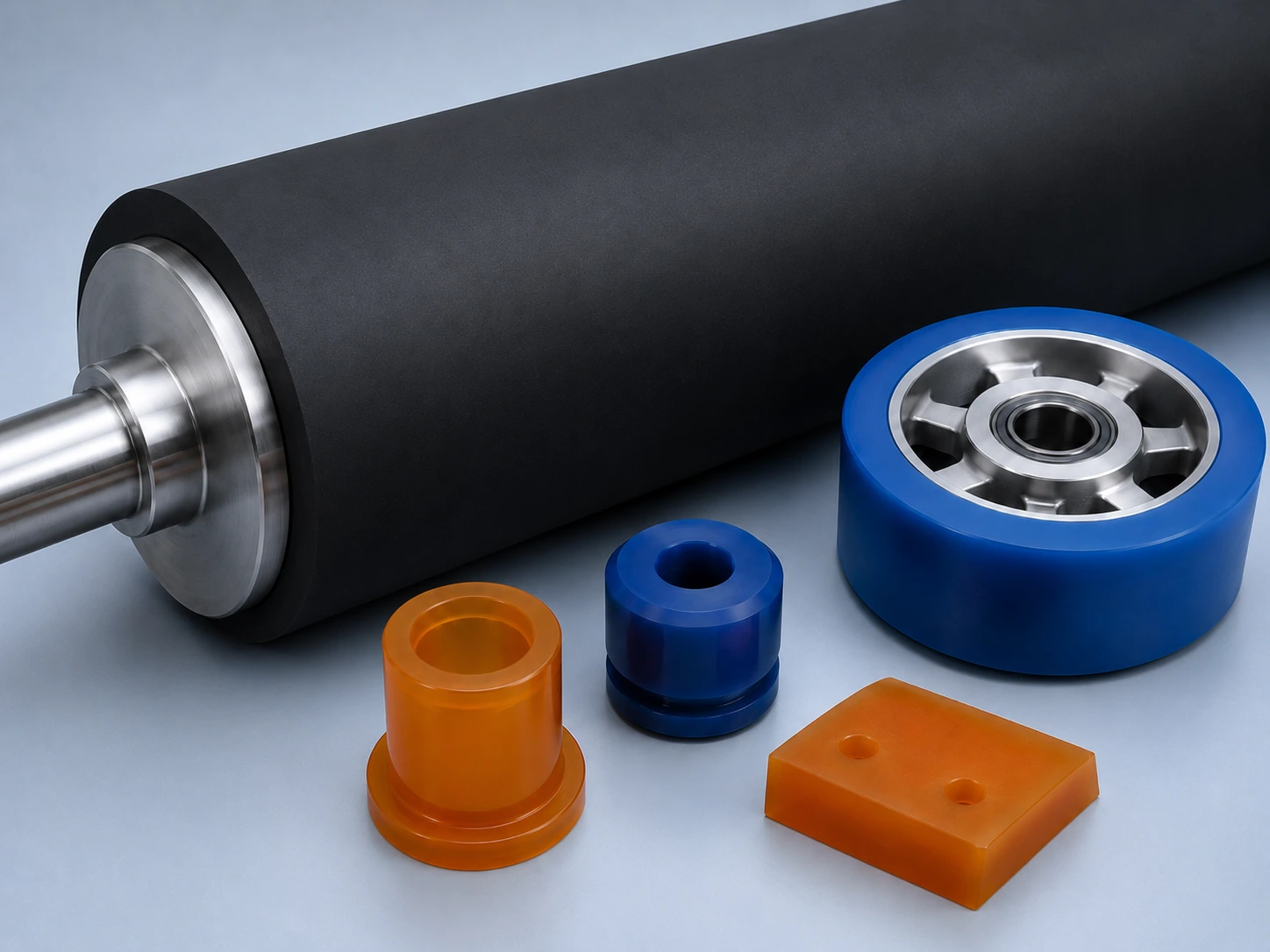
  • Polyuréthane — abrasion et charge élevées

The choice depends on the temperature, the speed, the pressure, the type of abrasive, the wood species, the presence of resin and the exposure to chemicals. The cover durometer is set according to the aggressiveness you are after — see the material selection guide.

balancing
and
runout
remain critical: a poorly balanced contact roller vibrates and marks the finish at high speed.

What we control on a contact roller

  • Cover material and durometer according to the aggressiveness
  • Finished diameter, face length, crown if required
  • Serration profile: spiral, groove pitch, angle, land-to-groove ratio, root radius
  • Runout (TIR) under control
  • Dynamic balancing (ISO grade) for high speed
  • Surface finish (Ra) if critical
  • Condition of the core, journals and bearings
  • Spec sheet + lot number

From the part received to the roller ready to go back

On a sander contact roller, four steps make the difference: the

roll covering
in the right compound and the right durometer, the
precision grinding
to diameter, the
CNC grooving
of the profile, and the
dynamic balancing
for high speed. The rest of the route — inspection, shaft repair, vulcanization and quality control — follows our complete shop process: see Grinding and grooving and Metal Fabrication & Repair.

Compatible sander brands

We build or refurbish contact rollers for most wide belt sanders and calibrating sanders, including:

  • SCM
  • DMC
  • Costa
  • Timesavers
  • Heesemann
  • Bütfering
  • HOMAG
  • WEBER
  • Viet
  • Biesse
  • Steinemann
  • Felder
  • SAC
  • Boere
  • Ott
  • Camam
  • Kündig
  • Loewer

Target materials and machines

Our contact rollers are used for sanding and calibrating a wide range of materials:

  • Hardwood and flooring
  • Furniture, kitchen cabinets, doors
  • MDF, HDF, particleboard
  • Plywood, OSB, veneer
  • Composite panels and materials
  • Corian® and solid surface
  • Engineering plastics
  • Aluminum

Machines: wide belt sanders, calibrating sanders, combination sanders and finishing lines.

Common problems → probable causes

SymptômeCauses probables
Marques répétitivesRouleau déséquilibré, faux-rond, roulement usé
Ponçage irrégulierDureté inadaptée, usure du recouvrement, pression incorrecte
La bande chauffeRainures colmatées, composé inadéquat, pression excessive
Bande abrasive qui s'use viteRouleau trop dur, géométrie de rainure incorrecte, mauvais équilibrage

Refurbish rather than replace

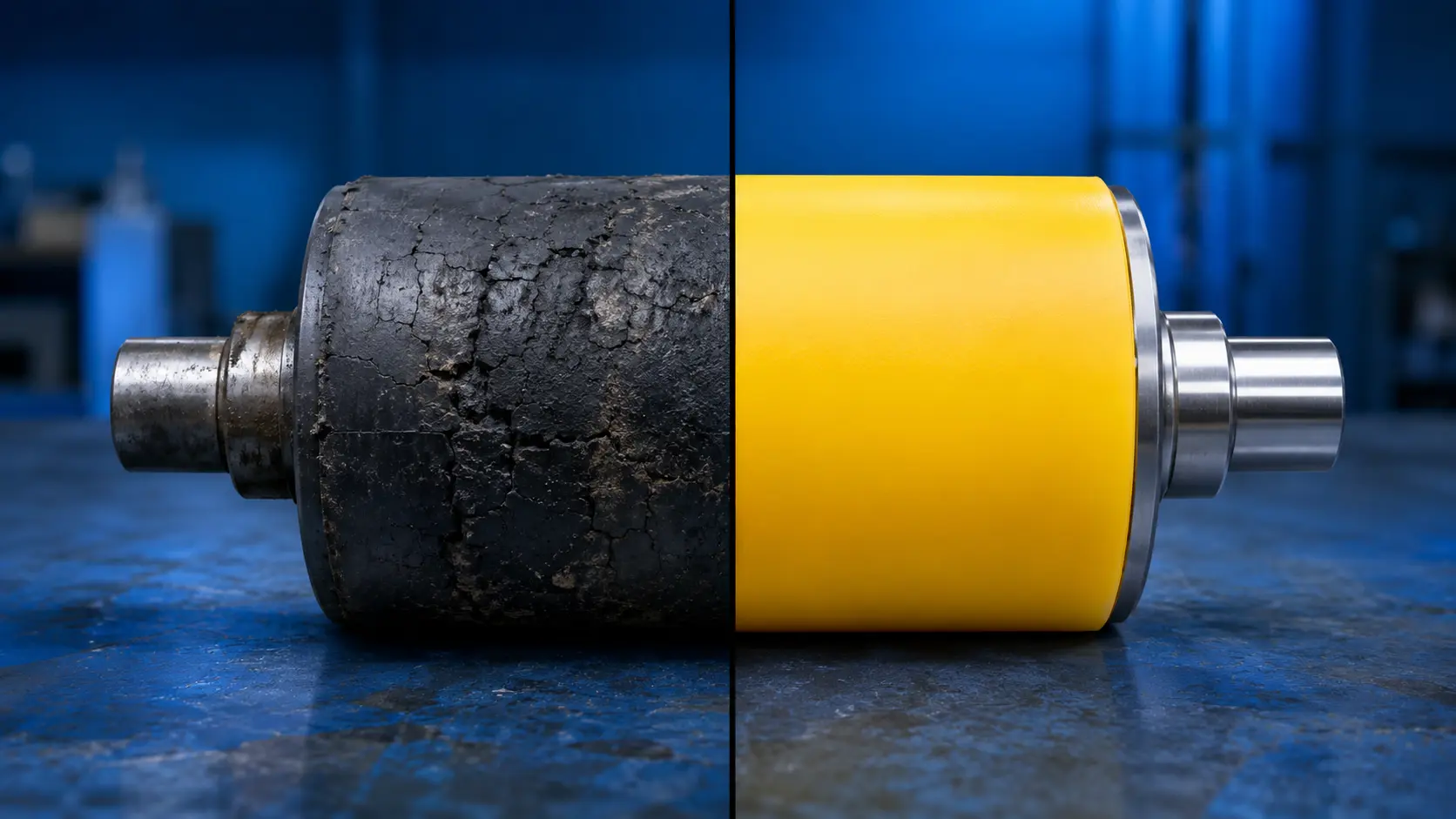
Refurbishing a contact roller often makes it possible to

keep the original core
, to
reduce costs
and
lead times
, and to get back the performance of a new roller thanks to a new cover, precision grinding and dynamic balancing. We also build
new
custom contact rollers when needed.

Aller plus loin

The serration profile changes everything on a contact roller. We explain the patterns, the ratios, the angles and the roots on the page

Grooved Rollers
— and we can recut worn serrations without always recovering from scratch.

Grooved rollers →

Why Soremag

  • More than 35 years of experience in industrial roll covering
  • Rubber and polyurethane covering
  • Precision grinding and custom CNC grooving
  • High-speed dynamic balancing
  • Complete core repair
  • New roller fabrication
  • Fast service in Quebec, Ontario and the Maritimes
  • Solutions for OEMs and wood processing shops

Frequently asked questions

À quoi sert le rouleau de contact ?+
It supports the abrasive belt at the sanding point and controls the aggressiveness of the cut, the finish, the cooling and the dust evacuation. The harder it is, the more aggressive the cut; the softer it is, the more it forgives irregularities.
Pourquoi rainurer en spirale ?+
The spiral groove (or serration) cools the abrasive belt and the cover and clears the dust. The land-to-groove ratio and the angle set the aggressiveness and the finish; at high speed, dynamic balancing is critical.
Quelle dureté choisir ?+
Harder for calibrating and fast removal, softer for veneer and finishing. We choose the durometer, the material and the profile according to the material, the belt speed and the result you want.
Pouvez-vous recouvrir et rainurer nos rouleaux existants ?+
Yes. We cover the core new, we grind to diameter, we groove on CNC, we check the runout (TIR) and we balance. We can also reprofile a worn serration if the cover thickness allows it.
Faites-vous les rouleaux de pression et d'entraînement ?+
Yes — hold-down rollers and conveyor drive rollers, often in a diamond or herringbone pattern for grip.

Is your sander burning, marking or no longer cutting true?

Send us the roller or its specifications (machine, belt width, speed, wood species, target finish): we recommend the durometer, the material and the serration profile, then we cover, groove and balance. Service in Quebec, Ontario and the Maritimes.

➔ Request a quote