Covering & manufacturing · rubber and polyurethane · Quebec450 664-4000·1 800 361-5588·EN|FR
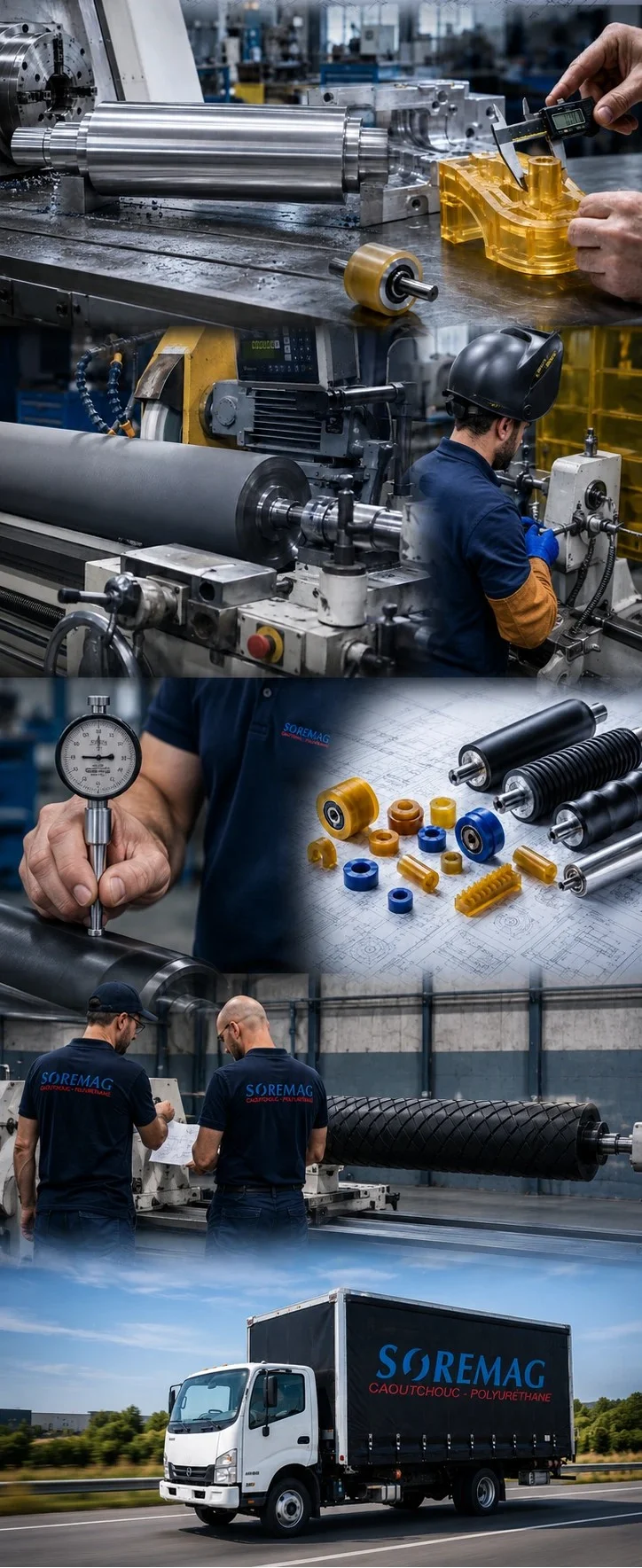
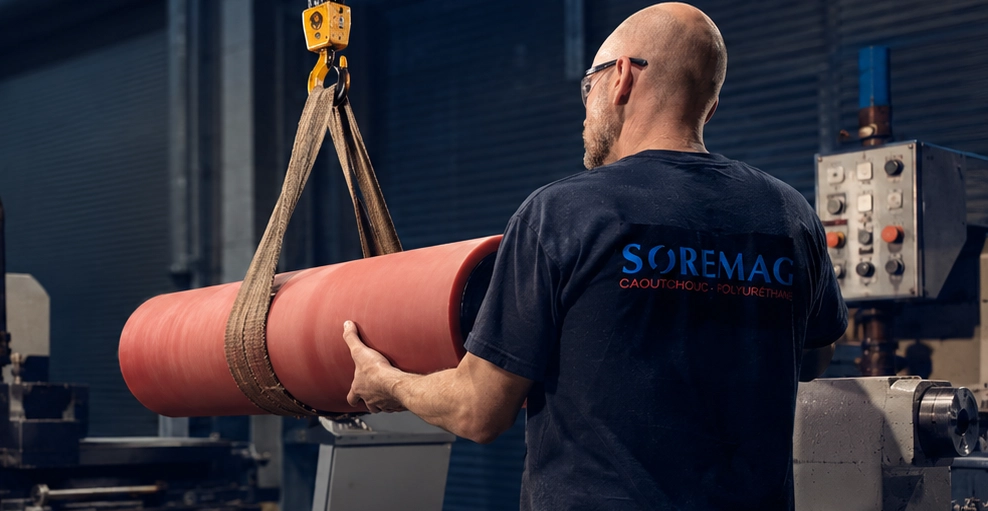
Relevé des cotes d'un rouleau industriel usé pour le reproduire par reverse engineering — atelier Soremag
Services · Reverse engineering

Reverse engineering of rollers, wheels and industrial parts

Reproduce, repair or improve a roller, a wheel or a molded part starting from the existing part — even with no drawings and without knowing the original material.

No drawing? The part is enough.

A roller that is worn, broken, discontinued or has no original drawings should not stop your production.

We start from the

actual part
— roller, core, shaft, wheel or molded part — to take the critical dimensions, understand its function and remake a part that is
reliable, measurable and ready to go back into production
. Not just copying: we analyze the metal core, the journals, the profile (crown, grooves), the cover, the hardness, the finish and the real operating conditions.

A solution when the drawings are no longer available

Over time, drawings get lost, tolerances get fuzzy or the part was modified with no documentation — often built years ago by an equipment maker or a supplier that no longer exists.

Soremag starts over from a

real sample
: we measure the part — roller, wheel or molded part —, we identify the critical zones and we produce the technical basis needed for repair, recovering or new roller fabrication — especially when the part is
critical to production
and hard to replace.

What we analyze

Every element that directly affects roller performance:

This analysis tells us whether the part can be repaired, recovered, modified — or whether it is better to build a new one.

Not just rollers: wheels and molded parts

The same reasoning applies to wheels and to cast polyurethane parts — with their own questions.

Wheels: the part in its real environment

For a wheel, taking the dimensions is only the start. We calculate the

applied pressure
— load per wheel, actual contact area — and we look at the working environment, right down to
the condition of the floor
it runs on. That is often where we beat the original part: the OEM part is designed for the machine in general; we redesign it for
your
equipment, with the real loads, the real speeds and the real constraints. See the wheel covering.

Molded parts: changing the material, not just copying

It is not unusual to start from a part made of

metal, steel or plastic
— and remake it in
polyurethane
to suit the customer's needs. Reverse engineering then serves to convert the material, not just to reproduce the geometry: we take the dimensions, we understand the function, then we choose the formulation and the hardness that suit the real conditions. See the cast polyurethane parts.

The survey, in practice

Every dimension is taken on the actual part — not on a drawing that is twenty years old.

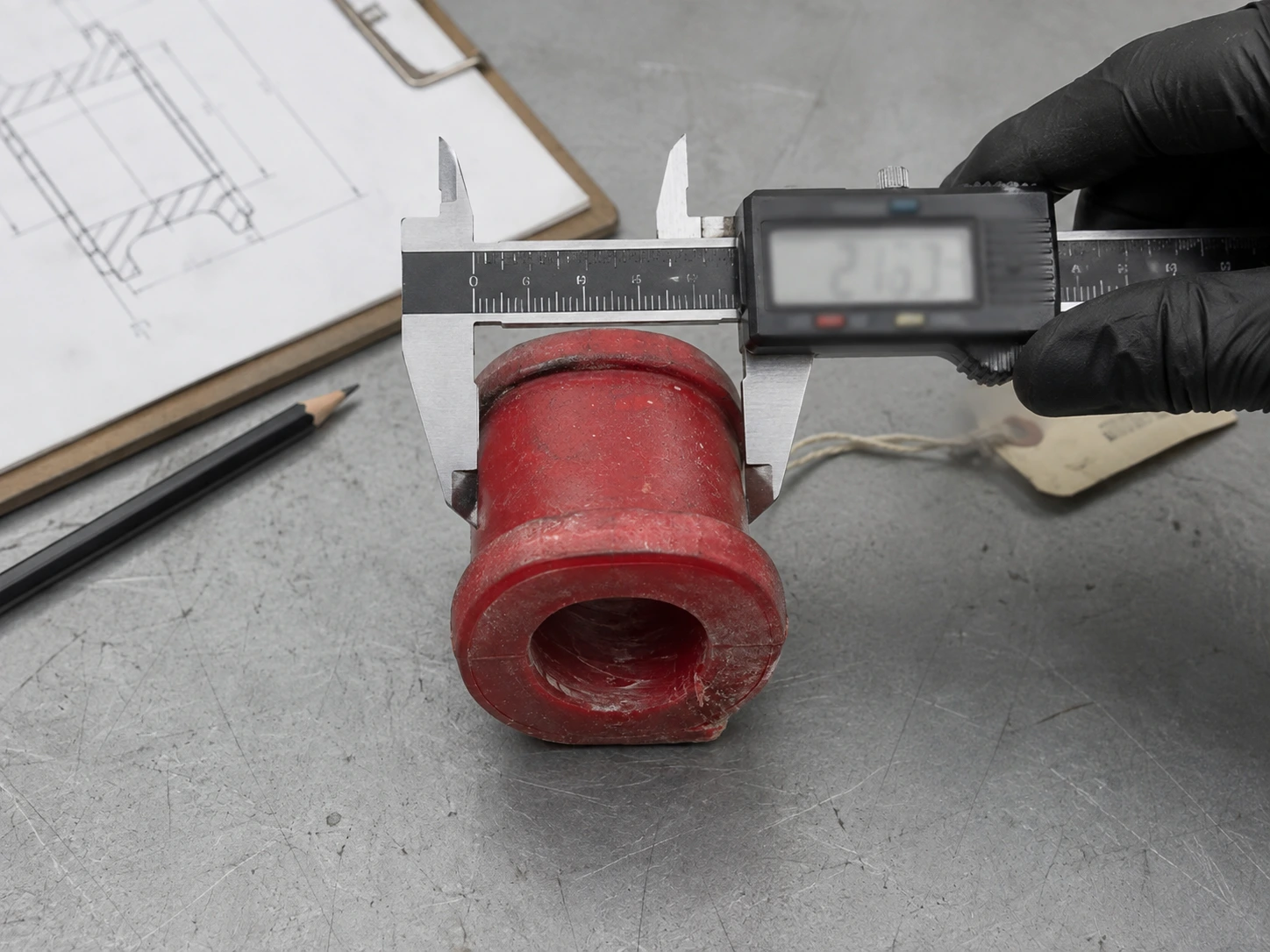
Relevé au pied à coulisse d'une bague en polyuréthane — reverse engineering d'une pièce moulée chez Soremag, Laval (Québec)
Pièces moulées

Inside and outside diameters, height, chamfers: the bushing is measured dimension by dimension before we choose the material and the hardness.

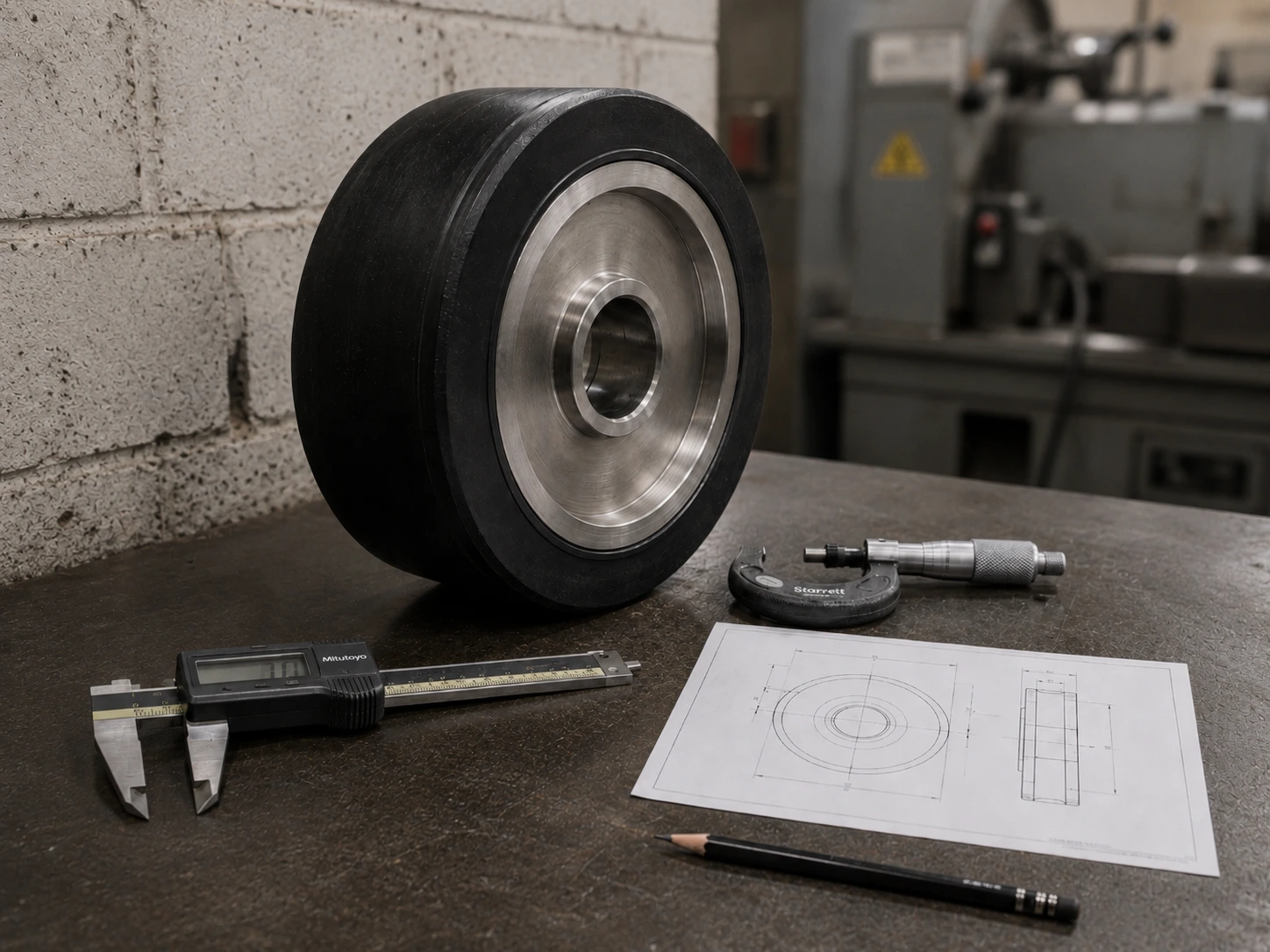
Mesure de la géométrie d'une roue au pied à coulisse — reverse engineering de roue sur mesure chez Soremag
Roues

Tread width, diameter, profile and bearing bore — then the real conditions: load, speed, condition of the floor.

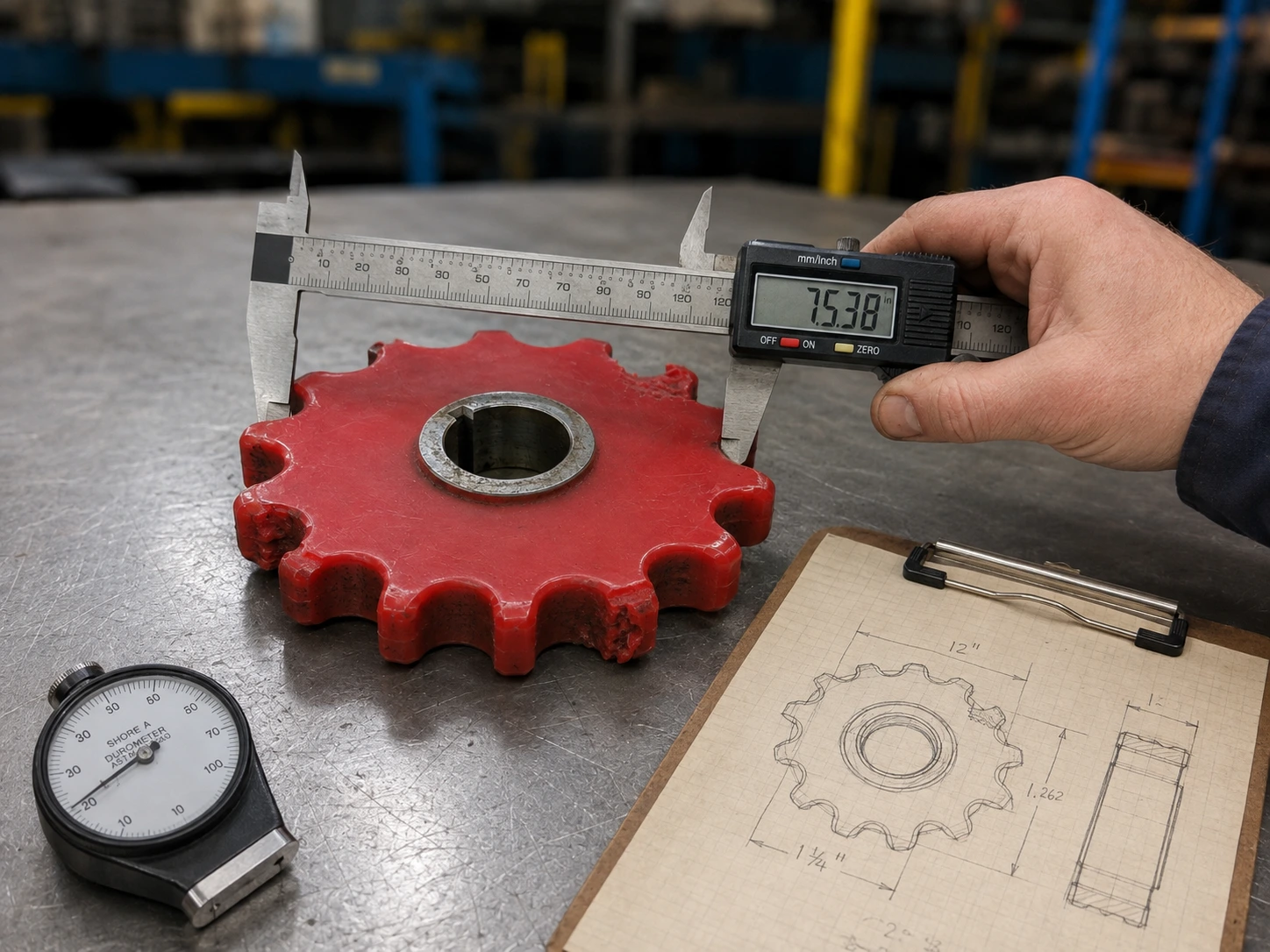
Mesure d'un pignon au pied à coulisse — reverse engineering et conversion métal vers polyuréthane chez Soremag
Conversion de matière

A steel sprocket measured to be remade in polyurethane: less noise, less wear on the mating part.

Repair, recovering or complete fabrication

Depending on the condition of the part, we offer different options.

Recovering

If the core or the wheel body is still in good shape, we strip the old cover, prepare the surface and apply a new rubber or polyurethane cover.

Metal repair or fabrication

Damaged core, bent shaft, worn journals or a core to rebuild? The metal work — repair or new fabrication — is done in-house. Details on the page Metal Fabrication & Repair.

The goal is always the same: put back in service a part that works, lasts and fits your real production needs. When the dimensions have to be taken right on your line, we come to you: see the on-site technical service.

Matching the material to the application

The cover is chosen from your real conditions — abrasion, solvents, moisture, heat, compression, chemicals, traction, surface finish. We point you to the right rubber or polyurethane. For a molded part, it is the

polyurethane formulation and hardness
that we adapt — including when the original part was metal or plastic.

Sometimes we reproduce the original performance; often we take the chance to

improve the material
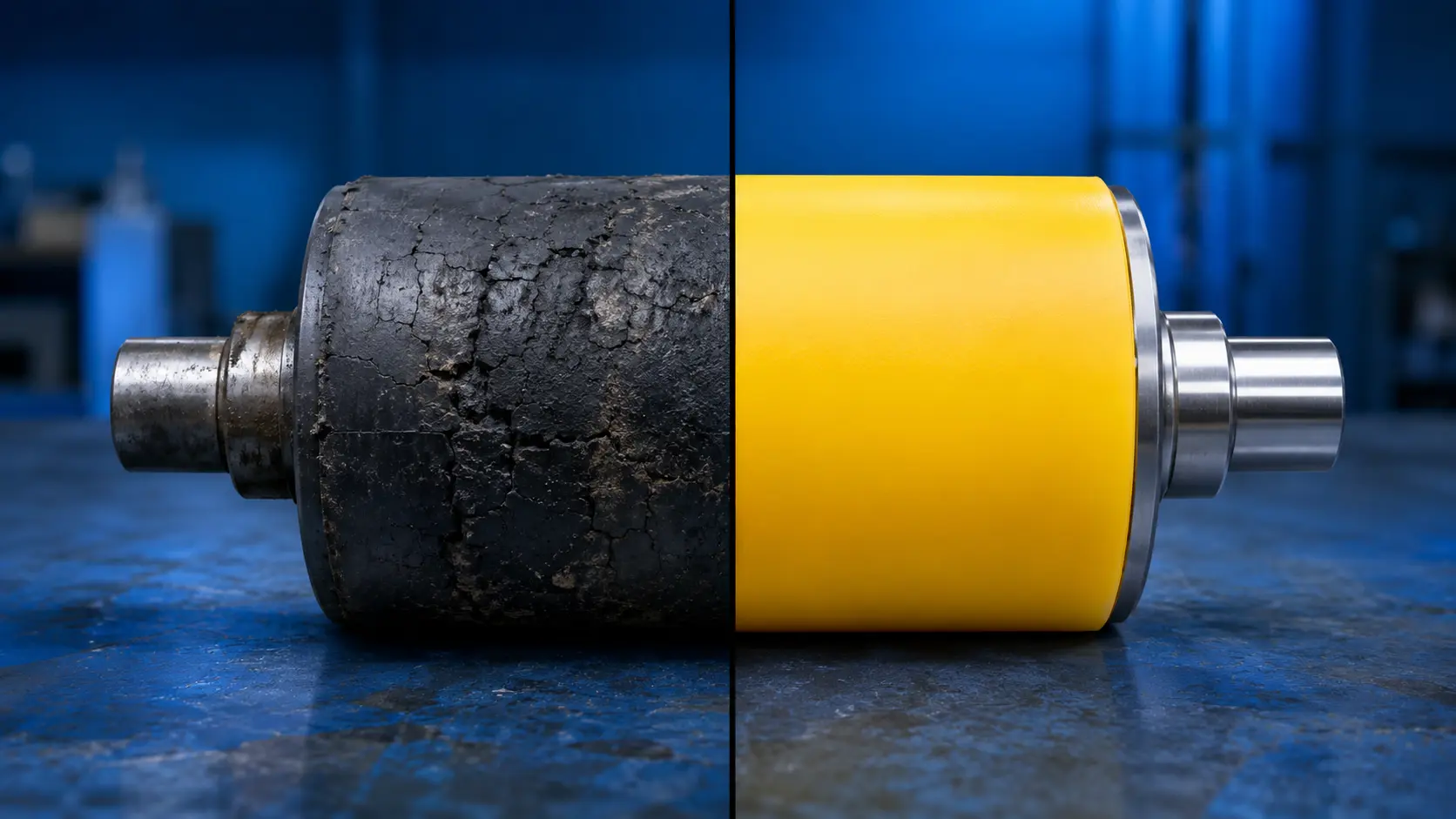
and correct premature wear, slippage, marking or a service life that falls short. A real case on an imported machine, where reproducing the original part would have reproduced the failure: service life doubled on a film line roller.

Going further: analysis and documentation

Analyse en laboratoire du revêtement existant +

Original material unknown? Reverse engineering applies to the

material itself
: identifying the type of polyurethane or the rubber family, the hardness, the structure of the compound, some fillers and additives. The analysis is done
in-house
— hardness, rheometer tests, DIN abrasion — and, when the chemistry has to go further, with an
outside firm specialized
in polymer analysis. The goal is not just to copy, but to understand
why it performs — or why it failed
, and to steer the right compound, the hardness, the bonding system and the process. If the exact formula can't be reproduced, we develop a
functional equivalent
.

Problems investigated:
premature wear, cracking, delamination, loss of adhesion, chemical swelling, abnormal hardening or softening, contamination, incompatibility with the environment.

Un processus documenté +

Once the part is measured and validated, the data serves as a

reference
for the next replacements: fewer errors, faster replacements, easier planning during a shutdown.

What we document:
dimensional measurements, photos, hardness, recommended material, surface finish, profile/grooves, wear observations, recommendations, balancing requirement, final validations.

When to use reverse engineering?

An excellent solution when:

This approach starts back from what is real: the part, its condition, its application and the conditions it works in.

Sometimes the best reproduction means changing the approach: at a paper mill, modifying the wheel instead of rebuilding the rails avoided a rebuild project estimated at between $750,000 and $1.2M.

For which industries?

Every project is assessed on its actual application — abrasion, pressure, traction, precision, contamination, cleaning, chemicals, temperature or rotational speed.

Packaging, Film & Extrusion Pulp, paper & printing Wood, panels & flooring Textile & nonwoven Conveyors & material handling Food processing Industrial Manufacturing & Specialty Equipment Mining, steel, aluminum & heavy-duty applications OEM equipment & custom machinery

Frequently asked questions — reverse engineering

Pouvez-vous reproduire une pièce sans aucun plan ? +

Yes — that's the core of the service. We start from the actual part, even worn or broken: survey of the critical dimensions, identification of the functional zones, material analysis where needed. A photo, a sketch or the part itself is enough to start the evaluation.

Pouvez-vous identifier la matière d'origine ? +

Yes — reverse engineering applies to the material too. We identify the type of polyurethane or the rubber family, the hardness and the structure of the compound:

in-house
(hardness, rheometer, DIN abrasion) and, for the fine chemistry, with an
outside firm specialized
in polymer analysis. If the exact formula can't be reproduced, we develop a
functional equivalent
— and often, we understand at the same time why the original part failed.

Pouvez-vous faire mieux que la pièce OEM ? +

Often, yes — and the reason is simple: the original part is designed for the machine in general, whereas we redesign it for

your equipment in your environment
, with the real loads, the real speeds and the real constraints. For a wheel, that goes right down to the applied pressure, the contact area and the condition of the floor. A real example: service life doubled on a roller from an imported film line.

Pouvez-vous refaire en polyuréthane une pièce en métal ou en plastique ? +

Yes, that comes up often. We survey the geometry of the original part — metal, steel or plastic — then we choose the polyurethane formulation and hardness that suit the function: abrasion resistance, impact absorption, protection of the mating surfaces, noise reduction. See the cast polyurethane parts.

Qu'analysez-vous de particulier pour une roue ? +

Beyond the dimensions: the

applied pressure
(load per wheel and actual contact area), the speed, the environment — temperature, contamination, chemicals — and even
the condition of the floor
it runs on. That data decides the material, the hardness and the geometry of the cover.

Que dois-je fournir pour obtenir une soumission ? +

The simplest: a photo, the main dimensions or the worn part itself — along with what you know about the real conditions (load, speed, products in contact, environment). If the survey has to be done on your line, we come to you: see the on-site technical service.

Bring your rollers, wheels and critical parts back to life

A roller, a wheel or a molded part that is worn, discontinued, poorly documented or hard to replace? Send us a photo, a sketch or the existing part. We will assess the critical dimensions, the material required and the best way to get your equipment back into production: repair, recovering, modification or complete fabrication.

➔ Get my part evaluated