Covering & manufacturing · rubber and polyurethane · Quebec450 664-4000·1 800 361-5588·EN|FR
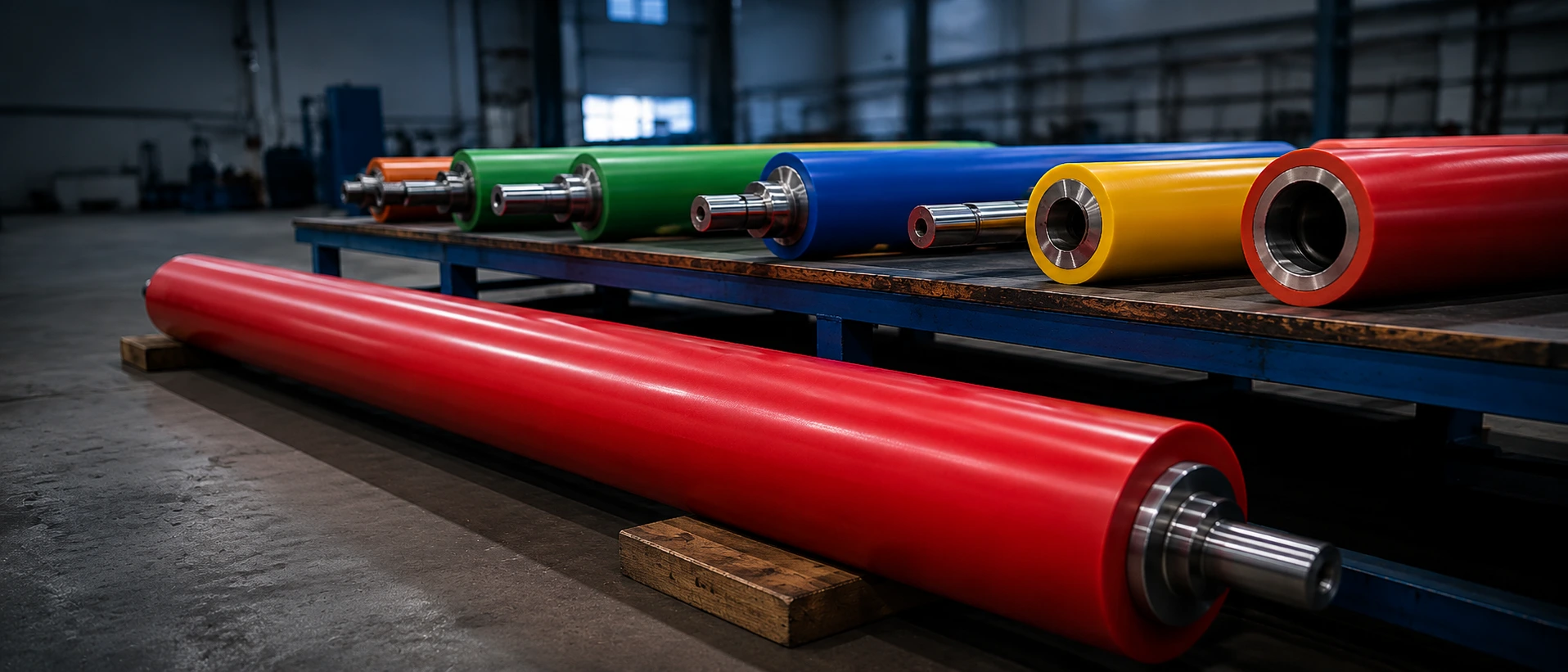
Rouleaux industriels recouverts de polyuréthane coulé de couleurs vives — orange, vert, bleu, jaune et rouge
Produits · Recouvrement de rouleaux

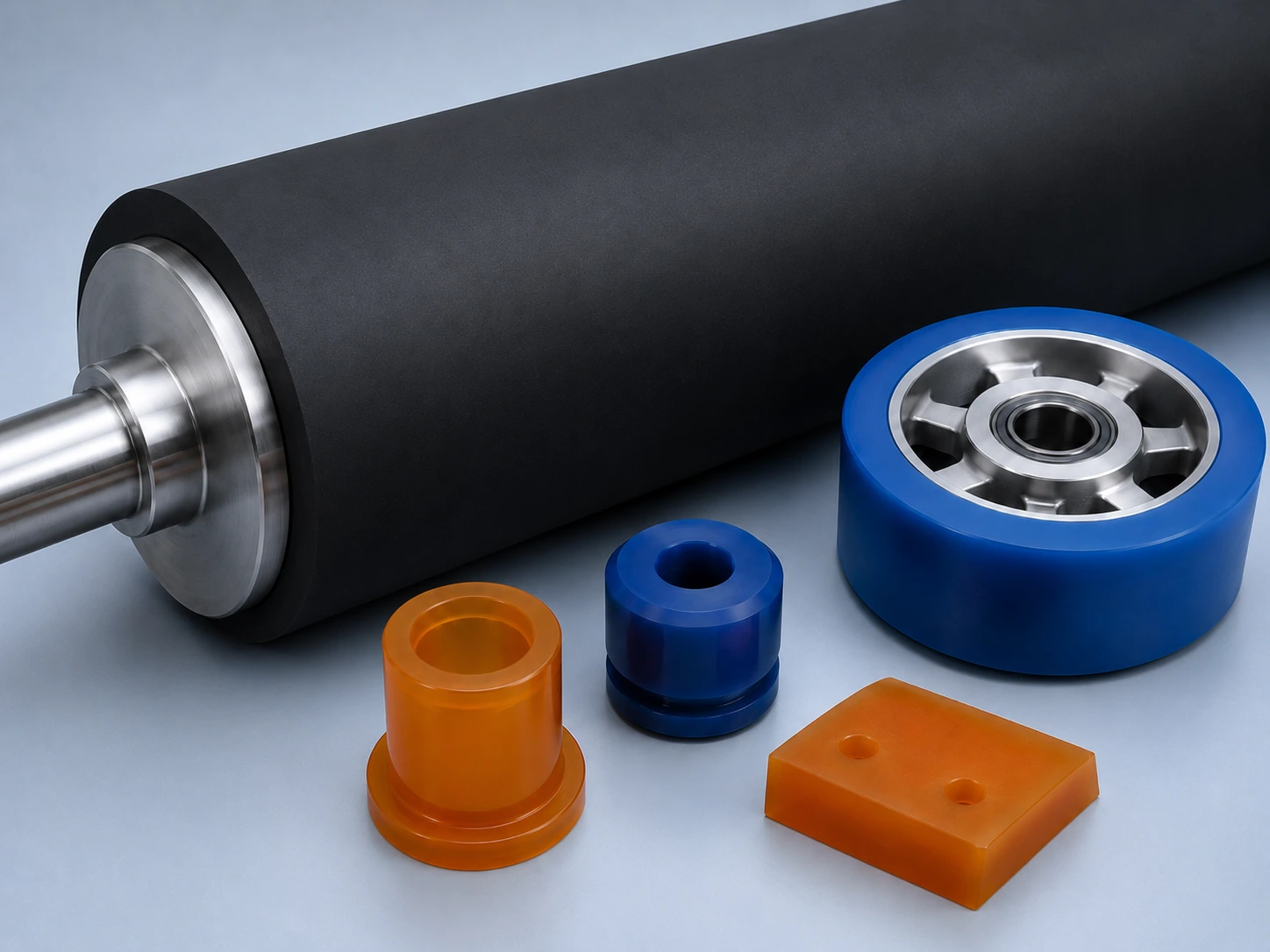
Rollers in polyurethane

Severe abrasion, high loads, cuts, service life. Cast polyurethane takes over where rubber wears out too fast — and everything comes down to the chemistry (ester or ether), the durometer and the formulation.

Custom polyurethane rollers for your industrial applications

At Soremag, a polyurethane roller is not an off-the-shelf product: it is a formulation developed for the real demands of your process, then cast and ground in-house.

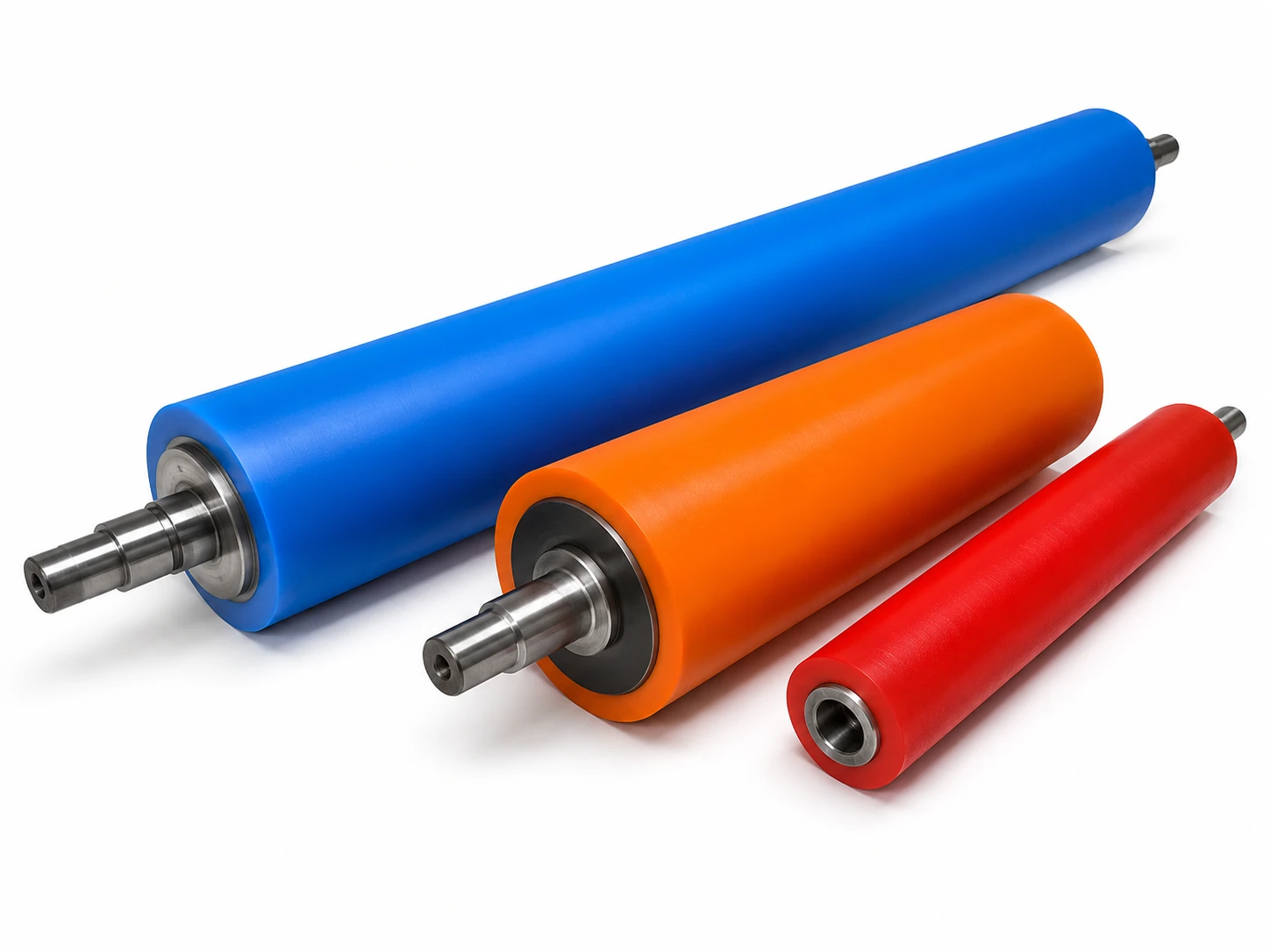
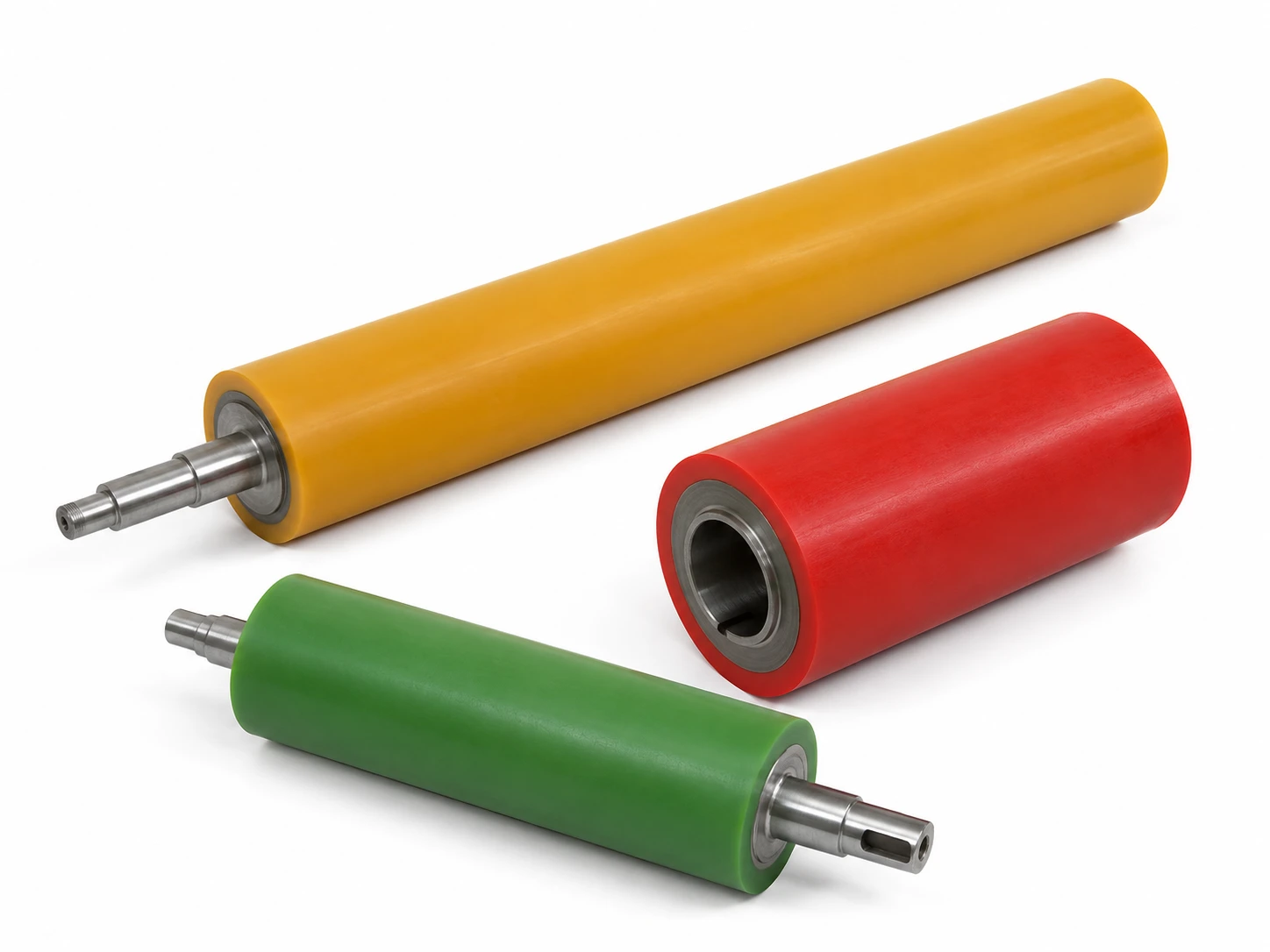
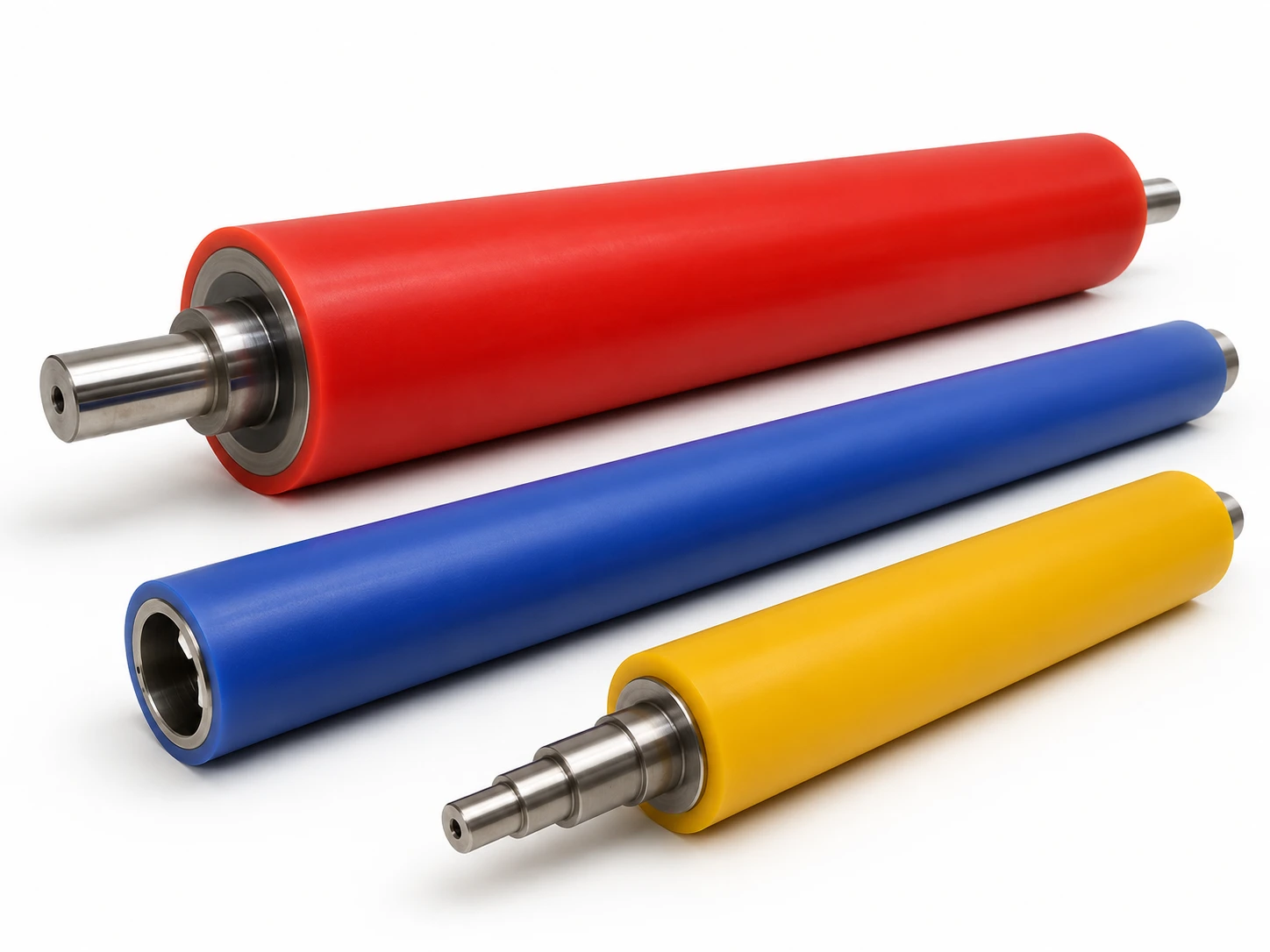
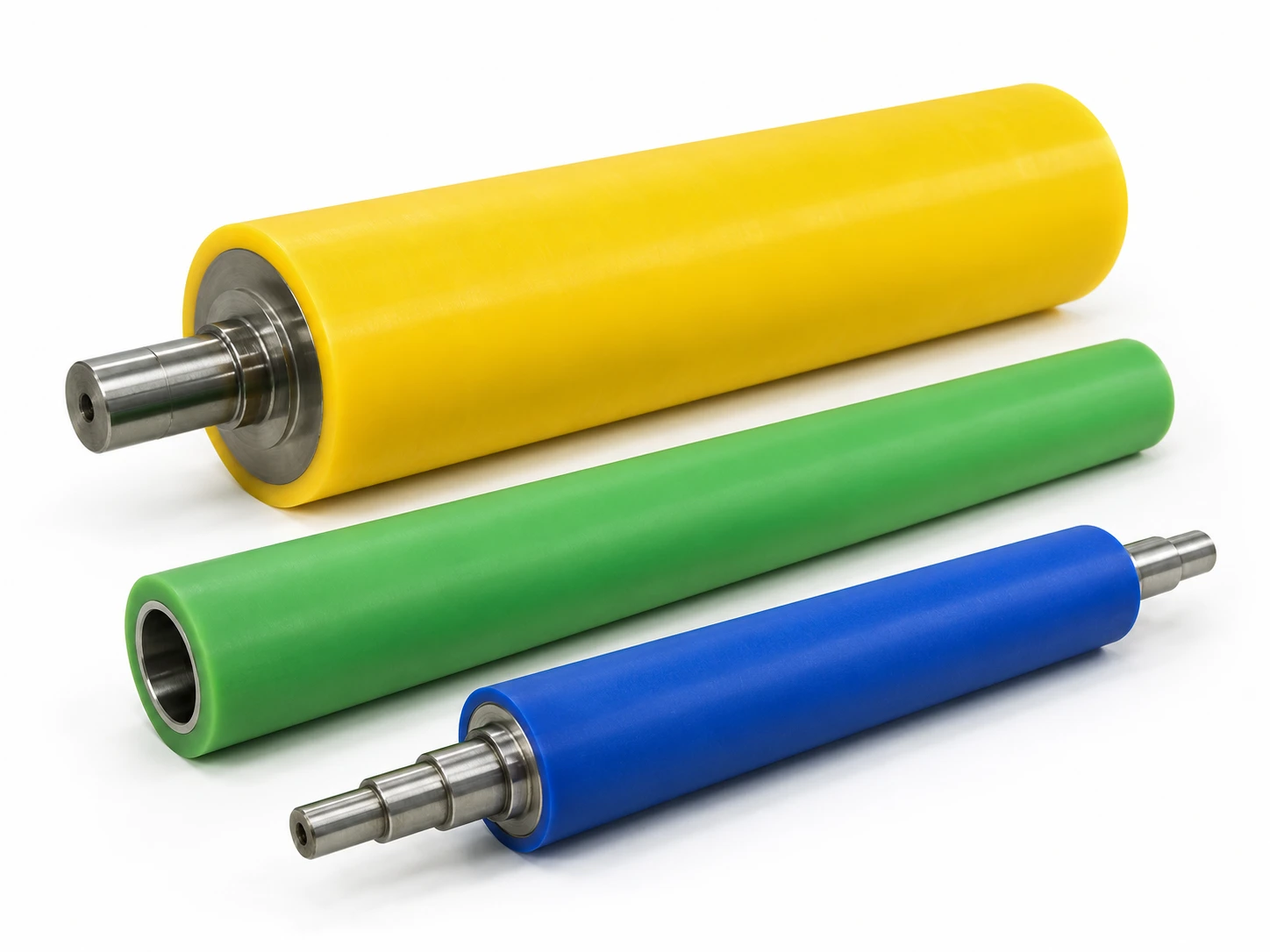
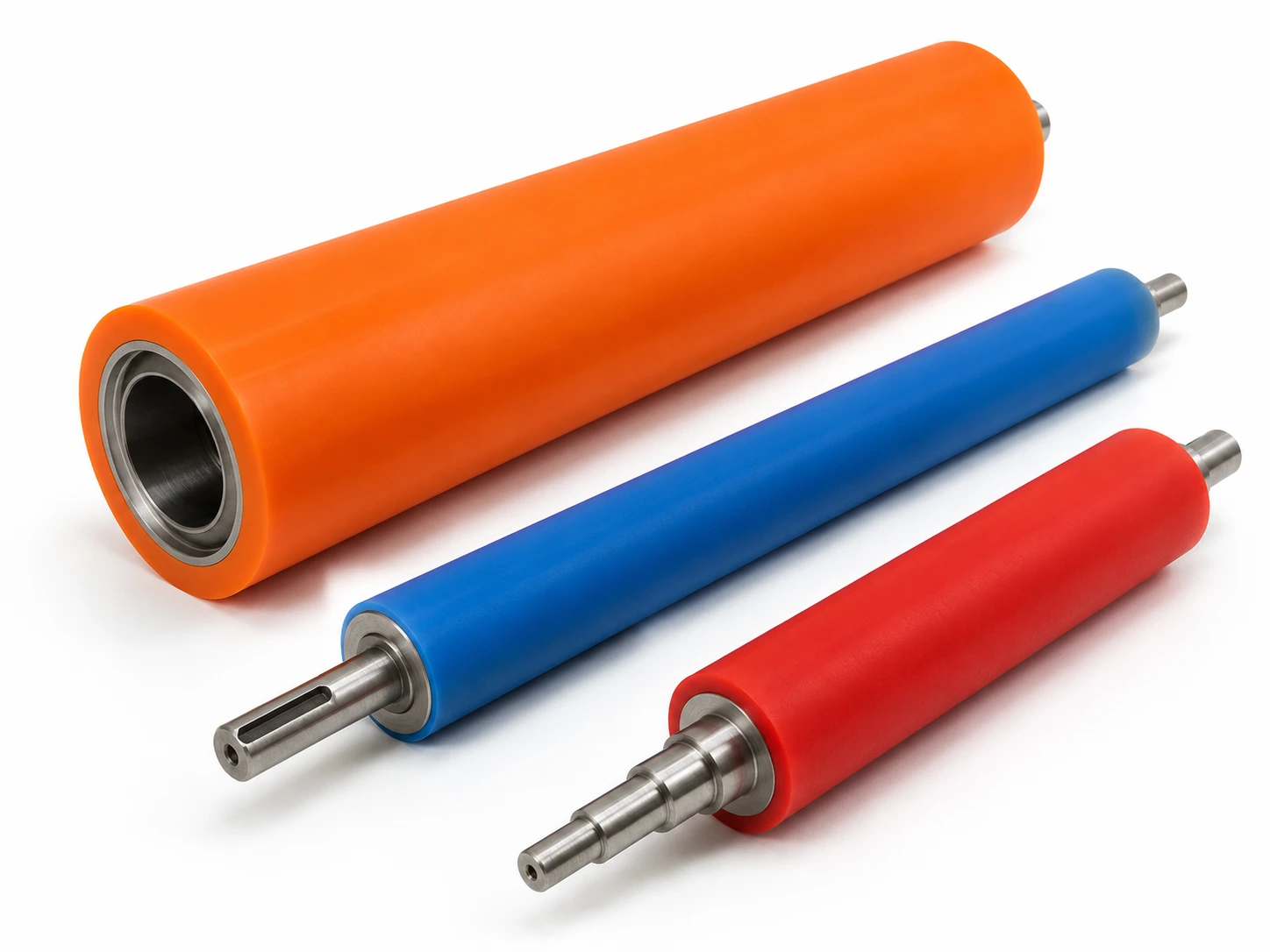
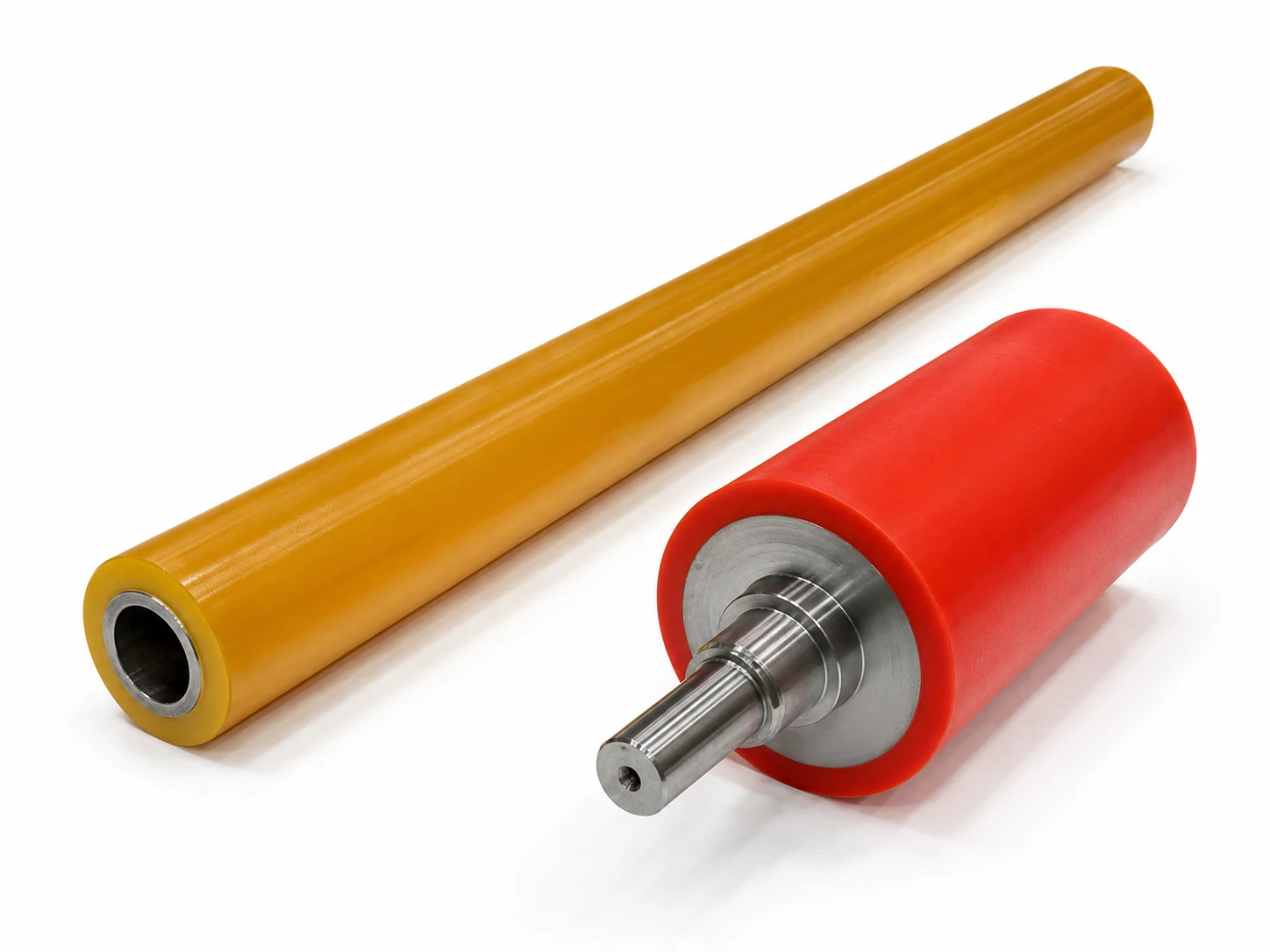
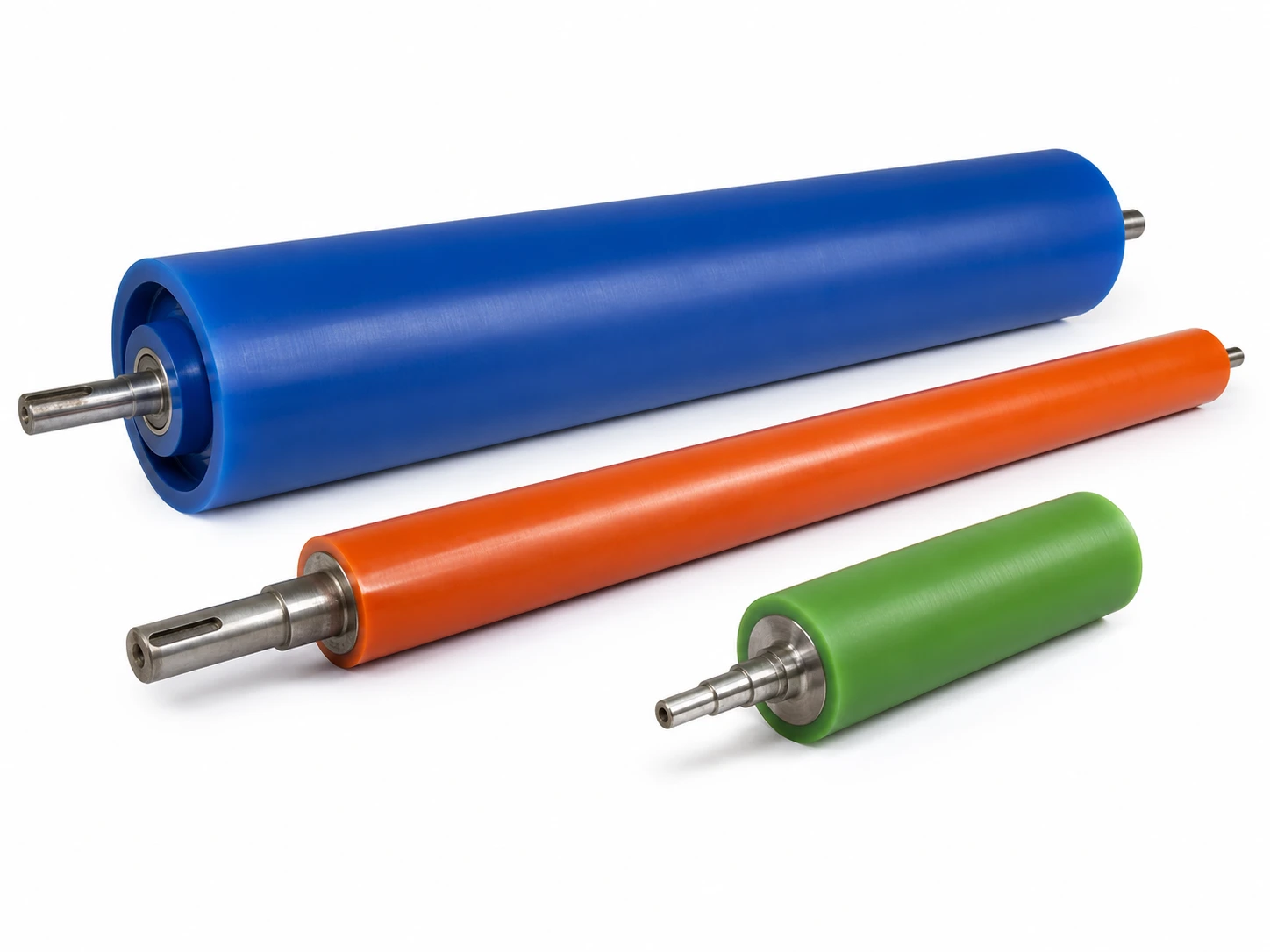
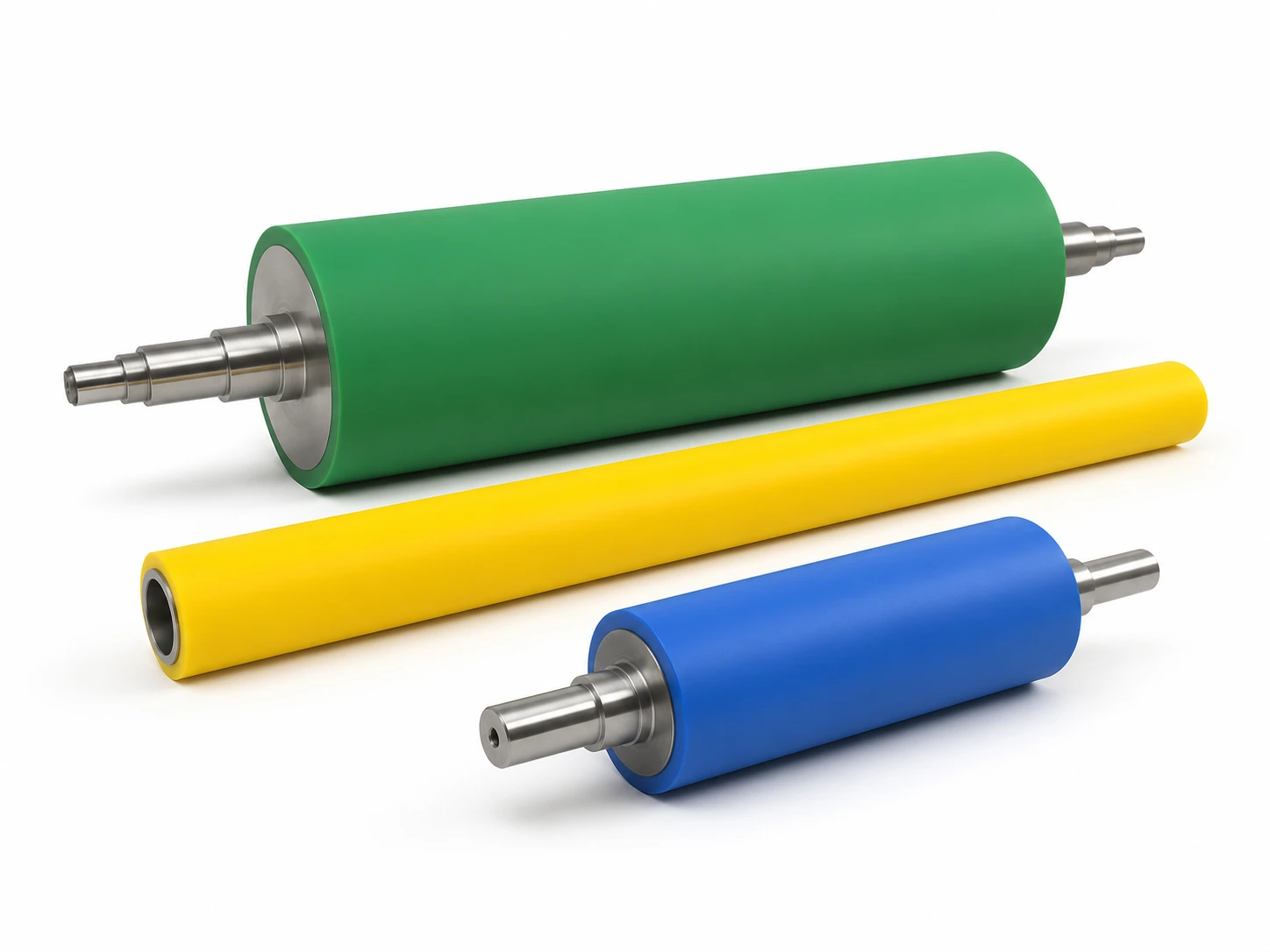
Trois rouleaux recouverts de polyuréthane coulé Rouleaux en polyuréthane — rouleau applicateur jaune (base TDI), manchon rouge à alésage usiné et rouleau doseur vert Trois rouleaux en polyuréthane Rouleaux industriels en polyuréthane coulé — rouleau orange à manchon tubulaire, rouleau bleu à arbre clavé et rouleau rouge Rouleaux recouverts de polyuréthane — rouleau jaune, rouleau vert à alésage tubulaire et rouleau bleu à arbre étagé Deux rouleaux en polyuréthane — long manchon orange à alésage intérieur et rouleau presseur rouge sur arbre usiné Trois rouleaux recouverts de polyuréthane coulé — rouleau bleu, rouleau orange à arbre clavé et petit rouleau vert Rouleaux en polyuréthane — grand rouleau vert à arbre étagé, rouleau jaune à alésage tubulaire et rouleau bleu presseur
Formulations et duretés offertes+

From very soft to rigid (up to Shore D), in

ester or ether
chemistry to match your environment. Our in-house formulations deliver superior abrasion and cut resistance and excellent load capacity — with special variants on request:
FDA
(food contact),
antistatic / conductive
, and low-hysteresis systems for dynamic applications.

Notre procédé — le coulé à chaud+

Soremag casts its polyurethanes

hot
(
hot cast
), a process that develops more complete crosslinking than cold casting: better mechanical strength, better heat resistance and more consistent properties from one roller to the next. Casting is done on a
fully automated, latest-generation machine
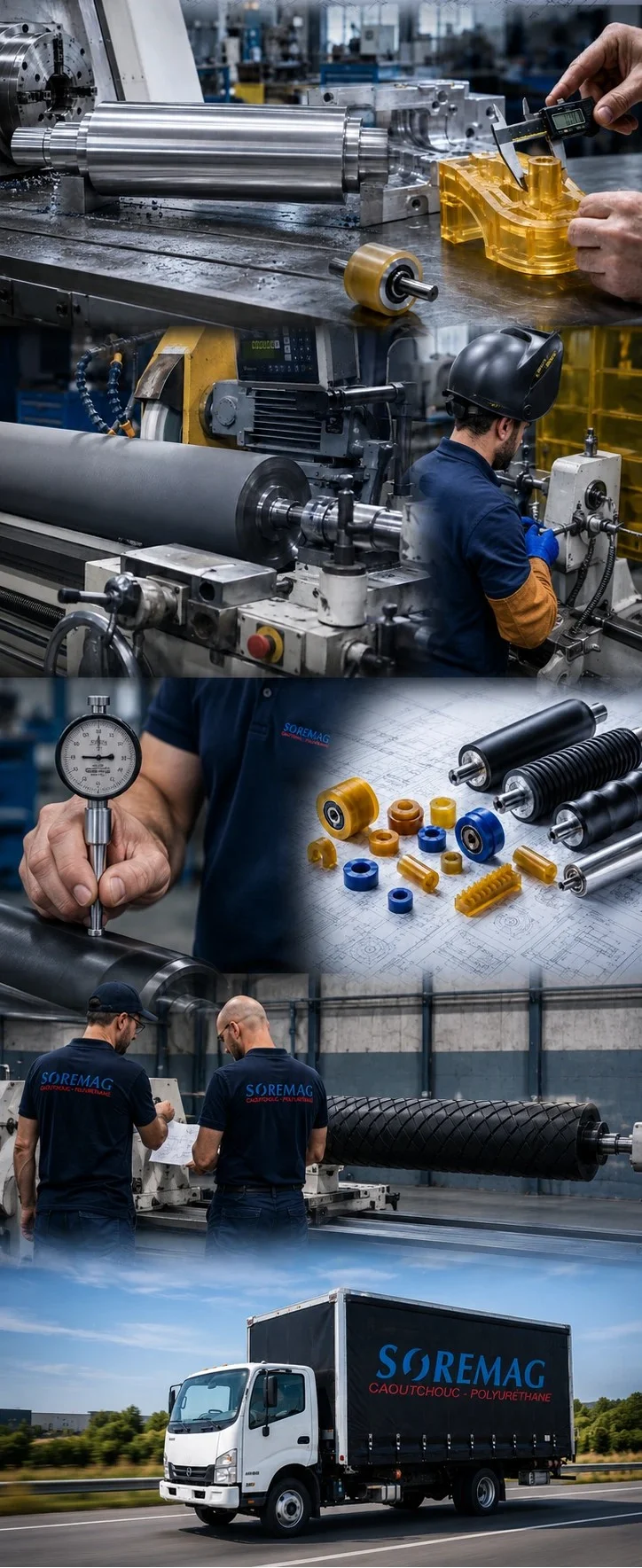
, which keeps metering and mixing perfectly consistent from one part to the next. Casting, curing and precision grinding are all done
in-house
.

Capacités et dimensions+

Covering of new rollers as well as refurbishment of worn rollers, over a wide range of diameters and lengths. Dimensional survey,

reverse engineering
if the drawings are lost, and precision grinding to hold your concentricity and surface finish tolerances.

Whether it is a large project or an emergency job, our team formulates the right polyurethane for your conditions — load, speed, temperature, environment — anywhere in Quebec and Canada.

Why cover in polyurethane

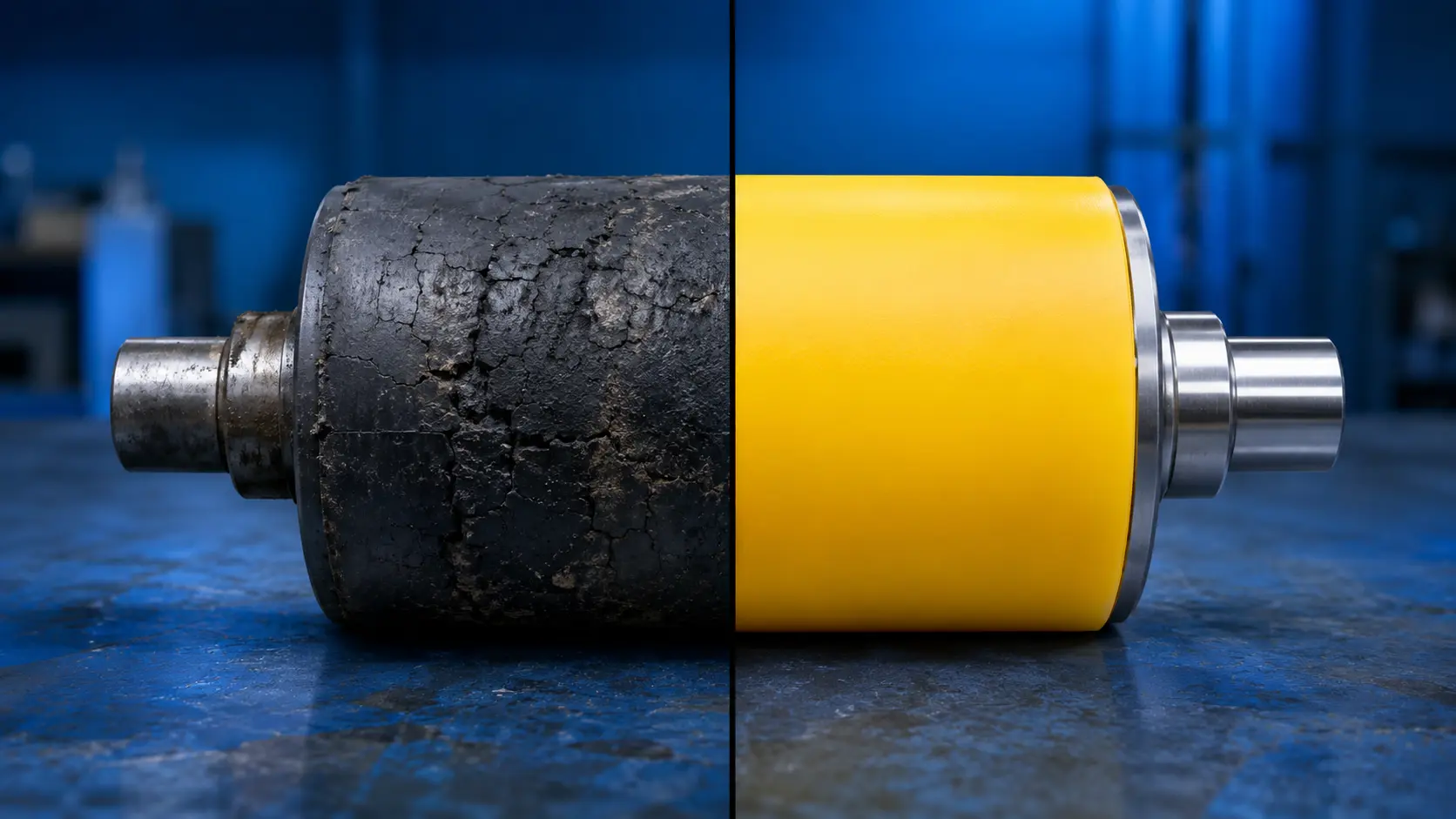
Where polyurethane pulls ahead of rubber — abrasion, load, cut resistance and service life.

What polyurethane does better than rubber

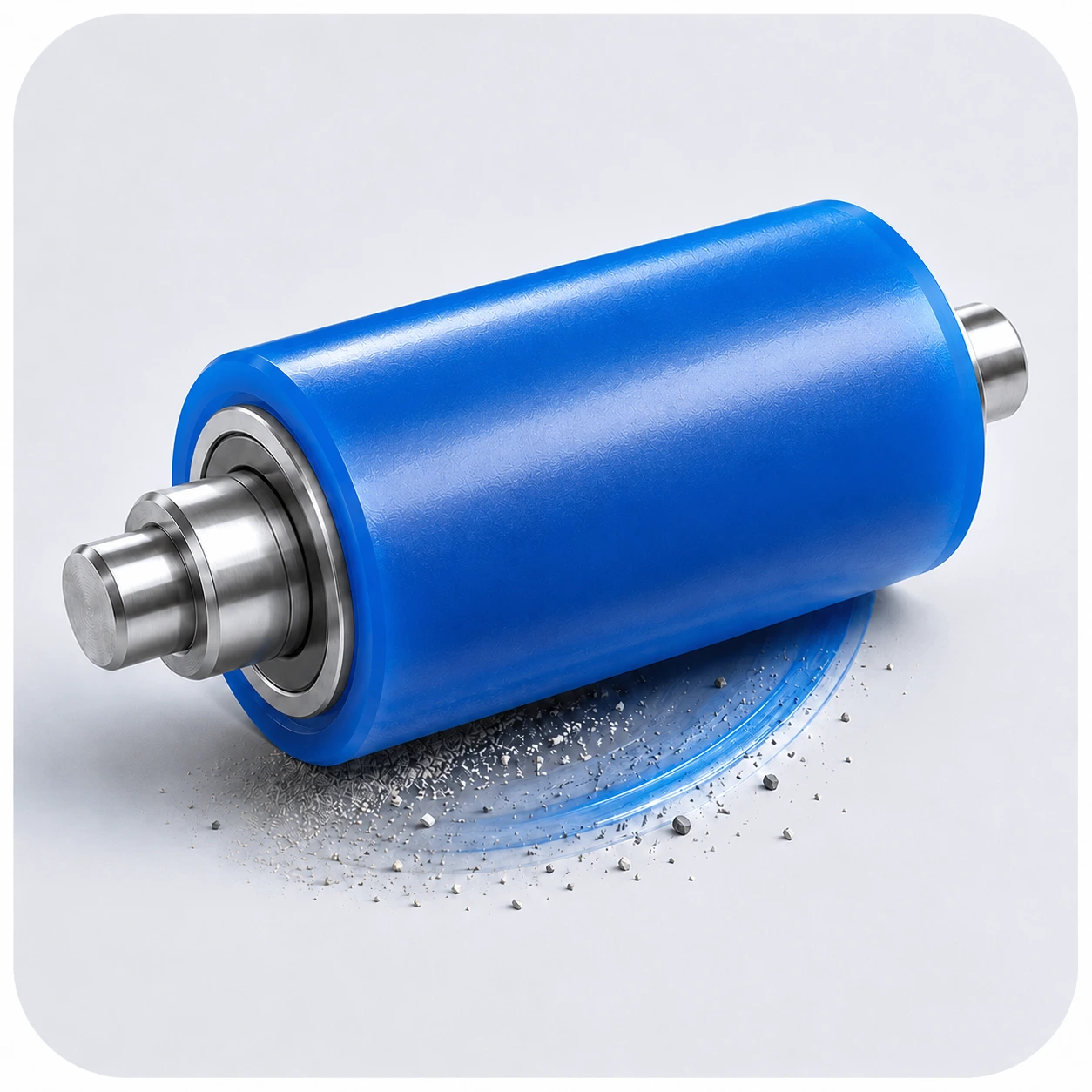
Rouleau recouvert de polyuréthane bleu résistant à l'abrasion et aux débris — usure très lente, Soremag, Québec

Outstanding abrasion resistance

A rare combination of hardness and resilience: it “rebounds” instead of tearing away, so it wears very slowly.

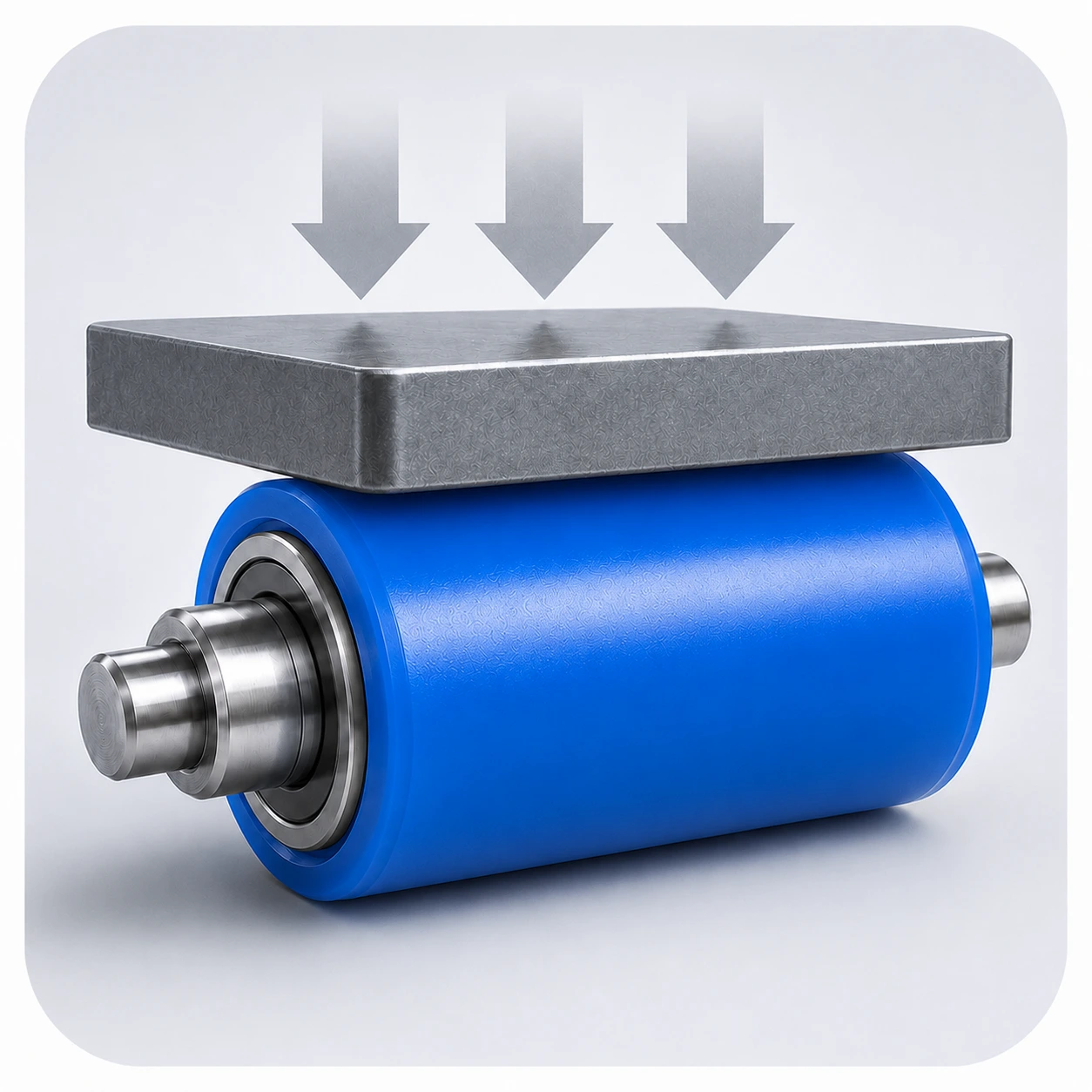
Rouleau en polyuréthane bleu supportant une forte charge sans se déformer — portance élevée et faible set de compression

Load bearing & capacity

At equal durometer, it takes higher loads without permanent deformation (low compression set).

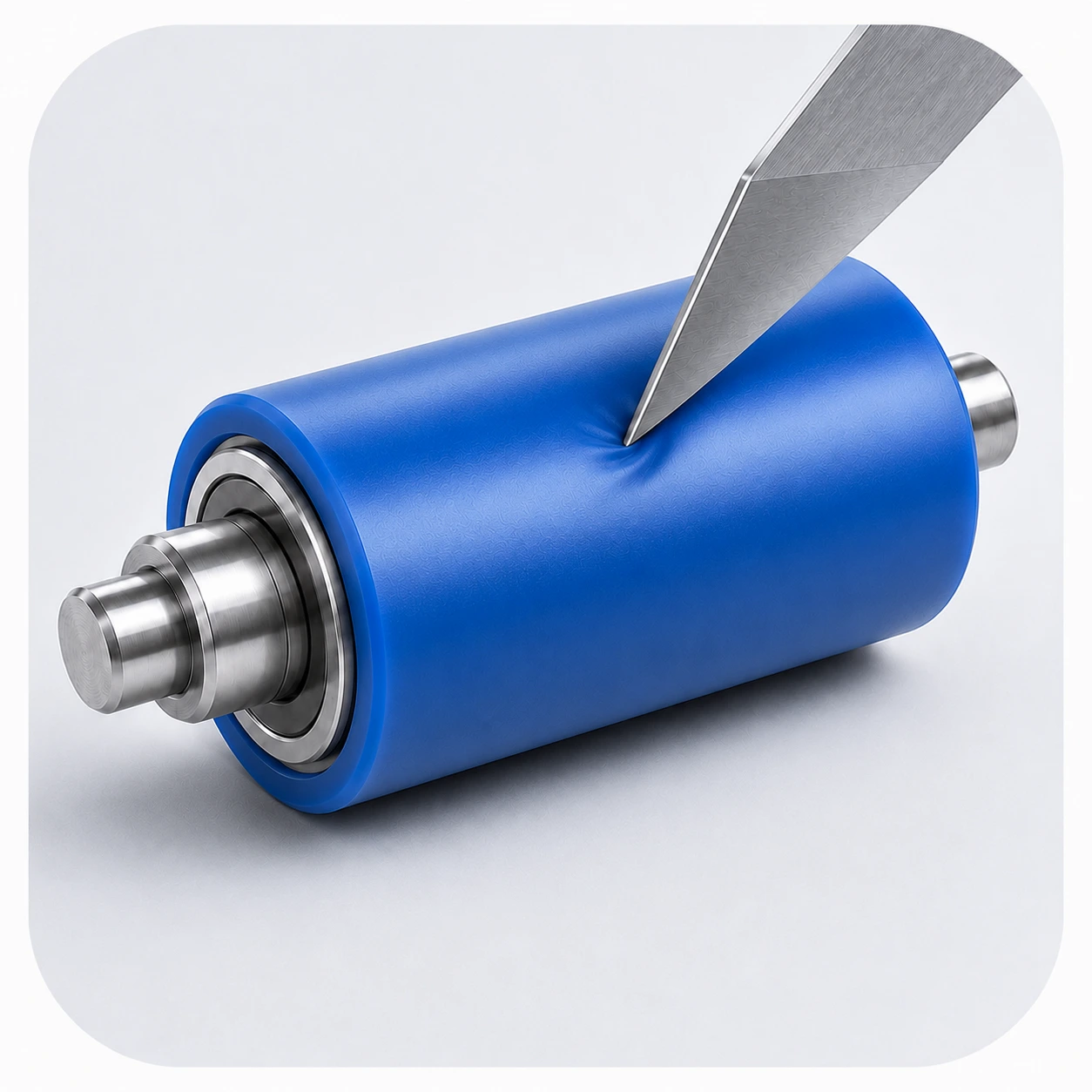
Lame appuyant sur un rouleau en polyuréthane bleu sans l'entailler — excellente résistance à la coupure et au déchirement

Cut resistance

Excellent nick and tear strength: ideal where edges or debris attack the surface.

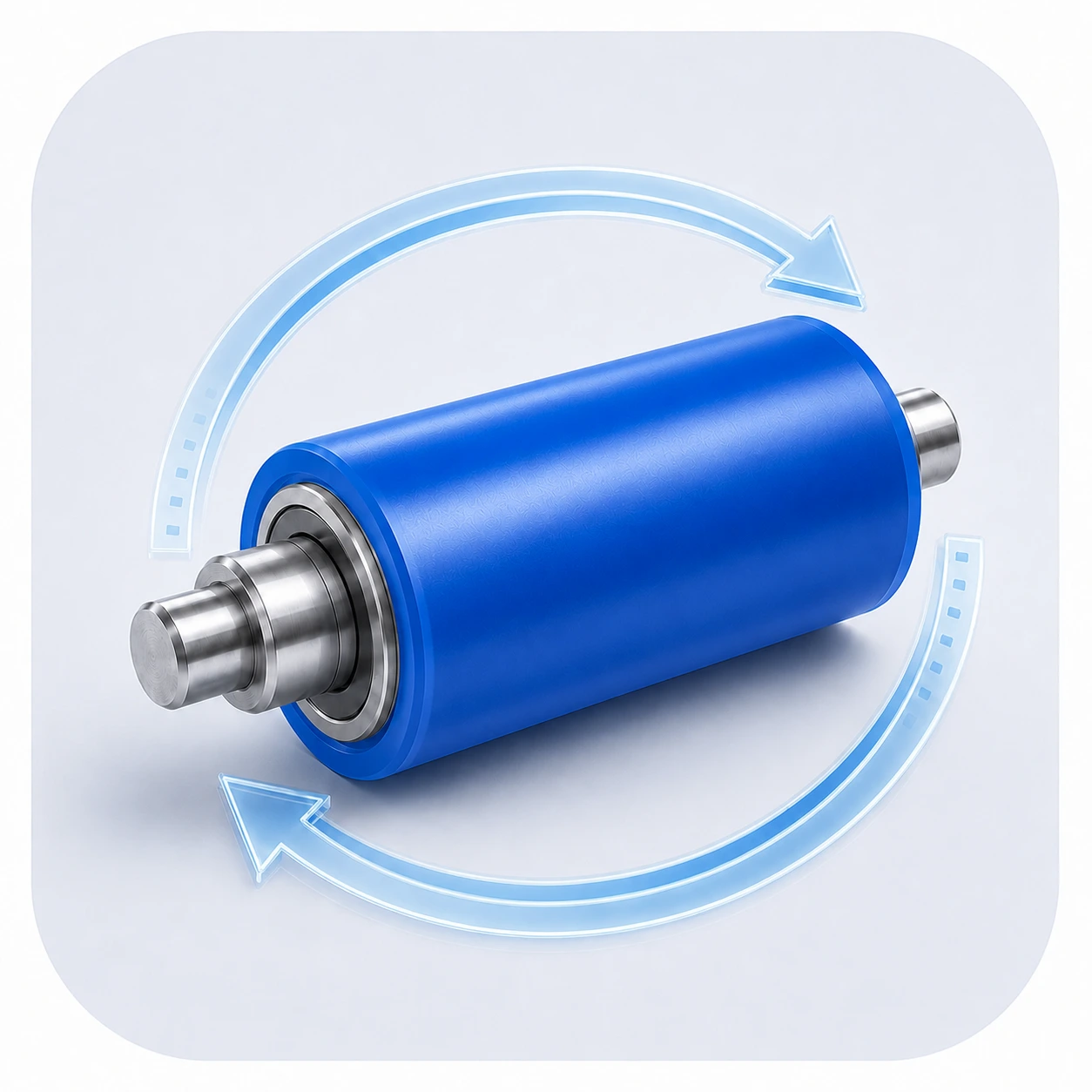
Rouleau en polyuréthane bleu tournant en cycles répétés — longue durée de vie, moins d'arrêts et de remplacements

Service life & cycles

Service life often several times longer under repeated stress — less downtime, fewer replacements.

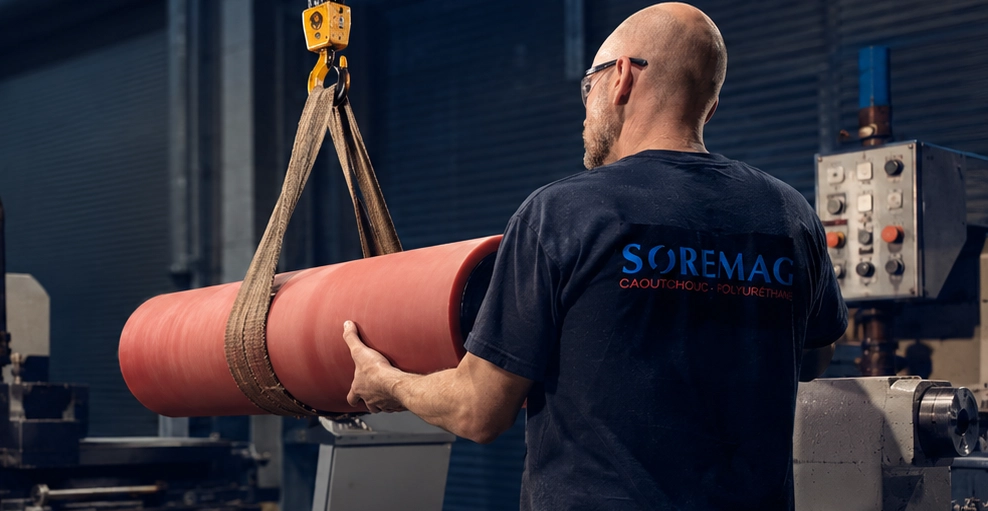
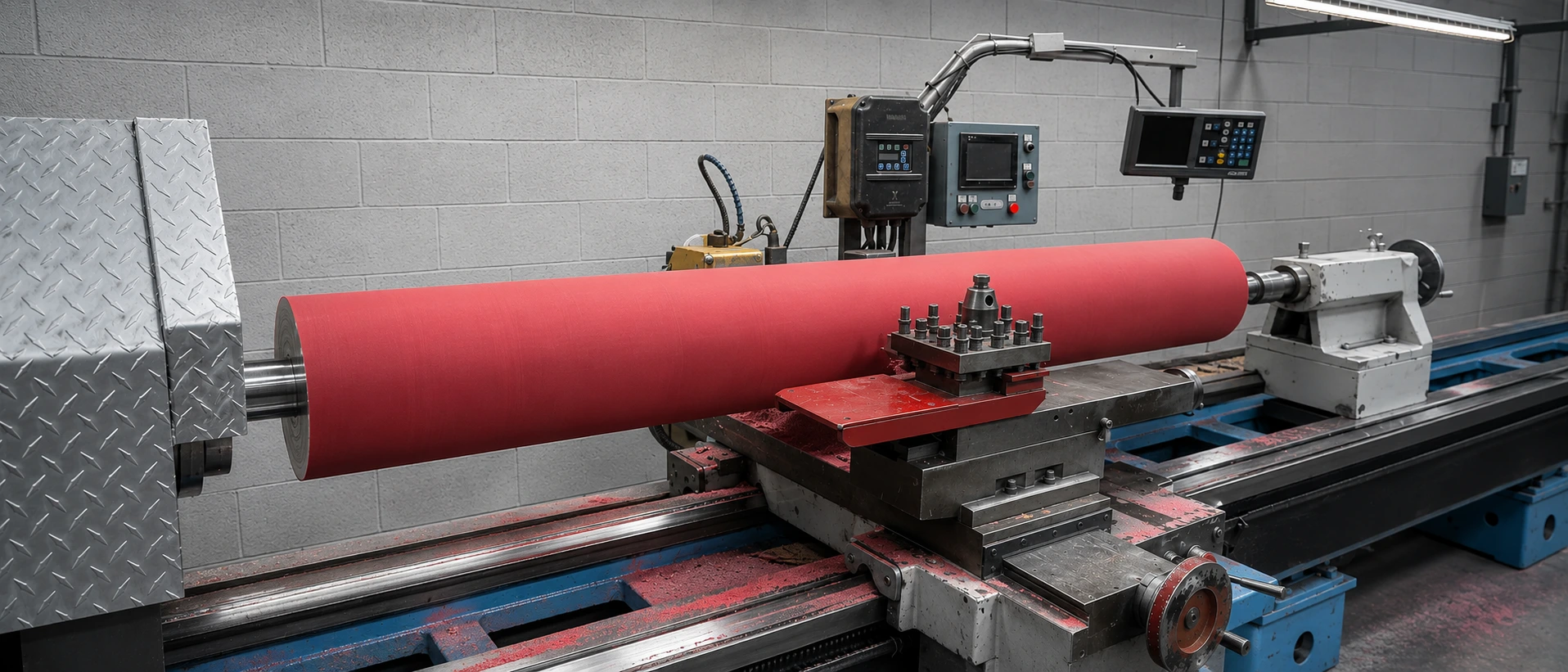
Rouleau nip recouvert de polyuréthane rouge en cours de rectification sur un tour à rectifier

The right polyurethane chemistry

Of two rollers both marked “90 Shore A”, one can last ten times longer than the other: at equal durometer, chemistry decides. The polyol family — ester, ether, polycaprolactone — and the choice of isocyanate (MDI/TDI or premium PPDI) set the basic trade-offs, long before the Shore number.

Polyuréthane esterPerformance mécanique maximale+

Built on ester polyols: the best in abrasion, nick resistance and under heavy load, with good resistance to oils and hydrocarbons. Its Achilles' heel is

hydrolysis
— in hot and humid or submerged service, the ester linkages break down and the cover degrades. Keep it for environments that stay
dry
. Typical service range ≈ −30 to 80 °C (indicative).

Polyuréthane étherRésistance à l'eau & au froid+

Built on ether polyols, whose linkages resist hydrolysis: the choice as soon as there is water, steam, prolonged humidity or cold (better low-temperature flexibility, good resilience, good resistance to mold). In exchange, abrasion and load capacity sit slightly behind ester — a gap that closes with the right formulation and the right durometer.

PolycaprolactoneLe meilleur des deux mondes+

A caprolactone-type ester polyol: it keeps the

mechanical performance of ester
(abrasion, cut, load) while resisting
hydrolysis far better
. The premium compromise when the application demands both mechanical performance
and
resistance to water / humidity.

Polyuréthane PPDIHaut de gamme dynamique+

Based on

PPDI
(p-phenylene diisocyanate) rather than MDI/TDI:
low heat build-up
(low hysteresis), high resilience and excellent heat resistance. For rollers that run
fast, heavily loaded or on intensive cycles
, where service life under dynamic loading is what counts.

PolyuréthaneAbrasionCoupure / déchirureChargeHuilesHydrolyse (eau)Basses températuresRouleaux & roues types
EsterpolyesterEntraînement haute charge · Roues de manutention lourdes · Abrasion sévère · Idlers · Nip durs
ÉtherpolyétherMilieu humide / eau · Roues extérieures · Basses températures · Lavage · Applications immergées
Polycaprolactoneester PCLForte charge + humidité · Là où l'ester classique cède à l'hydrolyse · Applications mécaniques exigeantes en milieu mouillé
PPDIp-phénylène diisocyanateHaute vitesse · Faible échauffement (hystérésis) · Cycles intensifs · Tenue thermique · Durée de vie maximale sous charge dynamique

Indicative ratings (out of 5), based on the general properties of cast polyurethanes. The cover durometer, the cure system and the formulation shift these trade-offs. Soremag also develops dedicated formulations (e.g. PolySorNip for nip rollers).

Hot cast or cold cast? At Soremag, it is hot cast.

The casting method sets the crosslink density of the polyurethane — and therefore its mechanical properties and its service life. This is not a detail: it is the difference between a roller that lasts and a roller that lets go.

Hot cast — our process

Thermoset, high performance

Prepolymers and curatives reacted hot: a

dense, uniform crosslink network
that gives the best properties — abrasion, cut resistance, load capacity,
low compression set
and excellent dynamic performance. It is the process that durable industrial rollers call for, and the one
Soremag uses exclusively.

Cold cast

Simpler, limited performance

Systems cast at room temperature: easy to process, but with mechanical properties, abrasion resistance and service life that are

markedly lower
. Acceptable for lightly loaded parts —
not
for critical production rollers.

Durometers and special formulations

Cast polyurethane can be dialed from soft to very hard, and loaded with additives to suit your application.

Souple · ~30–60 Shore AEmpreinte de contact, adhérence, amortissement — pinçage doux, transport délicat.
Mi-dur · ~60–95 Shore ALe cœur de gamme des rouleaux : bon compromis traction / portance / usure.
Dur · ~Shore D (jusqu'à ~75 D)Portance maximale, faible déformation — roues lourdes, idlers, charges extrêmes.

Indicative scale. The softer it is, the better the footprint and the grip; the harder it is, the better the load capacity and the resistance to indentation. Durometer is chosen according to load, speed and the target deformation. Understanding Shore hardness →

Formulations spéciales : pour les besoins ultra-souples, nos recettes maison descendent aussi bas que ~10 Shore A (en amélioration continue). Nous coulons aussi plusieurs mousses de polyuréthane (cellulaires) pour l'amortissement, l'étanchéité et l'allègement.
Food grade (FDA)
food contact

Polyurethane compliant for food contact (FDA), for the food industry, processing and packaging.

Antistatic / conductive
ESD dissipation

Compounds that drain electrostatic charge — film, electronics, batteries, dusty atmospheres.

Dedicated formulations
parts

Formulations developed for a specific use (e.g. PolySorNip for nip rollers), and other formulations on request.

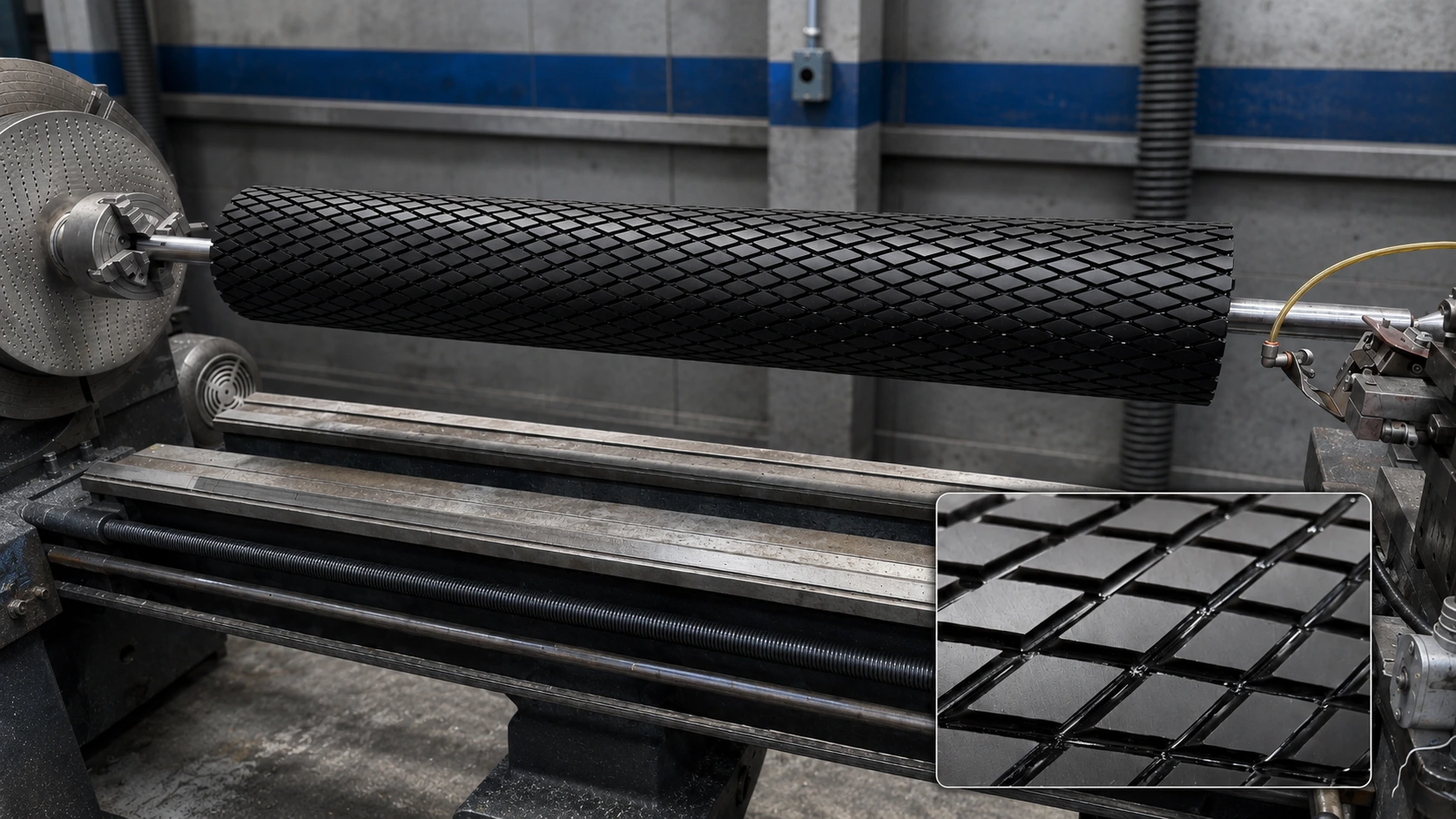
Rouleau recouvert de polyuréthane noir à rainurage diamant réalisé au couteau thermique, monté sur tourRouleau en polyuréthane à rainurage diamant, réalisé au couteau thermique

More about roller grooving →

Polyurethane rollers, by function

Every process roller position, covered in custom polyurethane — wherever abrasion, load or service life makes the difference.

Motorized, drive & pull

Motorized and driving rollers (

drive
), pulling (
traction
) and braking (
brake
) — they transmit torque under load.

Feed, draw & haul-off

Infeed rollers (

feed
), drawing (
pull / draw
), extraction (
haul-off
) and capstans — webs, sheets, cable, tubing and profiles.

Nip, pinch, pressure & back-up

Nip rollers, pinching (

pinch
), pressure, backing (
back-up
), holding (
hold-down
), contact and laydown (
lay-on
).

Idler, support, transport & conveying

Idlers, conveyor rollers, transport rollers, line-of-pass (

pass-line
), carry (
carry-over
), table (
table / bed
) and stacker rollers.

Guiding, centering & direction change

Guiding rollers (

guide
), web tracking (
tracking
), piloting (
steering
), deflectors and rollers with a V, U or flanged profile.

Tension, bridle, dancer & accumulation

Tension, bridle, snubber, dancer, S-wrap, take-up, brake and accumulator rollers — they control web tension and steady the web at high speed.

Spreading, flattening & wrinkle removal

Spreading rollers (

spreader
), bowed spreaders (
bow / banana
), expander and anti-wrinkle rollers — they open the web and pull the wrinkles out. See spreader rollers →

Application, metering, coating & transfer

Applicator rollers, dosing (

metering
), coating (
coater
), glue, oiling and transfer rollers.

Wringing, pressing & dewatering

Wringing rollers (

wringer
), scraper (
squeegee
), pressing (
squeeze
), padder and quench squeeze (
quench wringer
).

Vacuum, perforated & drainage

Rollers under vacuum (

vacuum
), aspirating (
suction
) and perforated rollers with a covered shell — draining, dewatering and holding the web.

Laminating, calendering, forming & embossing

Laminating, calender and gauging rollers (

sizing
), forming and embossing rollers, and pressure backing rollers.

Extrusion, film, winding & pre-stretch

Extrusion outfeed rollers (

take-off
), nipping (
collapsing
), pre-stretching (
pre-stretch
), laydown (
lay-on
), winding and unwinding rollers.

Printing, board & converting

Printing rollers, ink transfer rollers, ductor, developer, corrugated board feed rollers (

corrugated feed
), anti-crush rollers and folder-gluer rollers. (ink/solvent compatibility to be validated)

Wood, cable, tube & long products

Wide belt sander and panel feed rollers, veneer rollers; wire and cable rollers, capstans, V / concave rollers for tubing, spooling and pipe handling rollers.

Special rollers & engineered constructions

Polyurethane foam / sponge rollers, anti-crush (

no-crush
), antistatic or conductive, non-marking, food grade, dual-hardness, multi-layer and replaceable-sleeve rollers. Your position? →

À noter : sur certains équipements — cylindres anilox ou de gravure, rouleaux-enclumes de coupe (slitter anvils), calandres tout-métal, chill rolls et rouleaux chauffants — c'est généralement le contre-rouleau, le rouleau de pression, de transport ou d'appui qui reçoit le recouvrement en polyuréthane, et non le cylindre fonctionnel dur lui-même.

Shapes, profiles & finishes available

Cylindrical rollers, crowned (

crown
), concave or tapered (
taper
); V, U or flanged profiles; smooth, matte or polished finishes (target Ra/Rz); spiral, axial, diamond, chevron (
herringbone
) or circumferential grooves; one-piece construction, replaceable sleeve (
sleeve
) or multi-hardness construction.

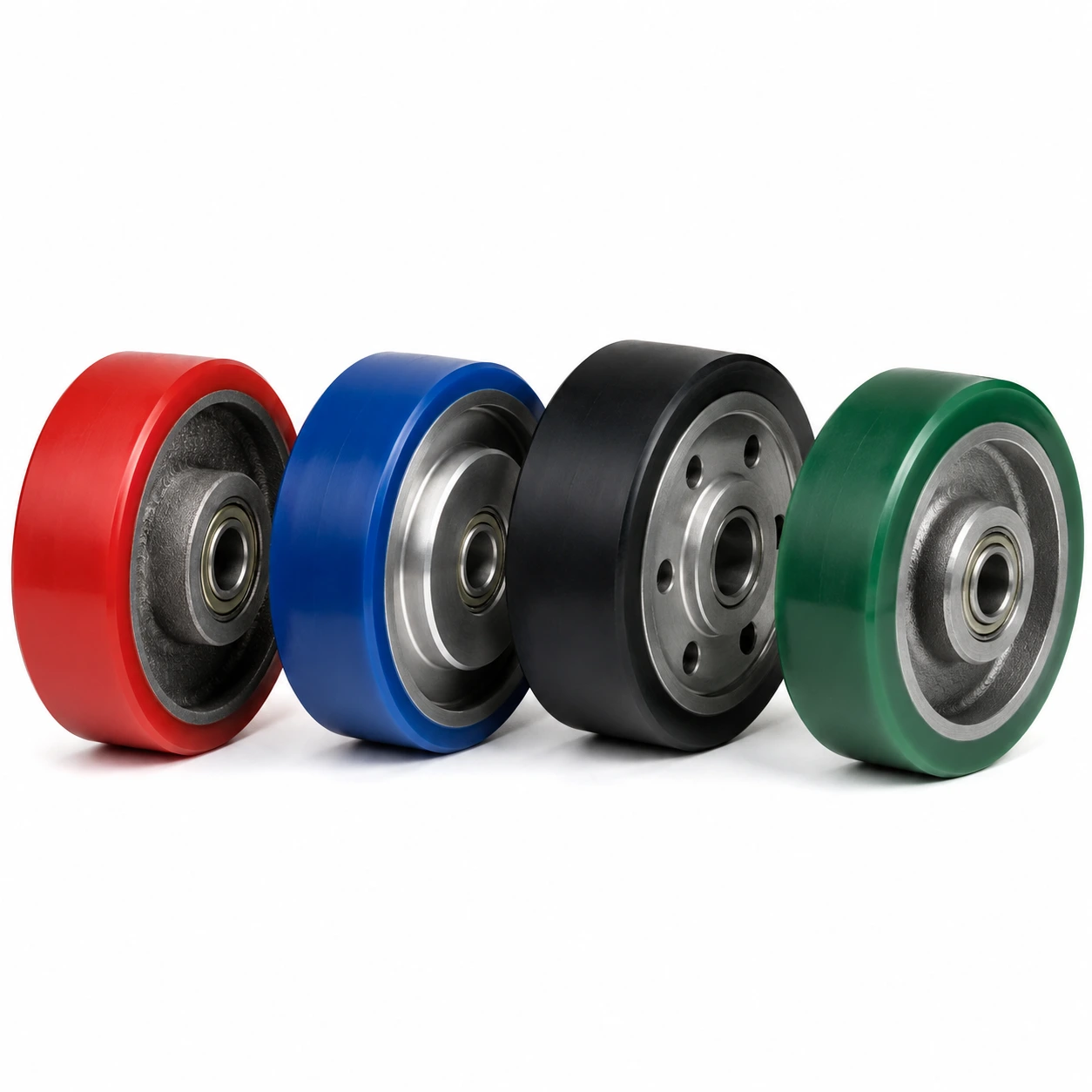
Quatre roues industrielles recouvertes de polyuréthane — rouge, bleue, noire et verte

Looking for polyurethane wheels?

Load and drive wheels, casters, guide rollers, forklift and AGV wheels — polyurethane covered, and handled on their own page.

Allez voir nos roues →
Pourquoi Soremag

Polyurethane expertise, from the formulation to the precision finish

For more than

35 years
, Soremag is a reference in roll covering in Quebec, and the
largest manufacturing companies
— here and elsewhere — trust us with their critical rollers. Our reputation was built on our expertise: delivering parts that hold up, on the agreed lead time, every time. What sets us apart is that we control
every step in-house, with no subcontracting
— as our know-how below spells out.

Our polyurethane know-how, A to Z

See our quality control (QC7) →

Content reviewed by Soremag's technical team
— specialists in molding, covering, machining and precision grinding of industrial rollers and wheels
since 1990
, with technical representatives in the field and laboratory validation.

Go further

Compare materials, understand the process or troubleshoot a problem.

Rubber or polyurethane?

The full comparison by abrasion, load, chemistry and the finish you are after.

See the comparison →

Material Selection Guide

The right material and the right durometer for your actual application.

See the guide →

Is your roller slipping, marking or vibrating?

Wear, slip, marking, vibration, runout: we trace it back to the cause.

Troubleshooting →

Questions about polyurethane rollers

Ester or ether polyurethane: what is the difference? +

Ester gives the best abrasion, nick resistance and load capacity, but it is vulnerable to hydrolysis (hot and humid or submerged service). Ether resists hydrolysis, humidity and cold, with abrasion resistance slightly behind. Simple rule: dry and mechanically demanding → ester; wet, water or cold → ether.

Which polyurethane durometer should you choose? +

Cast polyurethane is formulated from very soft (10 Shore A) to very hard (85 Shore D). The softer it is, the better the contact footprint and the grip; the harder it is, the better the load capacity and the resistance to indentation. Durometer is chosen according to load, speed and the target deformation.

Why polyurethane rather than rubber? +

At equal durometer, polyurethane resists abrasion, cutting and high loads better, and it often lasts several times longer. Rubber is still the better choice when you need a lot of softness, heavy damping, very gentle grip or a specific chemical resistance depending on the family.

Do you offer FDA or antistatic polyurethane? +

Yes. We formulate food grade (FDA) polyurethane and antistatic/conductive compounds, plus other formulations on request, depending on the constraints of your application.

Can you cover a polyurethane roller without a drawing? +

Yes. Through reverse engineering, we reproduce the dimensions, the durometer and the profile from the old roller or from a sample, even without a drawing, and we adapt the formulation if your conditions have changed.

The right polyurethane is the right formulation.

Describe your application to us — load, speed, temperature, presence of water or chemicals, and the problem you are seeing — and we will recommend the family (ester or ether), the cover durometer and the formulation that fit best.

➔ Get a technical recommendation