
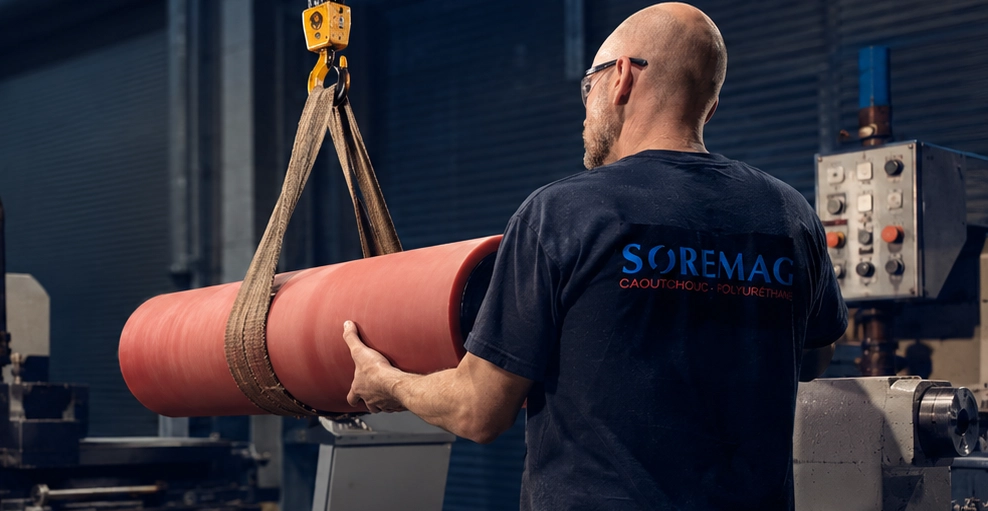
When a line goes down because of a roller, it is never just a roller. It is a crew standing around, an order falling behind, a supervisor looking for a fix, an end customer waiting. At that point, the real question is no longer “how much does the covering cost?” but “how much does each hour of downtime cost?”. The NIST work on industrial maintenance confirms it: unplanned downtime weighs heavily on cost, lead times and quality. That is exactly why a well-organized emergency service changes everything.
When a roller stops a line, every minute counts
On the floor, it usually comes down to a few sentences: “The line is not pulling anymore.” “We are losing the film.” “It is marking the product.” “We are down.” “We need a fix, fast.” In moments like that, you do not need a long speech: you need a supplier who understands the urgency, asks the right questions and knows what to do first.
The real goal: getting you running again, not just fixing a part
Sometimes the right answer is a complete recovering. Sometimes a regrind gets you by. Sometimes the grooving has to be recut, or the durometer or the material adjusted. But the goal stays the same: put the roller back to work as fast as possible — without skipping what makes it reliable. Because an emergency that is settled badly comes back a few days later, and then you lose twice.
The three levels of urgency
Critical emergency
The line is down or about to go down, and the roller is essential. We cut the communication, transport, analysis and manufacturing time to the minimum.
Operational emergency
The line is still running, but it is making scrap (slippage, marking, vibration, constant adjustments). We step in fast, before it stops completely.
Planned emergency
The roller is showing signs of wear and you want to take advantage of a planned shutdown. This is the best case — we work fast, but with room to breathe. Learning to spot those signs early is exactly the subject of our article on recognizing wear signals.
The emergency starts before the roller arrives
There is no need to wait for the roller to reach the shop to start thinking. From the first call, we start the analysis: a photo shows a cut, a video shows a vibration, a measurement reveals lost diameter, a new cleaner explains swelling, wear on one side only points to alignment. The faster the information comes in, the more we can prepare what comes next — shop time slot, material, finishing method, grooving, logistics. That is where an emergency service becomes more than a fast service: an organized one.
What wastes time (and how to avoid it)
The time is often lost before the work even starts: a missing dimension, an unknown durometer, a roller that is not ready to ship, photos that do not show the real problem, transport that was never arranged. To move fast, these simple questions help:
- Which roller?
- Is the line down?
- Do you have a replacement roller?
- The application?
- The problem (slippage, wear, debonding, vibration, marking)?
- Rubber or polyurethane?
- The durometer, if known?
- The dimensions?
- Any grooving?
- Does the core look damaged?
- Any oil, solvent, water or heat present?
- Can you send photos right away?
These questions do not complicate the request — they prevent bad surprises and speed up the right decision.
Logistics is part of the solution
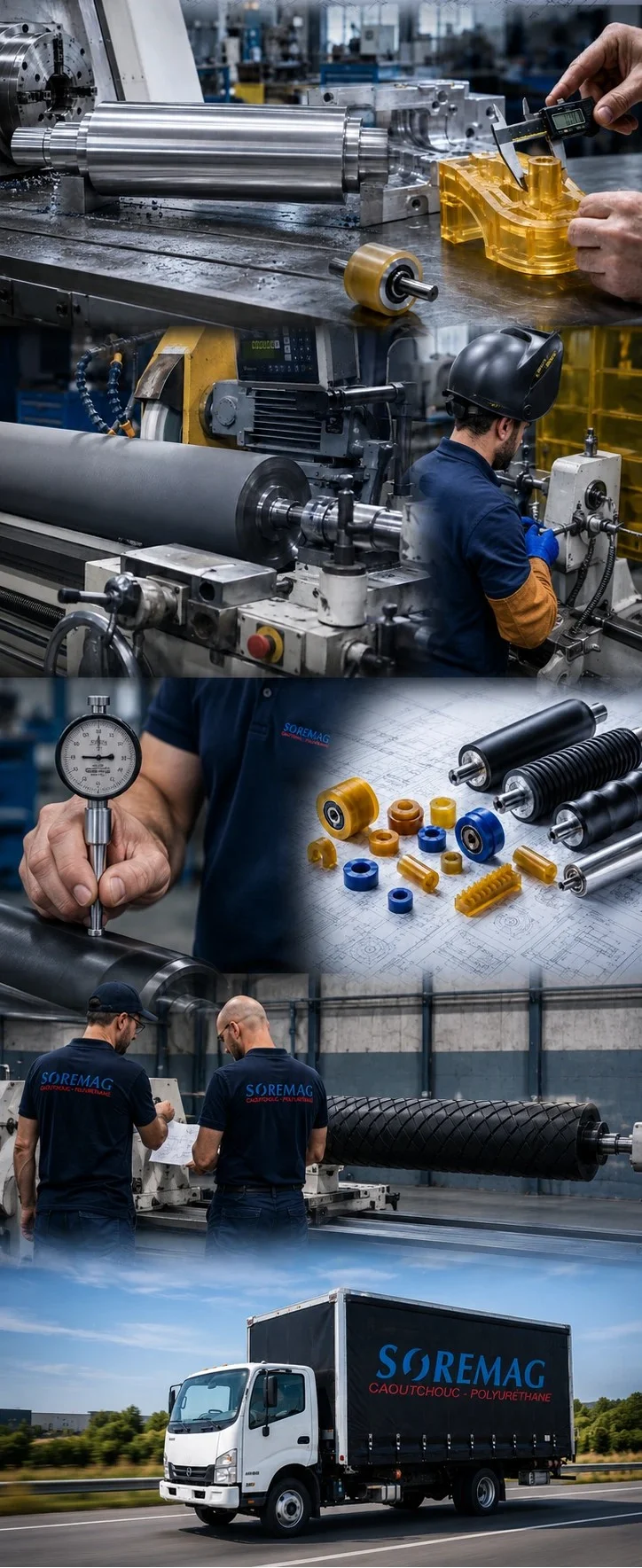
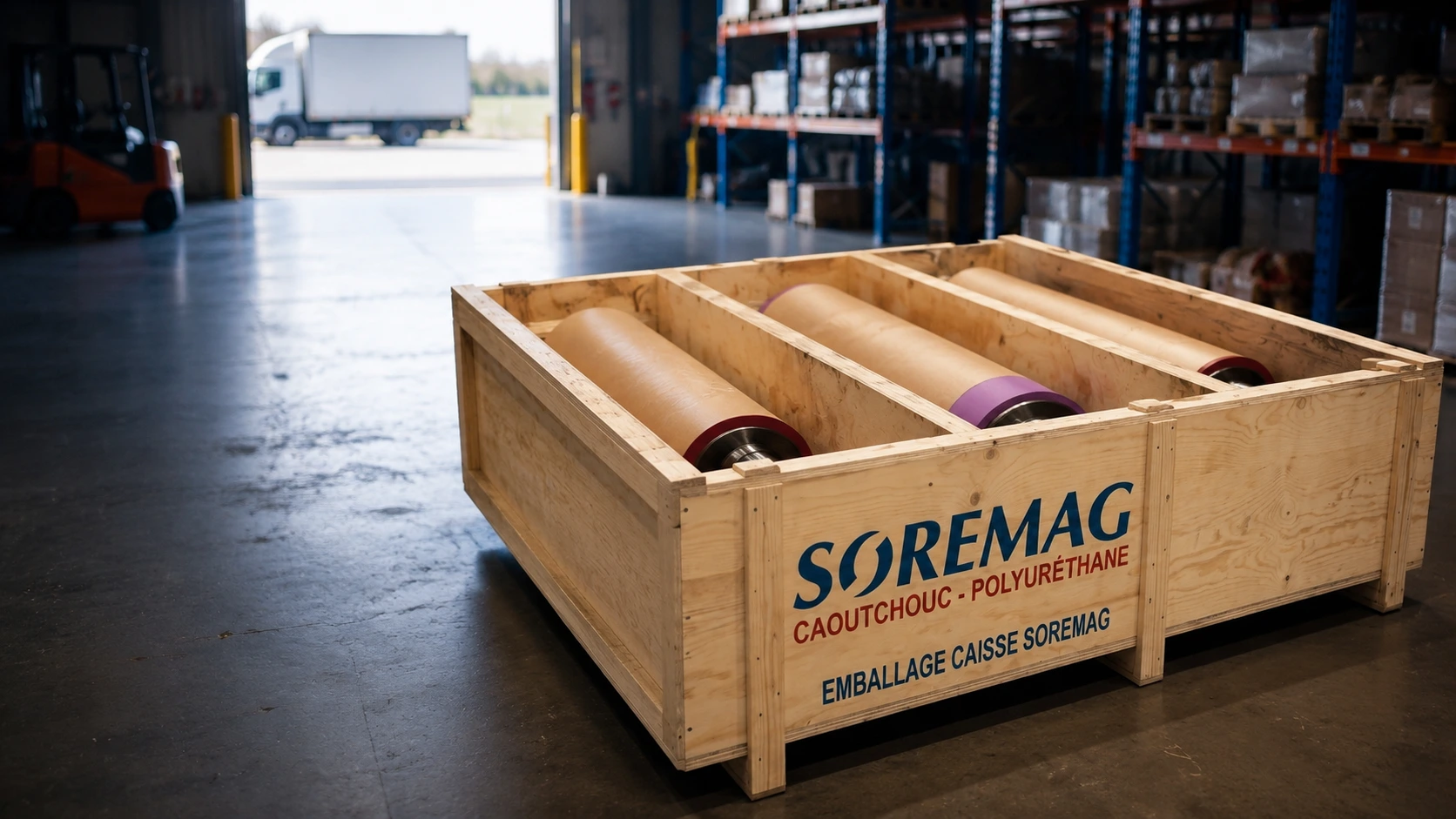
A roller sitting on the dock is more time lost; poorly protected, it is one more risk. An industrial roller is heavy, long and fragile at the surface. Soremag has transport capacity built for the job — including a truck designed for side loading — to simplify pickup and delivery and shorten the lead time between your plant and the shop. In an emergency, that detail counts for a lot.
Emergency regrind or complete recovering? We will be straight with you
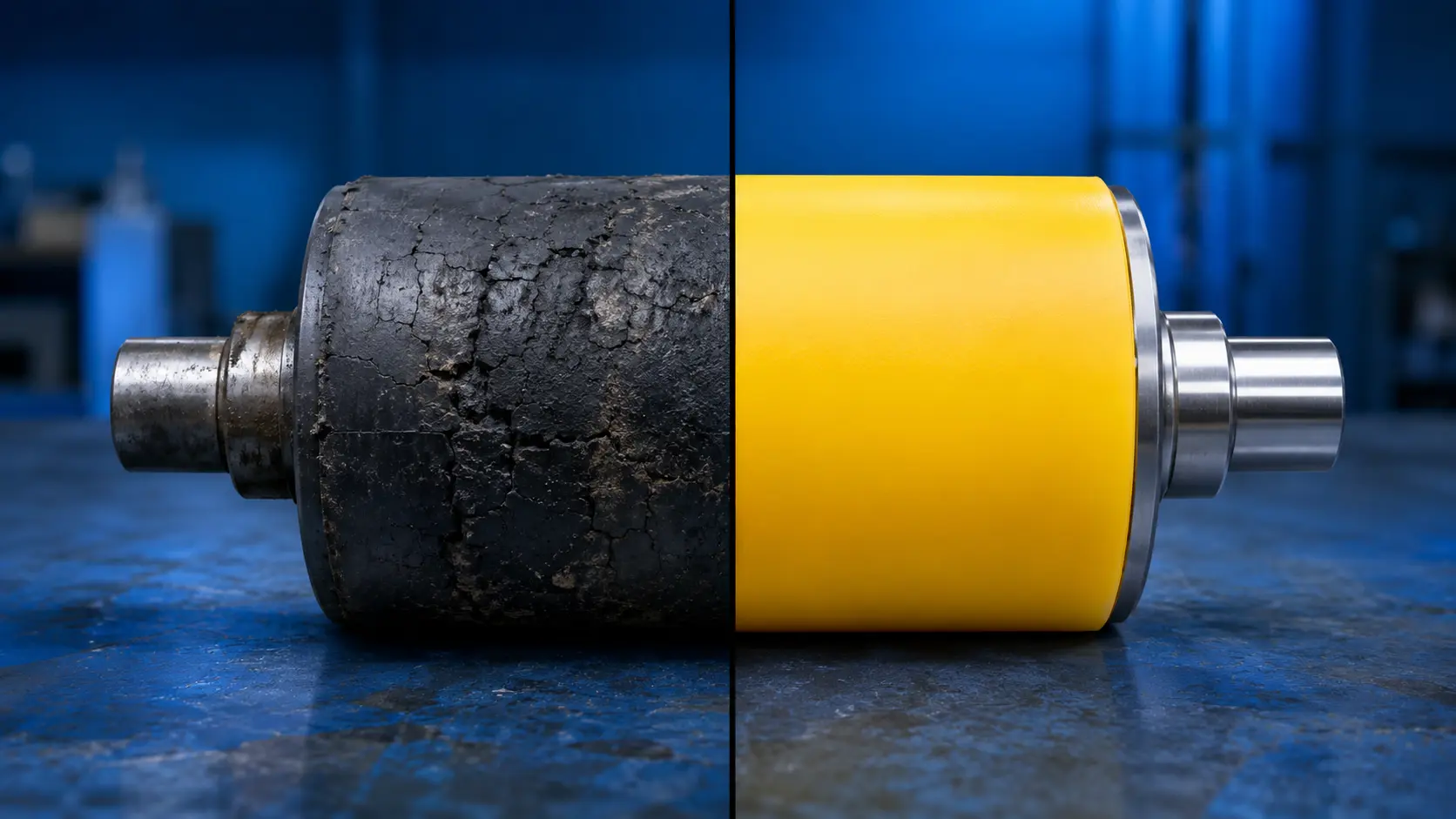
The fastest solution is not always the best one. A regrind can be enough if the cover is still thick, well bonded, just glazed or lightly worn, and not contaminated deep down. But if the material is cracked, debonded, swollen or contaminated, we will tell you plainly: a complete recovering beats a repair that will not hold. Our job is to help you choose between a smart temporary fix and a real refurbishment — see the roller covering.
An emergency often reveals a deeper problem
When a roller comes back failed, the temptation is to redo it exactly the same way, as fast as possible. But if it let go quickly, you have to ask why: did the speed go up? did the product change? a new cleaner? too much pressure? a misalignment? tired journals? Reading the wear is the subject of our Roller and wheel diagnosis. A well-managed emergency does not just get you running again: it helps you avoid the next one.
Being fast is good. Being ready is better
A real emergency service rests above all on one thing: being ready before the emergency. For your critical rollers — the ones that shut down a whole line, that take a long time to remove, that have a special geometry, that have no spare available — keep an up-to-date record (dimensions, material, durometer, grooving, finish, history, transport plan). And for the most critical ones, a spare roller already on the shelf is often the best insurance: it almost always costs less than a major shutdown. We can help you identify which ones deserve a spare.
An emergency must not sacrifice quality
We can speed up the organization, prioritize the work, cut the dead time. But we do not remove the steps that protect performance: core inspection, preparation, material selection, bond control, diameter, precision grinding, finishing, grooving, final check before shipping. A serious emergency service looks for the best balance between speed and reliability.
Field example: the packaging line that goes down
A packaging line runs fine, then the film starts to slip. The pressure gets adjusted, cleaning gets more frequent… and one morning it stops. The roller reaches us: glazed surface, worn grooves, a diameter that is no longer optimal. Here, the emergency is not just to redo a roller — it is to understand why it lost its traction. The answer may be a regrind, a new cover, a different finish, better suited grooving or a revised durometer. The goal: that it goes back not only onto the machine, but that it works better than before.
Reducing emergencies over the long term
The best emergency service is the one that ends up reducing how often you need it. After every problem roller, we ask the real questions — right material? right durometer? right finish? is the grooving still useful? compatible cleaning? too much pressure? normal or premature wear? would a spare roller be justified? The emergency gets you started again; the analysis keeps you from ending up there again.
In short: in an emergency, organization counts as much as speed
Downtime costs money and puts pressure on everyone. Speed helps, but it is not enough: you have to ask the right questions, arrange the transport, inspect quickly, choose the right solution, communicate clearly and deliver a roller that is ready to go back to work. Because a roller that stops a line is never a small problem.
Line down because of a roller? Call us: 450 664-4000 (toll-free 1 800 361-5588) or email us. The sooner we have the information, the sooner you are running again.
FAQ
When should you call for emergency service?
As soon as a roller stops a line, causes scrap, slips, marks, vibrates, debonds, swells or cracks to the point where it can no longer produce normally.
Can you get us going again without a complete recovering?
Sometimes: if the cover is still sound and thick enough, a regrind or a refinishing pass can help. Otherwise (worn, contaminated, cracked, debonded), a complete recovering is the better choice.
What information should you provide in an emergency?
Photos, dimensions, application, the problem observed, material and durometer if known, grooving, the products in contact, and the real level of urgency.
Does Soremag help with transport?
Yes: logistics is part of managing the emergency (pickup and delivery suited to industrial rollers).
Should you always go back to the same material?
No. If the roller let go quickly, we look for the cause before repeating it — sometimes we change the material, the durometer, the finish or the grooving.
How do you avoid repeat emergencies?
Keep a history of the critical rollers, watch for wear signals, plan before failure and correct the real cause.
Is a spare roller recommended?
For critical rollers, yes: it sharply reduces the risk of extended downtime and takes the extreme pressure off the repair.
Reference
- National Institute of Standards and Technology (NIST) — work on industrial maintenance and the impact of unplanned downtime (cost, lead times, quality).
